Buy Art Prints Like a Pro: 5 Terms You Should Know
This article is part of our Guide to Buying Fine Art Prints.
Buying art prints online gets much easier once you understand a few basic terms.
Not art-history jargon. Practical terms.
The kind that affect whether a print fits your frame, whether it has a border, whether it should be matted, whether it can be printed edge-to-edge, and how it will look once it is actually on your wall.
Most confusion around art prints does not come from the artwork itself. It comes from the invisible decisions around size, shape, borders, framing, and glazing.
Here are five terms that make those decisions much easier.
In brief: To buy art prints like a pro, learn five practical terms: aspect ratio, image size, bleed, matting, and glazing. These explain the shape of the print, whether the artwork has a border, how it fits in a frame, and how the finished piece is protected and viewed.
1. Aspect Ratio

Aspect ratio means the shape of an image: how wide it is compared with how tall it is.
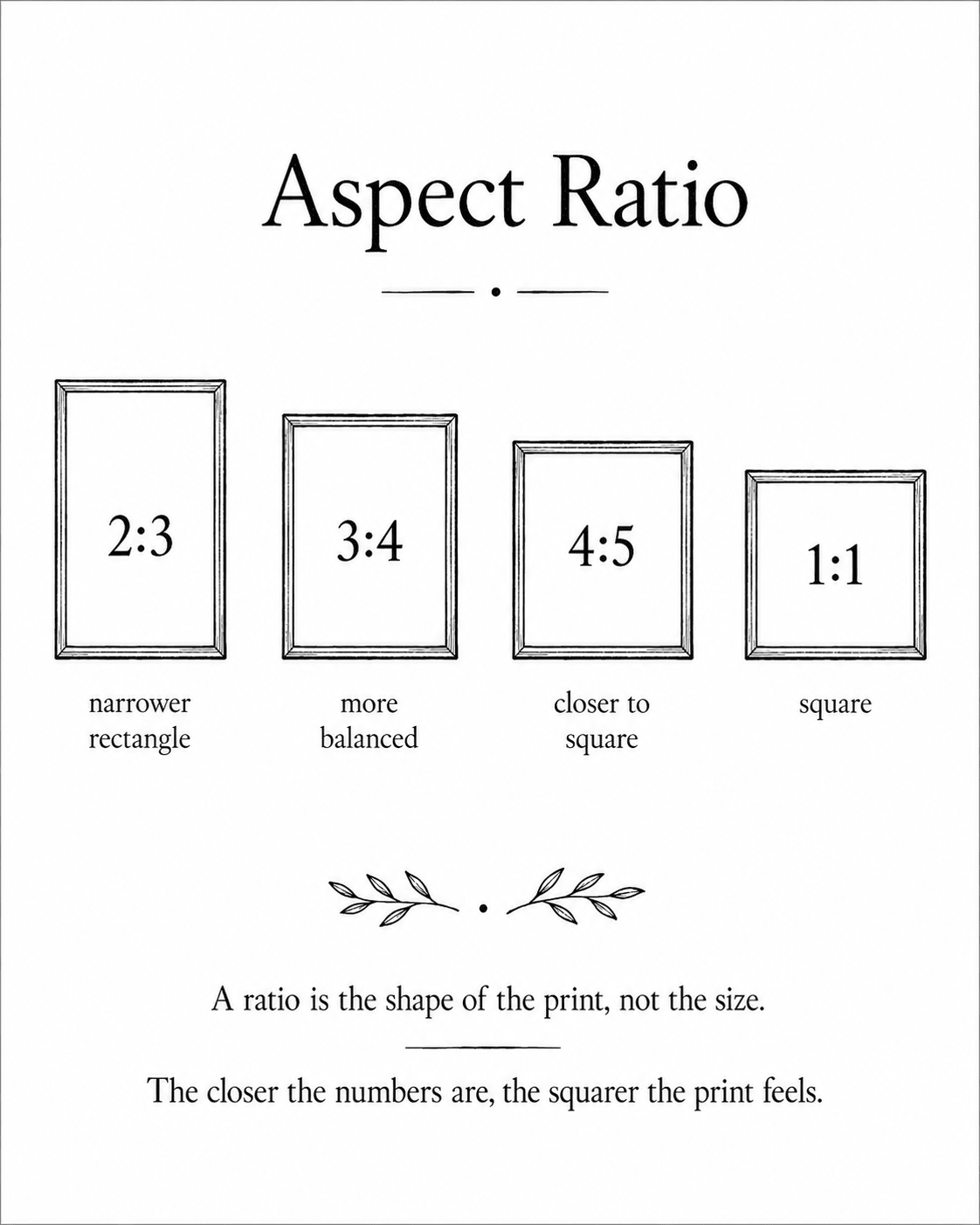
The numbers tell you the relationship between width and height, not the actual size. A 12x18 print and a 24x36 print are very different sizes, but they share the same 2:3 ratio.
The practical way to think about it is this:
A ratio is not a size. It is the shape of the print.
In simple terms, the closer the two numbers are to each other, the squarer the print feels. The farther apart the numbers are, the longer and narrower the print feels.
- 2:3 ratio is a narrower rectangle. In a vertical format, it can work well for portraits, fashion images, tall figures, botanical prints, and artworks with a strong up-and-down composition. In a horizontal format, it feels more cinematic and can work well for landscapes, posters, and wide scenes.
- 3:4 ratio is a little more balanced. It is still rectangular, but less narrow than 2:3. This can be a very useful shape for portraits, figure studies, interiors, still lifes, and many paintings because it gives the artwork more visual width and stability.
- 4:5 ratio is closer to square. It often feels calmer and more contained. It can work well for portraits, quiet landscapes, modern interiors, and artworks that should feel substantial without becoming too tall or too wide.
- 1:1 ratio is square. Square prints can feel modern, balanced, and graphic. They are often good for abstract works, minimalist pieces, centered compositions, and gallery walls where you want a clean grid.
- Panoramic shapes are long and narrow. They are best for artworks that are already wide by nature: sweeping landscapes, seascapes, city views, procession scenes, long horizontal compositions, or pieces meant to stretch across a sofa, bed, or console.
The important thing is that the artwork usually has an original shape. You should not force every image into whatever frame size happens to be convenient.
If a painting was composed as a tall portrait, it may look awkward if cropped into a square. If a landscape was designed as a long horizontal scene, it may lose its sweep if squeezed into a more vertical format. And if a work has important details near the edges, cropping it into a different ratio can cut away part of what makes the image work.
So when choosing a size, ask two questions:
- What shape is the artwork naturally?
- What shape works best on the wall where I want to hang it?
Ideally, those two answers should match.
A 2:3 image can scale cleanly from 12x18 to 24x36 because the shape stays the same. But it will not naturally fit a 16x20 frame because 16x20 is a 4:5 ratio. To make it fit, the artwork may need to be cropped, bordered, or resized in a way that changes how it looks.
That is why aspect ratio matters before you choose the final size.
If you are still thinking about overall scale, read Fine Art Print Size Guide: How Big Should Your Print Be?.
2. Image Size vs Paper Size

This is another common source of confusion.
The image size is the printed artwork area.
The paper size is the full sheet of paper.
Sometimes they are the same. Sometimes they are not.
For example, a print may be listed as 16x20 because the full paper sheet is 16x20, while the artwork itself sits inside that area with a white border. In another case, the artwork may fill the full 16x20 area edge-to-edge.
Those two prints can be the same paper size but look very different once framed.
This matters especially if you plan to use a mat or a standard-size frame. A print with a built-in border may frame differently from a full-bleed print. A print where the image fills the entire sheet may need a mat that overlaps the image slightly. A print with generous white space may not need a mat at all.
Before framing, ask:
- Is the listed size the paper size?
- Is the listed size the image area?
- Does the print include a white border?
- Will the artwork be matted or framed edge-to-edge?
These questions prevent a lot of frustration later.
3. Bleed / Full Bleed

Bleed is a printing term that means the image extends beyond the final trim edge.
In ordinary language, full bleed usually means the image goes all the way to the edge of the paper, with no visible white border.
Adobe explains that to print to the paper’s edge without margins, the design is extended into a bleed area slightly larger than the finished print size, then trimmed down so the image covers the whole page.
For buyers, the practical difference is simple:
- Full bleed means the image reaches the edge.
- No bleed / bordered printing means there is visible paper around the image.
Full-bleed prints often feel more modern, direct, and image-forward. They can work very well for photography, posters, graphic art, modernist pieces, and images where you want a clean edge-to-edge look.
Bordered prints often feel more traditional, quieter, and easier to mat. The white space can give the artwork breathing room and make framing more flexible.
Neither is automatically better. The right choice depends on the artwork and how you want to display it.
4. Matting

A mat is the border, usually made from mat board, placed between the artwork and the frame.
It is not just decoration.
Matting gives the artwork breathing room. It can make a smaller print feel more substantial. It can also help separate the print visually from the frame and, in conservation-minded framing, help keep the artwork away from the glazing.
The American Institute for Conservation’s Book and Paper Group describes matting and framing as a way to protect works of art and artifacts on paper while providing secure and aesthetically sympathetic housing for display, handling, transport, storage, and support.
There are several common approaches:
- No mat: clean, modern, and direct; often good for full-bleed prints, photography, posters, and graphic works.
- Single mat: classic and balanced; gives the print breathing room without looking too formal.
- Wide mat: elegant and gallery-like; useful for smaller images or works that benefit from space.
- Double mat: more traditional or decorative; can work well for classical pieces but may feel too formal for modern prints.
Matting changes both the size and the mood of the finished piece.
A small print with a wide mat can feel much more important. A bold modern print with no mat can feel cleaner and more immediate.
If you want the full framing guide, read How to Frame Art Prints in 4 Easy Steps.
5. Glazing

Glazing is the clear protective layer in front of a framed print.
It may be glass, acrylic, Perspex, museum glass, or a low-reflection acrylic option. The Canadian Conservation Institute describes glazing as a protective covering used in framing works of art on paper and discusses glass and plastic glazing materials for that purpose.
For buyers, glazing matters because it affects both protection and visibility.
Standard glass can look traditional, but it is heavier, reflective, and breakable. Standard acrylic or Perspex is lighter and more shatter-resistant, which makes it useful for shipped framed prints. Museum glass can be excellent for clarity and reduced reflection, but it is often expensive.
Low-reflection acrylic options are also important because glare can seriously affect how framed art looks in a real room. A print that looks beautiful online can be harder to enjoy if the finished frame mostly reflects windows, lamps, or movement in the room.
At 9 Art Prints, our premium framed prints use Moth-Eye Perspex glazing, a low-reflection acrylic glazing designed to create a cleaner, near “no-glass” viewing effect.
The simple rule is this:
The wrong glazing can make a beautiful print hard to see.
Why These Terms Matter
These terms matter because buying an art print is not just choosing an image.
You are also choosing:
- the shape of the print
- the final size
- whether the artwork has a border
- whether it should be matted
- how it will be protected
- how it will actually look once framed
That is why a beautiful artwork can still disappoint if the ratio is wrong, the mat is awkward, the border is misunderstood, or the glazing creates too much reflection.
Learning these terms helps you avoid those mistakes before you order.
Where 9 Art Prints Fits
At 9 Art Prints, we try to make these decisions easier by offering carefully chosen sizes, framed and unframed options, and clear information about paper, process, and presentation.
For framed pieces, we use solid wood frames, not MDF, and premium Moth-Eye Perspex glazing on eligible framed prints. For many core fine art reproductions, we also specify the paper and print process because the physical object matters as much as the image.
If you are still deciding whether framed or unframed is right for you, read Should I Buy Framed or Unframed Art Prints?.
The Bottom Line
If you want to buy art prints like a pro, learn the terms that affect the finished object.
Aspect ratio tells you the shape. Image size and paper size tell you what is actually being measured. Bleed tells you whether the image reaches the edge. Matting changes the presentation. Glazing affects protection and visibility.
Once you understand those five terms, choosing the right print, size, and frame becomes much easier.
Further Reading
- The Ultimate Guide to Fine Art Prints
- Fine Art Print Size Guide: How Big Should Your Print Be?
- How to Frame Art Prints in 4 Easy Steps
- Should I Buy Framed or Unframed Art Prints?
- What Kind of Wall Art Makes a Home Look More Expensive?
- How to Buy Fine Art Prints Online: 3 Steps Before You Order