Should I Get My Art Print Mounted? Mats, Mounts, and Passe-Partout Explained
This article is part of our Guide to Buying Fine Art Prints.
Some people call it a mat.
Some call it a mount.
In parts of Europe, it may be called a passe-partout.
In practical terms, they are usually talking about the same thing: the border board placed around the artwork inside a frame. It creates space between the image and the frame, often making the whole piece look more finished, more gallery-like, and more premium.
But a mount is not always the right choice.
For some art prints, a mat or mount makes the work look more considered. For others, it can reduce impact by making the visible image smaller. A photograph may look excellent with a clean white mount. A bold vintage movie poster may look better filling the frame. A delicate drawing may need breathing room. A Bauhaus poster may not.
In brief: A mat, mount, or passe-partout can make a framed art print look more gallery-like, give the image breathing room, and help keep the glazing away from the paper. It works especially well for photography, drawings, botanical prints, quiet fine art reproductions, and smaller works in larger frames. It is less useful for full-bleed posters, bold graphic art, large statement pieces, or artworks where you want the image to fill the frame.
Quick Answer: Should You Choose a Mounted or Unmounted Print?
| Choose a mat / mount / passe-partout when... | Choose an unmatted or full-bleed presentation when... |
|---|---|
| You want a more gallery-style framed print. | You want maximum image size and visual impact. |
| The artwork is a photograph, drawing, botanical print, or delicate fine art image. | The artwork is a poster, bold graphic work, Bauhaus print, or strong colour-field design. |
| The image needs breathing room around it. | The image already has a border or was designed to fill the page. |
| You are framing a smaller print in a larger frame. | You are buying a large statement piece where scale matters most. |
| You want the glazing kept away from the print surface. | The artwork is clean, flat, graphic, and looks strongest edge-to-edge. |
The simplest rule is this:
If the artwork needs elegance, space, or delicacy, a mount can help. If the artwork needs scale, force, or graphic impact, skip the mount.
What Is a Mat, Mount, or Passe-Partout?
A mat or mount is the board placed between the artwork and the frame. It has a cut window in the middle, so the print is visible through the opening.
The outer part of the board creates a border around the image.
This border does three things:
- It gives the artwork visual breathing room.
- It creates a more finished, gallery-style presentation.
- It helps separate the print surface from the glazing in front of it.
The word changes by market. In North America, many people say “mat” or “mat board.” In the UK, “mount” is common. In Europe, “passe-partout” is often used. A buyer asking for a matted print, mounted print, or passe-partout is usually asking for the same general framed presentation.
For more framing terms, read Buy Art Prints Like a Pro: 5 Terms You Should Know.
Why Mounted Prints Look More Premium
A mount makes the frame feel more intentional.
Without a mount, the artwork usually sits closer to the edge of the frame. This can be clean and effective, especially for posters and graphic art. But it can also feel more direct and less formal.
With a mount, the artwork gets space around it. The eye is drawn inward. The frame no longer feels like it is crowding the image.
That extra space often creates a more gallery-like effect.
This is especially useful for smaller works. A 9x12 or 12x16 print can feel more substantial when placed inside a larger frame with a mount. Instead of looking small, the image looks intentionally presented.
This is one reason mounted prints can work well as gifts, housewarming presents, office art, and more formal framed pieces.
The Protection Benefit: Keeping Glazing Away from the Print
A mount is not only visual.
It can also serve a practical framing function.
When a framed work sits directly against the glass or acrylic glazing, the surface of the print may be more vulnerable over time. A mount creates a small gap between the print and the glazing.
This is one reason conservation framing often uses mats or spacers for works on paper. The goal is not just to make the artwork look better, but to house it more safely inside the frame.
For ordinary home display, this does not mean every print must be mounted. But for works on paper, the basic principle is sound: keeping the print surface away from the glazing is generally better than pressing it directly against it.
For more on framing choices, read How to Frame Art Prints in 4 Easy Steps.

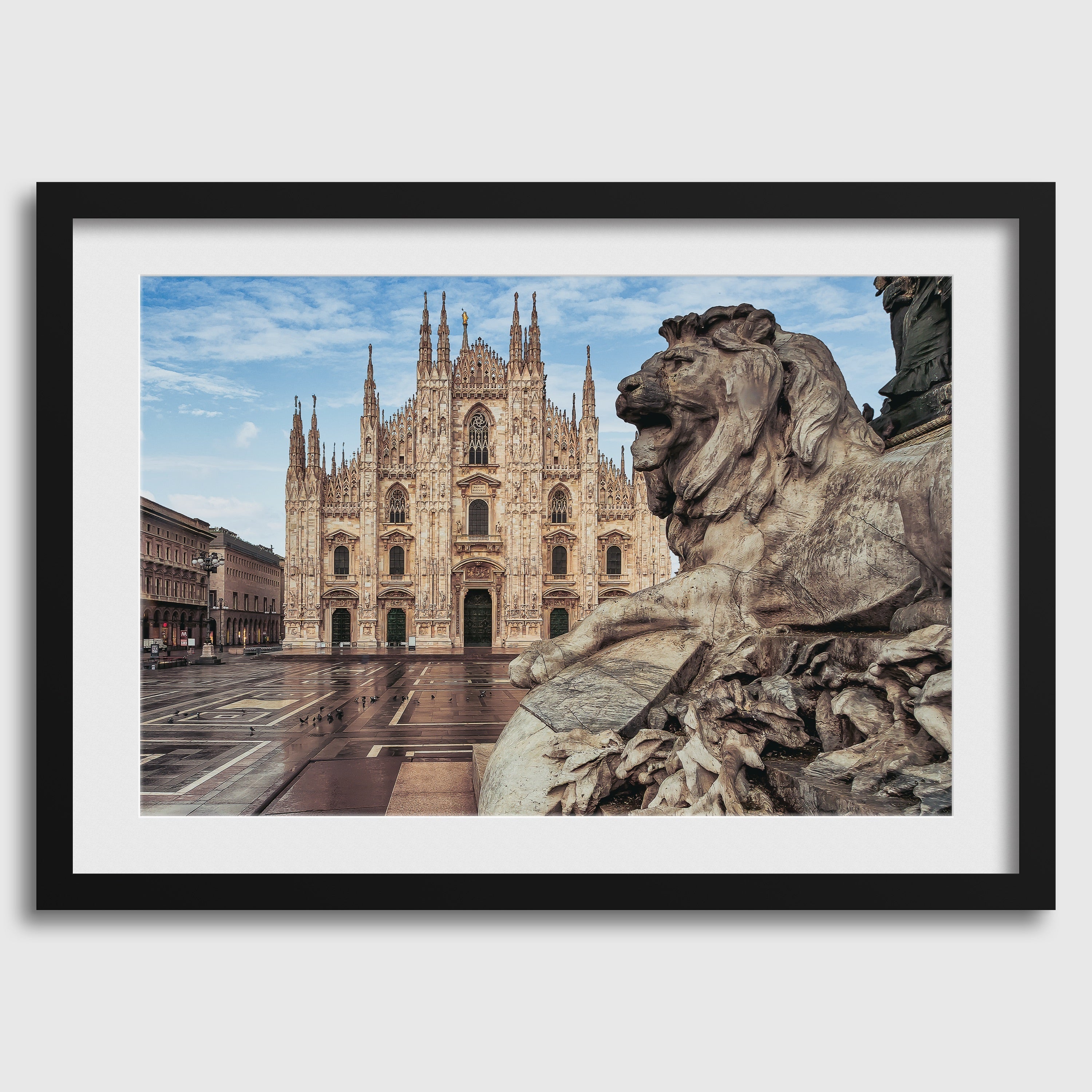
Pictured: Milan Cathedral
The Main Tradeoff: Your Visible Artwork Gets Smaller
The biggest disadvantage of a mount is simple:
You see less artwork inside the same frame area.
A mount uses part of the framed space as border. That border may look elegant, but it also means the visible image becomes smaller than it would be in an unmatted or full-bleed presentation.
This is not a problem if the artwork benefits from space.
It is a problem if you bought the print for scale.
For example, if you want a large vintage poster to dominate a wall, a mount may reduce the effect. If you want a Bauhaus print to feel bold and architectural, a wide border may soften it too much. If you want a movie poster to feel cinematic, filling the frame may be stronger.
So the question is not whether mounts are “better.”
The question is whether the artwork should breathe or fill the frame.
Which Art Prints Look Best Matted or Mounted?
Mounted prints usually work best when the artwork benefits from quietness, space, or refinement.
Photography
Photography is one of the strongest candidates for a mount.
A clean white or warm off-white border can make a photograph feel more deliberate. It separates the image from the frame, helps the viewer focus on the composition, and gives the print a classic gallery presentation.
This can work especially well for architectural photography, black-and-white photography, travel photography, and images with strong composition.
Examples from our photography collections include Fine Art Photography, Pablo Meilán Campagnale’s Italy photographs, and Andrew Shoukry’s architectural work. Individual pieces such as Milan Cathedral, Trevi Fountain (Rome), Vernazza Sunset, and Andrew Shoukry — Tableau are the kind of photographs that can look very good with breathing room around the image.
Drawings, Sketches, and Delicate Works on Paper
Drawings and sketch-like artworks often look better with a mount because they already carry a sense of paper, hand, and space.
A mount supports that feeling. It gives the work a margin. It prevents the image from feeling crowded. It also makes a small drawing feel more important inside a frame.
This is the same logic often used in traditional framing for drawings, watercolours, manuscripts, and works on paper.
Botanical, Naturalist, and Scientific Prints
Botanical and naturalist prints often suit a mounted presentation.
These images tend to have central subjects, white space, fine lines, and a quieter visual rhythm. A mount can make them feel more like framed specimens or archival plates rather than casual decorative prints.
This is a good choice for bedrooms, hallways, studies, kitchens, and traditional interiors.
Classical, Figurative, and Historical Works
Some classical or figurative artworks also benefit from a mount, especially if the image has a contained composition and does not need to fill the frame edge-to-edge.
For example, richly detailed works such as Rudolf Ernst’s The Musician or Ludwig Deutsch’s The Inspection can work well with a formal mounted presentation when the goal is elegance rather than maximum scale.
The same can be true for certain Art Nouveau or decorative works, depending on the image. A piece like Alphonse Mucha’s Médée already has strong ornamental structure, so the choice depends on whether you want it to feel like a formal framed artwork or a bold poster-like statement.
Browse our Orientalist Art collection for richly detailed works where a mounted presentation may suit more traditional interiors.
Which Art Prints Are Better Without a Mat?
Some prints are stronger when the artwork fills the frame.
This is especially true when the image is graphic, poster-like, large, bold, or designed to make an immediate visual impact.
Vintage Movie Posters

Pictured: Breakfast at Tiffany's
Vintage movie posters often look better unmatted or close to full-bleed.
Their power comes from scale, typography, dramatic layout, and graphic force. A mount can make them look more polite, but not always better.
A print like Metropolis Movie Poster is a good example. The image is long, cinematic, and poster-driven. It usually wants height, drama, and edge-to-edge presence more than a quiet gallery border.
Vintage Advertising Posters
Vintage advertising posters also often work best without a mat.
These designs were made to command attention. They often rely on large colour shapes, lettering, and a strong central graphic.
For a piece like Leonetto Cappiello’s Florio Cinzano, the poster logic is the point. The print wants to feel bold, graphic, and immediate.
Browse our Vintage Maps and Posters collection for travel, film, Art Deco, and advertising prints that often benefit from an unmatted presentation.
Bauhaus and Modernist Prints
Bauhaus and modernist prints are another category where matting should be used carefully.
Many of these works depend on flat colour, geometry, typography, and sharp edge relationships. A wide mount can sometimes weaken that graphic force.
For example, Joost Schmidt’s Bauhaus poster, our Bauhaus Black Orange Statement Trio, and many works in our Bauhaus and Avant-Garde Modernism collection often make the most sense when the image is allowed to hold the frame directly.
That does not mean they can never be matted. But if the whole point of the artwork is graphic force, edge-to-edge presentation may be stronger.
Josef Albers-Inspired Geometric Prints
Our Josef Albers-inspired prints are built around nested squares and colour relationships.
Because these compositions are already geometric and self-contained, they usually do not need a mount to create order. The artwork already has internal structure.
A mount can work if you want a more formal gallery effect, especially for a smaller square print. But for many rooms, these prints are strongest when the colour fields remain visually direct.
Large Statement Sets
Large statement pieces and multi-print arrangements are often better without mounts.
If you are building a wall around scale, rhythm, and visual impact, the mount can interrupt the effect or make each image feel smaller.
For example, many works in our Statement Art Sets collection are designed to work as duos, trios, or larger wall arrangements. In those cases, the relationship between the prints often matters more than adding a formal border to each individual piece.
White, Cream, Hayseed, or Black: What Mount Colour Should You Choose?
Most people should start with white or warm off-white.
A white mount feels clean, gallery-like, and versatile. It works especially well with photography, drawings, minimal works, and many traditional fine art prints.
A warmer cream, ivory, or hayseed-toned mount can work better when the artwork itself has age, warmth, sepia tones, antique paper colour, or a softer historical feeling.
Black mounts are more dramatic.
They can work beautifully with black-and-white photography, dark images, certain modern interiors, or high-contrast works. But they are less neutral than white or warm cream. A black mount becomes part of the design, so it should be chosen deliberately.
The safest rule:
- White mount: clean, modern, gallery-like.
- Warm cream or hayseed mount: softer, more traditional, good for vintage or historical images.
- Black mount: dramatic, high-contrast, best when the artwork and room can handle it.
Should You Choose a Mounted Print as a Gift?
A mounted framed print can make an excellent gift because it feels finished.
The recipient does not need to find a framer, choose a mat, or figure out how to present the piece. The print arrives as a complete object.
This works especially well for:
- photography gifts
- housewarming gifts
- wedding or anniversary gifts
- office gifts
- smaller works intended to feel more substantial
- classic or traditional interiors
But if the gift is a bold poster, a large statement print, or a highly graphic work, an unmatted framed presentation may be better.
For more gift-buying advice, read How to Buy Art Prints as a Gift Without Getting It Wrong.
Does Mounting Work with Every Artwork?
No.
This is the most important point.
A mount is a presentation choice, not a universal upgrade.
It can make some prints look more refined and more expensive. It can make other prints look smaller, weaker, or less direct.
Mounting usually works best when the image benefits from separation and space. It works less well when the image was designed to be immersive, poster-like, panoramic, or edge-driven.
Before choosing a mount, ask:
- Does this artwork need breathing room?
- Would a border make it look more elegant?
- Would a border make the actual image feel too small?
- Is the artwork delicate or graphic?
- Is the goal gallery presentation or maximum impact?
- Does the image already have a printed border?
- Are important details close to the edge?
If the artwork is quiet, delicate, photographic, or formal, a mount may help. If it is bold, poster-like, or already visually complete edge-to-edge, it may not.
Can You Request a Mounted Print from 9 Art Prints?
At 9 Art Prints, our standard framed prints are generally not matted or mounted by default.
We do this because many artworks look strongest when the visible image has as much presence as possible inside the frame. This is especially true for vintage posters, Bauhaus prints, geometric works, large statement prints, and other graphic pieces.
However, mounted or matted framing may be available by request for framed orders where compatible.
If you would like a mat, mount, or passe-partout added to a framed print, contact us before ordering. We can confirm whether it is suitable for the artwork, size, and frame option you are considering.
In some cases, a mount may affect the visible image size, the final presentation, the price, or production timing. We would rather confirm the right presentation before the order is placed than add a mount where it does not serve the artwork.
Mounted vs Unmounted: The Practical Rule
The choice is not about which option is more “premium” in the abstract.
It is about what the artwork needs.
| Artwork type | Usually better mounted? | Usually better unmatted? |
|---|---|---|
| Photography | Often yes | Sometimes, especially large contemporary photography |
| Drawings and sketches | Often yes | Less often |
| Botanical and naturalist prints | Often yes | Sometimes |
| Classical or historical reproductions | Often yes, depending on composition | Sometimes, especially large dramatic works |
| Vintage movie posters | Usually no | Often yes |
| Vintage advertising posters | Usually no | Often yes |
| Bauhaus and modernist posters | Sometimes | Often yes |
| Josef Albers-inspired square prints | Sometimes | Often yes |
| Statement duos and trios | Usually no | Often yes |
The Bottom Line
A mat, mount, or passe-partout can make an art print look more finished, more gallery-like, and more premium.
It can also make the visible artwork smaller.
That tradeoff is the whole decision.
Choose a mount when the artwork benefits from space, elegance, and separation: photography, drawings, botanical prints, delicate works, and smaller fine art images often look excellent this way.
Skip the mount when the artwork needs scale, edge-to-edge force, and graphic impact: vintage movie posters, advertising posters, Bauhaus prints, Albers-inspired colour studies, and large statement sets often look better unmatted.
The best framed print is not always the one with the most features.
It is the one where the presentation fits the artwork.
Further Reading
- The Ultimate Guide to Fine Art Prints
- Should I Buy Framed or Unframed Art Prints?
- How to Frame Art Prints in 4 Easy Steps
- Buy Art Prints Like a Pro: 5 Terms You Should Know
- The 3 Biggest Art Print Buying Regrets — and How to Avoid Them
- What Paper Is Best for Art Prints?
- Does Thicker Paper Make for a Better Art Print?