Artist · 59 prints
Kalighat painter Prints
About Kalighat Painting
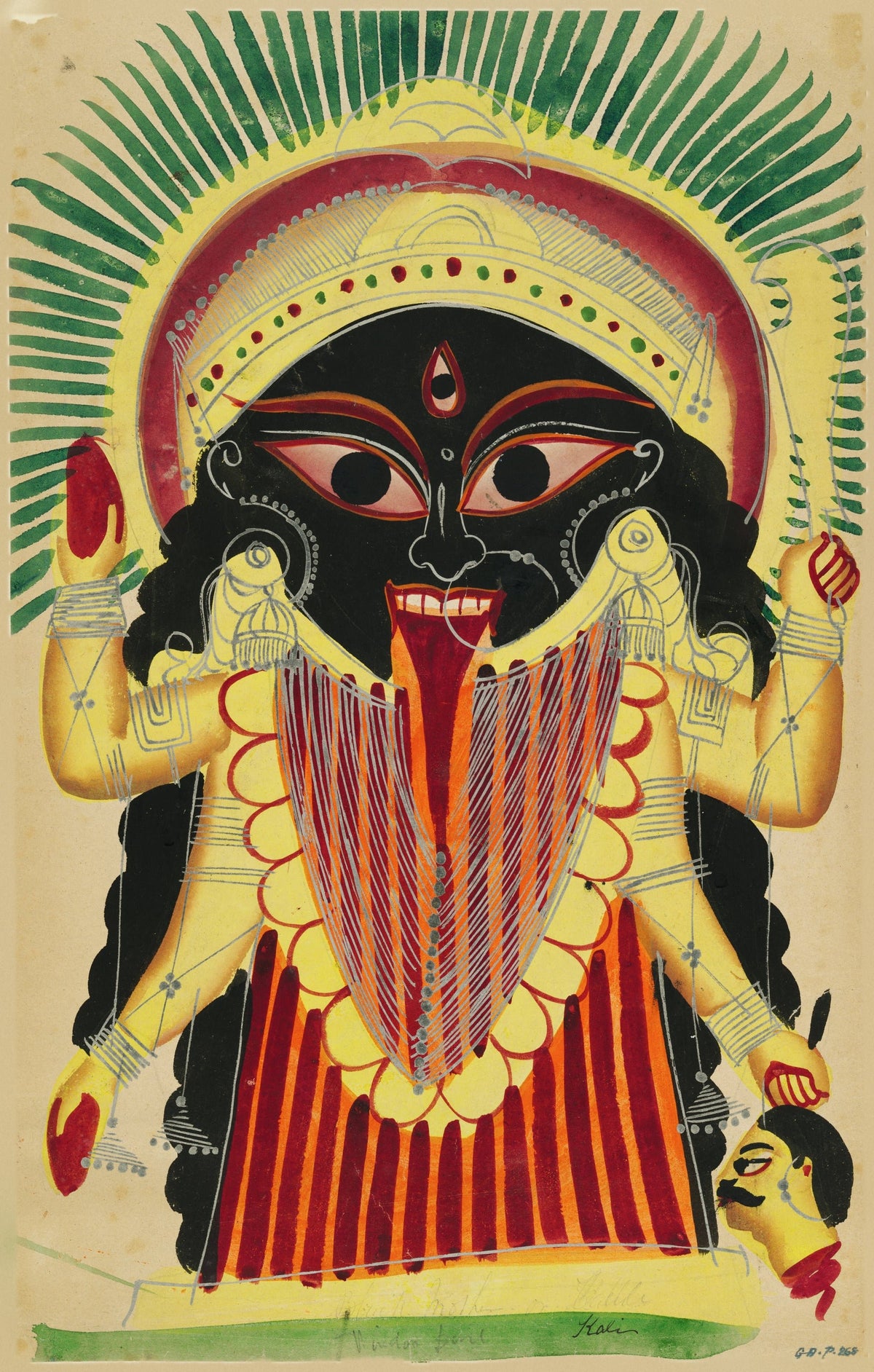
Kalighat painting was a style of watercolour painting made in 19th-century Calcutta (now Kolkata) and sold to pilgrims visiting the Kali temple at Kalighat. The painters were patuas, scroll painters from rural Bengal, chiefly Midnapore and the 24 Parganas, who moved to the city. They turned from long narrative scrolls to single images on mill-made paper, with plain, unfilled backgrounds, using imported British paints alongside traditional colours.
The style is known for broad, sweeping brush lines, bold colour and simple forms that allowed quick production. Hindu gods and scenes from the epics were the main subjects, but painters also showed fashionable city men (babus), animals and news events such as the Tarakeswar murder case of 1873. Cheap coloured lithographs undercut the trade in the early 20th century. The Victoria and Albert Museum in London holds the largest collection, about 645 works, and the style later influenced the modern painter Jamini Roy.
Kalighat painting prints: reproductions of the 19th-century Kalighat paintings made in Calcutta for temple pilgrims. The collection includes Kali Trampling Upon Shiva (1854), Skanda on his Peacock (1860), Shiva Carries the Corpse of Sati (1865), Hanuman (1880) and Annapurna and Shiva (1890).
This selection gathers the main gods of Bengal: Kali, Durga, Shiva, Krishna and Radha, Ganesha and Lakshmi, alongside scenes from the Ramayana. It also includes the secular side of Kalighat, with a babu holding a hookah, a portrait of a woman, and topical pictures such as the Mahant of Tarakeshwar in prison and Rani Lakshmi Bai of Jhansi.
The bold outlines and plain backgrounds read clearly from across a room, and suit living rooms, studies, entrance halls and prayer or meditation corners. All prints are museum-quality reproductions, available unframed or framed with low-glare acrylic glazing, with free shipping and import duties covered.