The print is colorful and pleasing to the eye. The paper is of high quality with good thickness that is great for display by itself or in a frame. A good price for the quality! Thank you!
Taylor H.
Hiroshi Yoshida — The Wetterhorn Giclee
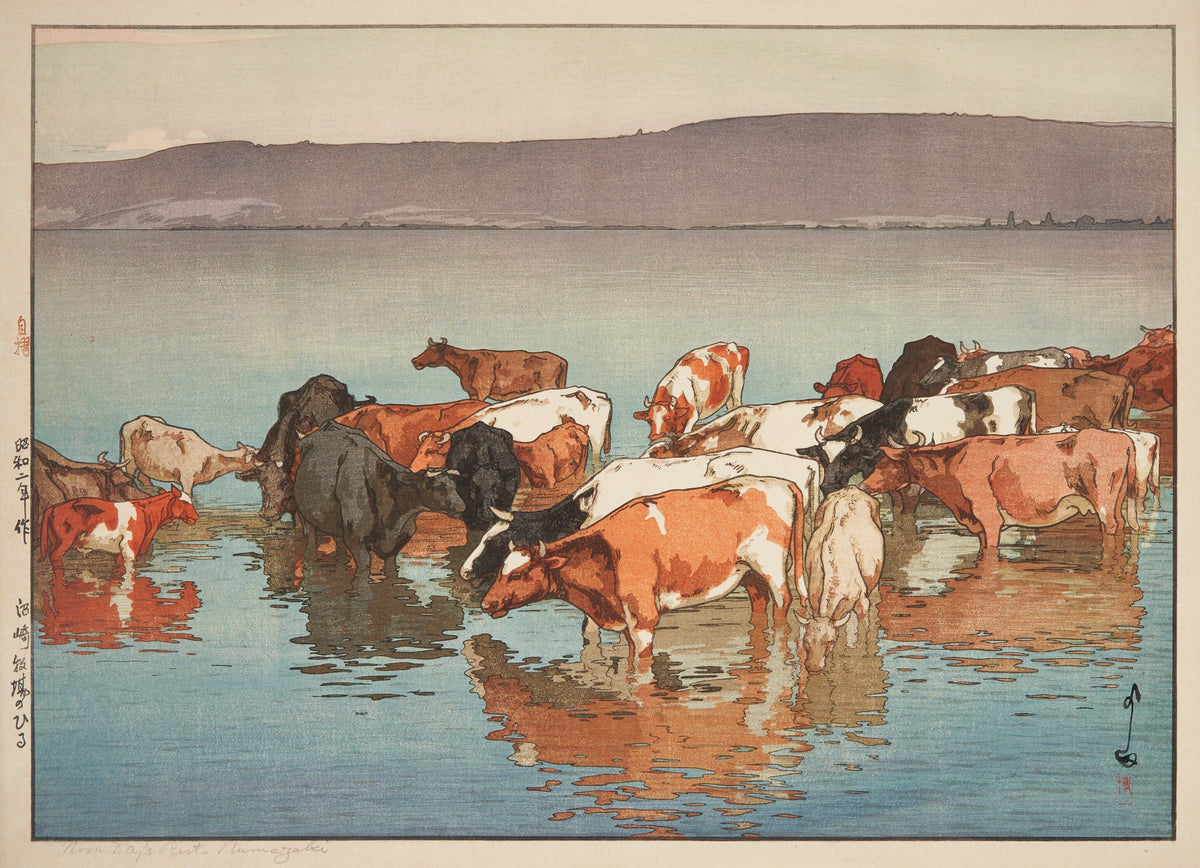


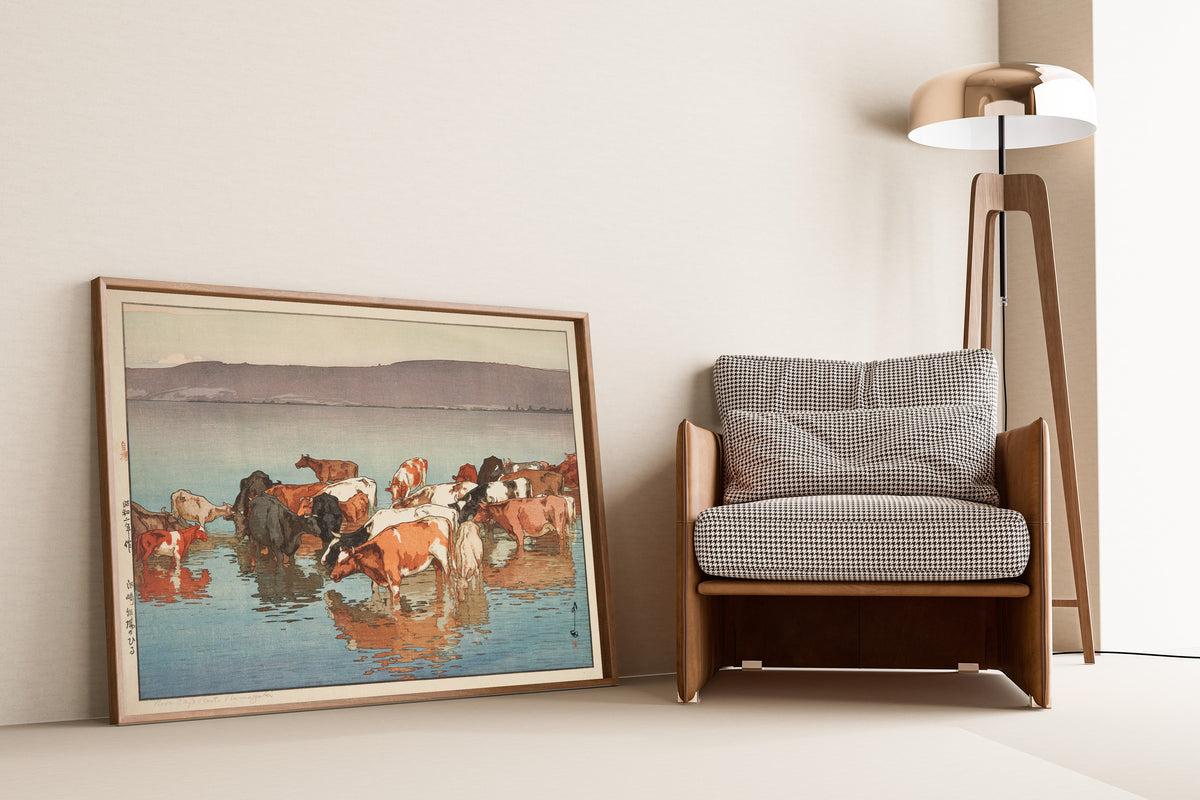
A herd stands cooling, doubled in shallow midday water
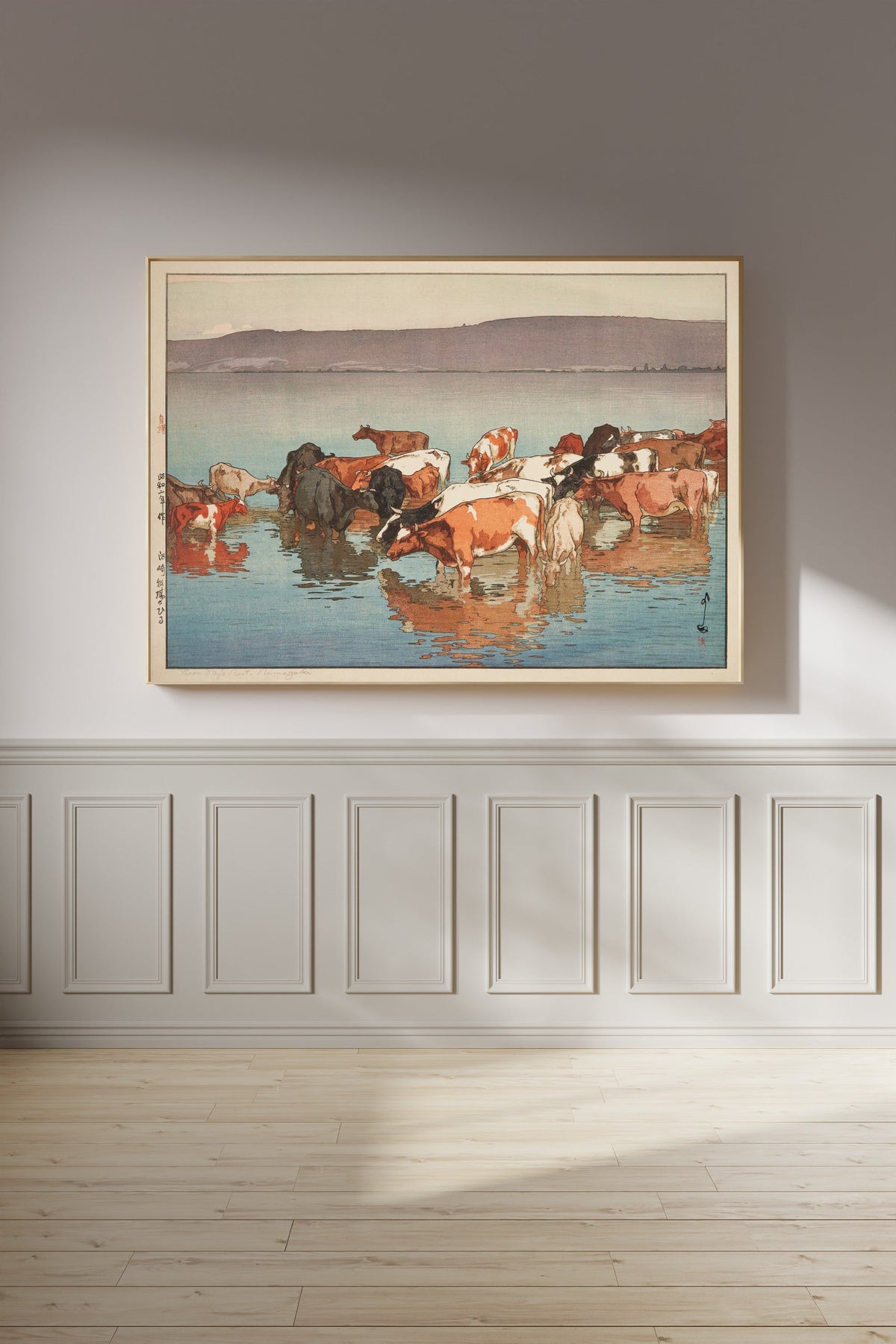
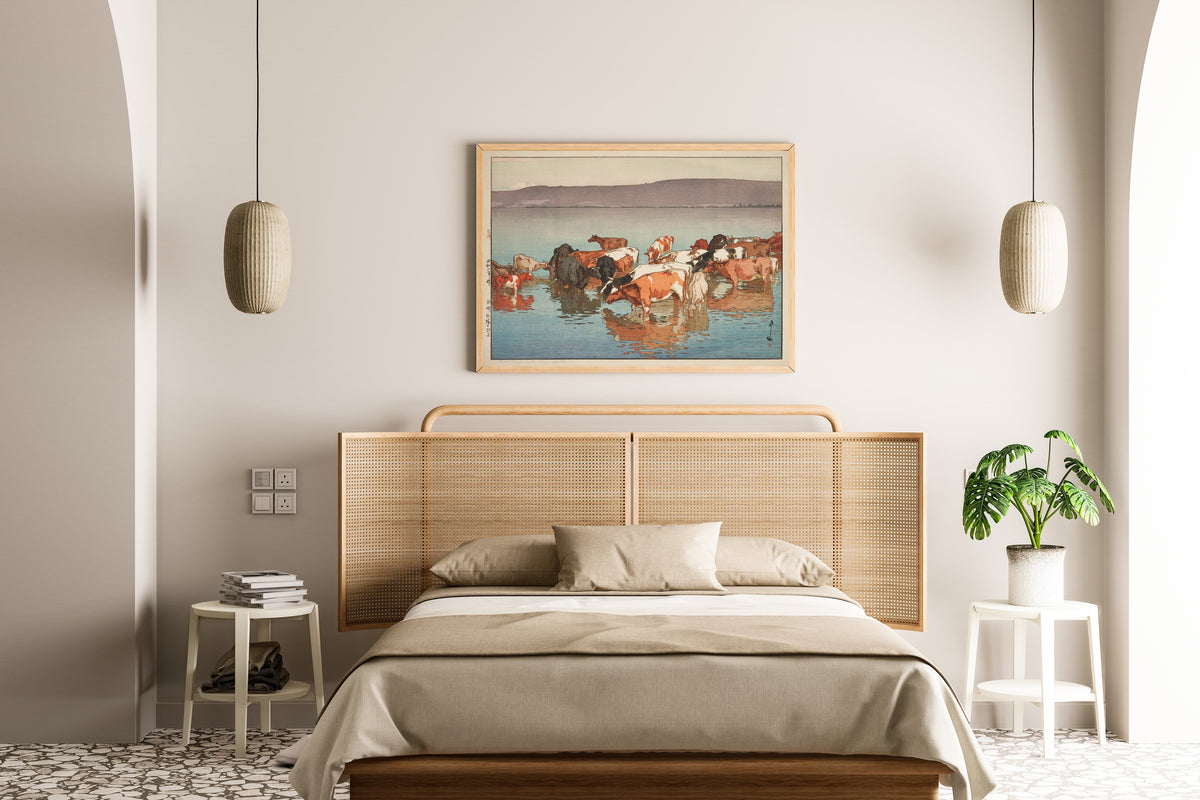
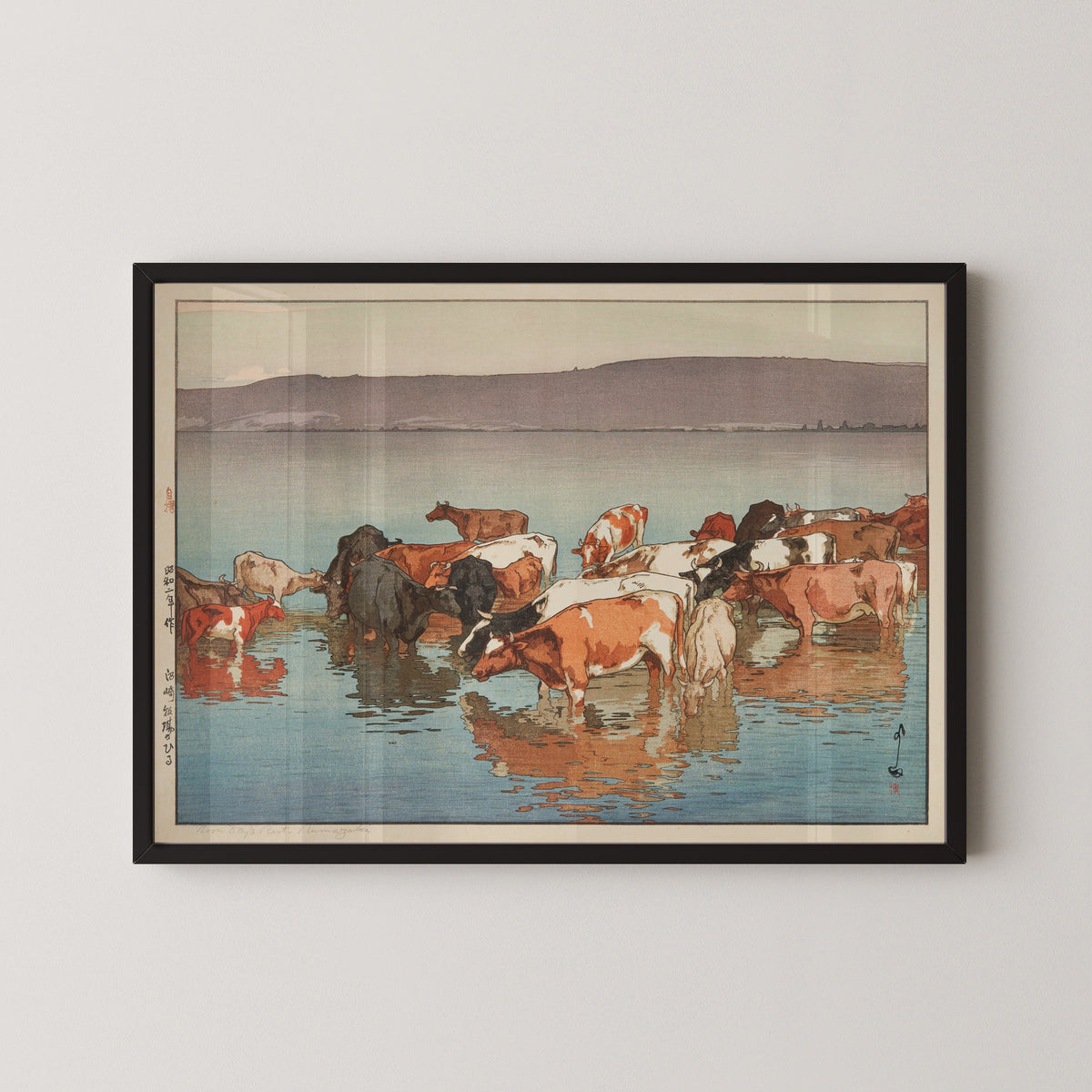
Each frame is made to order by one of our framing workshops, so the exact shade and profile may vary slightly from the photos.
A herd of cattle stands in shallow water at midday, cooling. Yoshida prints them in warm russet, chestnut, black and broken white, packed together across the right two-thirds of the sheet, each animal carrying its own soft reflection in the pale water below. A long low headland runs across the background in flat mauve-grey, with the faintest suggestion of buildings at its far end, and the sky above is a plain warm cream. Nothing else competes — the herd and its reflection are the subject.
Hiroshi Yoshida (1876–1950) came to woodblock printing from Western-style oil and watercolour painting, and the meeting of the two defines his work. He travelled widely before turning to prints — the Alps, the Rockies, India, Egypt and China all enter his subjects — and in 1925 set up his own studio, supervising the carving and printing himself instead of working through a publisher. That control let him print one set of blocks in several colour states, so the same view could be given morning, evening or mist. His prints are held by the Metropolitan Museum of Art, the British Museum and the Art Institute of Chicago.
Printed as a museum-grade giclée on Hahnemühle fine art paper using 12-ink archival pigment printing. Available handframed in solid wood with low-reflection glazing, or unframed. Ships worldwide with free delivery to 30+ countries.
Choose options
The print is colorful and pleasing to the eye. The paper is of high quality with good thickness that is great for display by itself or in a frame. A good price for the quality! Thank you!
Taylor H.
Hiroshi Yoshida — The Wetterhorn GicleeVrty nice print at very fair pricepoint. Comms with seller around shipping delay went smooth. Overall I'm very happy!
Y. L.
Kaoru Kawano — Girl with Yellow BirdThe print is so exquisite that I literally gasped upon opening it! The quality of color and paper is museum quality and well worth the purchase price This vendor is now at the top of my list in ordering future art prints!
Imani S.
Rudolf Ernst — The MusicianFrom the collection
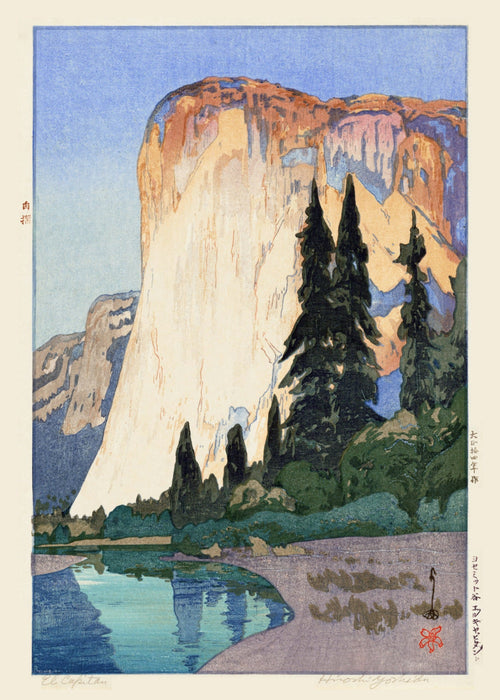 Hiroshi YoshidaEl Capitan
From $165 CAD
Hiroshi YoshidaEl Capitan
From $165 CAD
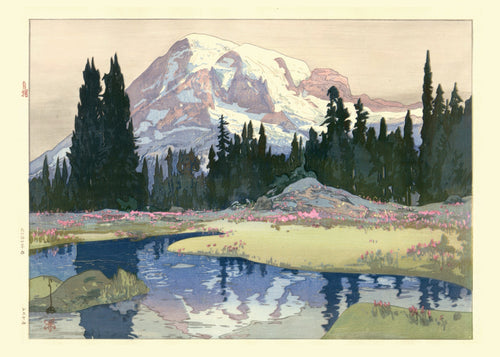 Hiroshi YoshidaMount Rainier, Washington State
From $165 CAD
Hiroshi YoshidaMount Rainier, Washington State
From $165 CAD
 Hiroshi YoshidaKomagatake Mountain
From $165 CAD
Hiroshi YoshidaKomagatake Mountain
From $165 CAD
 Hiroshi YoshidaFuji from Lake Kawaguchi
From $165 CAD
Hiroshi YoshidaFuji from Lake Kawaguchi
From $165 CAD
 Hiroshi YoshidaItoigawa Morning
From $165 CAD
Hiroshi YoshidaItoigawa Morning
From $165 CAD
 Hiroshi YoshidaAncient Athens
From $165 CAD
Hiroshi YoshidaAncient Athens
From $165 CAD
 Hiroshi YoshidaThe Grand Canyon
From $165 CAD
Hiroshi YoshidaThe Grand Canyon
From $165 CAD
 Hiroshi YoshidaKurobe River
From $165 CAD
Hiroshi YoshidaKurobe River
From $165 CAD
NO VAGUE “MUSEUM QUALITY” CLAIMS. JUST THE SPECIFICATIONS.
Fine-art quality should be something you can verify. Here is exactly what goes into a 9 Art Prints reproduction.
A lot of art-print sellers describe their work as “museum quality” without telling you what that actually means. We prefer specifications. Our fine-art reproductions are produced using professional giclée printing on genuine Hahnemühle fine-art papers, selected to suit the artwork. We work from high-resolution source material and prepare each image specifically for print, with close attention to colour, detail and tonal range.
Our principal fine-art papers include Hahnemühle German Etching 310gsm and Hahnemühle Photo Rag 308gsm. German Etching has a substantial, lightly textured surface that works exceptionally well for paintings and richly coloured works. Photo Rag has a smoother cotton surface suited to graphic, modernist and highly detailed imagery.
Paper is selected according to the character of the artwork rather than using one generic stock for everything. Framed prints are printed on 200gsm matte fine-art paper.
Giclée is a professional fine-art printing process using archival pigment inks and high-resolution inkjet technology. Unlike inexpensive poster printing, it is designed to reproduce subtle colour gradations, fine detail and tonal depth.
It is a reproduction method widely used by artists, photographers, galleries and professional fine-art printers.
We would rather tell you what we use and let you decide. Genuine Hahnemühle fine-art paper, professional giclée printing, archival pigment inks and carefully prepared high-resolution artwork are measurable things.
“Museum quality” by itself is not.
Large-format reproduction depends heavily on the quality of the underlying artwork file. We source the highest-resolution material available and prepare each image for print rather than simply enlarging a small internet image.
That is especially important with historic paintings, posters and archival works where source quality varies considerably.
No. A poster can be printed cheaply on lightweight commercial paper. Our fine-art editions are intended as permanent pieces of wall art, produced on heavyweight fine-art substrates with professional printing methods.
For graphic or poster artwork, the image may be a historic poster; the object you receive is still a fine-art reproduction.
Our framed pieces use solid-wood frames, handmade to order, with low-reflection glazing. There is no mount: the print fills the frame. Framed prints are printed on 200gsm matte fine-art paper.
The goal is the same as with the print itself: use materials appropriate for a piece you intend to keep.
Screens emit light; paper reflects it, so no physical print can be identical to every monitor or phone display. We prepare our artwork specifically for print and aim for accurate colour, contrast and tonal reproduction.
The texture and surface of fine-art paper also give the finished piece a physical depth that cannot be shown completely on a screen.
“I am not just impressed; I'm blown away by the quality and overall experience. The wood grain in the frame is beautiful and the print quality is superb.”
Top Quality Store on Google
Read the reviewsArchival fine art paper · 12-ink giclée · Solid wood frames · Free shipping