Artist · 4 prints
Abbott Handerson Thayer Prints
About Abbott Handerson Thayer
Abbott Handerson Thayer was an American painter and naturalist, born in Boston in 1849. He studied at the Brooklyn Art School and the National Academy of Design, then spent four years in Paris at the École des Beaux-Arts under Henri Lehmann and Jean-Léon Gérôme. In 1901 he settled permanently in Dublin, New Hampshire, where he had grown up, and he died there in 1921.
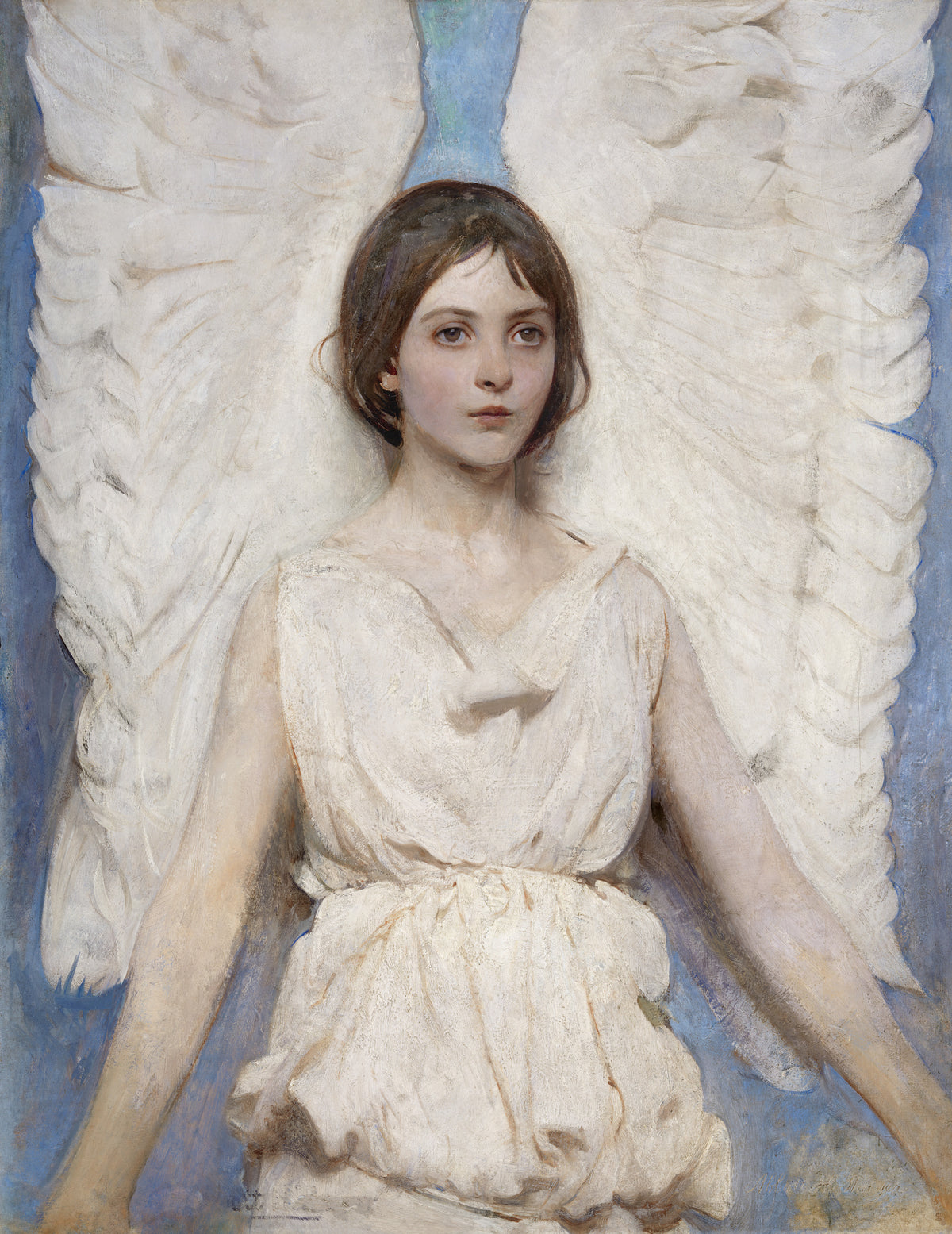
Thayer was admired for idealised figures of young women, often shown as angels or virgins with great wings. His Angel (1887), a portrait of his eleven-year-old daughter Mary, is at the Smithsonian American Art Museum, and the Freer Gallery of Art, founded by his patron Charles Lang Freer, holds several of his finest works. A keen observer of birds, Thayer also studied how animals hide. He noticed that many have pale undersides that cancel out shadow, an effect now called countershading or "Thayer's law," and the book Concealing-Coloration in the Animal Kingdom (1909), written with his son Gerald, helped shape military camouflage.
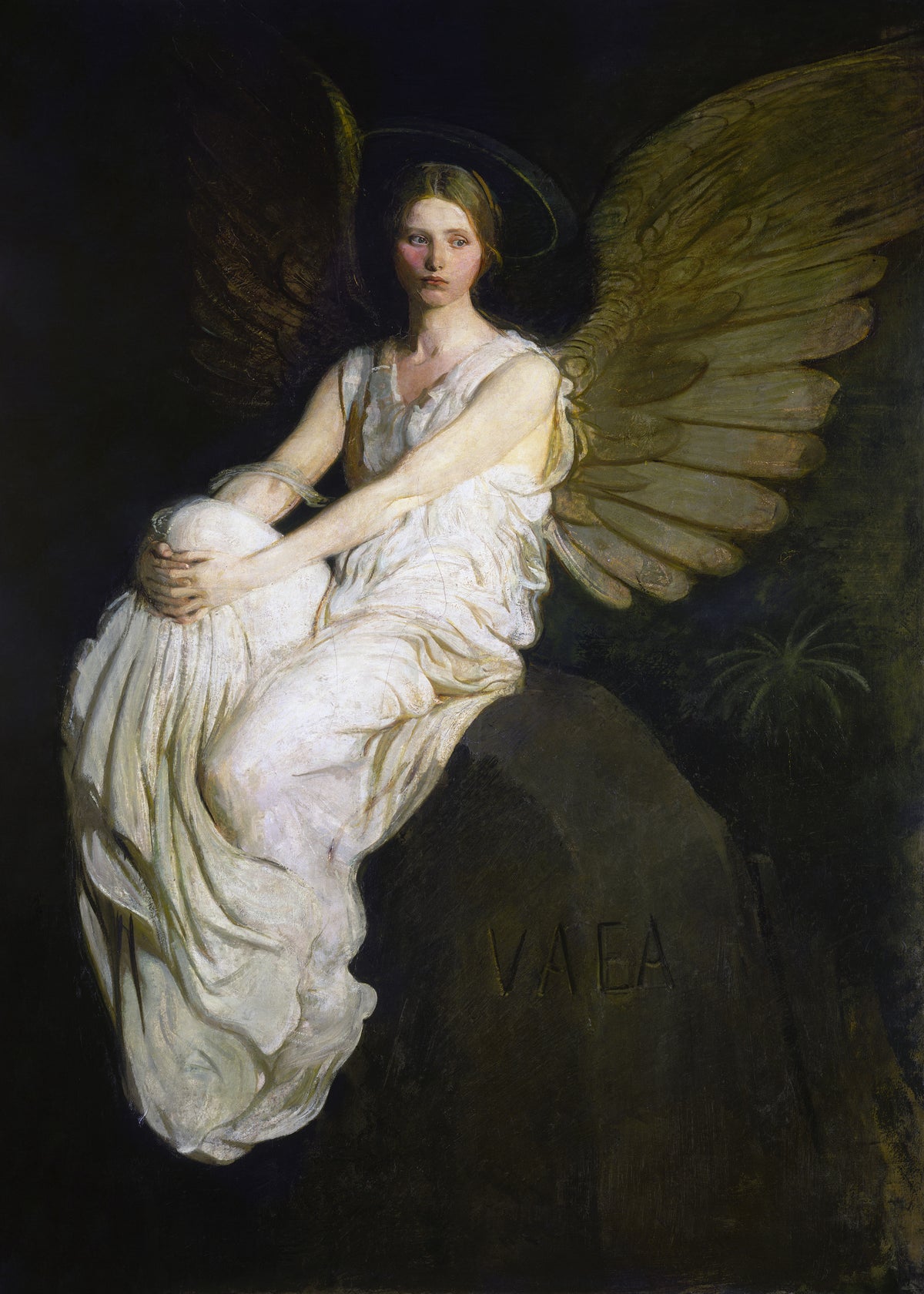
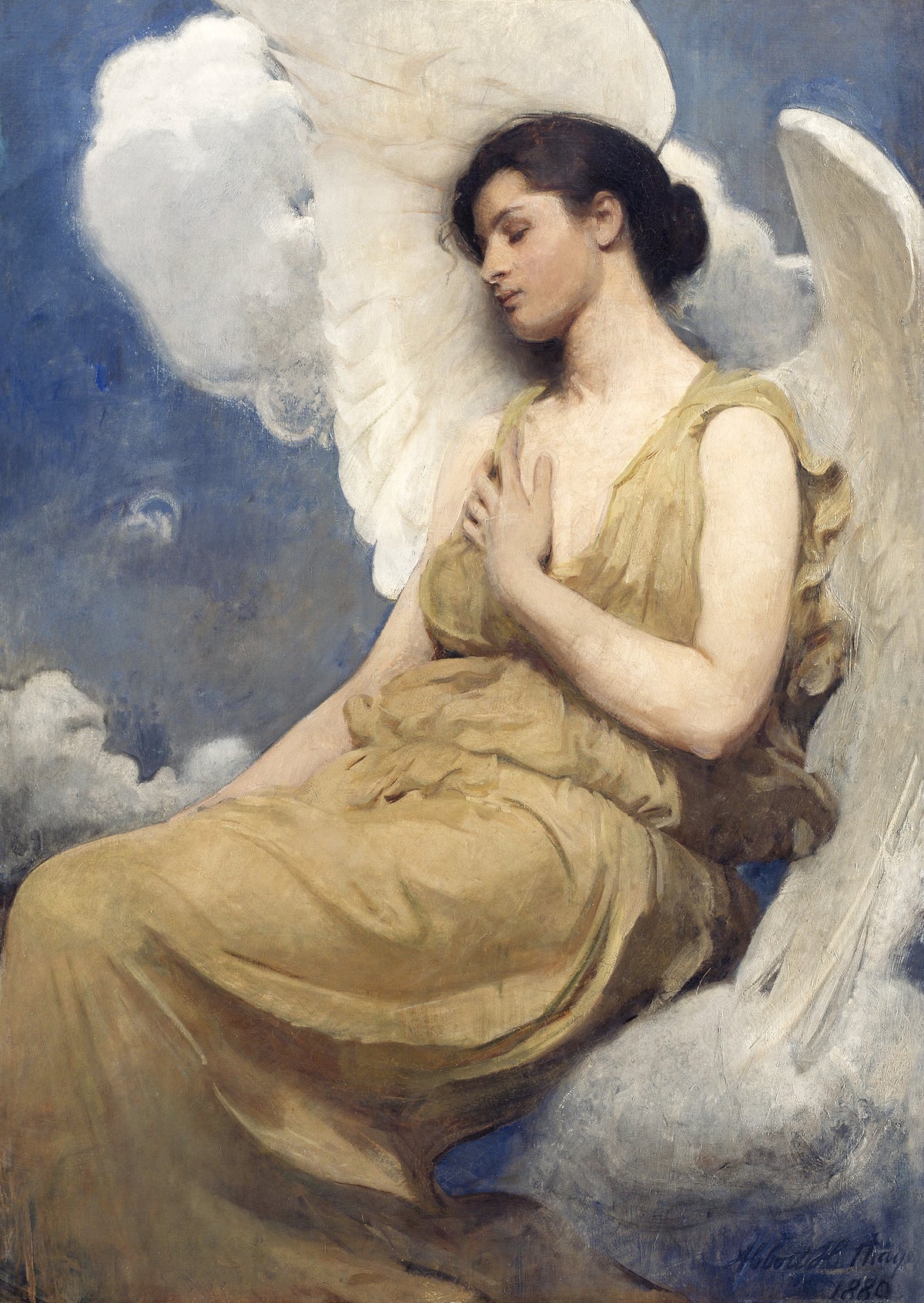
Abbott Handerson Thayer prints: reproductions of paintings by the American painter Abbott Handerson Thayer, best known for his winged figures of young women. The collection includes Angel, Winged Figure (1889) and Stevenson Memorial (1903).
This selection focuses on Thayer's angel paintings. Each shows a young woman in white with large wings, set against a plain or softly clouded background. Stevenson Memorial was painted in honour of the writer Robert Louis Stevenson. The palette is pale and restrained, mostly whites and soft greys, and the figures are painted with broad brushwork.
The pale, quiet palette suits bedrooms, nurseries, reading rooms and hallways, and the upright formats fit narrow walls and spaces beside a window or door. All prints are museum-quality reproductions, available unframed or framed with acrylic glazing, with free shipping and import duties covered.