Artist · 5 prints
Akseli Gallen-Kallela Prints
About Akseli Gallen-Kallela
Akseli Gallen-Kallela (1865–1931) was a Finnish painter, born Axel Gallén in Pori into a Swedish-speaking family; he took the Finnish form of his name in 1907. He trained in Helsinki and then in Paris in the 1880s, at the Académie Julian and the studio of Fernand Cormon. He died in Stockholm in 1931 while travelling home from a lecture in Copenhagen.
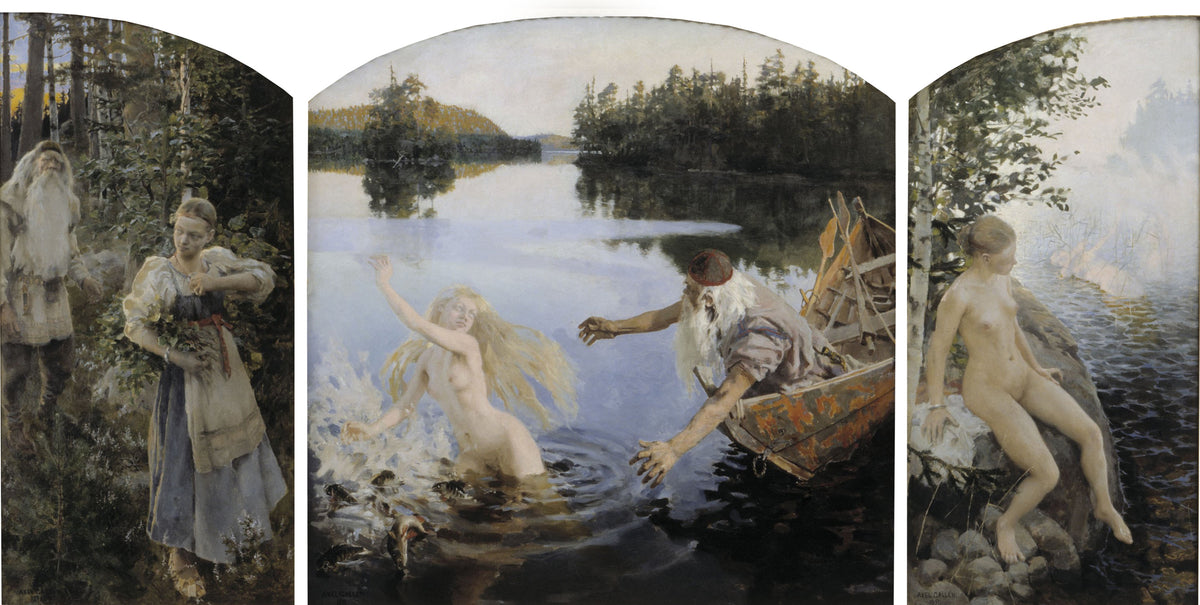
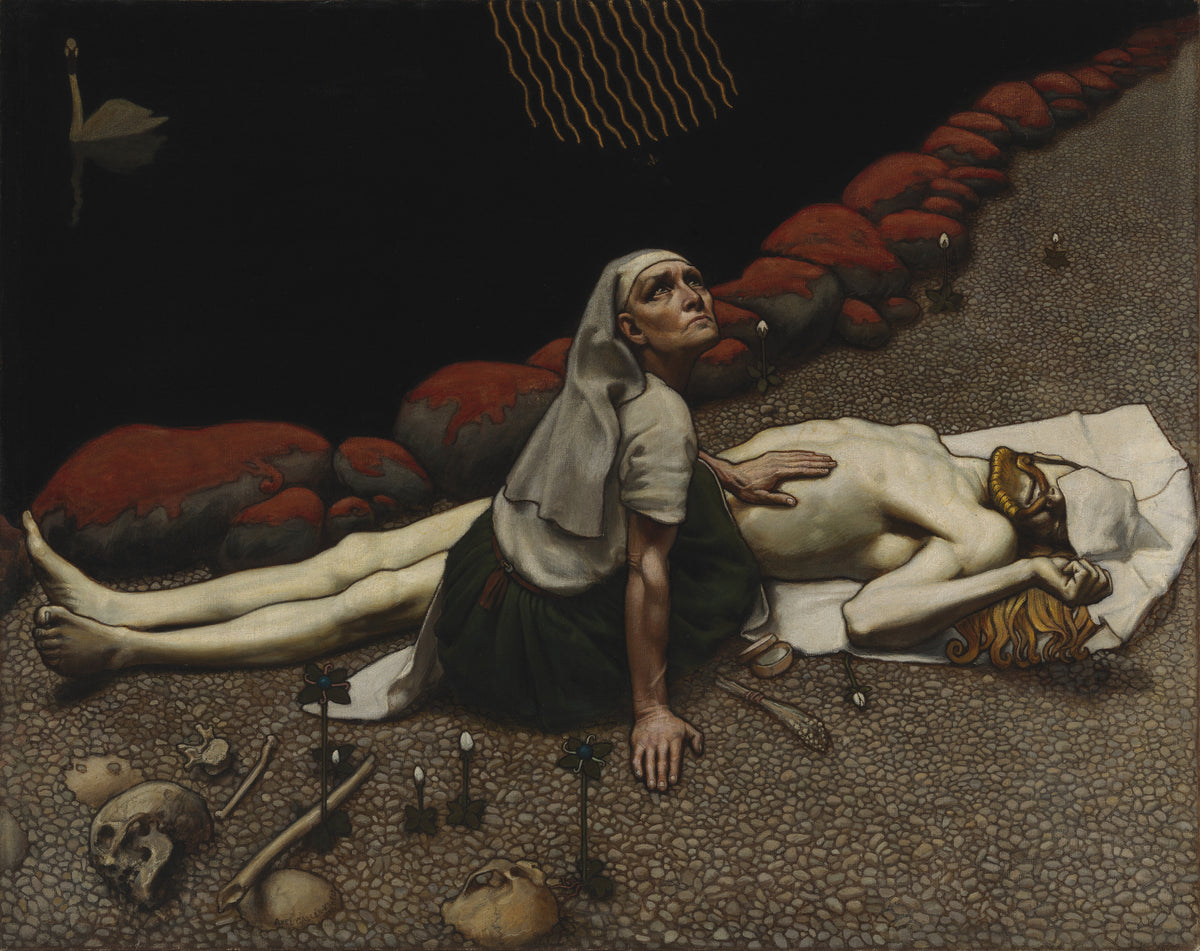
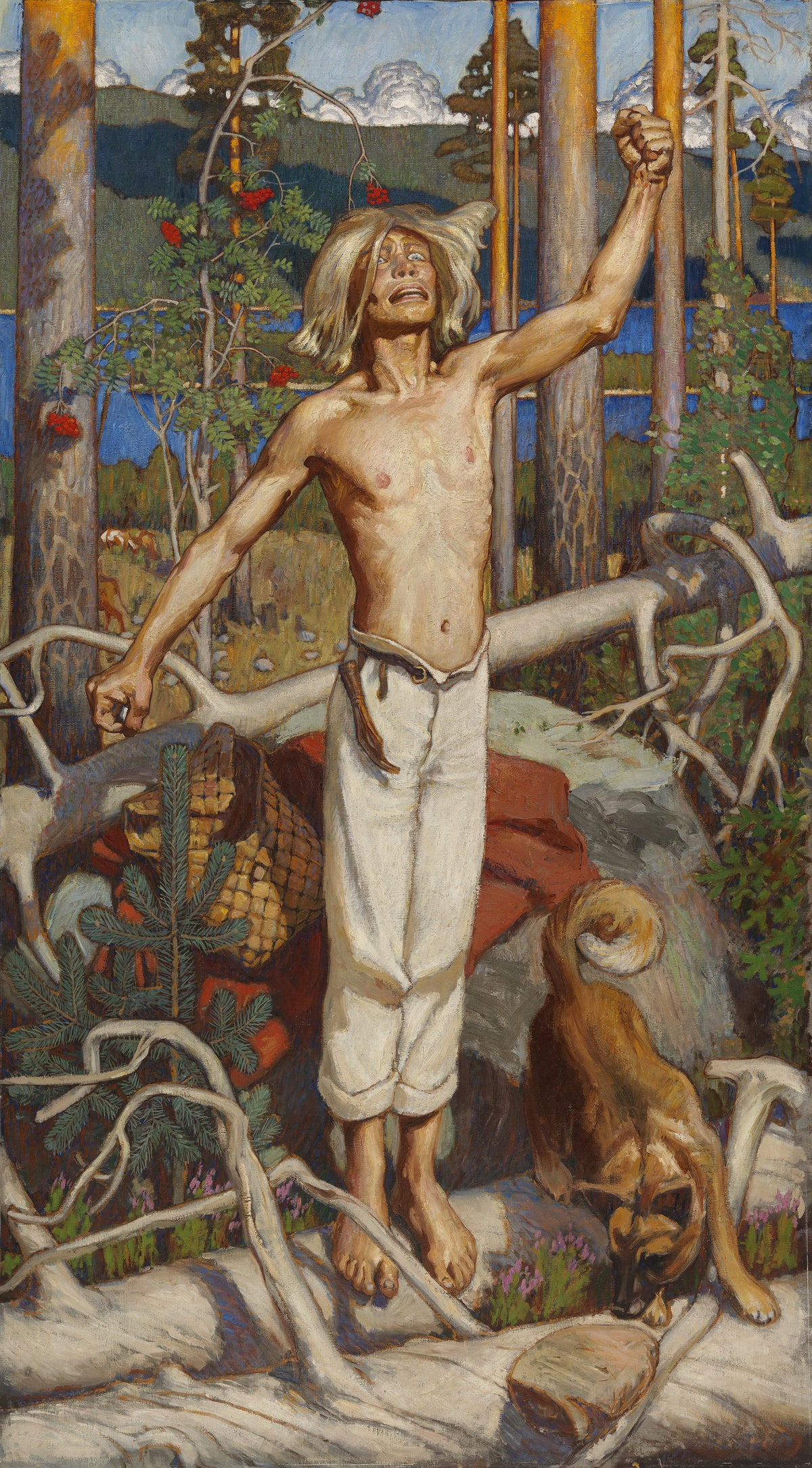
Akseli Gallen-Kallela is best known for bringing the Kalevala, Finland's national epic poem, to life in paint. Works such as the Aino Triptych (1891), The Defence of the Sampo (1896), Lemminkäinen's Mother (1897) and Kullervo's Curse (1899) gave the old heroes and myths a vivid visual form at a time when Finns were asserting their own national identity. He painted frescoes for the Finnish Pavilion at the 1900 Paris World's Fair, and also made posters, prints and designs. He built his own homes and studios, the log house Kalela by Lake Ruovesi and Tarvaspää near Helsinki, which is now the Gallen-Kallela Museum.
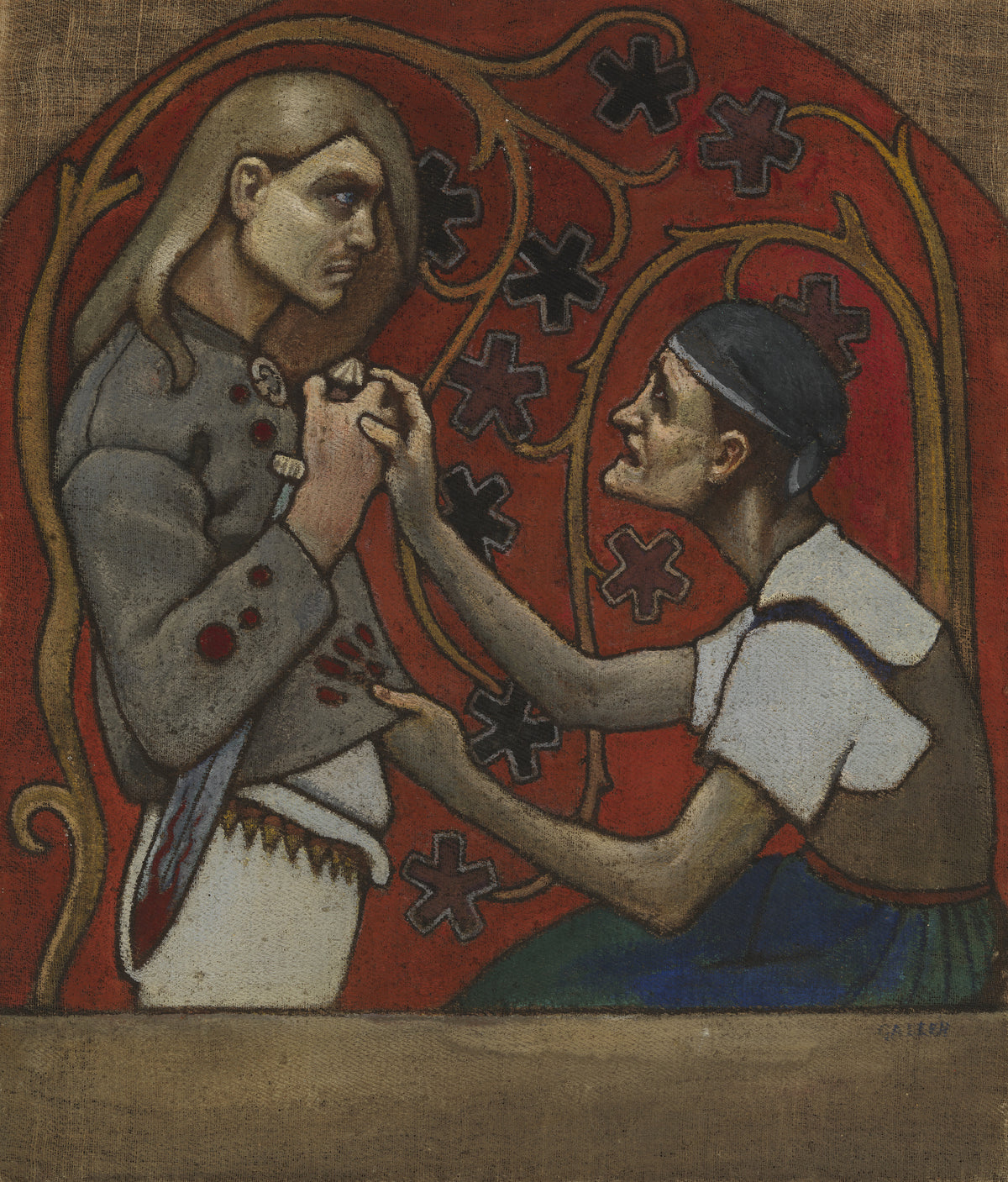
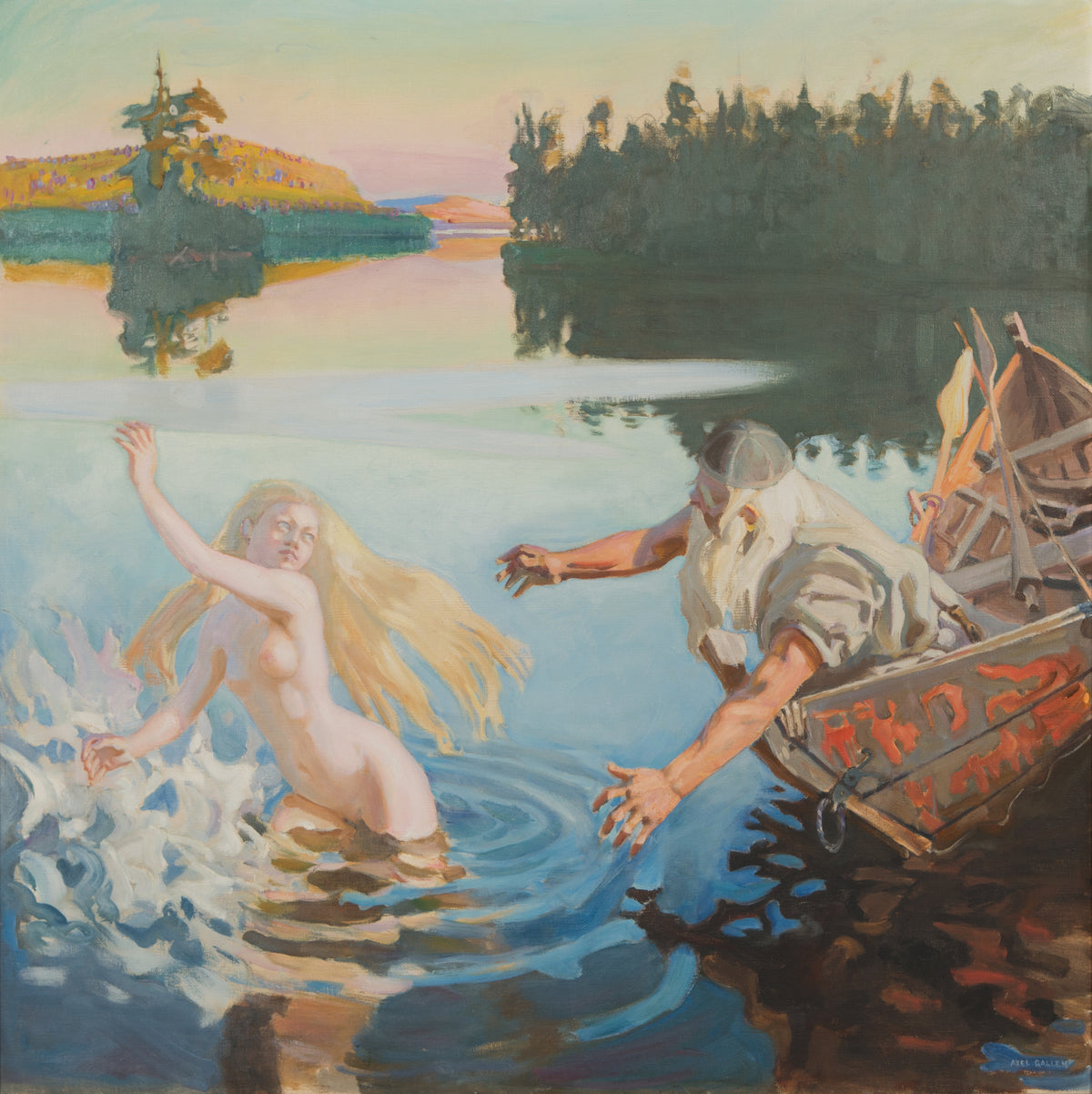
Akseli Gallen-Kallela prints: reproductions of paintings by the Finnish painter Akseli Gallen-Kallela based on the Kalevala, Finland's national epic. The collection includes Lemminkäinen's Mother (1897), The Fratricide (1897), Kullervo Cursing (1899) and Aino (1916).
This selection concentrates on the tragic episodes of the Kalevala: a mother bringing her son back from the river of death, the curse of Kullervo, a killing between brothers, and the story of Aino. The paintings use strong outlines, flat areas of colour and dark, earthy tones lit by bright accents, often set in Finnish forest landscapes.
The strong colours and dramatic subjects suit living rooms, libraries and studies, and the larger works hold a wall above a sofa or fireplace on their own. All prints are museum-quality reproductions, available unframed or framed with acrylic glazing, with free shipping and import duties covered.