Artist · 7 prints
Edward Hopper Prints
About Edward Hopper
Edward Hopper was an American painter, born on 22 July 1882 in Nyack, New York. He trained first as an illustrator and then studied painting at the New York School of Art, where Robert Henri taught him from 1901 to 1906. He made three trips to Europe, each centred on Paris, between 1906 and 1910. In 1924 he married the painter Josephine Nivison. He lived and worked in New York City, where he died on 15 May 1967.
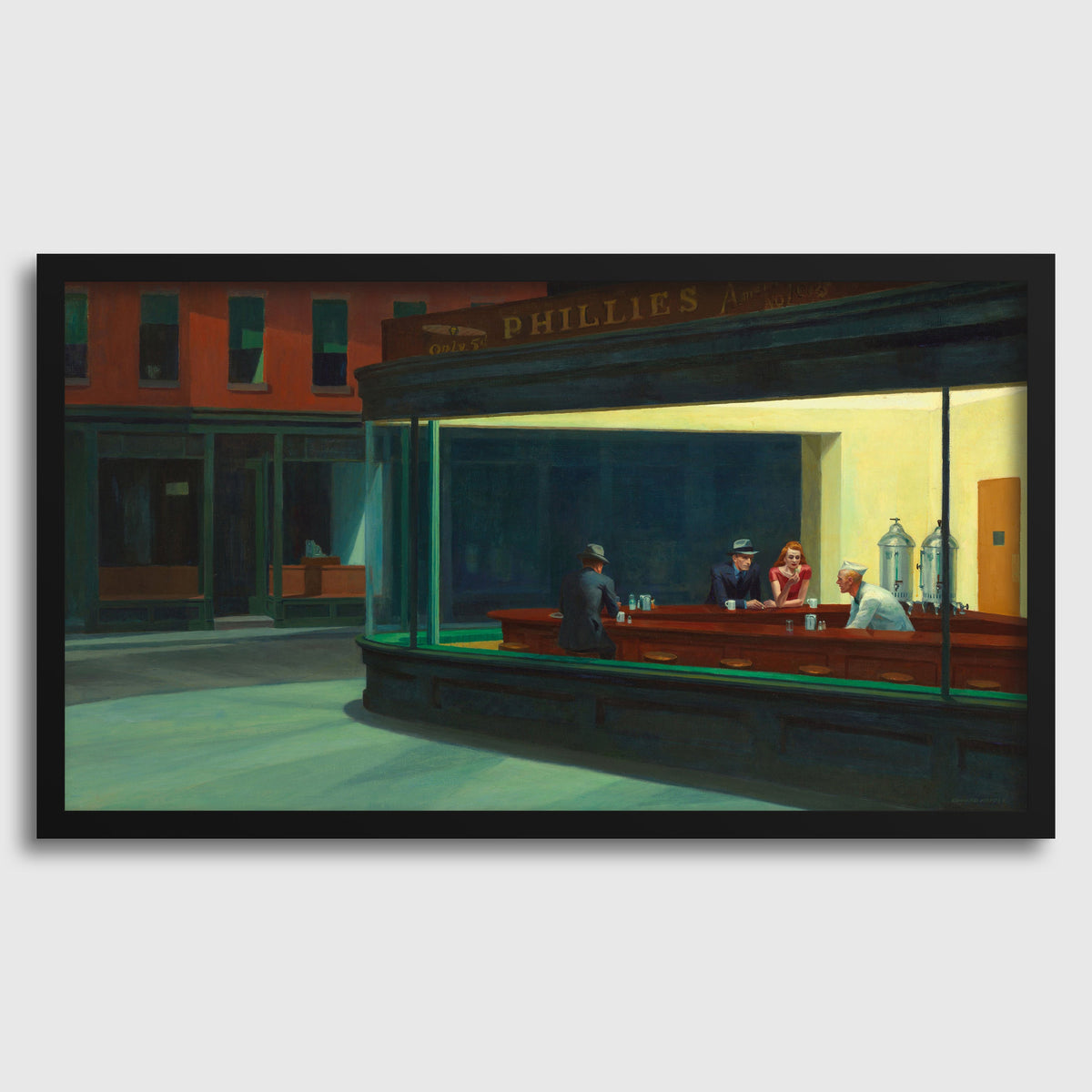
Hopper painted ordinary American places: empty streets, diners, offices, hotel rooms and lone houses, lit by harsh sun or cold electric light. His figures often seem alone even in company, and his pictures carry a quiet sense of loneliness. Key works include House by the Railroad (1925), at the Museum of Modern Art, Early Sunday Morning (1930), at the Whitney Museum, and Nighthawks (1942), at the Art Institute of Chicago. Edward Hopper's wife left the couple's collection to the Whitney.
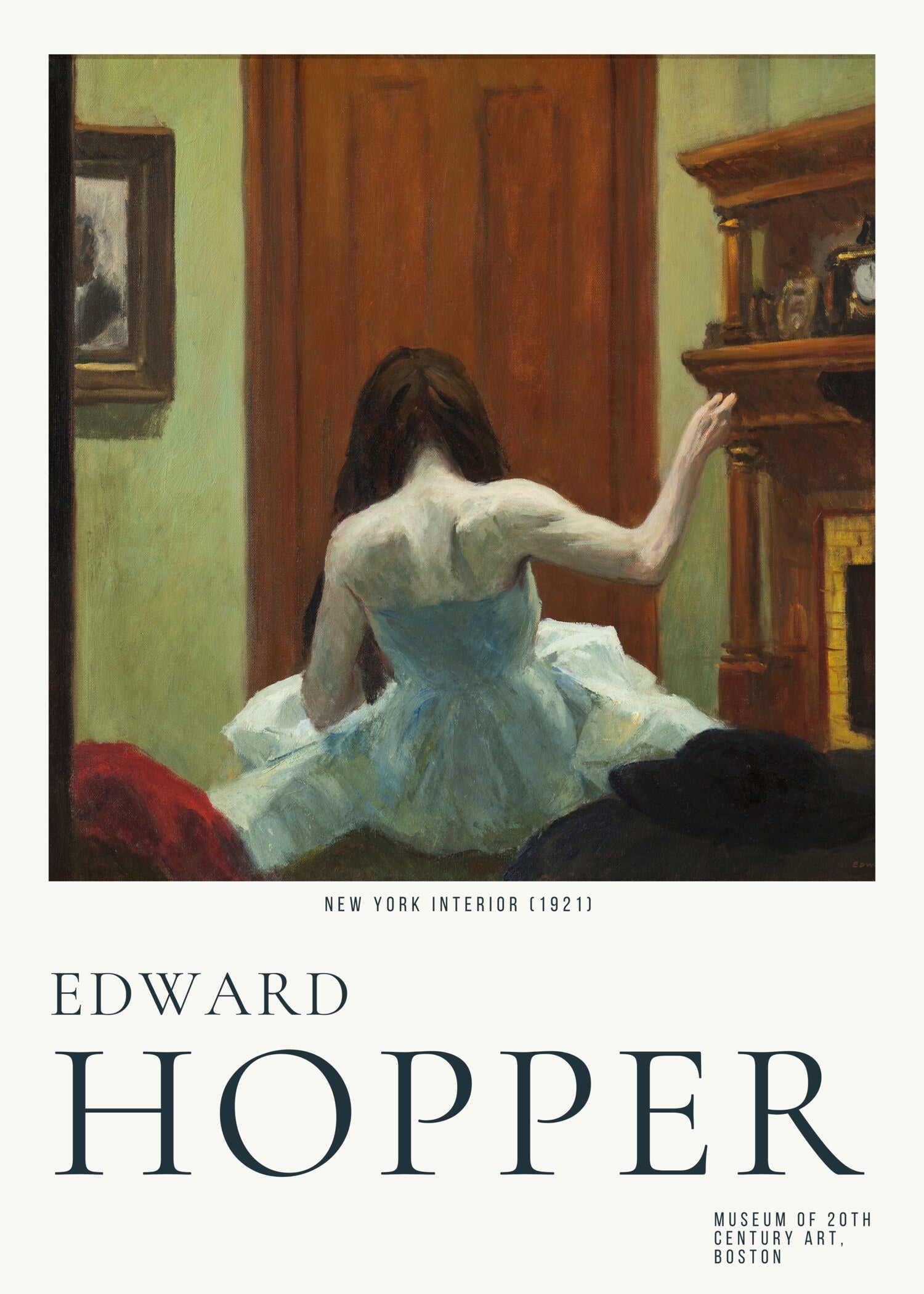
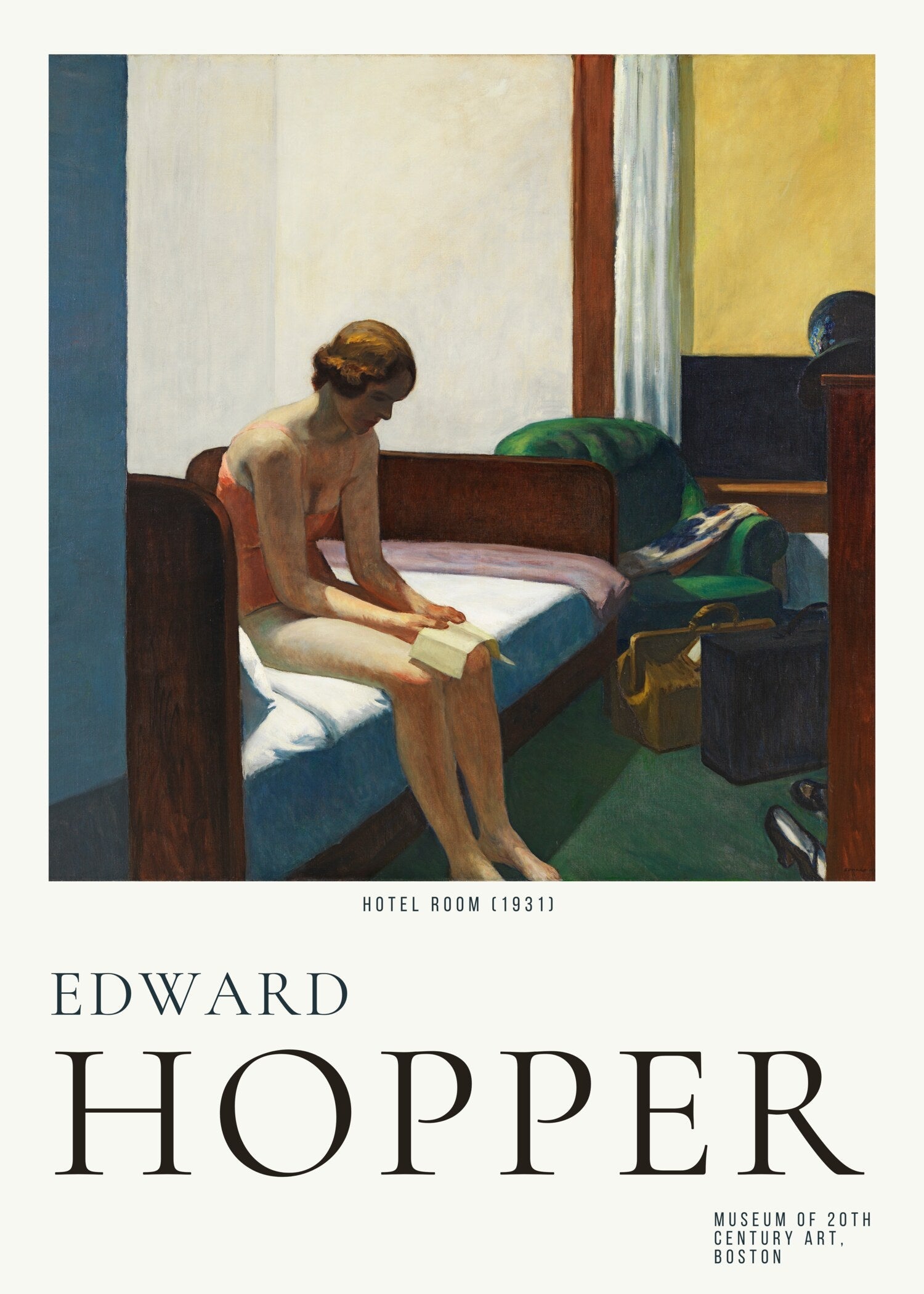
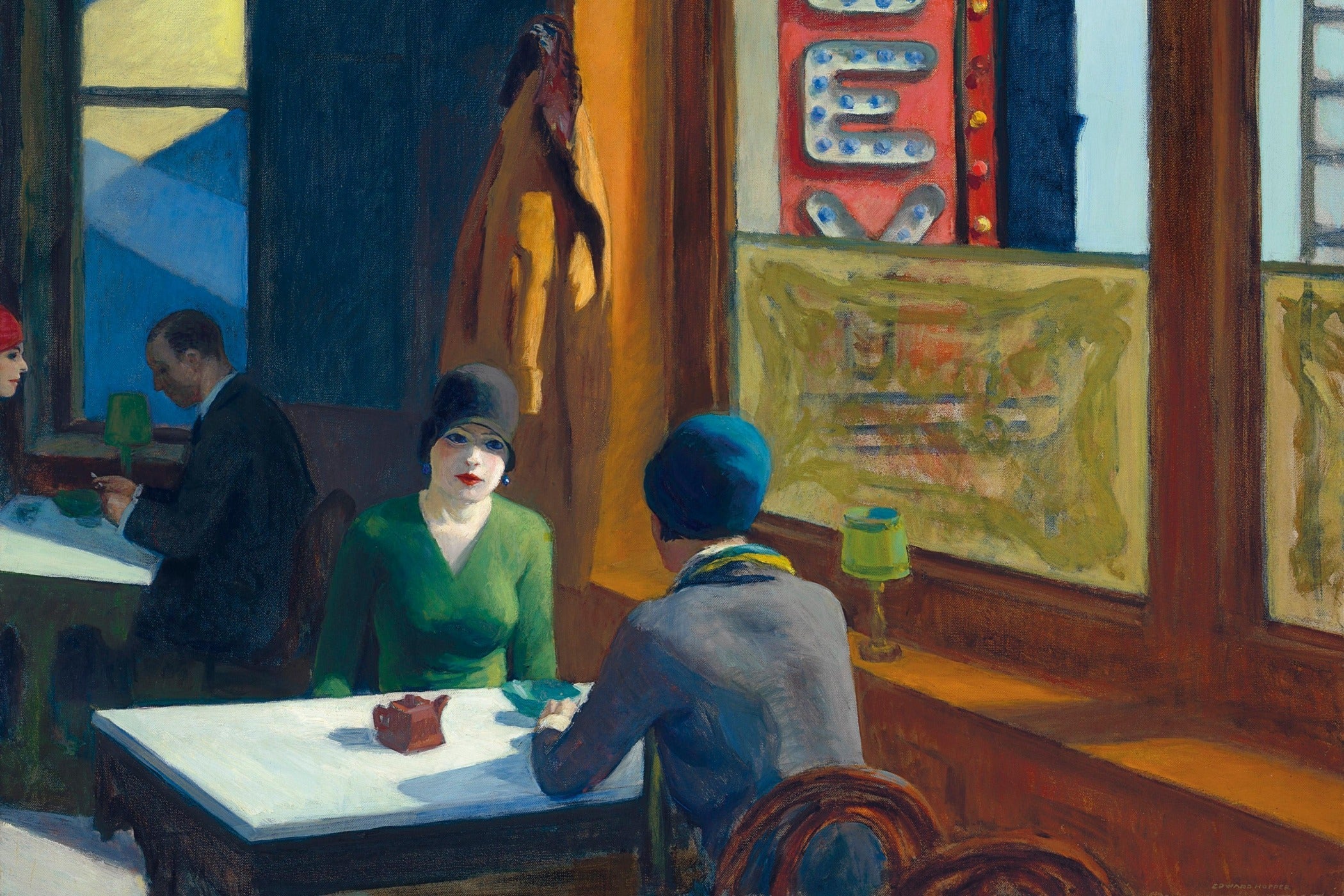
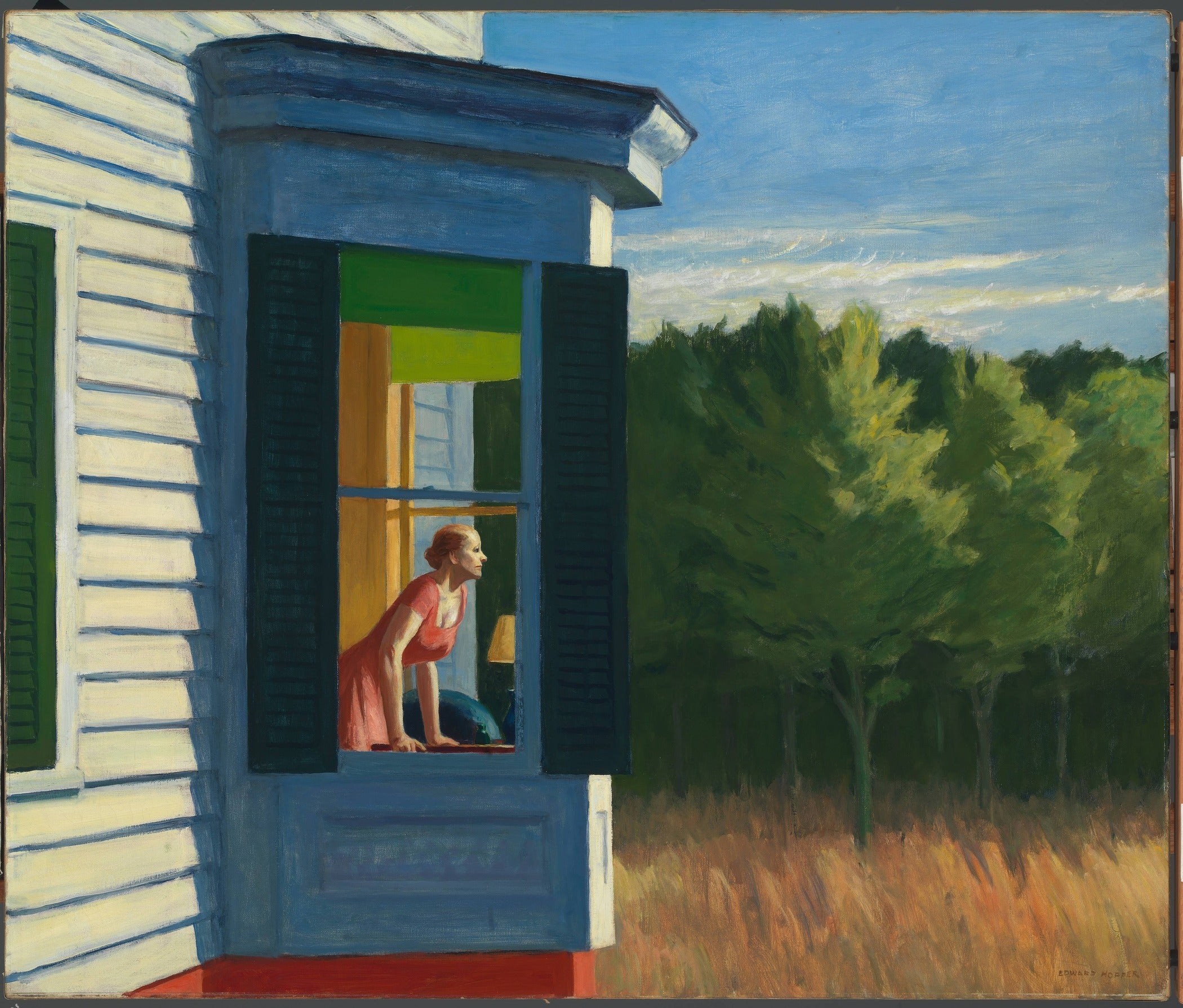
Edward Hopper prints: reproductions of paintings by the American realist Edward Hopper, made between 1921 and 1950. The collection includes New York Interior (1921), Chop Suey (1929), Hotel Room (1931), Nighthawks (1942) and Cape Cod Morning (1950).
This selection concentrates on Hopper's interiors and figures: a woman sewing in a New York room, two women at a restaurant table, a traveller reading in a hotel room, late-night diners and a woman looking out of a Cape Cod window. The paintings share flat planes of light and colour and a quiet, still mood. Several are also offered as matched pairs.
The calm compositions suit living rooms, bedrooms, home offices and kitchens, and the paired prints work well side by side above a sofa or bed. All prints are museum-quality reproductions, available unframed or framed with low-glare acrylic glazing, with free shipping and import duties covered.