Artist · 5 prints
Émile Prisse d'Avennes Prints
About Émile Prisse d'Avennes
Émile Prisse d'Avennes (1807–1879) was a French archaeologist, architect and writer, born in Avesnes-sur-Helpe in northern France. He went to Egypt in 1827 and was employed as a civil engineer by its ruler, Muhammad Ali. He learned Arabic, lived as an Egyptian under the name Idriss Effendi, and spent many years recording the country's monuments. He died in Paris in 1879.
Prisse d'Avennes is remembered for his large illustrated books on the art of Egypt. L'Art arabe d'après les monuments du Kaire (Arab Art from the Monuments of Cairo), published in three volumes up to 1877, records the buildings and ornament of Islamic Cairo. His Histoire de l'art égyptien (1878) does the same for ancient Egypt. A set of L'Art arabe is in the collection of the Metropolitan Museum of Art.
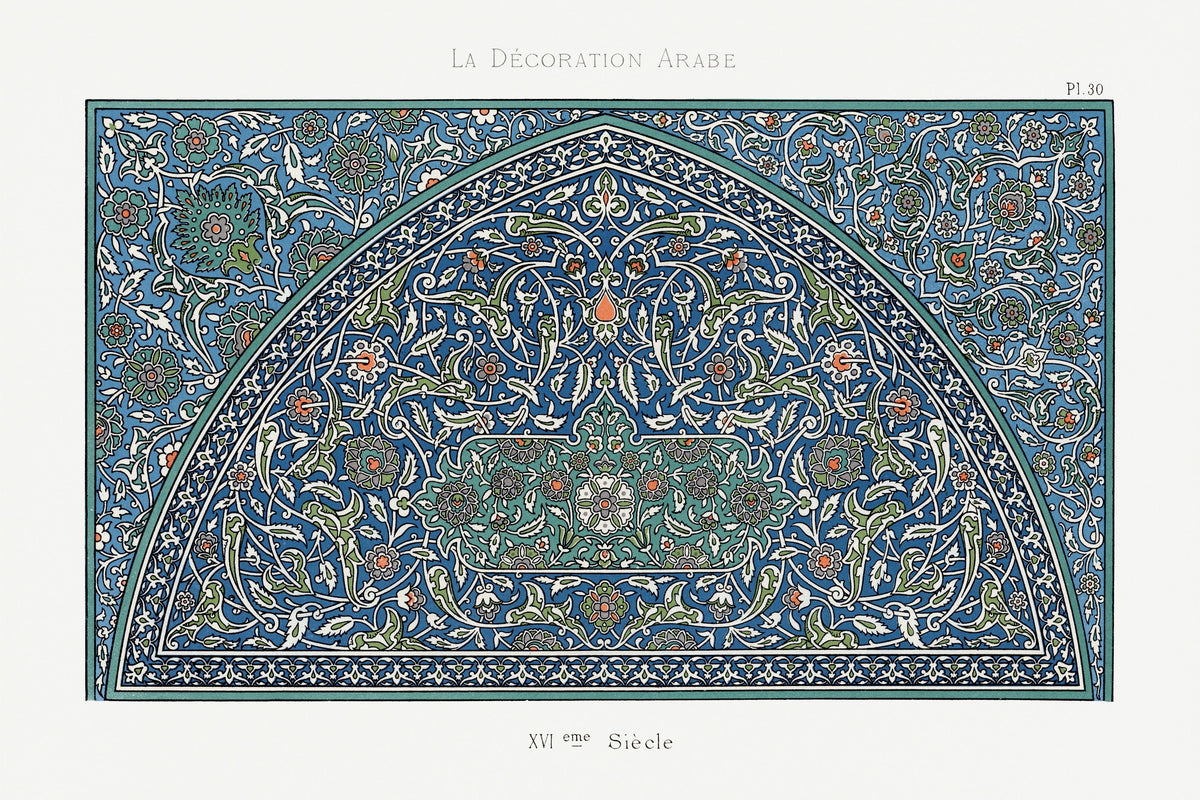
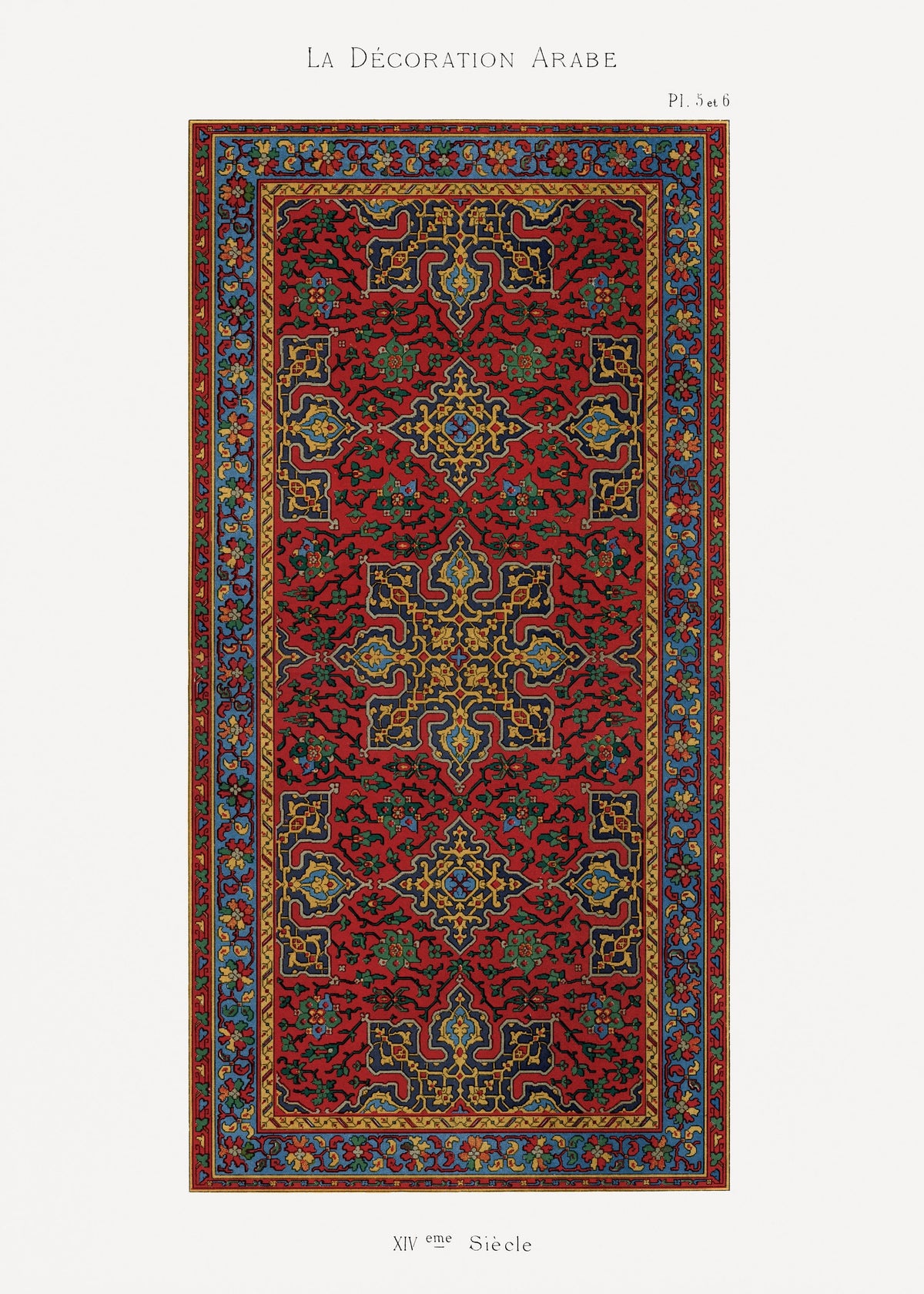
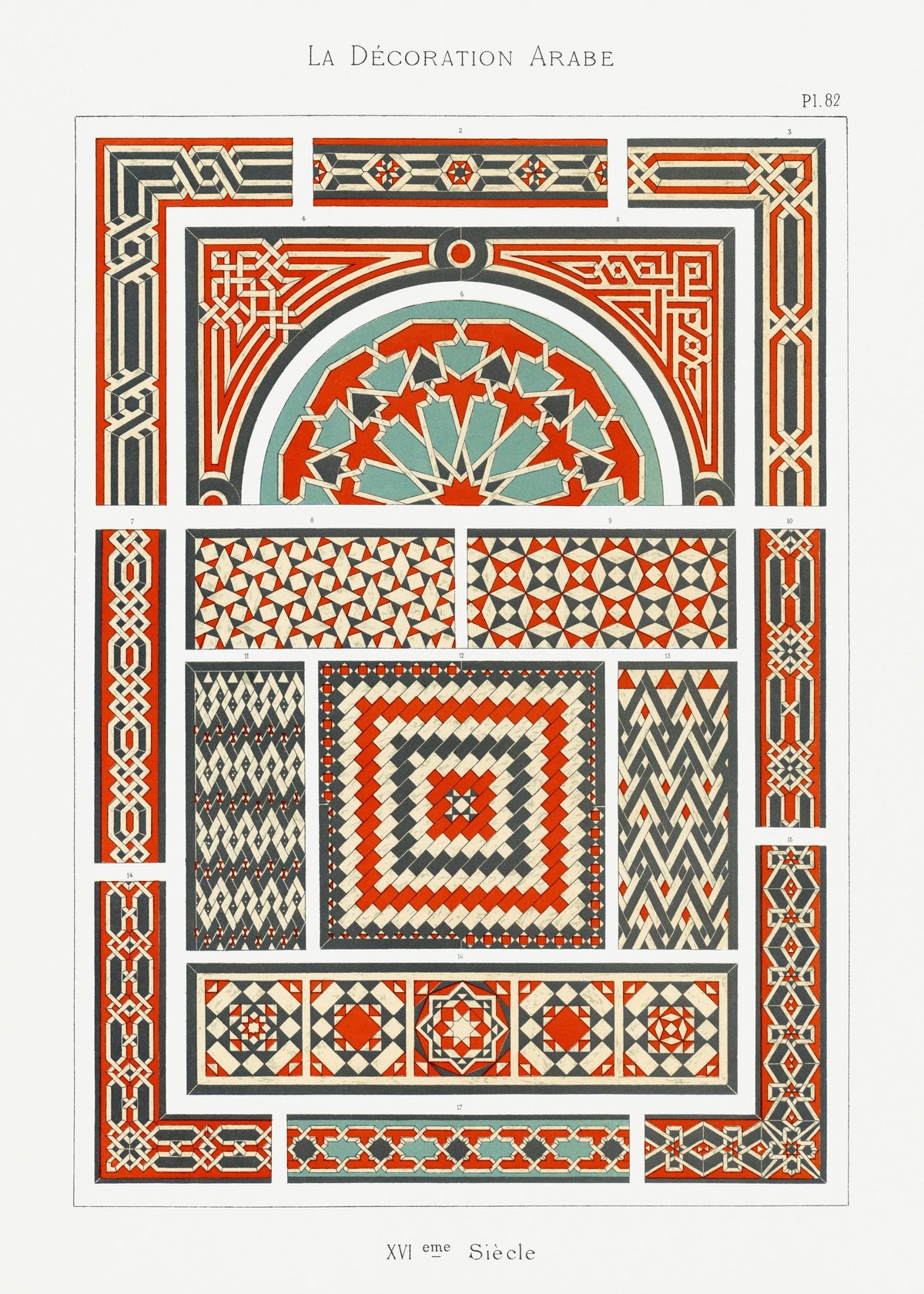
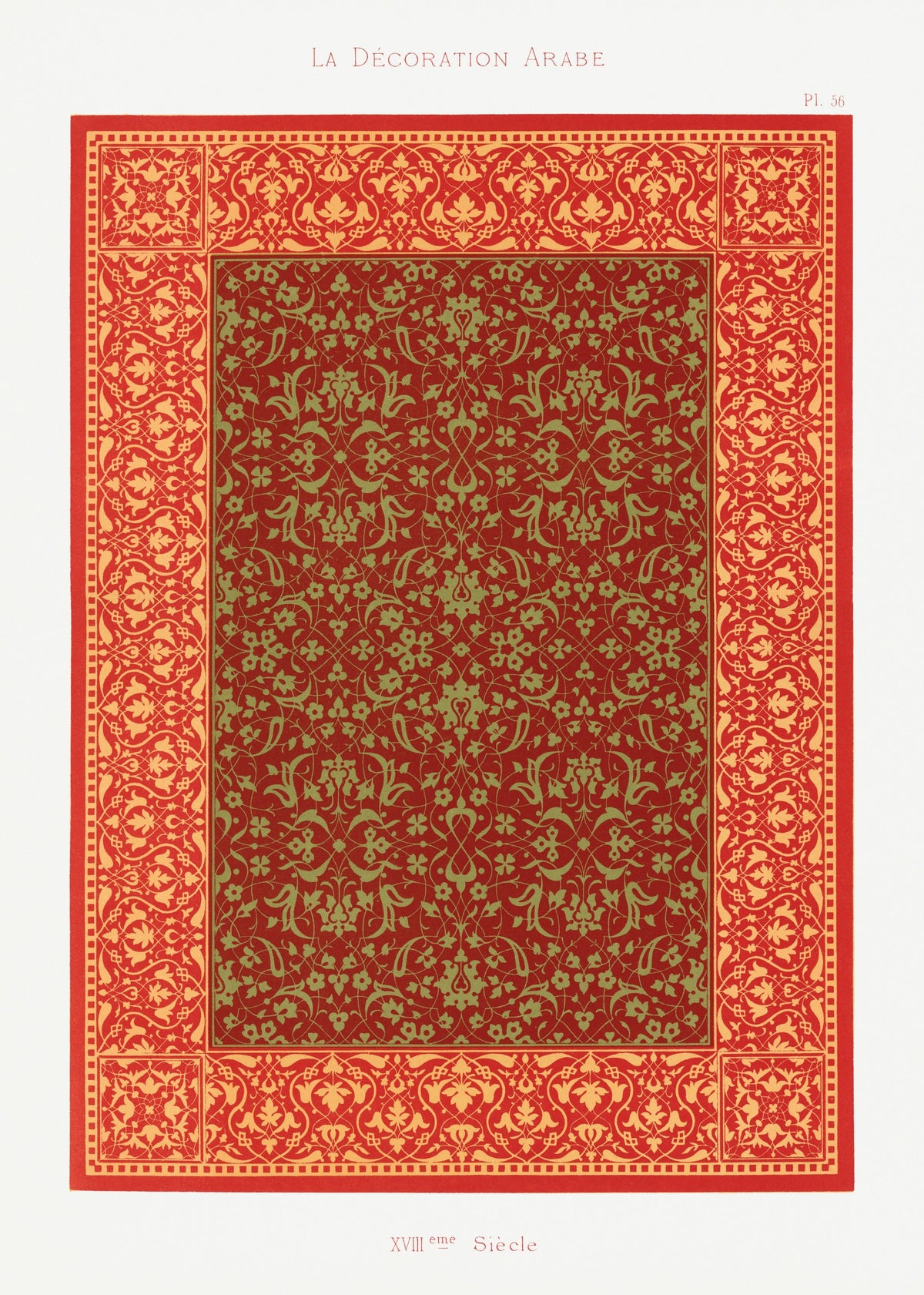
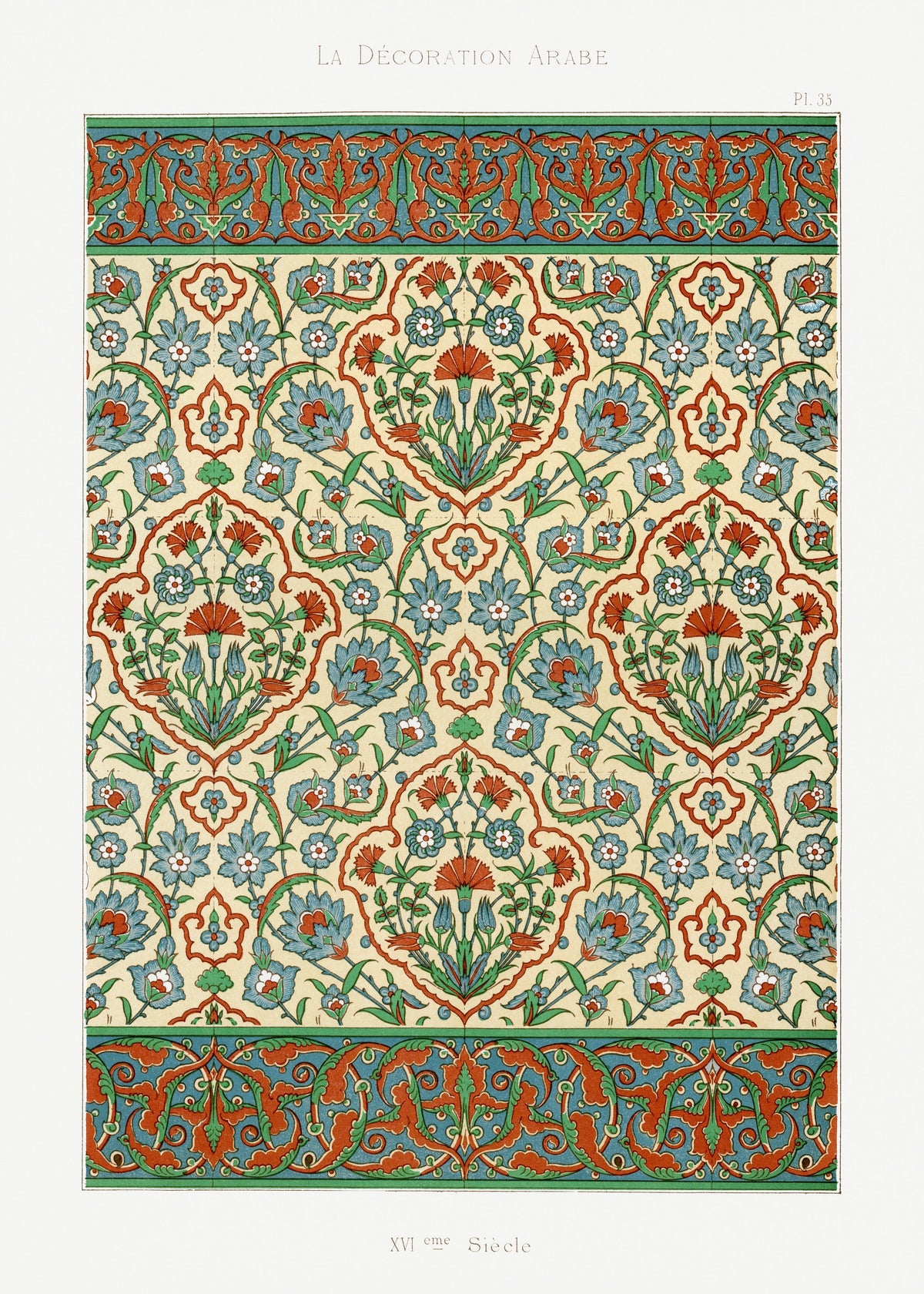
Émile Prisse d'Avennes prints: reproductions of Islamic ornament plates from La Décoration arabe, based on the drawings the French archaeologist Émile Prisse d'Avennes made of the buildings of Cairo. The collection includes Plates 5 and 6, Plate 30, Plate 35, Plate 56 and Plate 82.
This selection concentrates on the geometric and floral patterns of Islamic Cairo: interlacing stars and polygons, arabesques, borders and tile designs, recorded from mosques, houses and manuscripts. Each plate is a flat, symmetrical design printed in strong colour.
The geometric patterns suit entryways, dining rooms, studies and libraries, and several plates hung together in a grid work well on a large wall. All prints are museum-quality reproductions, available unframed or framed with acrylic glazing, with free shipping and import duties covered.