Skip to content
4.9/5 From 210 Reviews
500+ Cities Served Internationally
Free Shipping Worldwide
Testimonials

Cart

Your cart is empty

Artist · 59 prints

Francisco de Goya Prints

About Francisco de Goya

Francisco de Goya (1746–1828) was a Spanish painter and printmaker, born on 30 March 1746 in Fuendetodos, near Saragossa. He trained with José Luzán in Saragossa and Francisco Bayeu in Madrid and settled in Madrid by 1775. He became a painter to King Charles III in 1786 and First Painter to Charles IV in 1799. A severe illness in 1792 left him deaf. In 1824 he went into exile in Bordeaux, France, where he died on 16 April 1828.

Goya painted royal and society portraits and designs for the royal tapestry works, but also some of the darkest images in European art. He lived through the Peninsular War, Napoleon's invasion of Spain, and recorded its cruelty in the etching series The Disasters of War (1810–14) and in the painting The Third of May 1808 (1814). His clothed and nude Majas hang in the Prado in Madrid. Late in life he covered the walls of his own house with the brooding images now known as the Black Paintings.

Francisco de Goya prints: reproductions of paintings and etchings by the Spanish painter and printmaker Francisco de Goya, made between 1783 and about 1820. The collection includes The Third of May 1808 (1814), Saturn Devouring His Son (1820), The Sleep of Reason Produces Monsters (1799), The Marquesa de Pontejos (1786) and The Forge (1815).

A large part of this selection is black-and-white etchings, from Los Caprichos (1799), with its witches, goblins and satire, and from Los Disparates, his late series of dreamlike follies. Alongside them are Black Paintings such as Atropos and Two Old Men Eating Soup, portraits of Spanish society sitters and children, tapestry designs such as Autumn and Boy on a Ram, and scenes from the war with France.

The etchings suit studies, libraries and hallways and hang well in groups; the lighter portraits and tapestry designs work in living rooms and dining rooms. All prints are museum-quality reproductions, available unframed or framed with acrylic glazing, with free shipping and import duties covered.

Browse all 59 prints
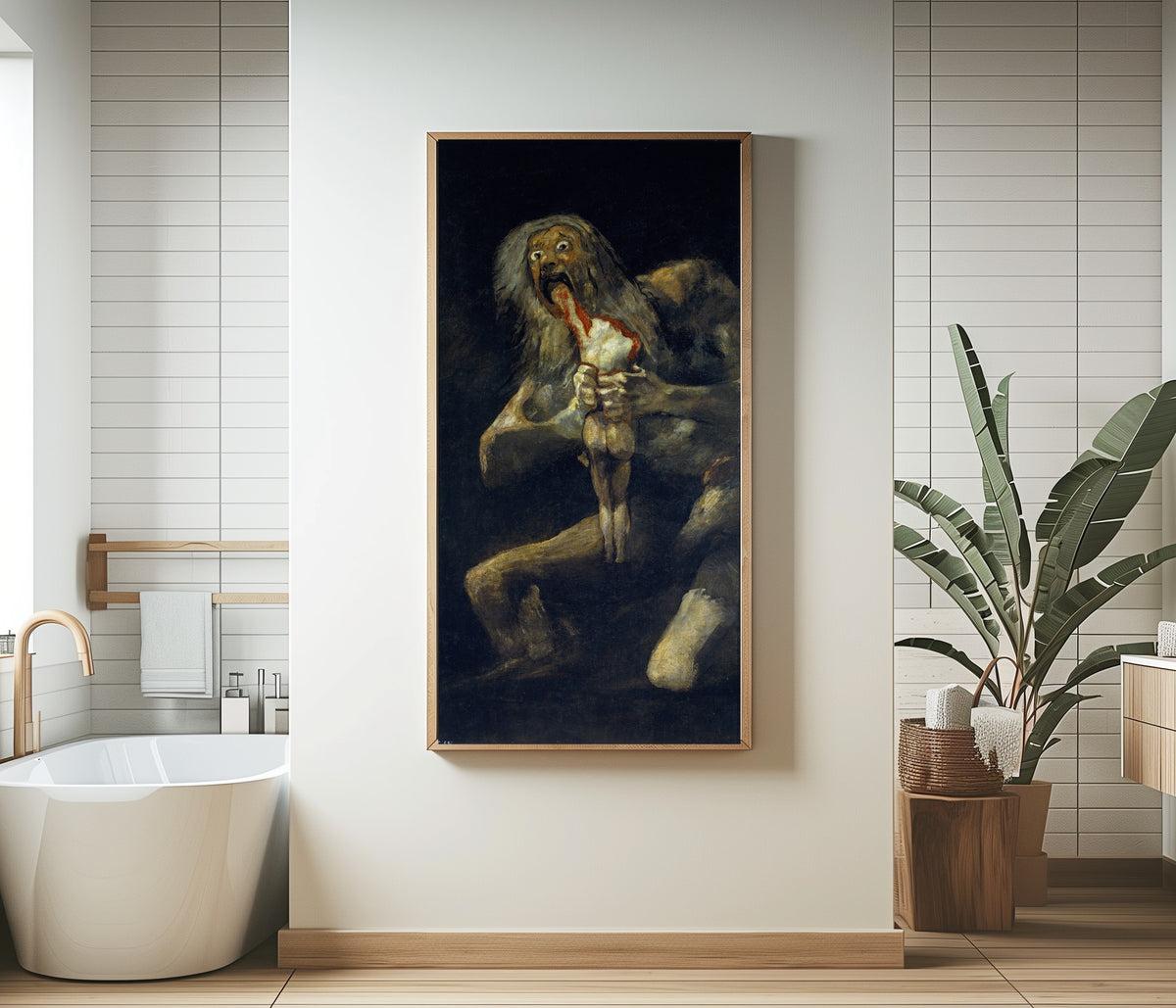
Saturn Devouring His Son by Francisco de Goya — A wild-eyed giant devours a headless body out of the dark
The Third of May 1808 by Francisco de Goya — A man in a white shirt flings up his arms before a firing squad
Pilgrimage to the Fountain of San Isidro by Francisco de Goya — A dark procession winds past a rock while hooded faces press forward
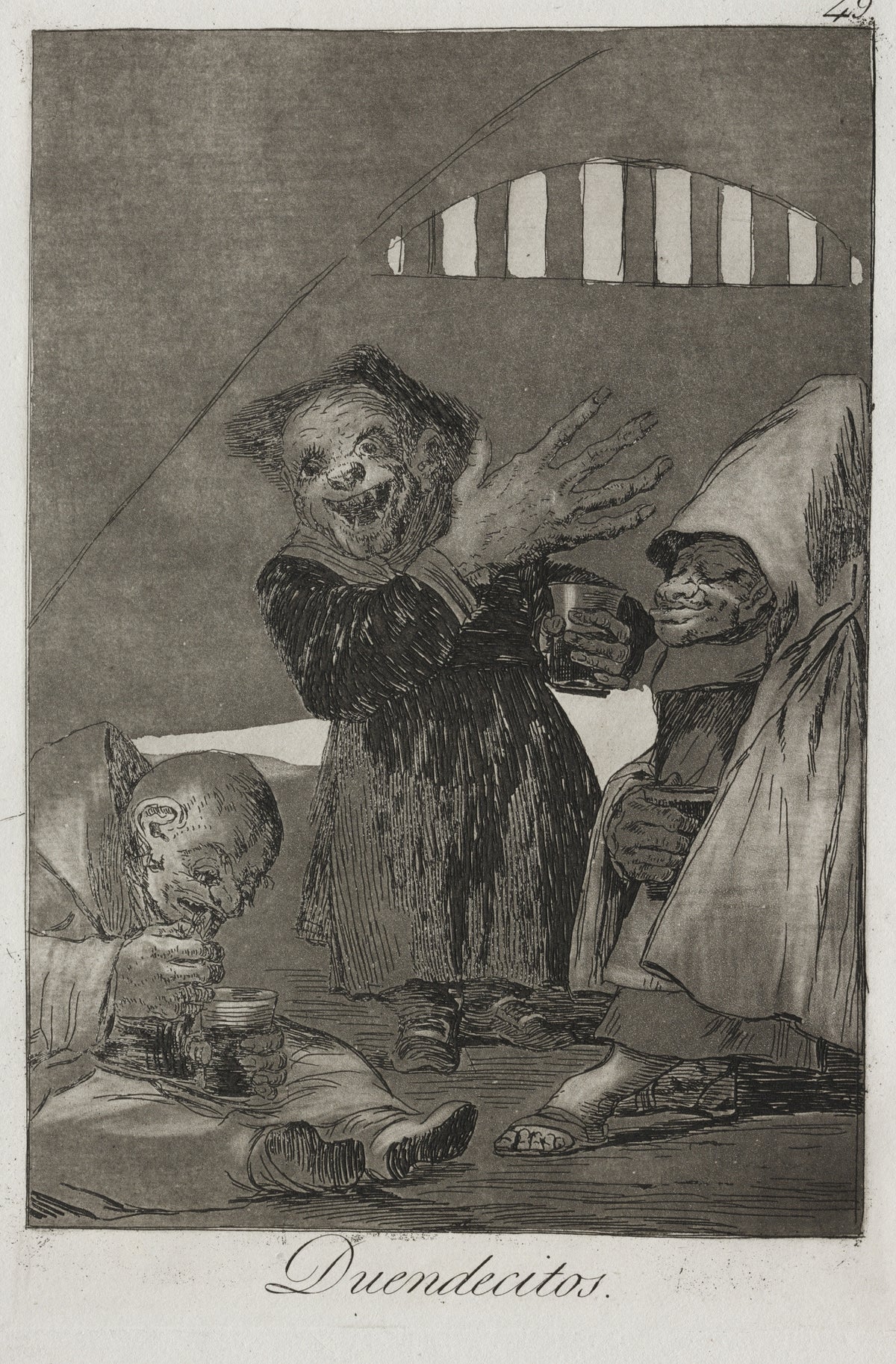
Duendecitos (Hobgoblins), Los Caprichos, Plate 49 by Francisco de Goya — Grinning hobgoblins in monks' habits drink by a barred window
Hasta la muerte (Until Death), Los Caprichos, Plate 55 by Francisco de Goya — An old woman primps at her mirror as onlookers stifle laughter
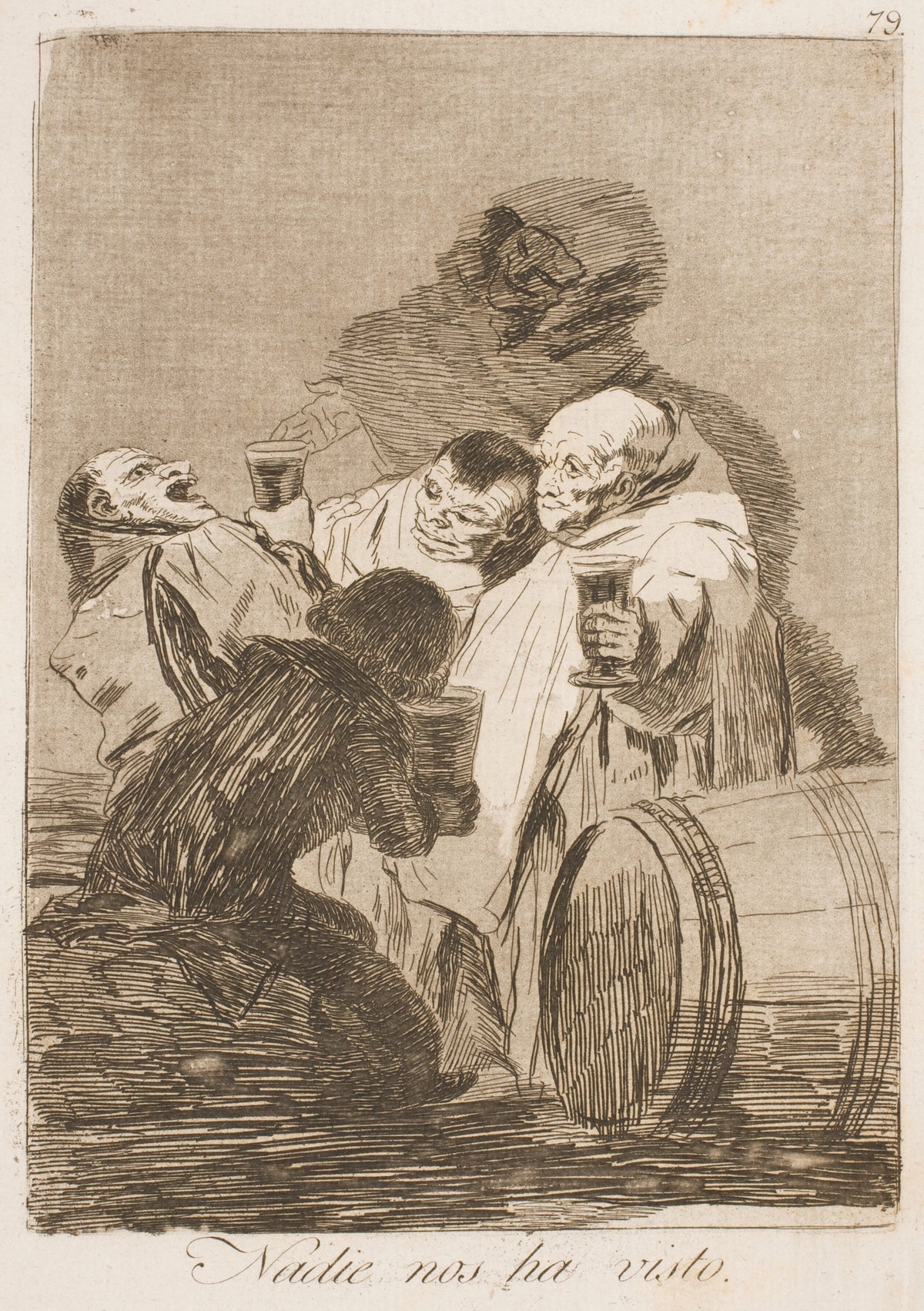
Nadie nos ha visto (Nobody Has Seen Us), Los Caprichos, Plate 79 by Francisco de Goya — Laughing drinkers toast round a wine barrel as a dark shape looms
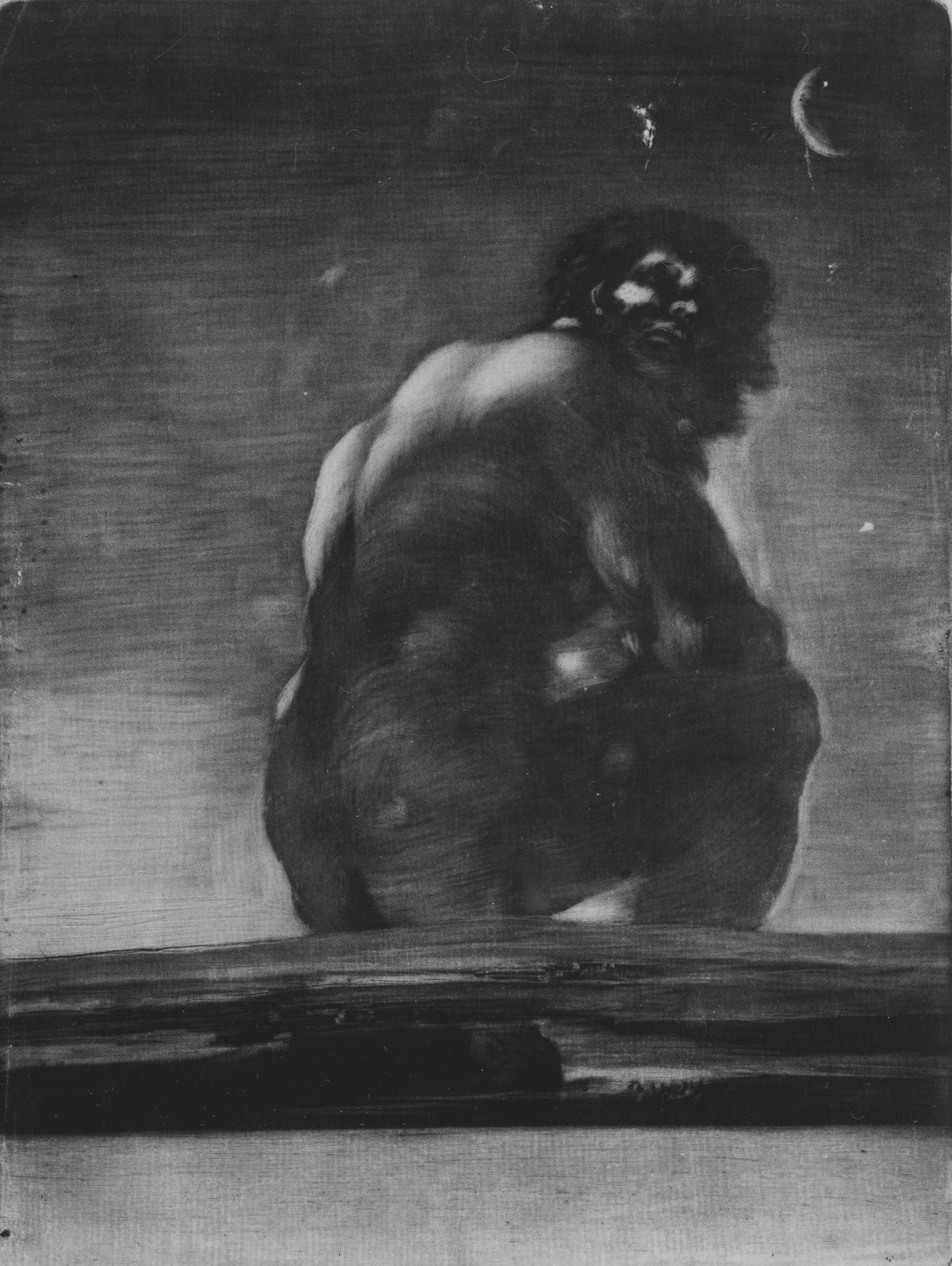
A Giant Seated in a Landscape (The Colossus) by Francisco de Goya — A huge seated giant looks back under a crescent moon
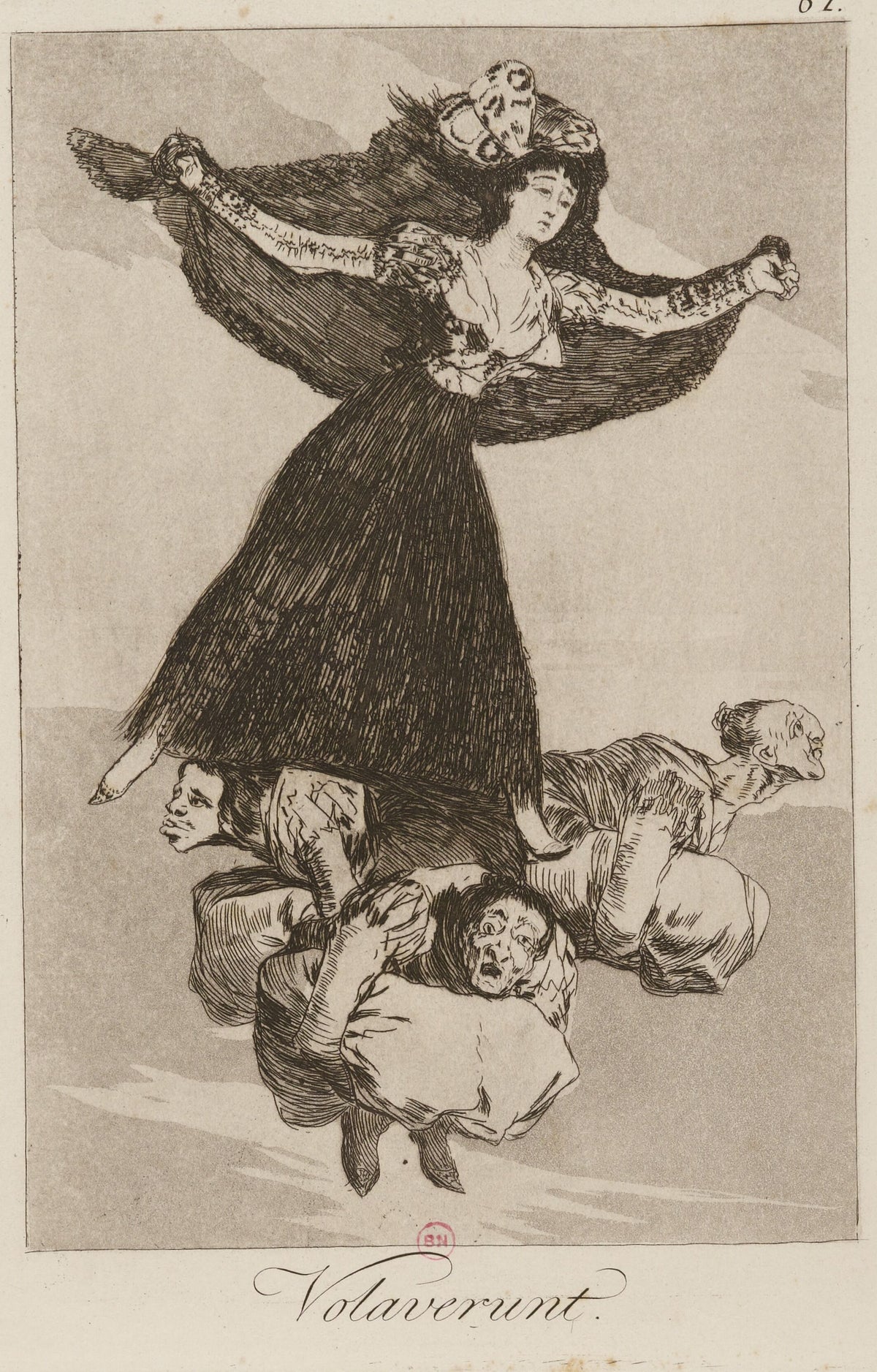
Volaverunt (They Have Flown), Los Caprichos, Plate 61 by Francisco de Goya — A young woman in a black skirt rides aloft on three crouching old men
Atropos (The Fates) by Francisco de Goya — Four grim figures drift through the air above a dark river valley
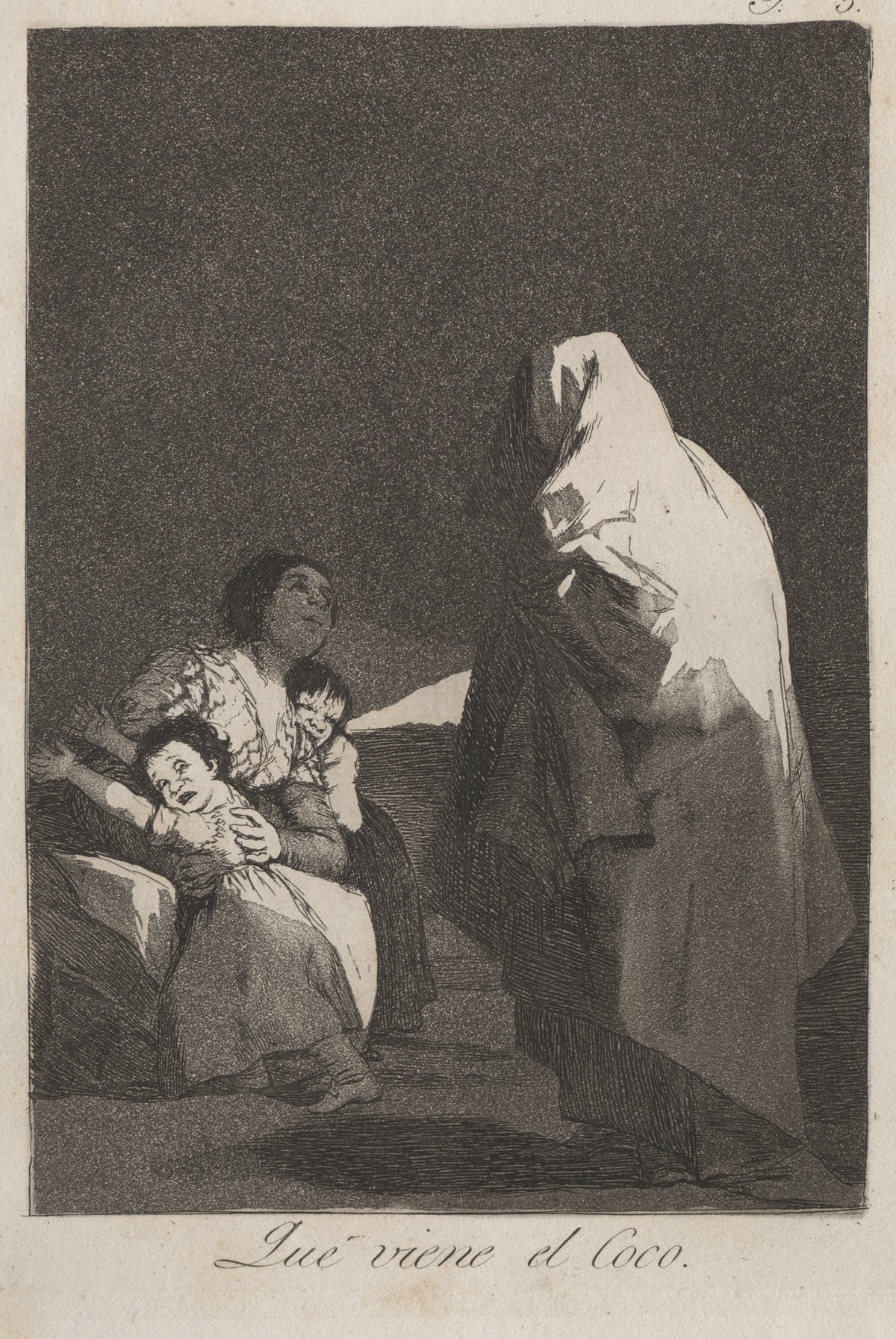
Que viene el Coco (Here Comes the Bogeyman), Los Caprichos, Plate 3 by Francisco de Goya — A shrouded figure looms over a woman and two terrified children
Duelo a garrotazos (Fight with Cudgels) by Francisco de Goya — Two men sunk to the knees swing clubs at each other on open ground
Judith and Holofernes by Francisco de Goya — Judith raises a blade in the dark as an old servant prays
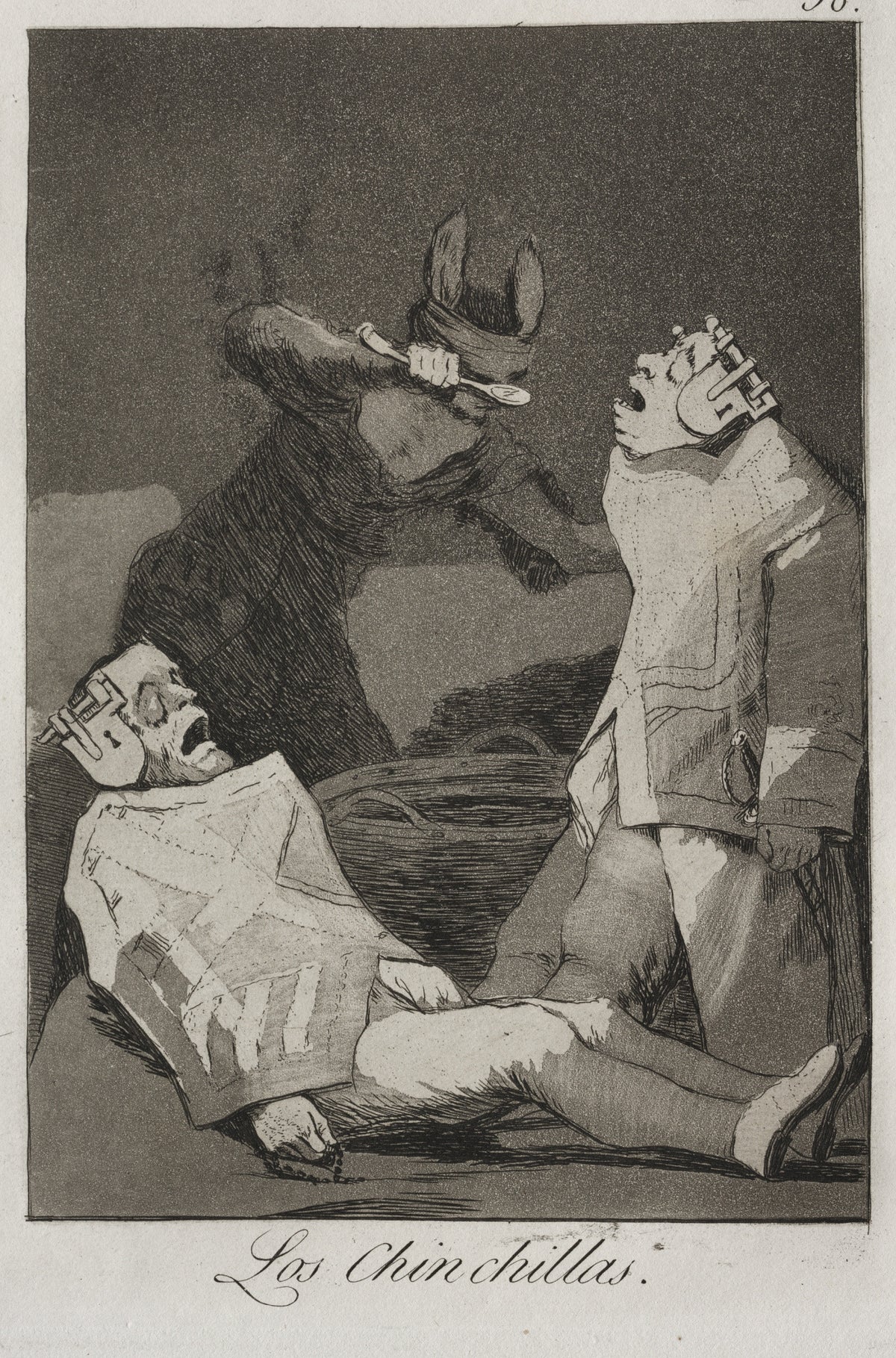
Las Chinchillas, Los Caprichos, Plate 50 by Francisco de Goya — A blindfolded figure with ass's ears feeds two padlocked men
Linda maestra! (A Fine Teacher), Los Caprichos, Plate 68 by Francisco de Goya — An old witch and a young one ride a broom through a grey sky
La lealtad (Loyalty), from Los Disparates by Francisco de Goya — Grinning men point and jeer at a hooded figure with eyes closed
Las exhortaciones (The Exhortations), from Los Disparates by Francisco de Goya — A gaunt man lectures a bowed figure while a crowd drags at them
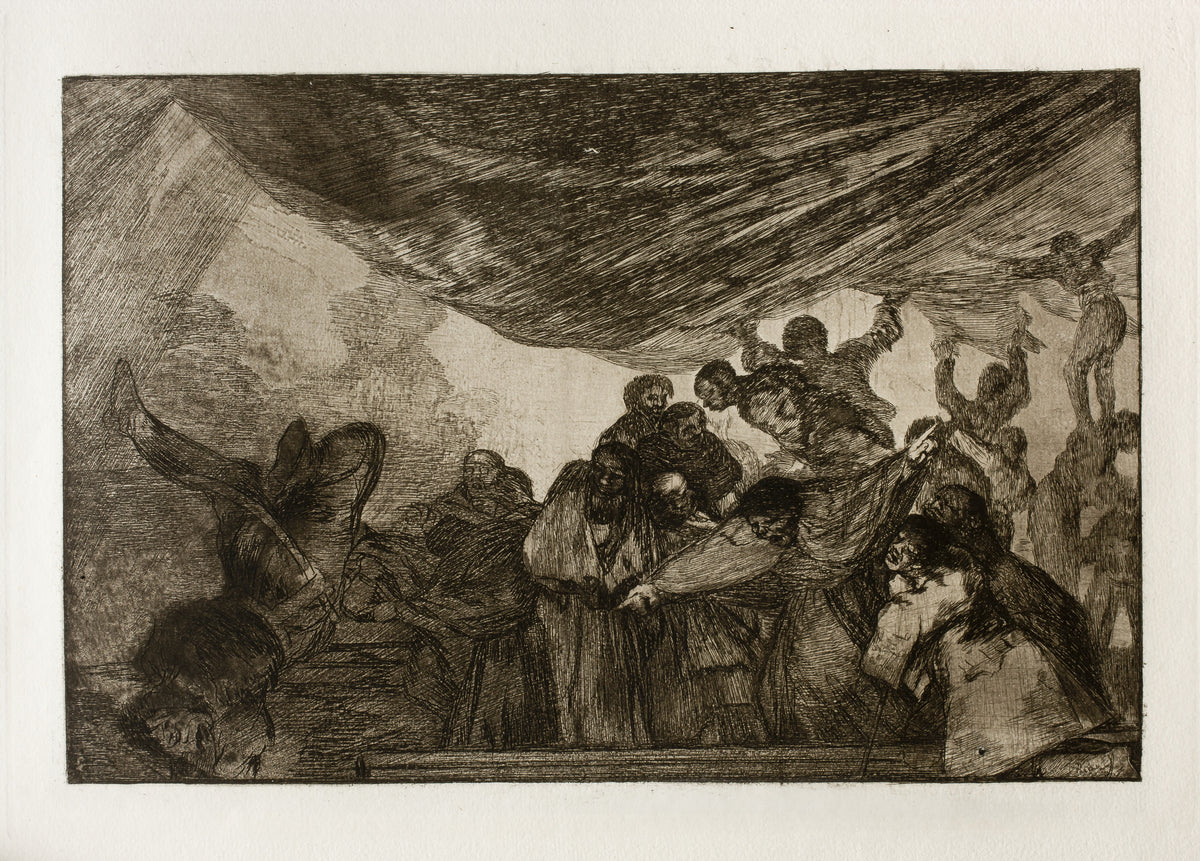
Disparate claro (Clear Folly), from Los Disparates by Francisco de Goya — Figures lift a vast dark canopy as a man tumbles head over heels
Disparate de carnaval (Carnival Folly), from Los Disparates by Francisco de Goya — Masked carnival revellers clash nose to nose under a man on stilts
Disparate alegre (Merry Folly), from Los Disparates by Francisco de Goya — Three men and three young women whirl in a wild ring dance
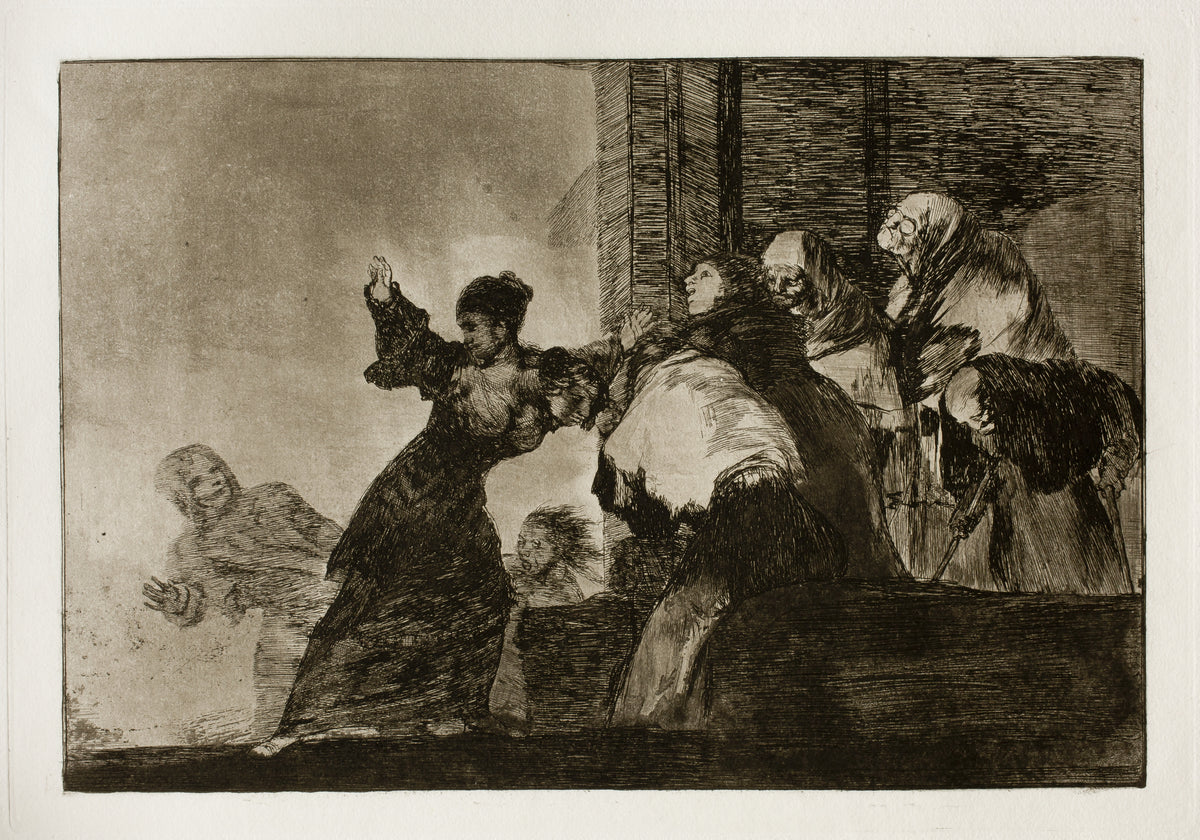
Disparate pobre (Poor Folly), from Los Disparates by Francisco de Goya — A woman in black strides away from hooded old women in a doorway
El caballo raptor (The Horse Abductor), from Los Disparates by Francisco de Goya — A rearing horse carries off a woman gripped in its teeth
Disparate general (General Folly), from Los Disparates by Francisco de Goya — A dark crowd surges around a gaunt cloaked figure
Los ensacados (The Men in Sacks), from Los Disparates by Francisco de Goya — A procession of men tied in sacks shuffles into the dark
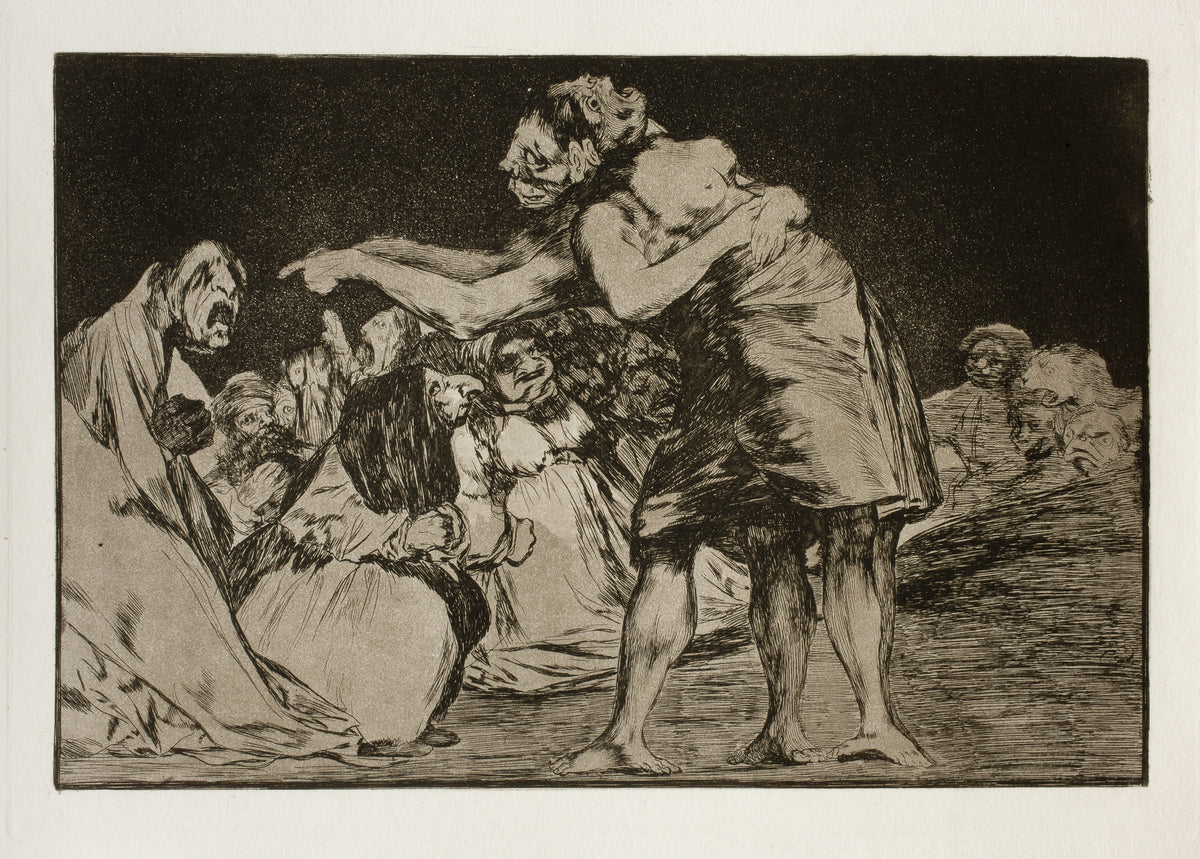
Disparate desordenado (Disorderly Folly), from Los Disparates by Francisco de Goya — A two-headed couple joined in one body jeer at a crowd
Disparate cruel (Cruel Folly), from Los Disparates by Francisco de Goya — A man with a long staff clamps another who cries out beneath him
Disparate volante (Flying Folly), from Los Disparates by Francisco de Goya — Riders cling to a winged beast flying through the night
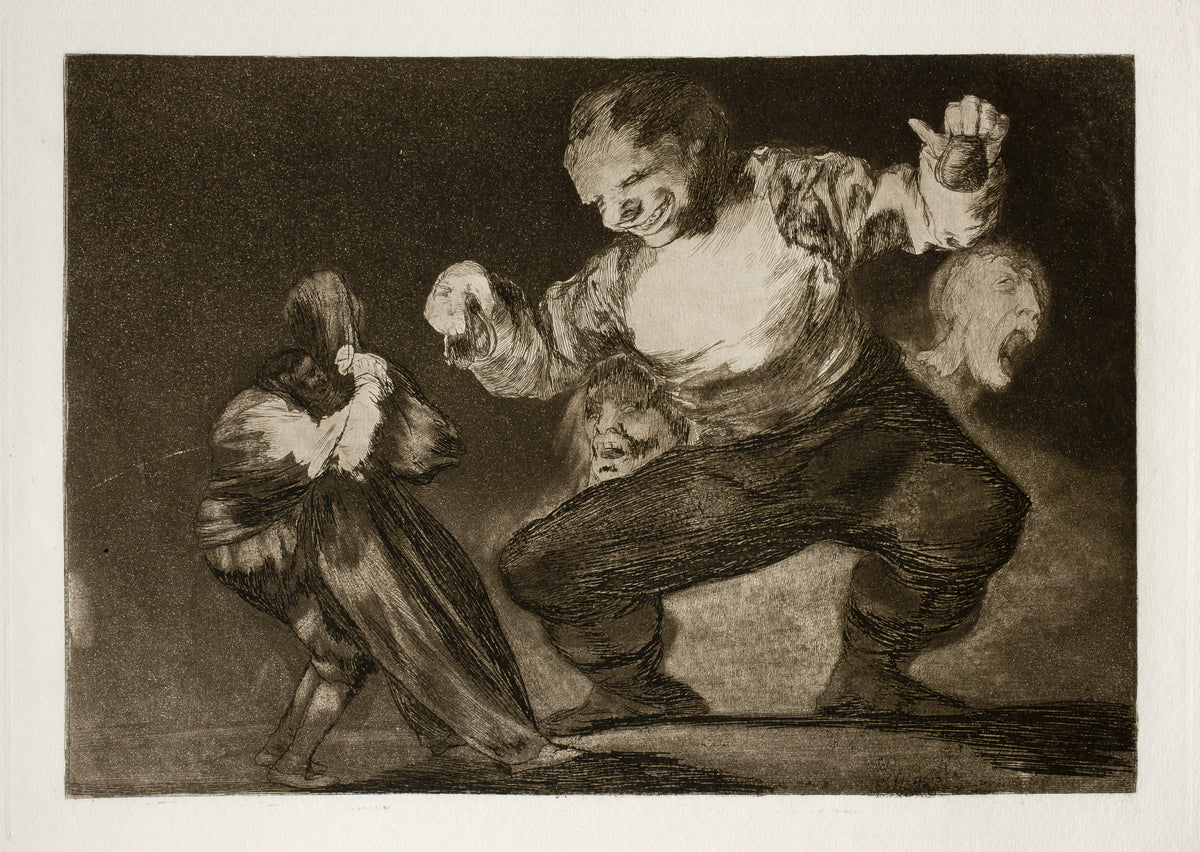
Bobalicón (Simpleton), from Los Disparates by Francisco de Goya — A grinning giant dances with castanets over a cowering figure
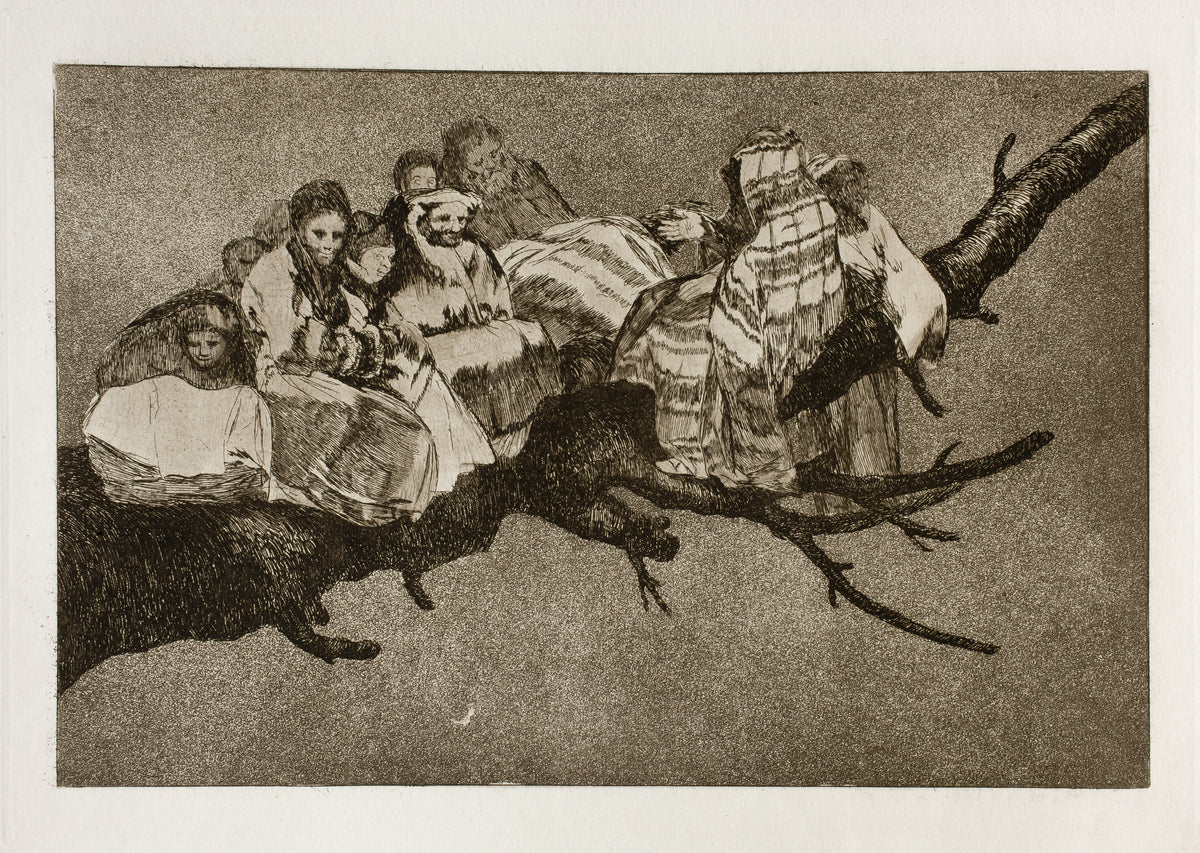
Disparate ridículo (Ridiculous Folly), from Los Disparates by Francisco de Goya — A row of muffled figures perched on a great bare branch
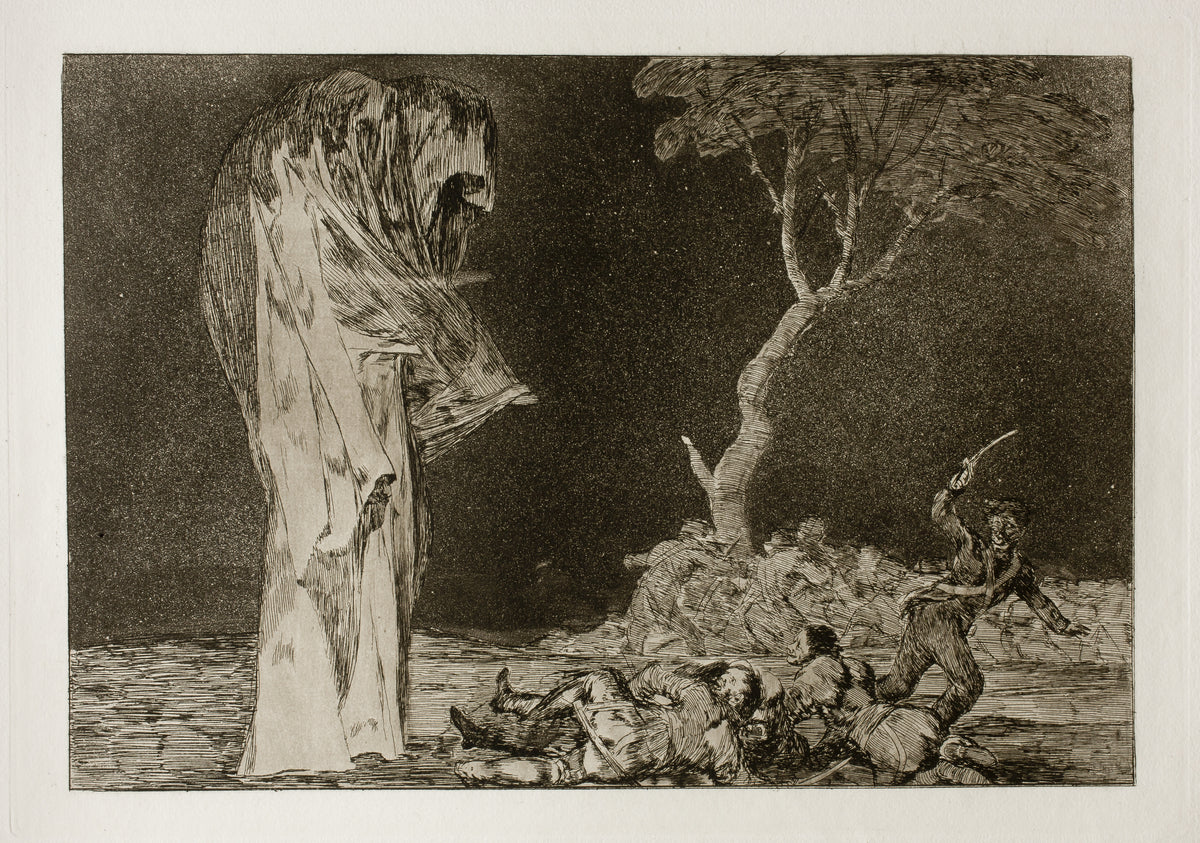
Disparate de miedo (Folly of Fear), from Los Disparates by Francisco de Goya — A towering sheeted phantom sends soldiers sprawling in the dark
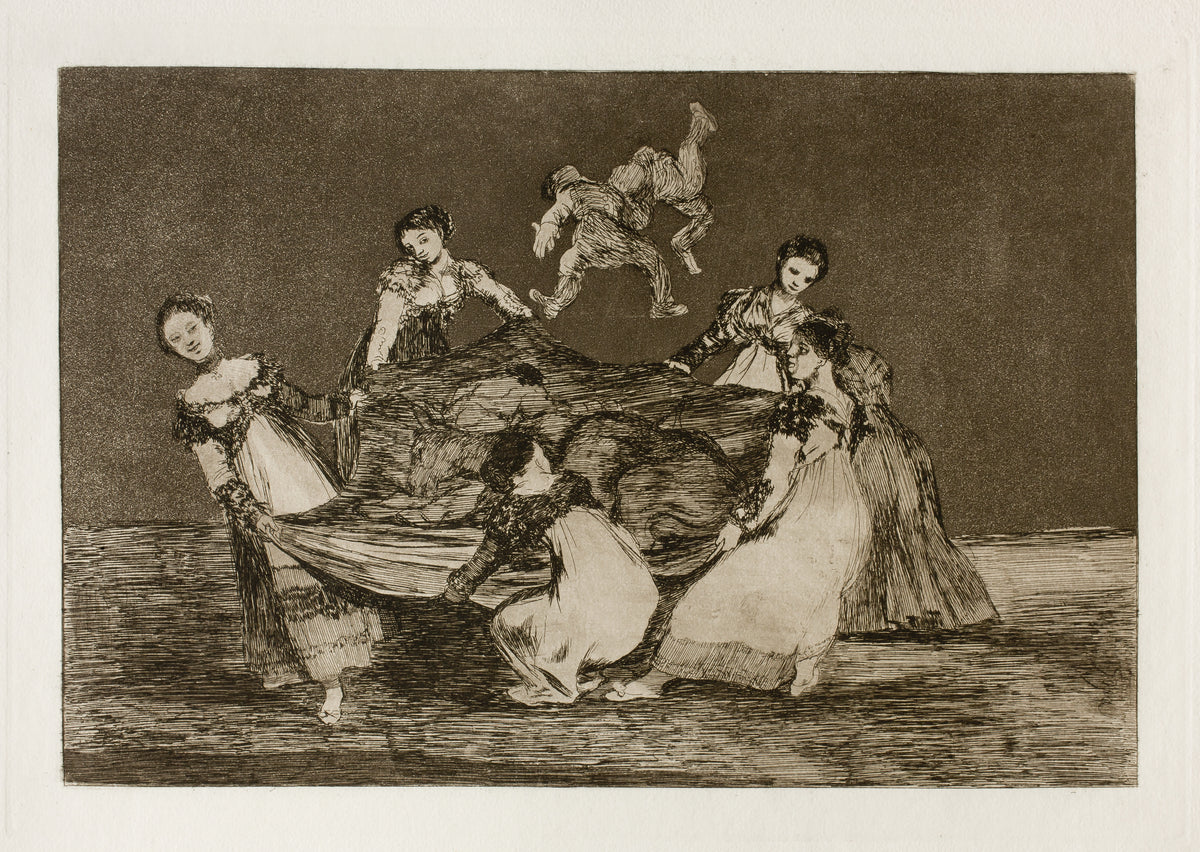
Disparate femenino (Feminine Folly), from Los Disparates by Francisco de Goya — Six women toss a limp man and a donkey in a blanket
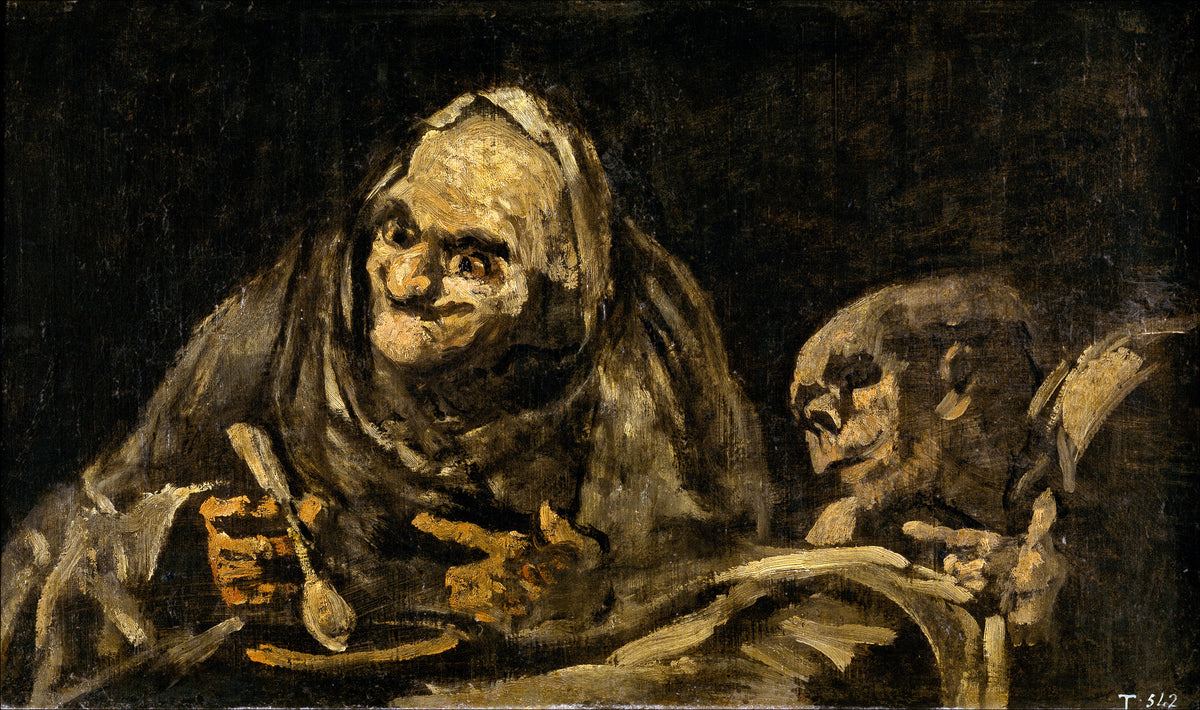
Two Old Men Eating Soup by Francisco de Goya — A hooded old man grins over his soup beside a skull-like companion
The Sabbath of Witches by Francisco de Goya — A garlanded he-goat presides over a moonlit gathering of witches
Witches' Flight by Francisco de Goya — Three witches in tall pointed caps carry a man up into the night
El tío Paquete by Francisco de Goya — An old man grins broadly, eyes shut, out of a dark ground
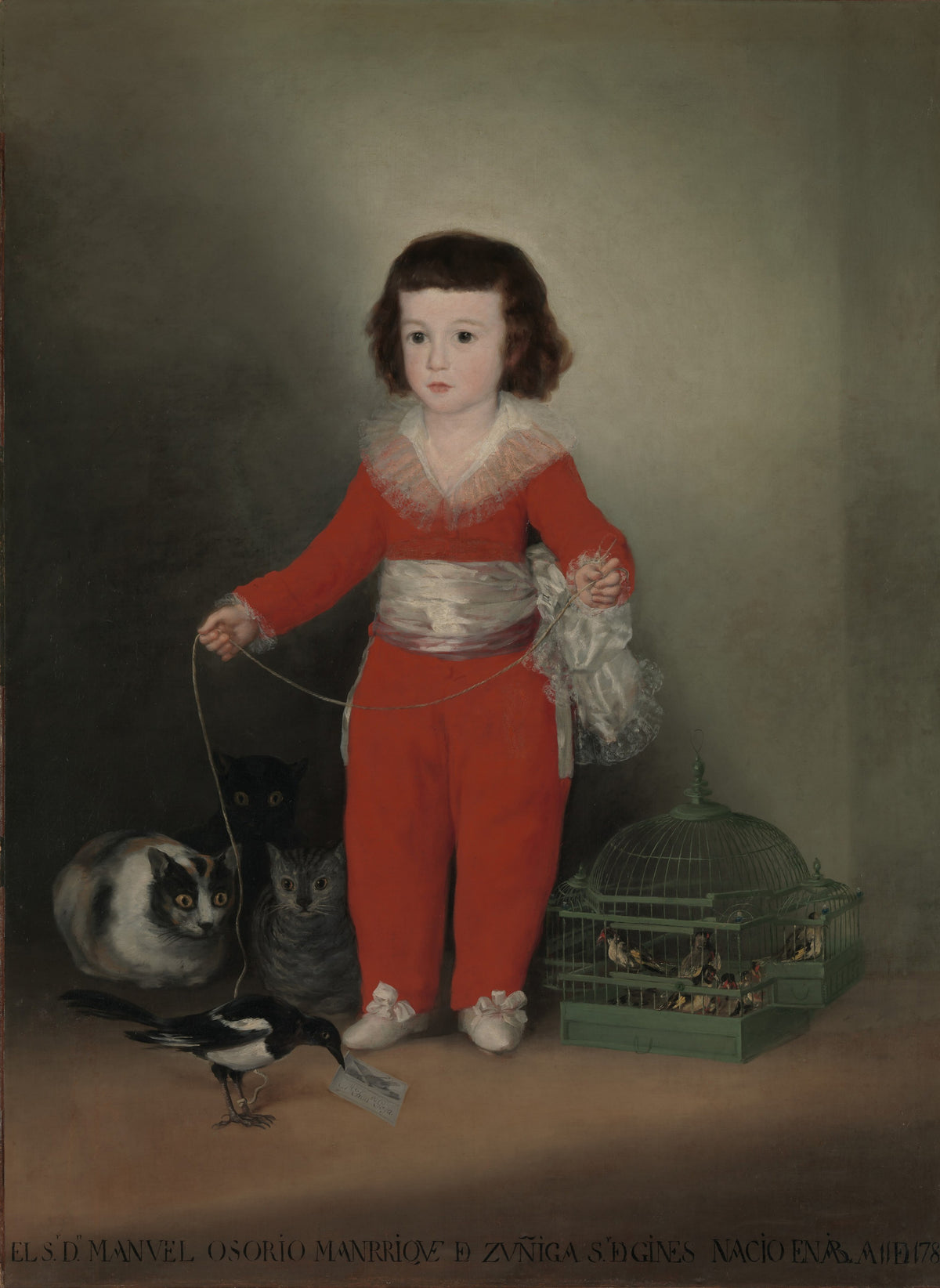
Manuel Osorio Manrique de Zuñiga (1784–1792) by Francisco de Goya — A small boy in red holds a magpie on a string as three cats watch
Portrait of the Matador Pedro Romero by Francisco de Goya — A matador in a mauve cape with coral lining, hand at rest
Buen Viage (Bon Voyage), Los Caprichos, Plate 64 by Francisco de Goya — A bat-winged figure carries a knot of shrieking figures by night
Señora Sabasa Garcia by Francisco de Goya — A young woman in a gauze mantilla and a golden shawl
María Teresa de Borbón y Vallabriga, later Condesa de Chinchón by Francisco de Goya — A small girl in a lace mantilla stands on a terrace beside her dog
The Water Carrier (La Aguadora) by Francisco de Goya — A young water carrier with a clay jug stands tall against a grey sky
Narcisa Barañano Gayoso de Goicoechea by Francisco de Goya — A woman in a towering black lace mantilla with a blue bow
De que mal morira? (Of What Ill Will He Die?), Los Caprichos, Plate 40 by Francisco de Goya — A donkey in a frock coat takes the pulse of a patient in bed
Allegory of Love, Cupid and Psyche by Francisco de Goya — A winged youth reaches toward a young woman resting on white pillows
Autumn by Francisco de Goya — A grape harvest under a pink and blue sky
Still Life with Golden Bream by Francisco de Goya — A heap of silver bream with staring yellow eyes on a green ledge
The Charge of the Mamelukes by Francisco de Goya — Turbaned horsemen and townsmen clash in a smoky city square
Winter Scene by Francisco de Goya — Travellers huddle under a blanket on a road in a driving snowstorm
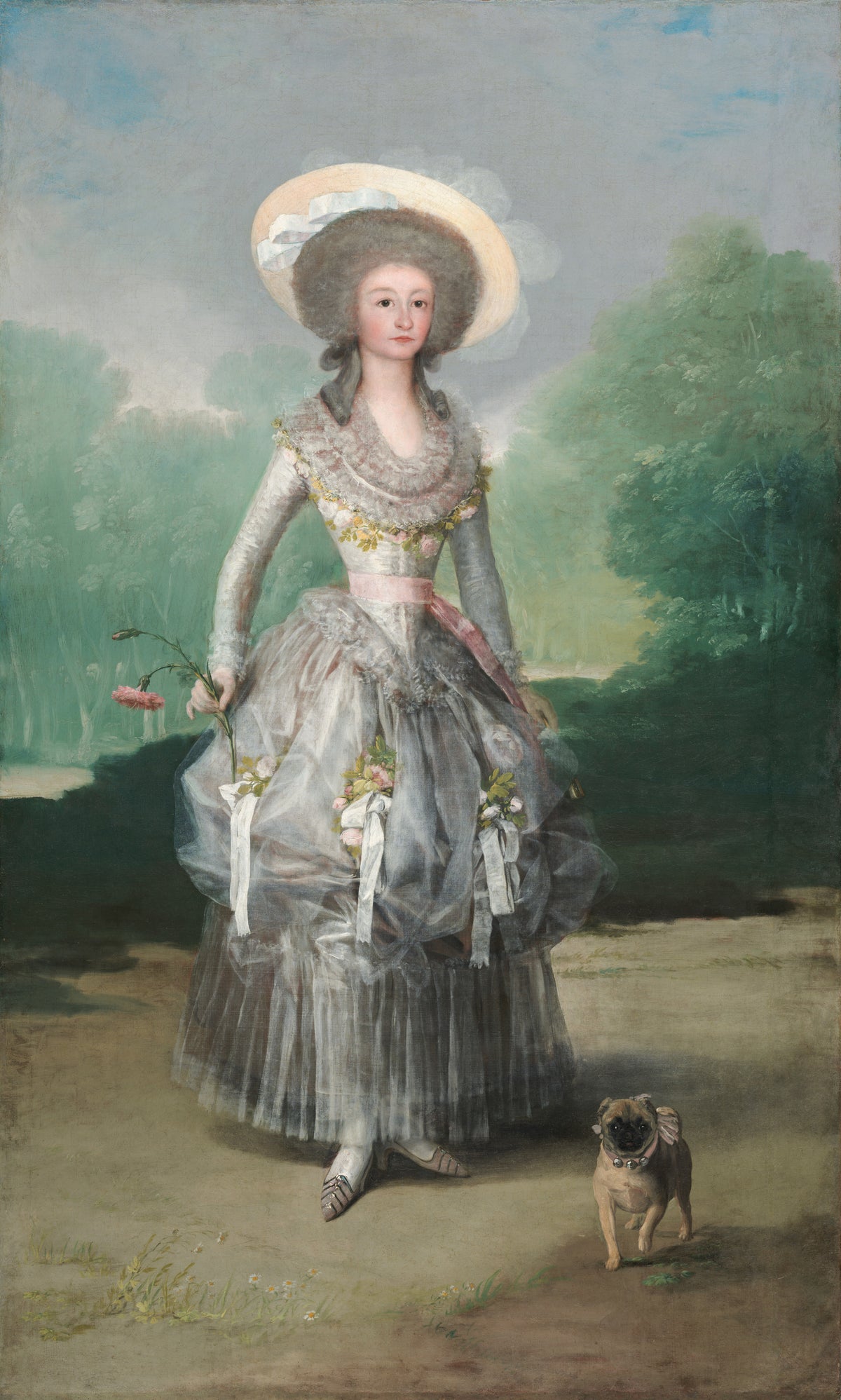
The Marquesa de Pontejos by Francisco de Goya — A lady in silvery grey gauze strolls a park walk with her pug