Artist · 3 prints
George Inness Prints
About George Inness
George Inness was an American landscape painter, born in Newburgh, New York, on 1 May 1825 and died at Bridge of Allan, Scotland, on 3 August 1894. He had little formal training: a few lessons from the painter John Jesse Barker, work at engraving firms, and study in 1843 with the French landscape painter Régis François Gignoux. His early landscapes follow the Hudson River School painters Thomas Cole and Asher Durand. Trips to Italy and France in the early 1850s introduced him to the Barbizon painters, whose looser, mood-driven style shaped the rest of his career.
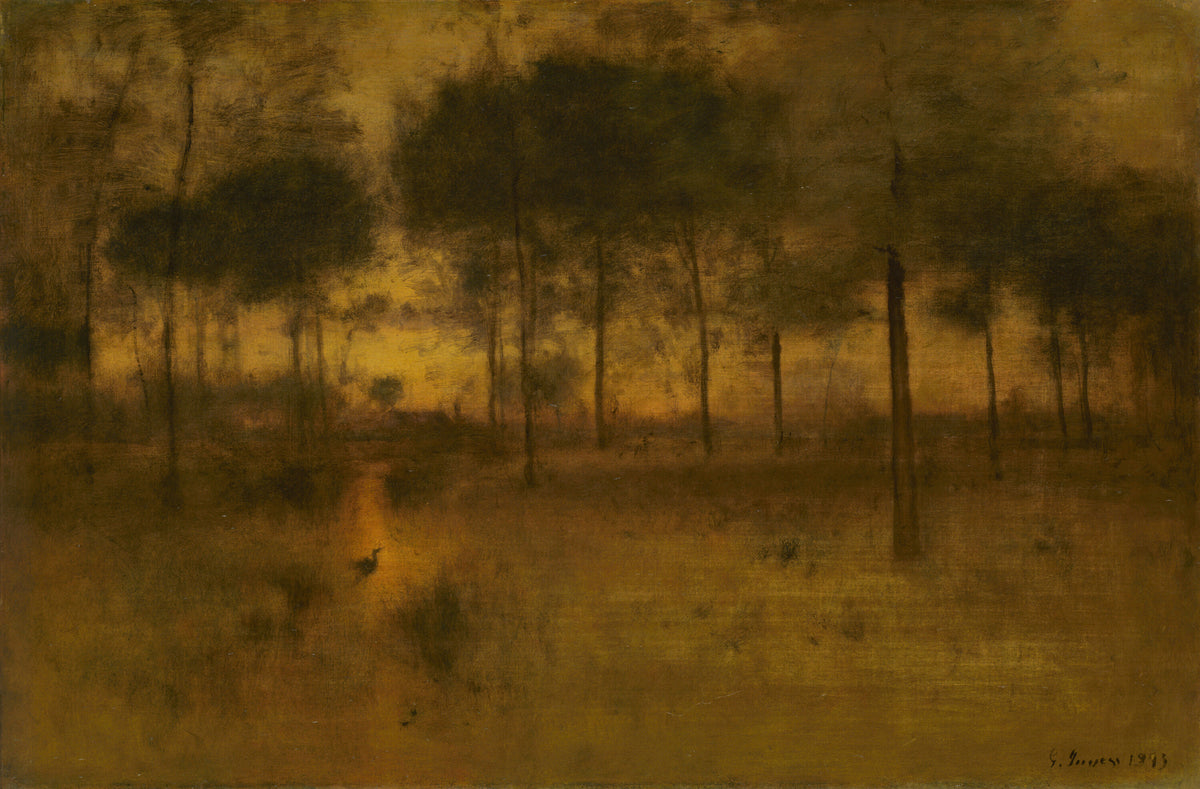
Inness became a follower of the Swedish thinker Emanuel Swedenborg, who taught that the natural world reflects a spiritual one, and his later paintings dissolve fields and trees into soft, glowing light. Key works include The Lackawanna Valley (1855), in the National Gallery of Art, Peace and Plenty (1865), in the Metropolitan Museum of Art, and The Home of the Heron (1893), in the Art Institute of Chicago.
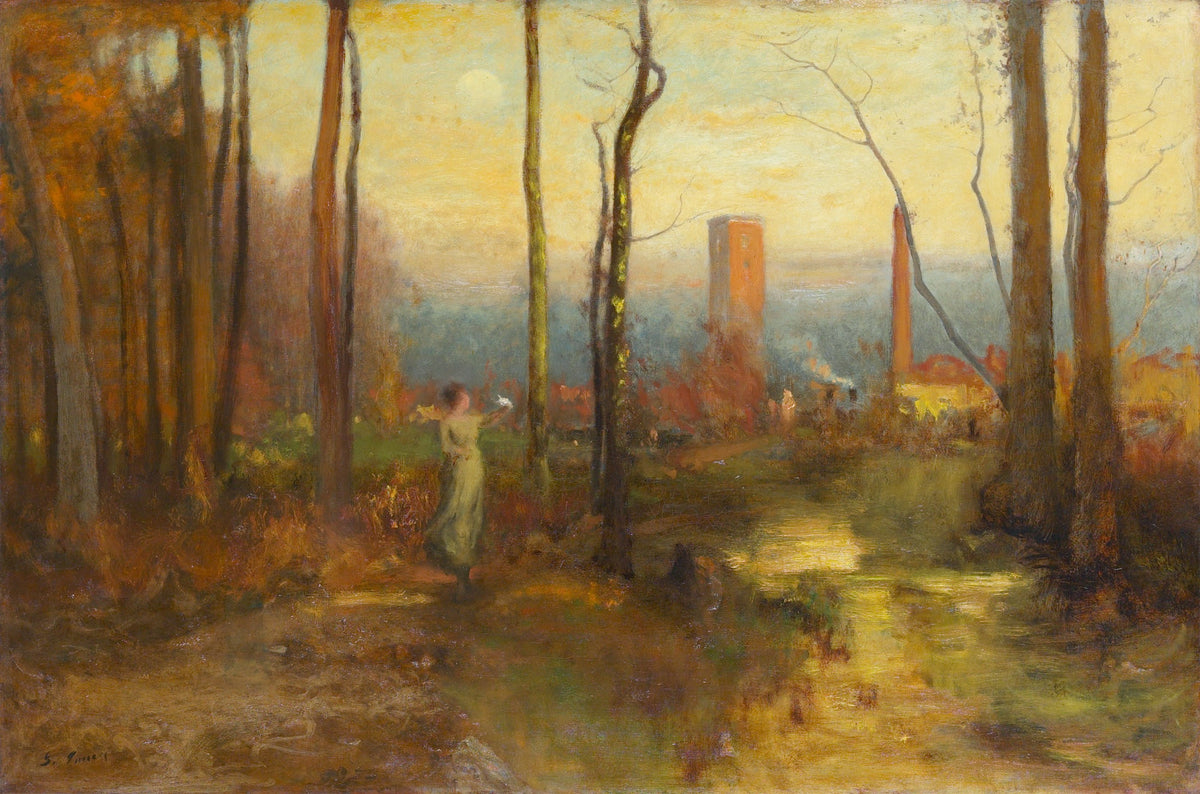
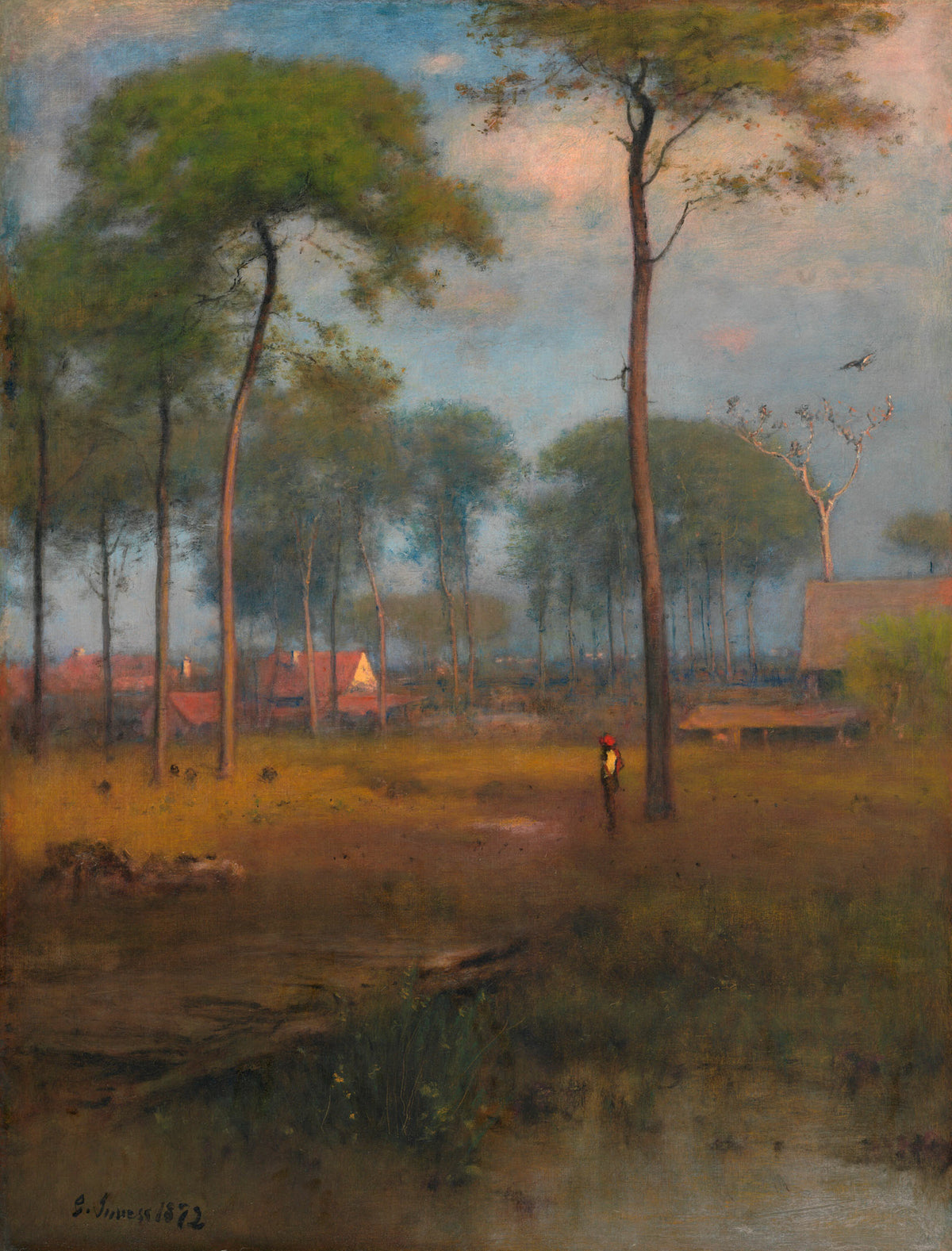
George Inness prints: reproductions of the late American landscape paintings George Inness made between 1888 and 1893. The collection includes The Mill Stream, Montclair, New Jersey (1888), Early Morning, Tarpon Springs (1892) and The Home of the Heron (1893).
This selection focuses on Inness's final years, when he painted the countryside near his home in Montclair, the pine woods at Tarpon Springs in Florida, and a marsh at dusk. All three show his late, softly blurred style, with forms half dissolved in warm light and mist.
The warm, muted tones suit living rooms, bedrooms and studies, and the wider landscapes work well above a sofa, bed or fireplace. All prints are museum-quality reproductions, available unframed or framed with low-glare acrylic glazing, with free shipping and import duties covered.