Artist · 5 prints
Giorgione Prints
About Giorgione
Giorgione (about 1477–1510), whose name means "big George", was an Italian painter from Castelfranco in the Veneto, the mainland region around Venice. Little about his life is documented. He is said to have trained with Giovanni Bellini in Venice. He worked on a painting for the Doge's Palace, since destroyed, and in 1508 on frescoes for the outside of the Fondaco dei Tedeschi, the German merchants' warehouse in Venice. Giorgione died of plague in 1510, probably still quite young.
Giorgione painted small, poetic pictures for private collectors, where landscape, light and mood matter as much as the story, and the meaning is often left open. The Tempest (about 1508), in the Gallerie dell'Accademia in Venice, shows a soldier, a nursing woman and a flash of lightning, and scholars still debate what it depicts. The Sleeping Venus in Dresden was finished after his death by Titian, who worked with him and completed several of his pictures.
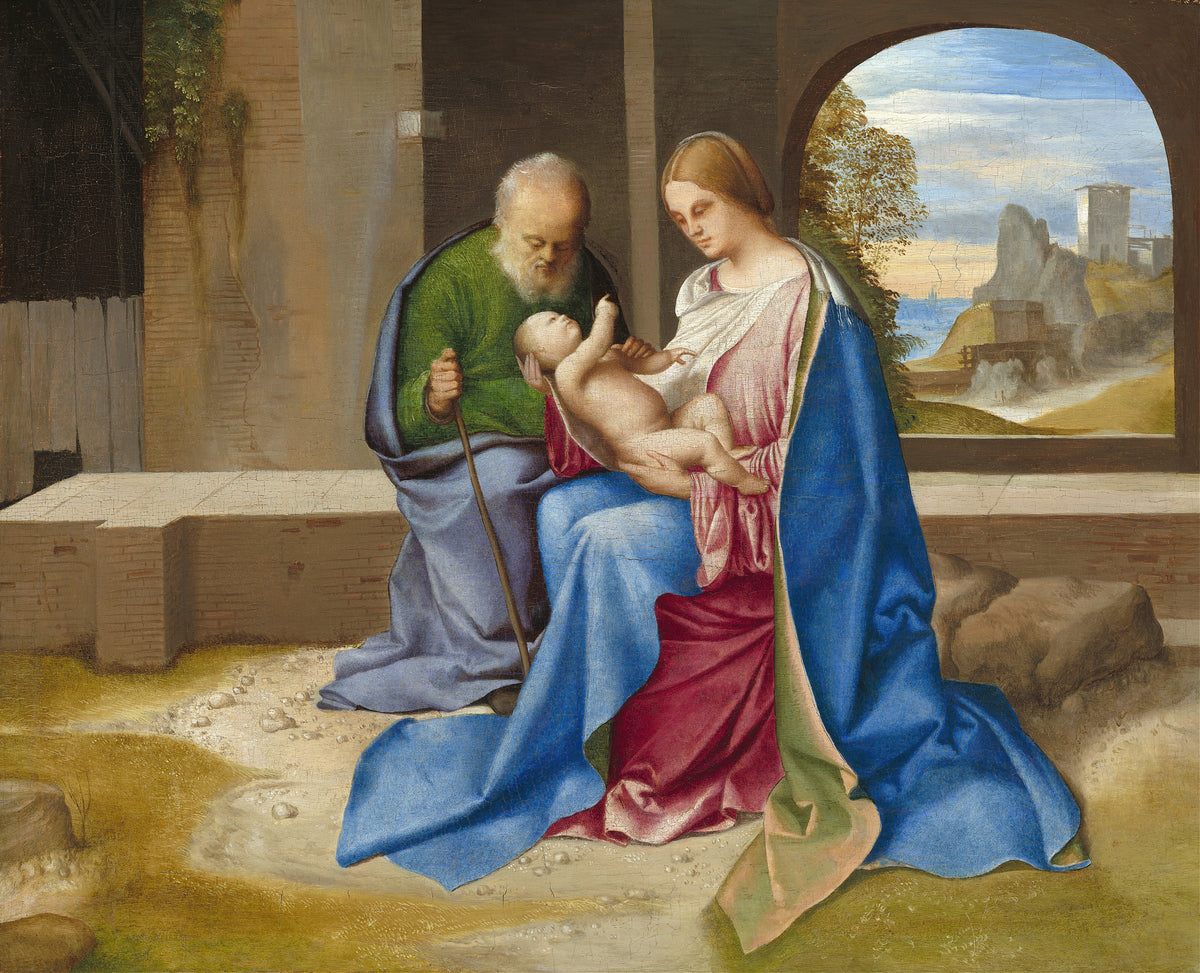
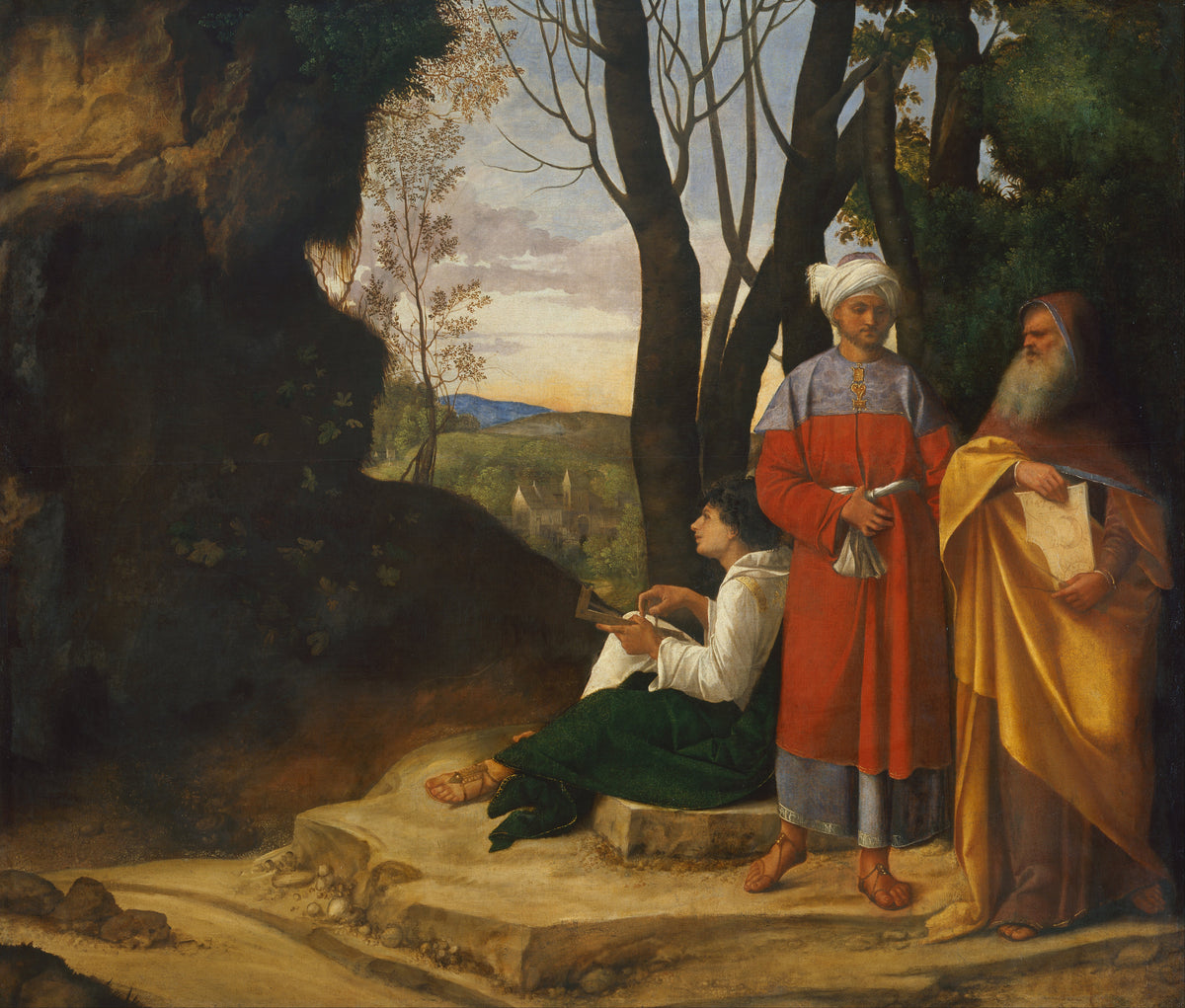
Giorgione prints: reproductions of paintings by the Venetian Renaissance painter Giorgione, made between about 1500 and 1510. The collection includes The Holy Family (1500), The Adoration of the Shepherds (1505), Young Woman (“Laura”) (1506), Three Philosophers (1508) and Sleeping Venus (1510).
This selection shows the range of his small body of work: two religious scenes, a single portrait, a group of three scholars in a landscape and a reclining nude. In most of them the figures sit in open countryside with soft evening light, warm browns and greens and distant blue hills.
The quiet, warm palettes suit bedrooms, studies and living rooms; the wide Sleeping Venus and Three Philosophers work above a bed or sofa. All prints are museum-quality reproductions, available unframed or framed with acrylic glazing, with free shipping and import duties covered.