Artist · 5 prints
Jacek Malczewski Prints
About Jacek Malczewski
Jacek Malczewski (1854–1929) was a Polish painter, born in Radom, then in the Russian-ruled part of Poland, and died in Kraków. He studied under the history painter Jan Matejko, completing his studies in 1879, and spent time in Paris in the 1870s. He is regarded as the father of Polish Symbolism, art that speaks through myths, allegories and dreamlike figures rather than plain description.
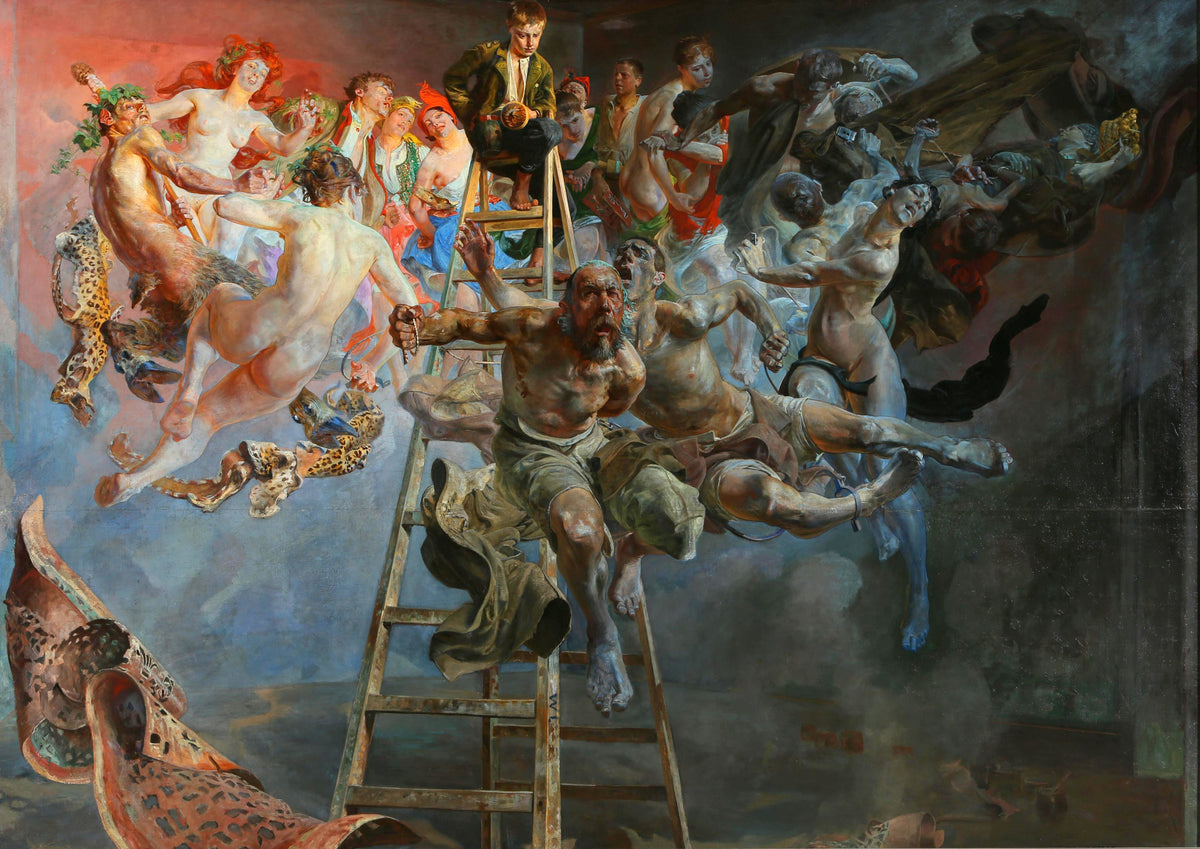
Much of Jacek Malczewski's work deals with Poland's loss of independence. Early paintings show Poles exiled to Siberia after failed uprisings, and Death of Ellenai (1883) draws on Juliusz Słowacki's poem Anhelli. His large painting Melancholia (1890–94) surveys a century of Polish history. Vicious Circle (1895–97) shows a painter overwhelmed by the force of nature and his own visions. In his Thanatos series he pictured Death as a young woman with a scythe and wings.
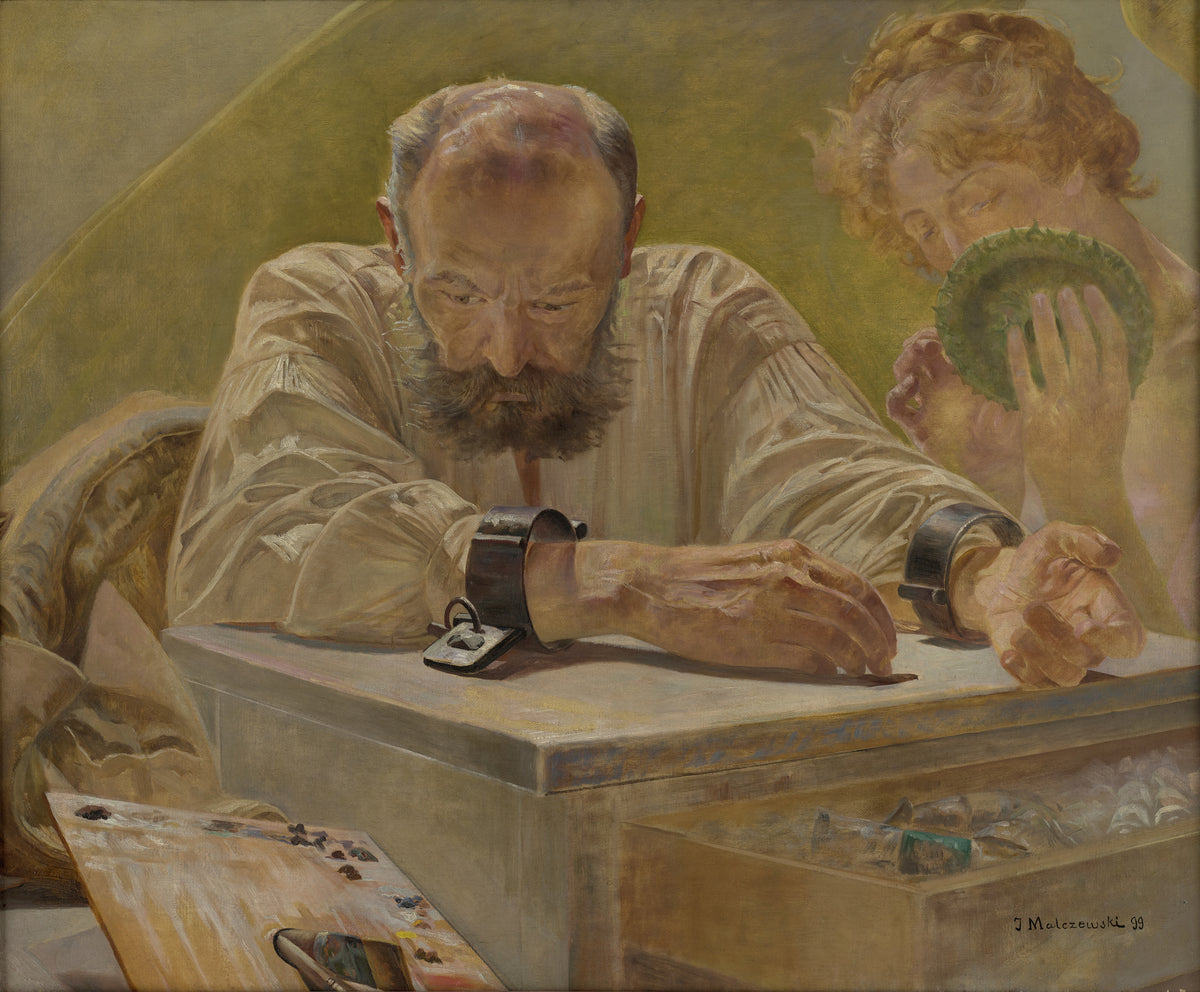
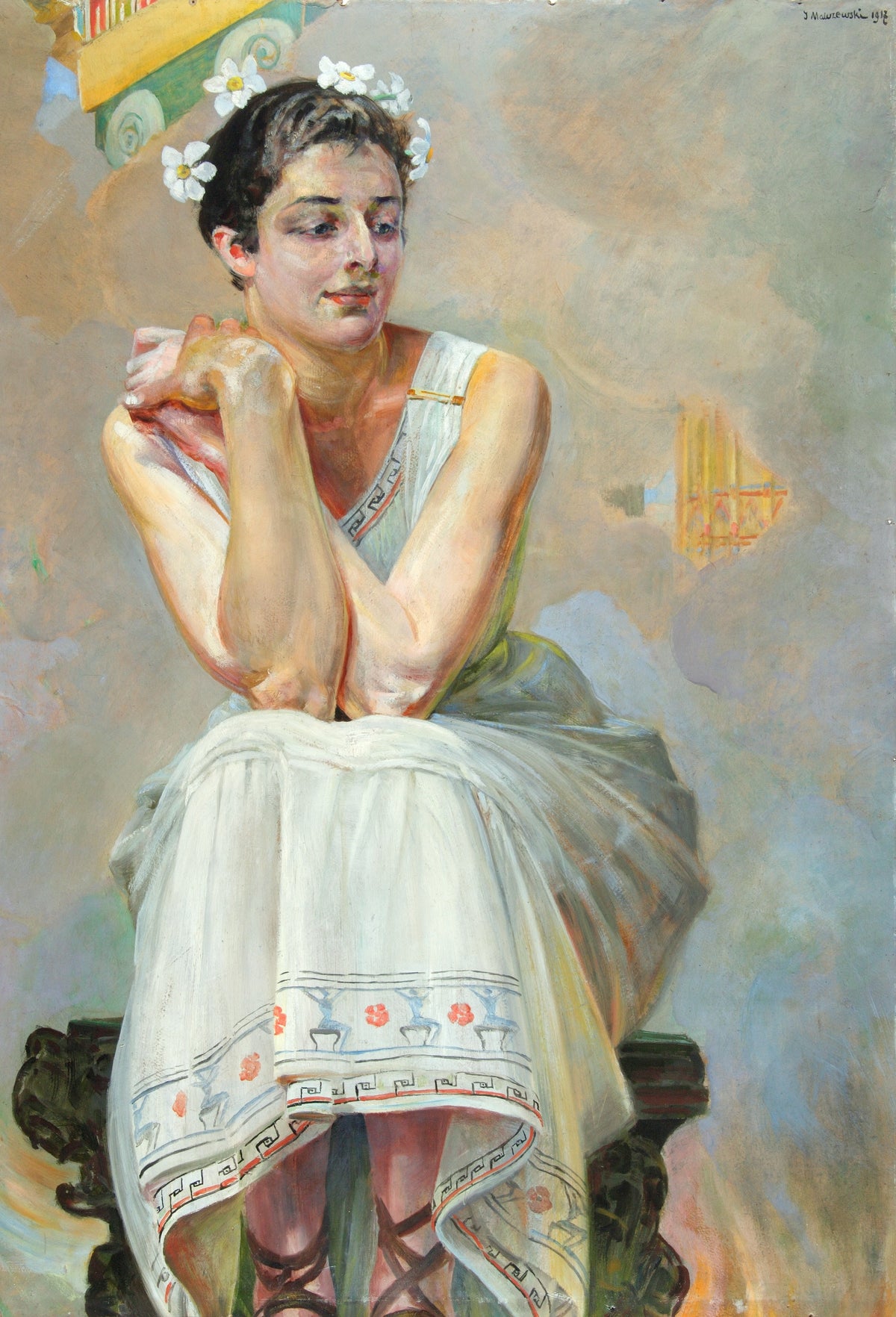
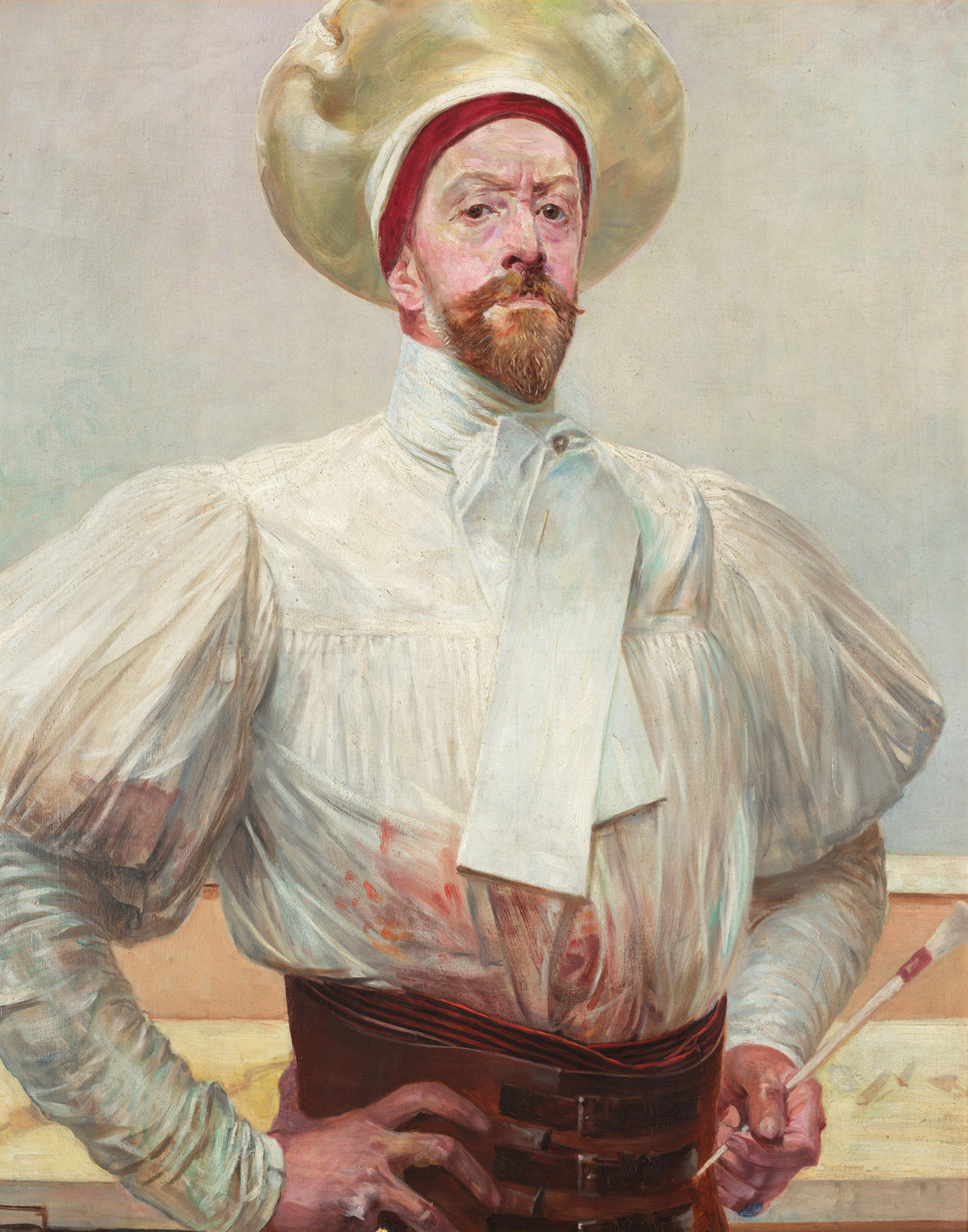
Jacek Malczewski prints: reproductions of paintings by the Polish Symbolist painter Jacek Malczewski, made between 1879 and 1917. The collection includes Vicious Circle (1897), Relaxation (Rest) (1899), Pythia (1917), The Reaper (1879) and Self-Portrait in a White Smock (1914).
This selection spans his career, from an early rural scene of a woman reaping to his large allegory of the artist's visions, a contemplative figure at rest, the Greek oracle Pythia, and a self-portrait. The paintings combine clear, realistic drawing with symbolic figures, often set in open landscapes, in earthy greens, browns and blues.
The natural, earthy palettes suit living rooms, studies and libraries, and the larger works hold a wall above a sofa or sideboard on their own. All prints are museum-quality reproductions, available unframed or framed with acrylic glazing, with free shipping and import duties covered.