Artist · 10 prints
John Martin Prints
About John Martin
John Martin (1789–1854) was an English painter and printmaker, born in Haydon Bridge, Northumberland, and died on the Isle of Man. He first learned heraldic painting as an apprentice to a coachbuilder in Newcastle, then studied with the Italian artist Boniface Musso, moving with him to London in 1806. He became one of the most popular painters of his day, and also spent years drawing up plans for London's water supply, sewers and railways.
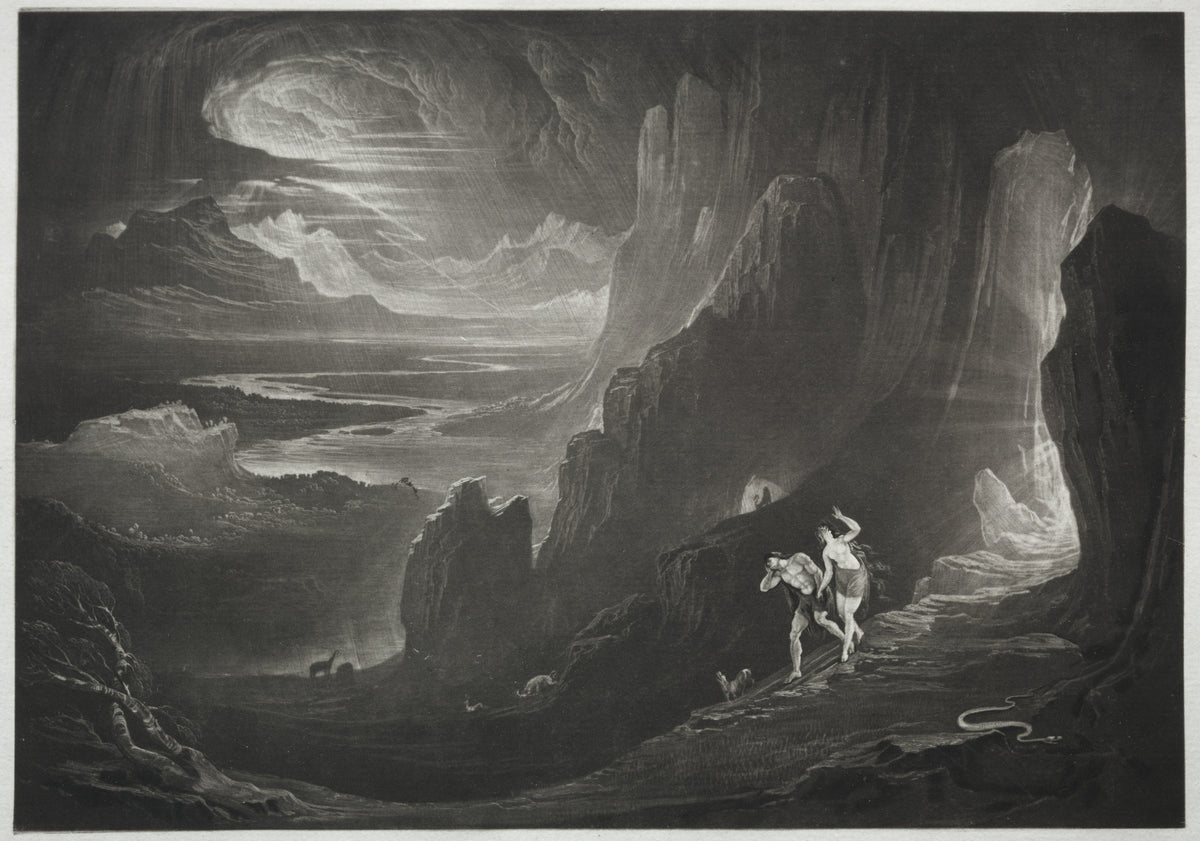
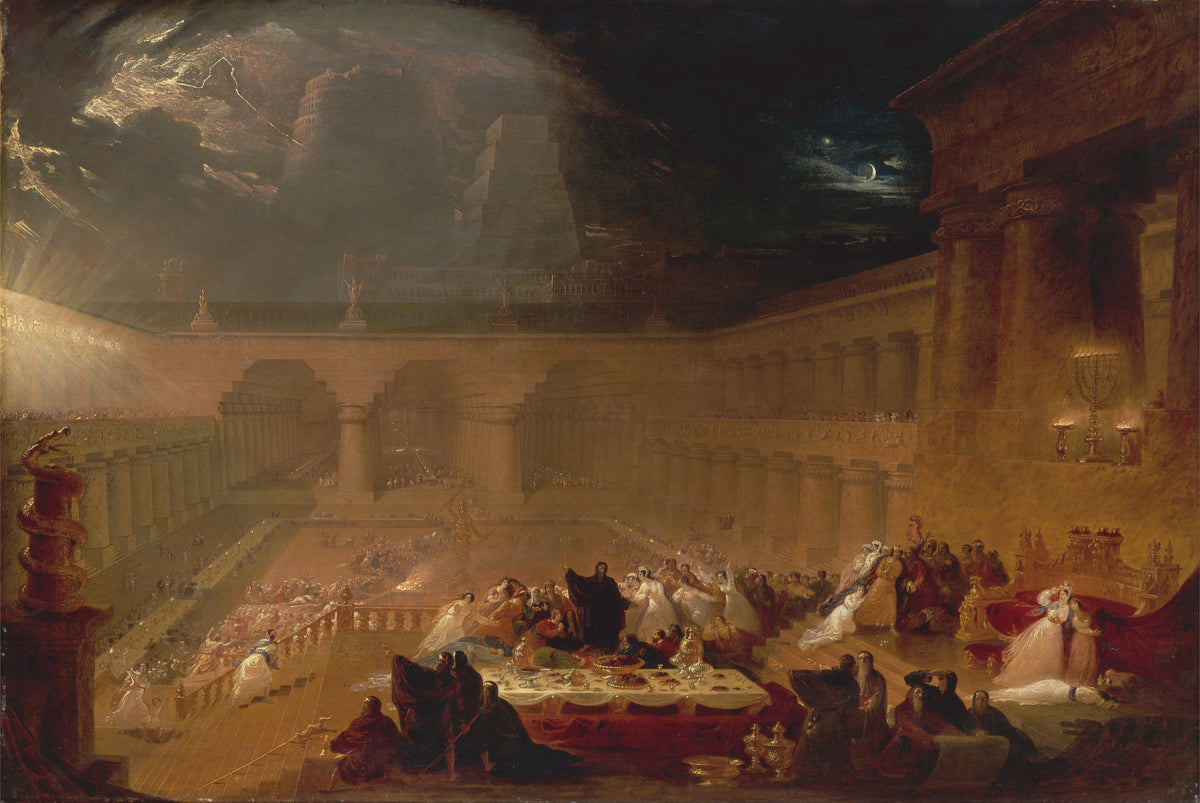
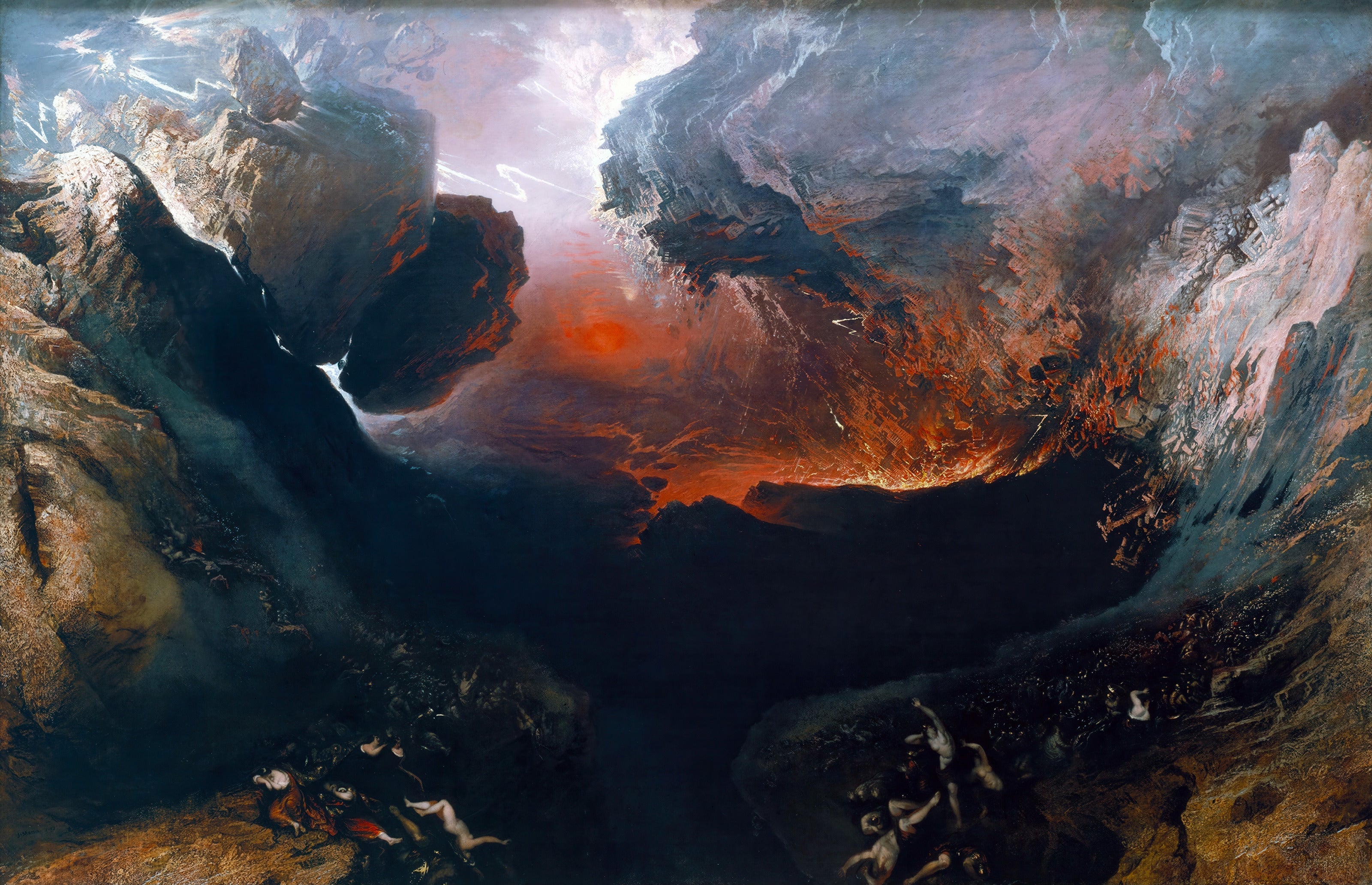
John Martin painted vast, dramatic scenes of catastrophe and judgement, drawn from the Bible and Milton, with tiny figures beneath enormous skies and architecture. Belshazzar's Feast (1820) drew around 5,000 paying visitors. He was also a gifted maker of mezzotints, a print method that gives deep, velvety blacks, and his illustrations to Milton's Paradise Lost (1825–27) earned him a wide audience. His last great works, The Last Judgement, The Great Day of His Wrath and The Plains of Heaven (1851–53), are all at Tate Britain in London.
John Martin prints: reproductions of paintings and mezzotints by the English Romantic painter John Martin, made between 1812 and 1853. The collection includes The Great Day of His Wrath (1853), Belshazzar's Feast (1820), Pandemonium (1841), Sadak in Search of the Waters of Oblivion (1812) and Paradise Lost: The Creation of Light (1824).
This selection focuses on biblical and Miltonic scenes on a vast scale: cities falling, rivers of fire, Satan's palace and the creation of light. It includes several of his black-and-white mezzotints for Paradise Lost alongside colour paintings. Small figures are set against huge skies, cliffs and architecture, with strong contrasts of light and dark.
The large, dramatic compositions suit living rooms, libraries and hallways with space to step back, and they work best above a sofa, sideboard or fireplace. All prints are museum-quality reproductions, available unframed or framed with acrylic glazing, with free shipping and import duties covered.