Artist · 6 prints
Judith Leyster Prints
About Judith Leyster
Judith Leyster was a Dutch painter, baptised in Haarlem in July 1609, who died in 1660 and was buried in Heemstede. By 1633 she was a member of the Haarlem Guild of Saint Luke, one of the first women admitted, which allowed her to run her own workshop and take pupils. In 1636 she married the painter Jan Miense Molenaer. Her loose brushwork is close to that of Frans Hals, who worked in Haarlem at the same time, and several of her paintings were long attributed to him.
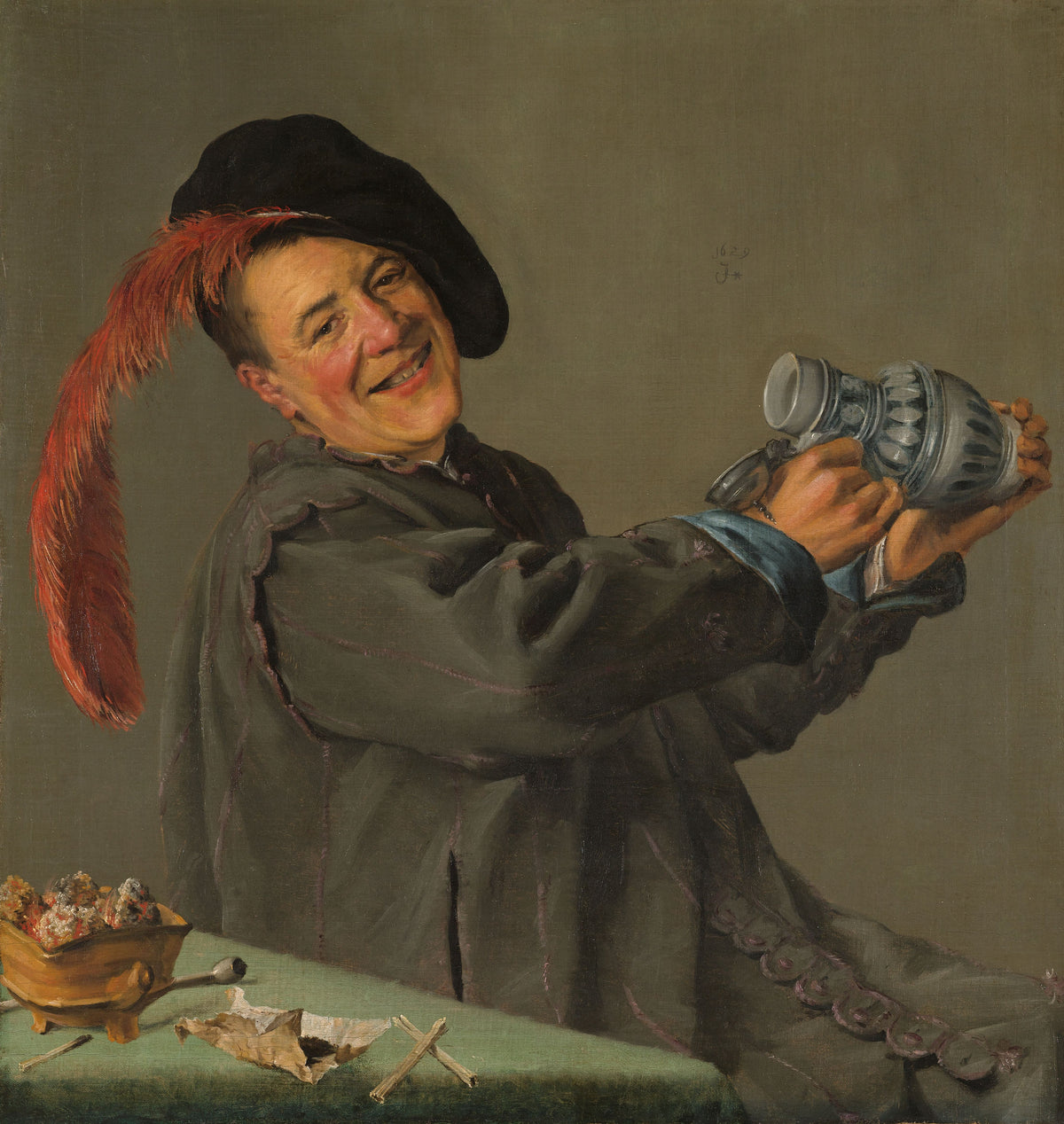
Leyster is known for lively genre scenes of musicians, drinkers and children, often lit by candlelight, and for portraits. The Jolly Drinker (1629), Rijksmuseum, Amsterdam, carried an attribution to Hals until her monogram was found in 1893. Her Self-Portrait (about 1630), National Gallery of Art, Washington, shows her at the easel. Man Offering Money to a Young Woman (1631) is another key work.
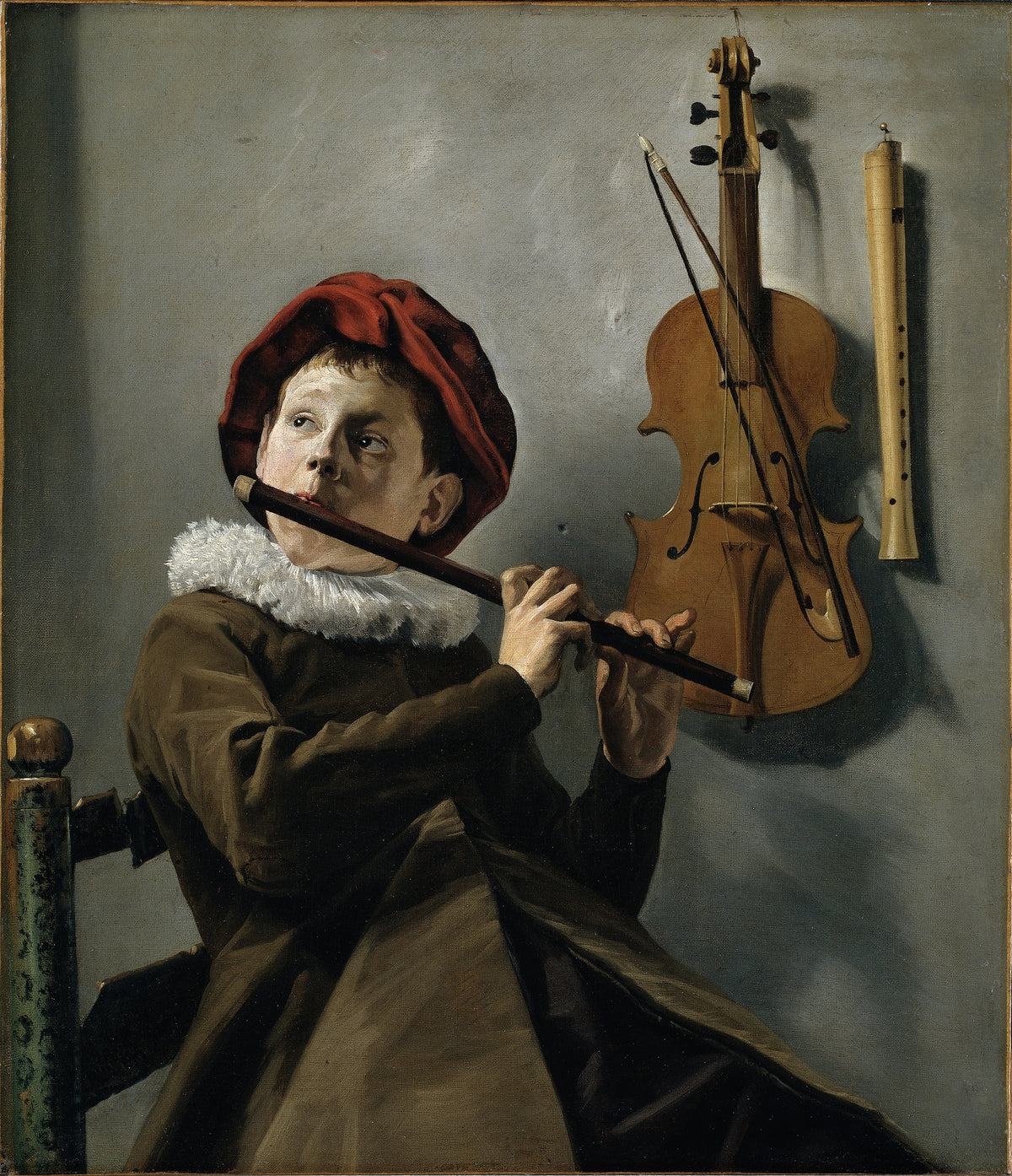
Judith Leyster prints: reproductions of the Dutch Golden Age painter's genre scenes and self-portrait. The collection includes The Serenade (1629), The Last Drop (The Gay Cavalier) (1629), Man Offering Money to a Young Woman (1631), Boy Playing the Flute (1630) and her Self-Portrait (1630).
Our selection focuses on music, drinking and candlelit encounters painted in Haarlem between 1629 and 1631. The Merry Drinker (1629) and The Serenade show her quick brushwork and cheerful figures, while Man Offering Money to a Young Woman is a quieter night scene. The palette is warm browns and ochres against dark grounds.
These scenes suit living rooms, music rooms, home bars and studies. All prints are museum-quality reproductions, available unframed or framed with acrylic glazing, with free shipping and import duties covered.