Artist · 9 prints
Kota school Prints
About the Kota School
Kota (Kotah) painting is a branch of the Rajasthani miniature tradition from the princely state of Kota, in present-day Rajasthan. Kota and its neighbour Bundi shared one school of painting from the 17th century to the end of the 19th, marked by unusually strong Mughal influence and a richness that recalls Deccan painting, since both courts were often in contact with the Deccan. Kota painting had a brilliant late phase under Ram Singh II, who reigned from 1828 to 1866.
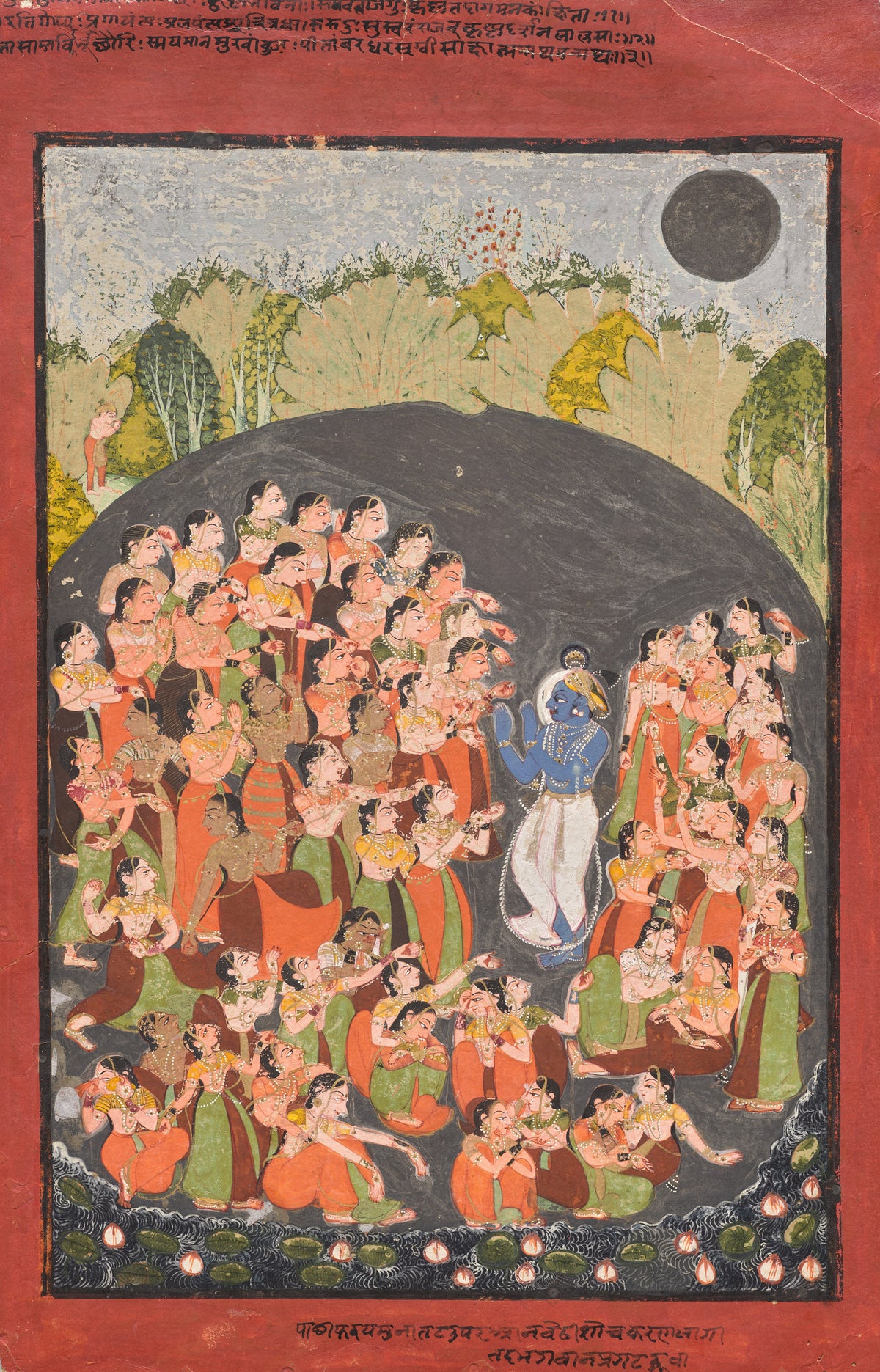
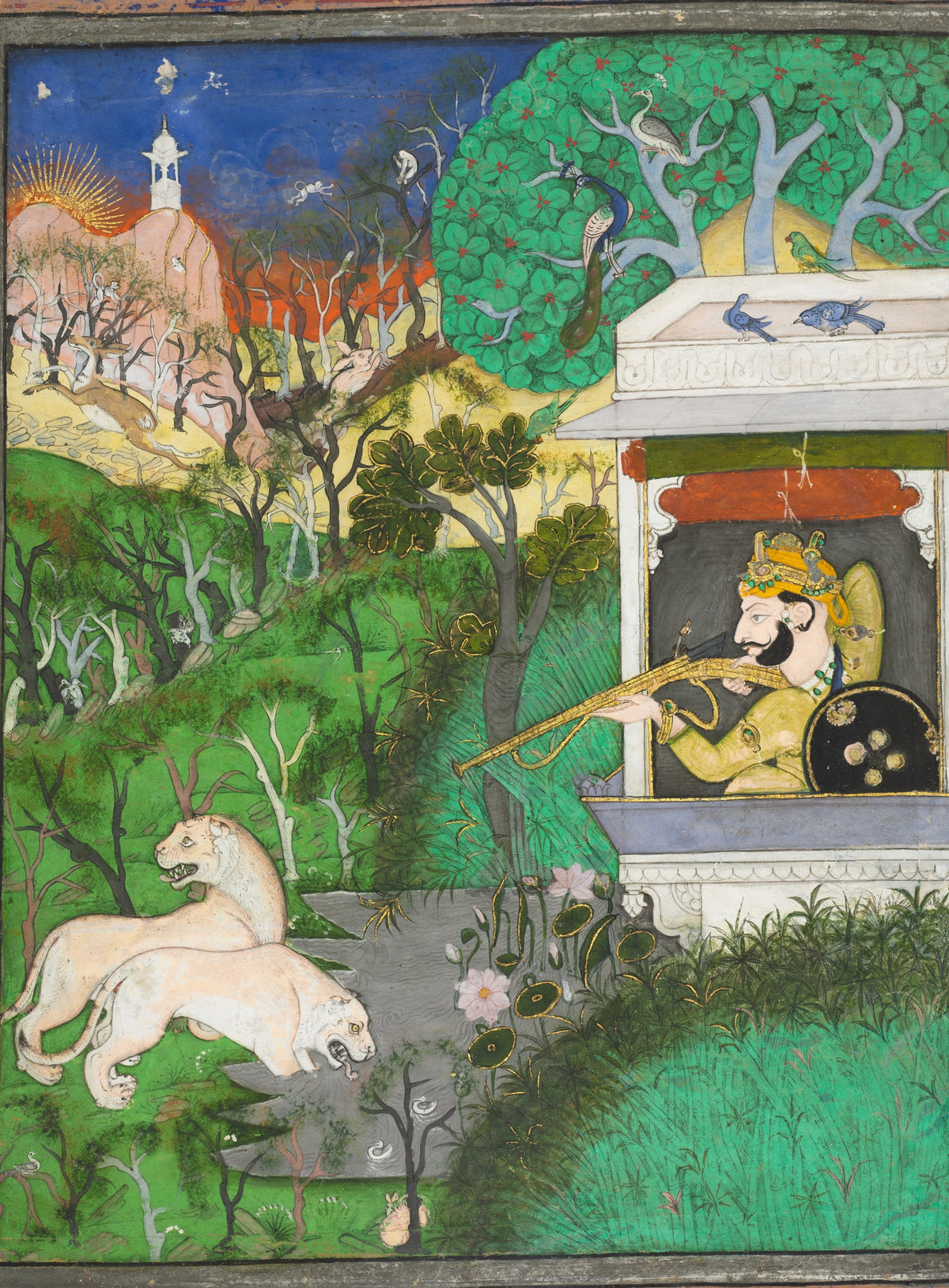
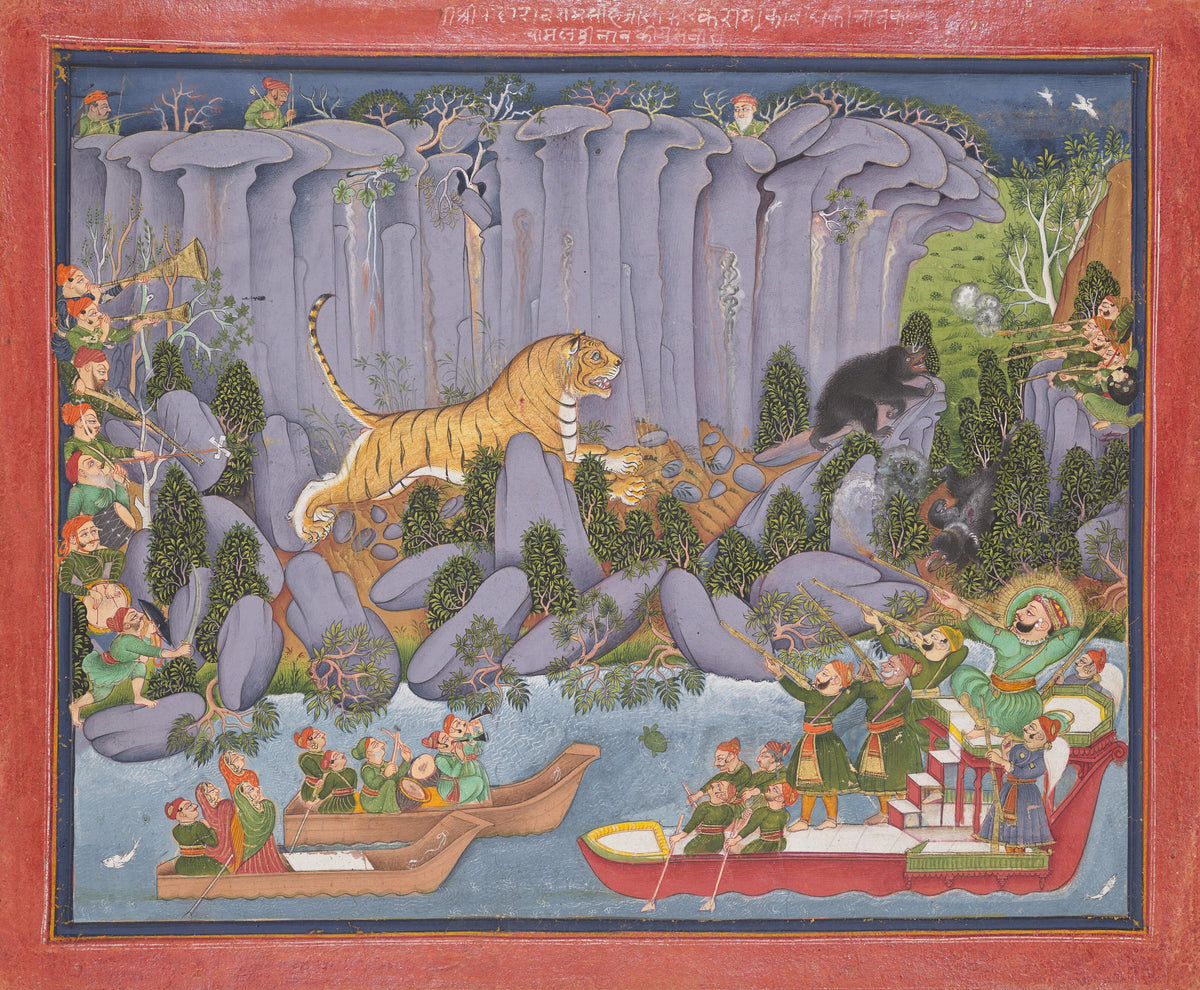
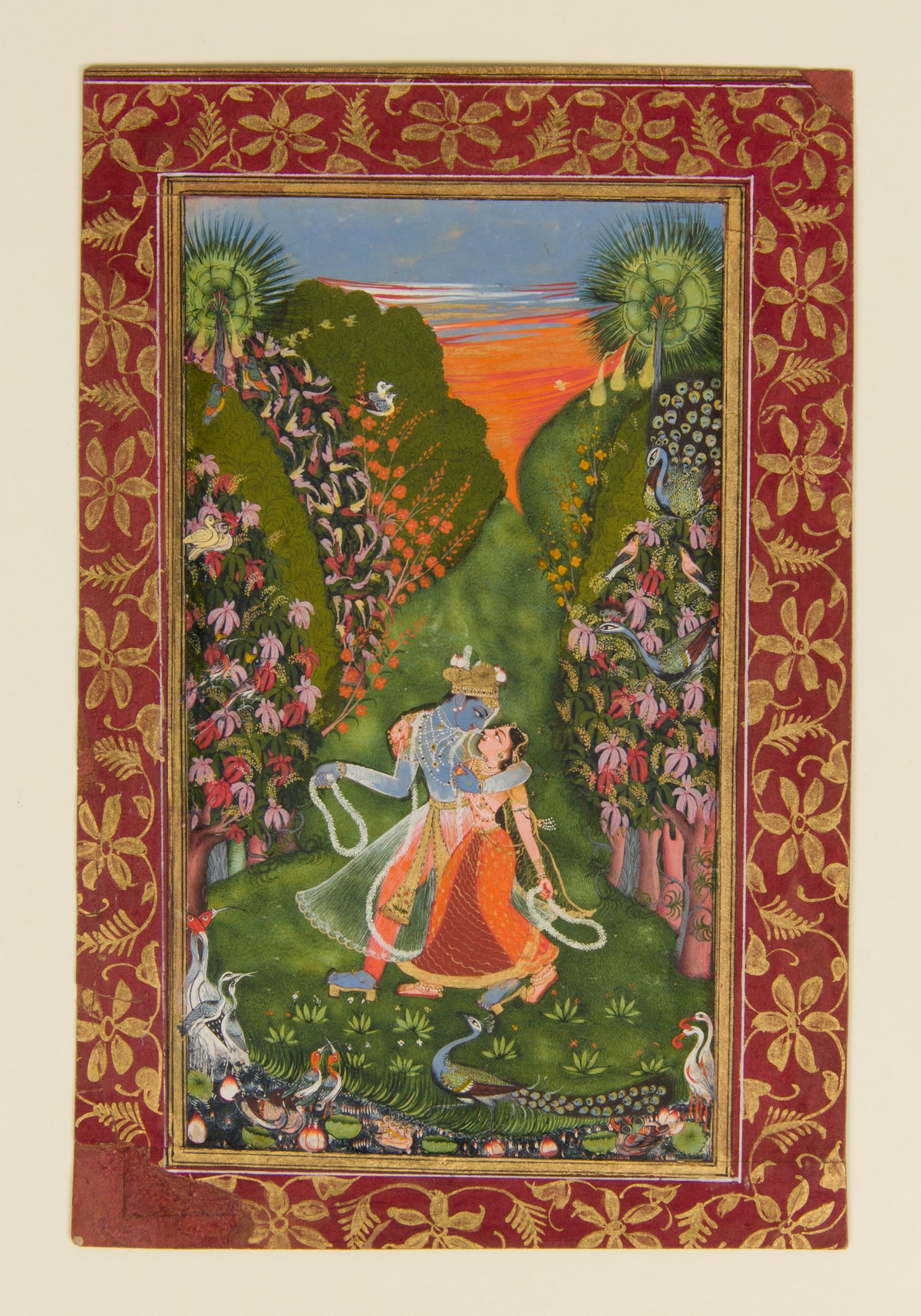
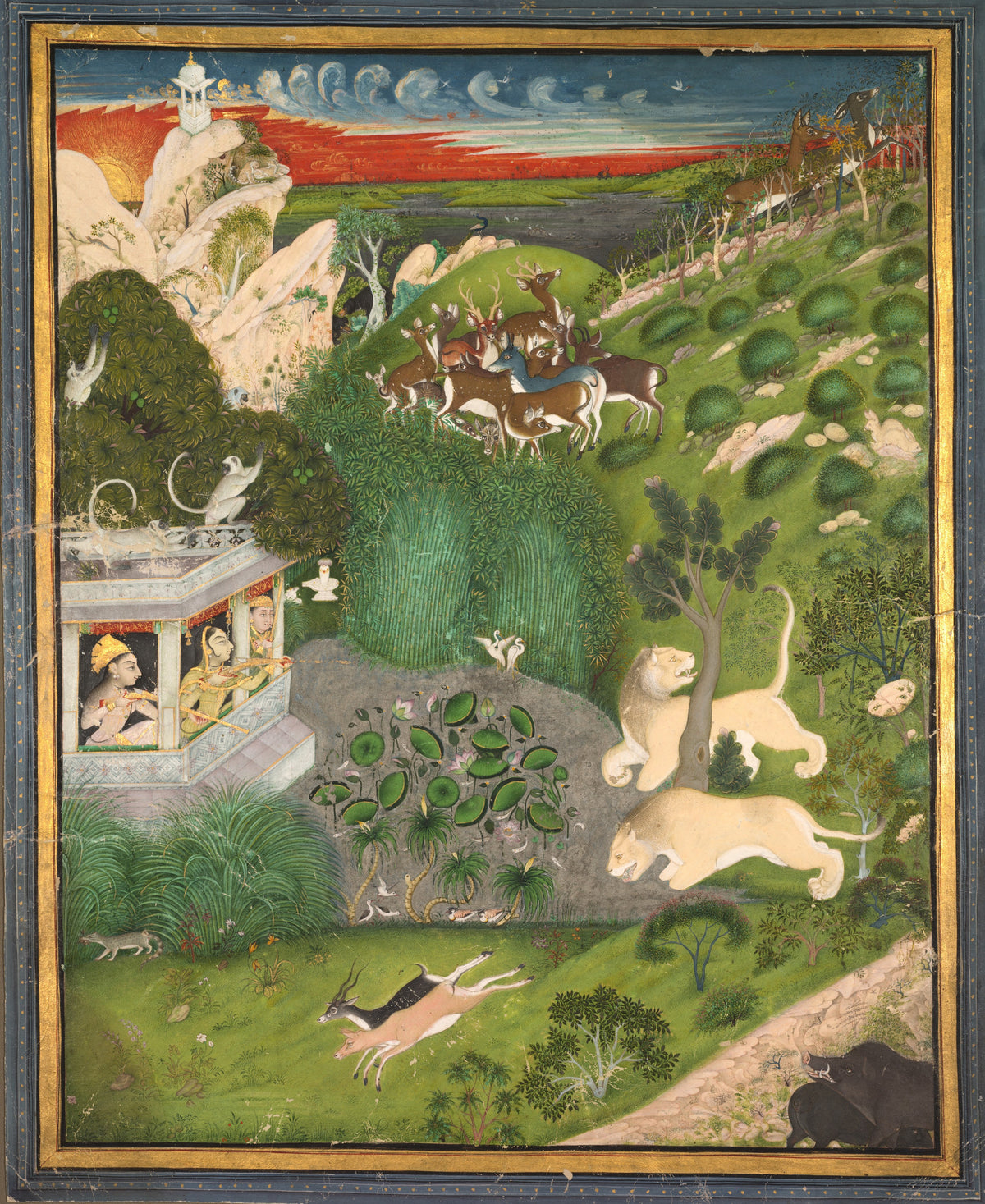
Kota artists are best known for royal hunts: tigers and other game pursued through thick, hilly jungle, painted with lush vegetation and vivid movement. They also painted many aspects of the ruler's life, including court music and dance, and devotional scenes of Krishna and Radha. Bundi and Kota work is so close that some paintings can only be attributed to one court or the other.
Kota school prints: reproductions of Rajasthani miniature paintings from the court of Kota, made between the late 17th and mid-19th centuries. The collection includes A Raja Smoking a Hookah (1690), Radha and Krishna Walk in a Flowering Grove (1720), Royal Women Shooting from a Pavilion (1810), Tiger Hunt of Raja Ram Singh II (1830) and Maharaja Chattarsol of Kota Shooting Lions (1860).
This selection leans towards the hunt, with tiger hunts in the jungle and from a boat, lion shooting, and royal women taking aim from a pavilion. Court music and dance, a ruler worshipping Krishna, and the Rasamandala dance of Krishna and the gopis complete it.
The hunting scenes, full of greens and movement, suit studies, libraries, dining rooms and offices; the devotional pages fit quieter rooms. All prints are museum-quality reproductions, available unframed or framed with low-glare acrylic glazing, with free shipping and import duties covered.