Artist · 54 prints
László Moholy-Nagy Prints
About László Moholy-Nagy
László Moholy-Nagy was a Hungarian-born artist, designer and teacher, born on 20 July 1895 in Bácsborsód, Hungary. He studied law in Budapest and served in the First World War before turning to art. In the early 1920s he moved to Berlin, and in 1923 he joined the Bauhaus, Germany's famous school of art and design, where he taught the foundation course and ran the metal workshop until 1928. He left Nazi Germany in 1934, lived in Amsterdam and London, and in 1937 moved to Chicago to found the New Bauhaus, later the Institute of Design. He died in Chicago on 24 November 1946.
Moholy-Nagy believed art should embrace modern technology and industry and worked across painting, photography, film and the stage. With his first wife, Lucia Moholy, he made photograms, pictures created by placing objects directly on light-sensitive paper. His Light Prop for an Electric Stage, shown in Paris in 1930, was a moving machine made to play with light.
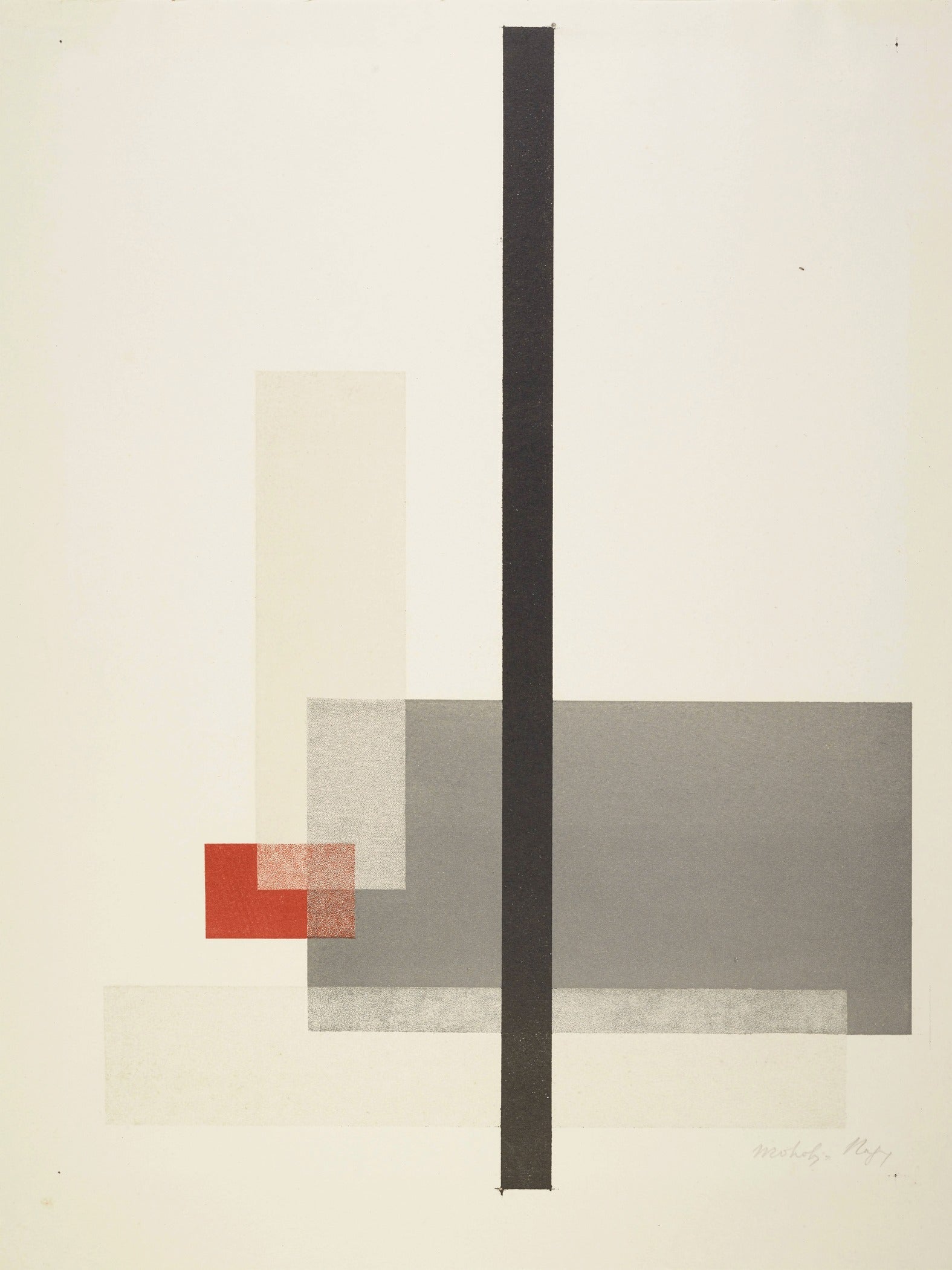
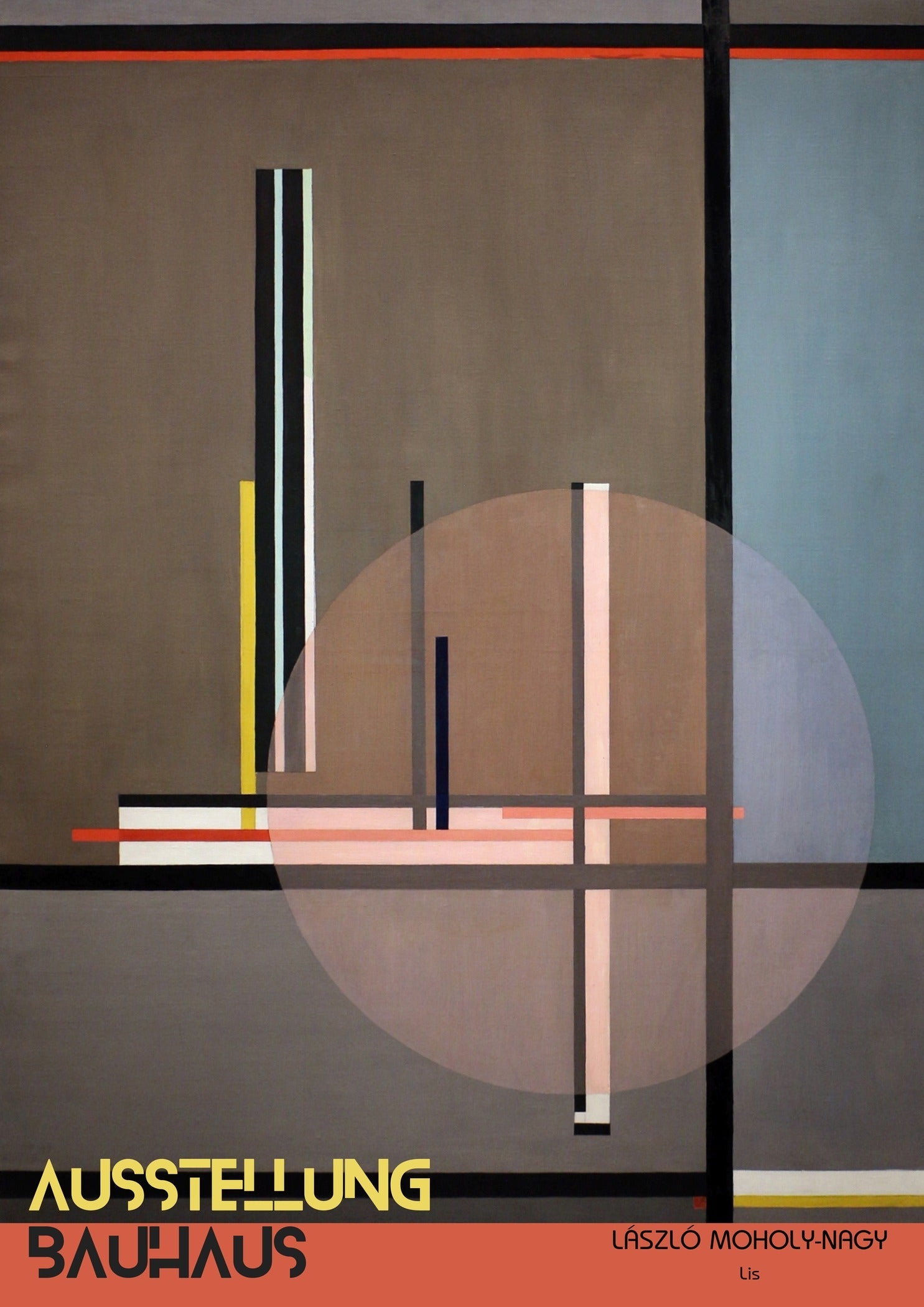
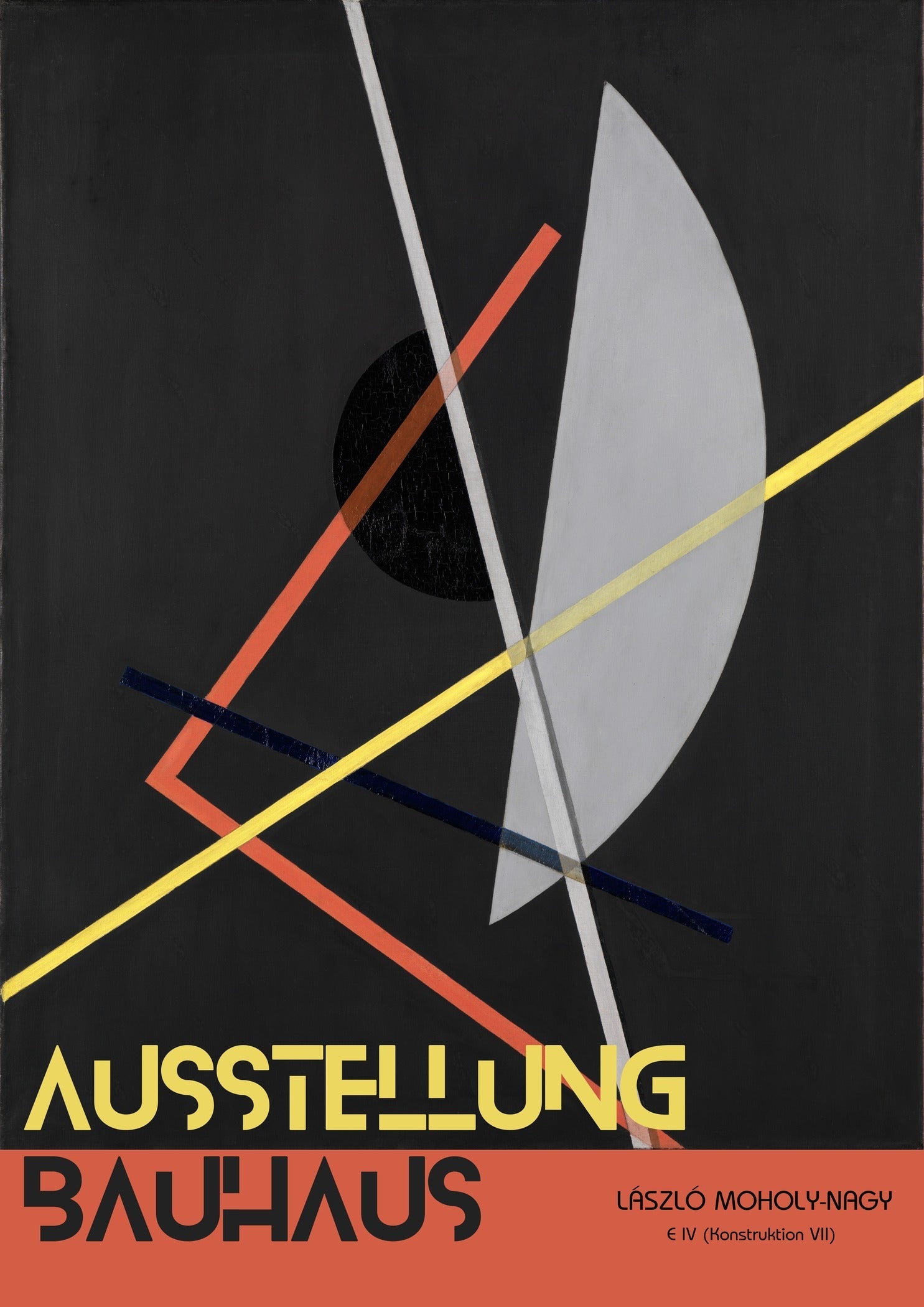
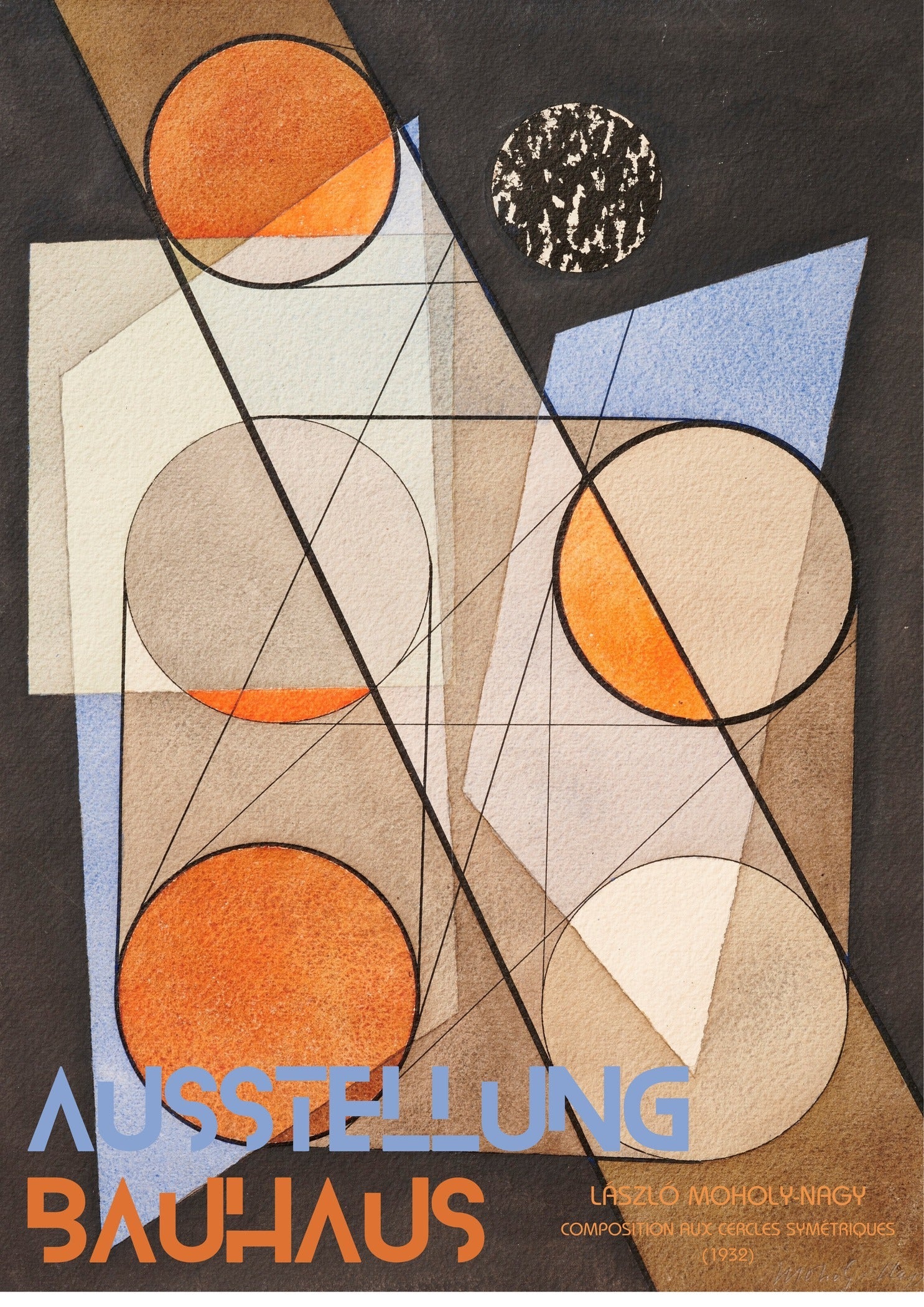
László Moholy-Nagy prints: reproductions of paintings, prints, photograms and photographs by the Hungarian Bauhaus artist László Moholy-Nagy, made between 1920 and 1946. The collection includes 19 (1921), K VII (1922), Kestnermappe (Komposition) (1923), From the Radio Tower, Berlin (1928) and Space Construction (1945).
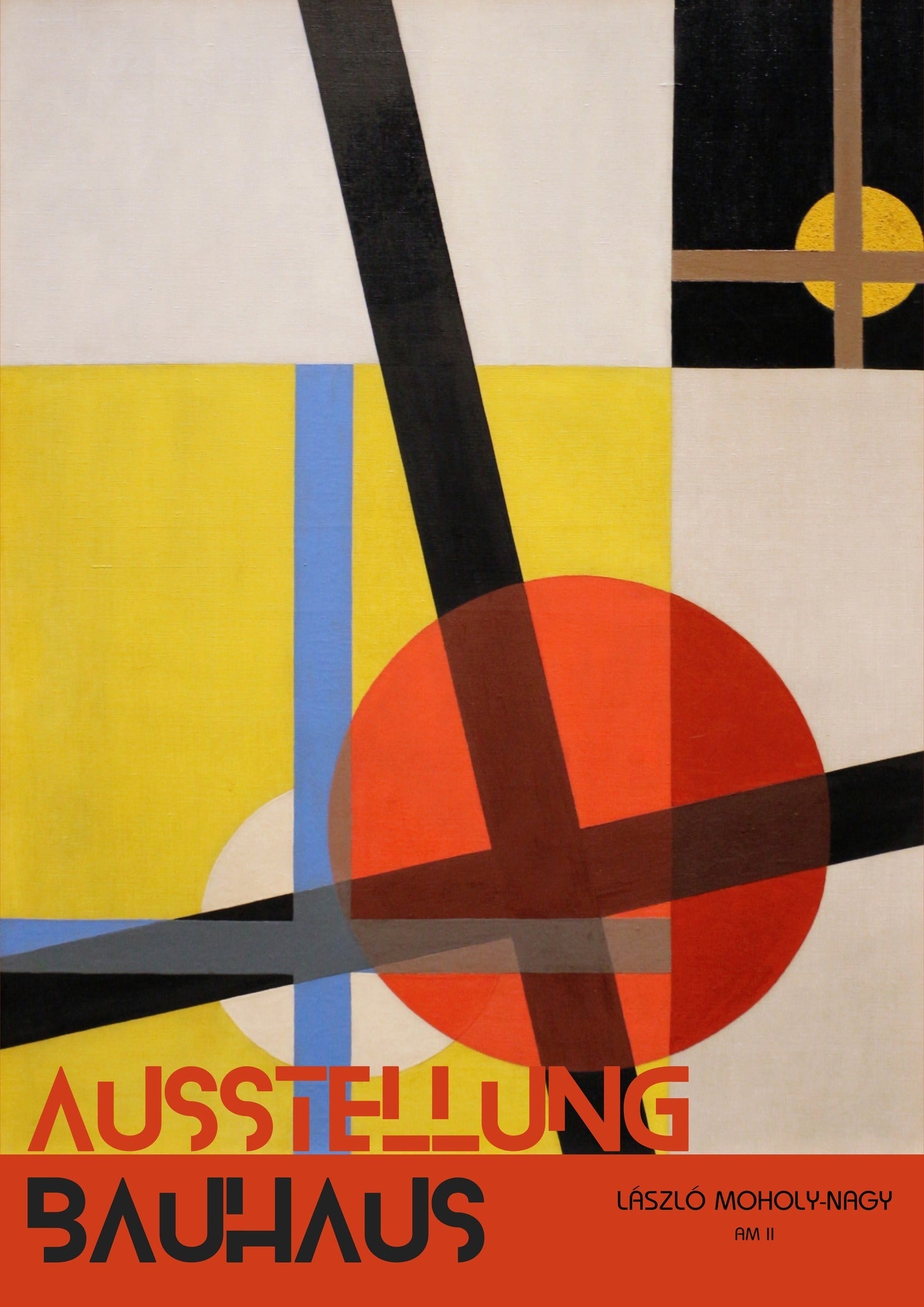
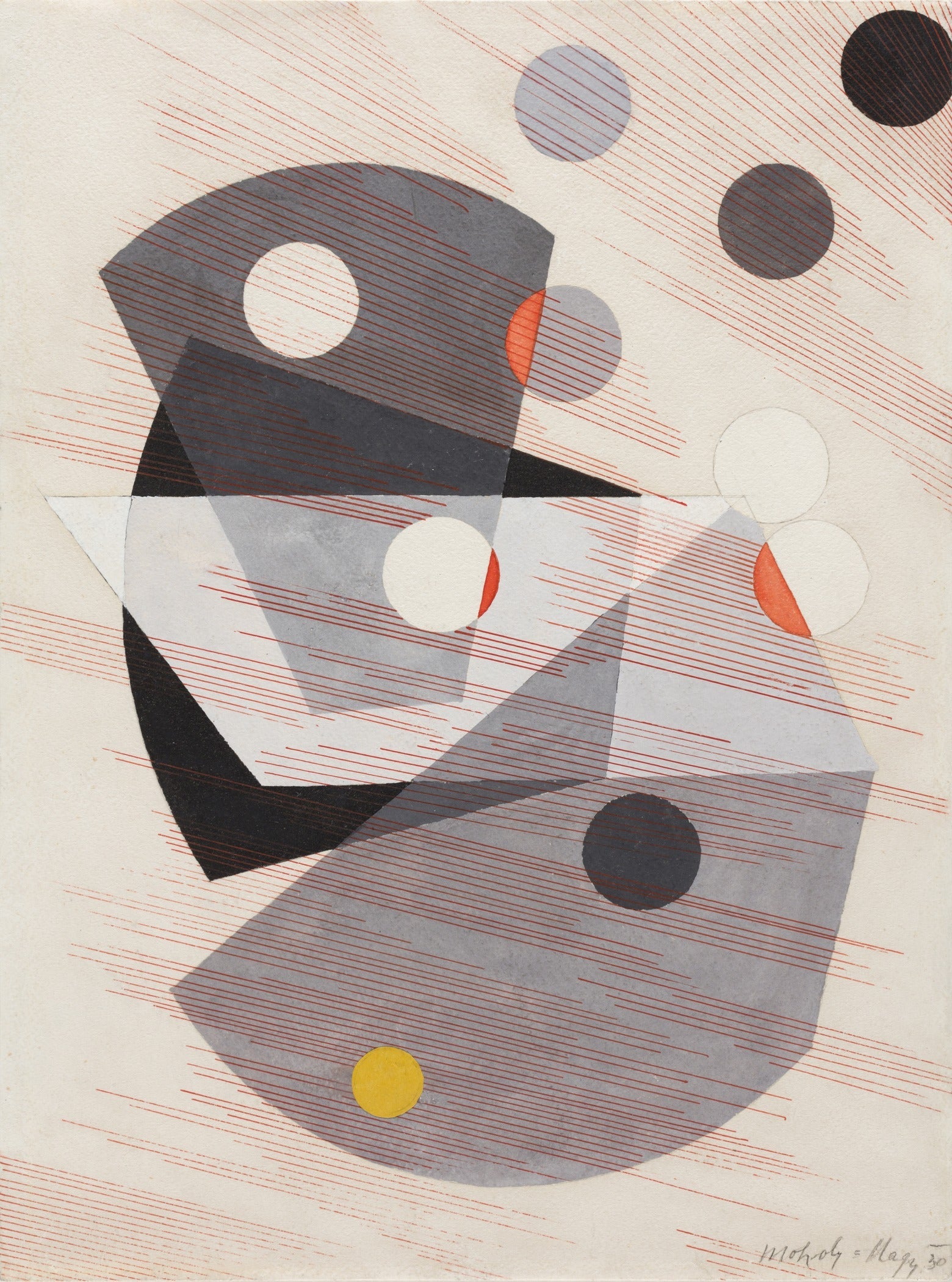
This selection concentrates on Moholy-Nagy's Constructivist compositions of the early 1920s: overlapping circles, bars and transparent planes in black, red, yellow and grey, including several of his Konstruktion prints. It also includes photograms from 1922 to 1926, his Bauhaus postcard and book designs, a photograph from the Berlin radio tower, and later abstract works from the 1930s and 1940s.
The clean geometric compositions suit home offices, studios and modern living rooms, and the black-and-white photograms work well grouped in a hallway. All prints are museum-quality reproductions, available unframed or framed with low-glare acrylic glazing, with free shipping and import duties covered.