Artist · 6 prints
Nicolaes Maes Prints
About Nicolaes Maes
Nicolaes Maes (1634–1693) was a Dutch painter of the Golden Age. He was born in Dordrecht in January 1634, the son of a prosperous merchant, and received his first drawing lessons there before studying with Rembrandt in Amsterdam. By the mid-1650s he was working in Dordrecht again, where he married in 1654. He later visited Antwerp to study Flemish painting, and in 1673 he settled in Amsterdam, where he died in December 1693.
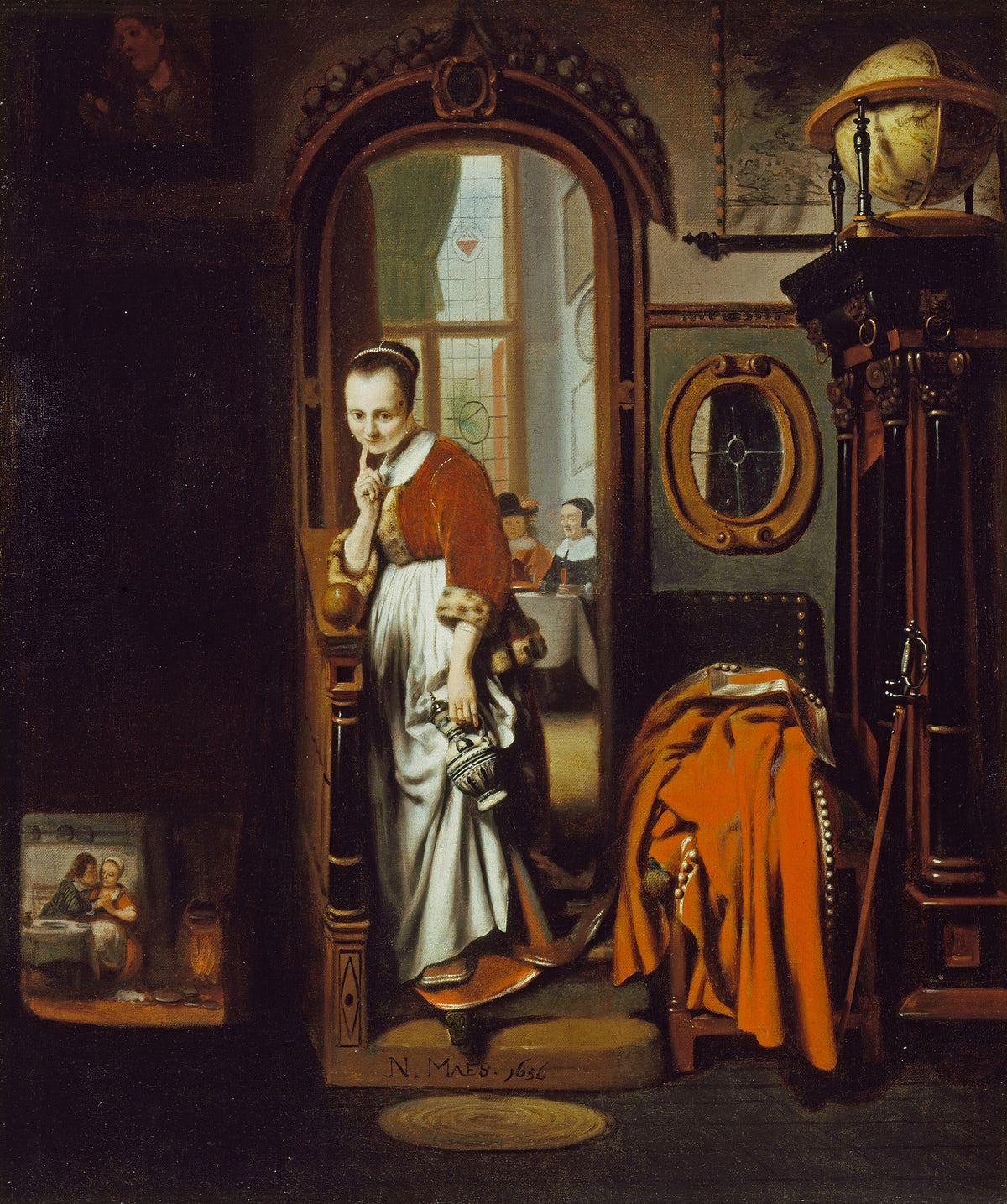
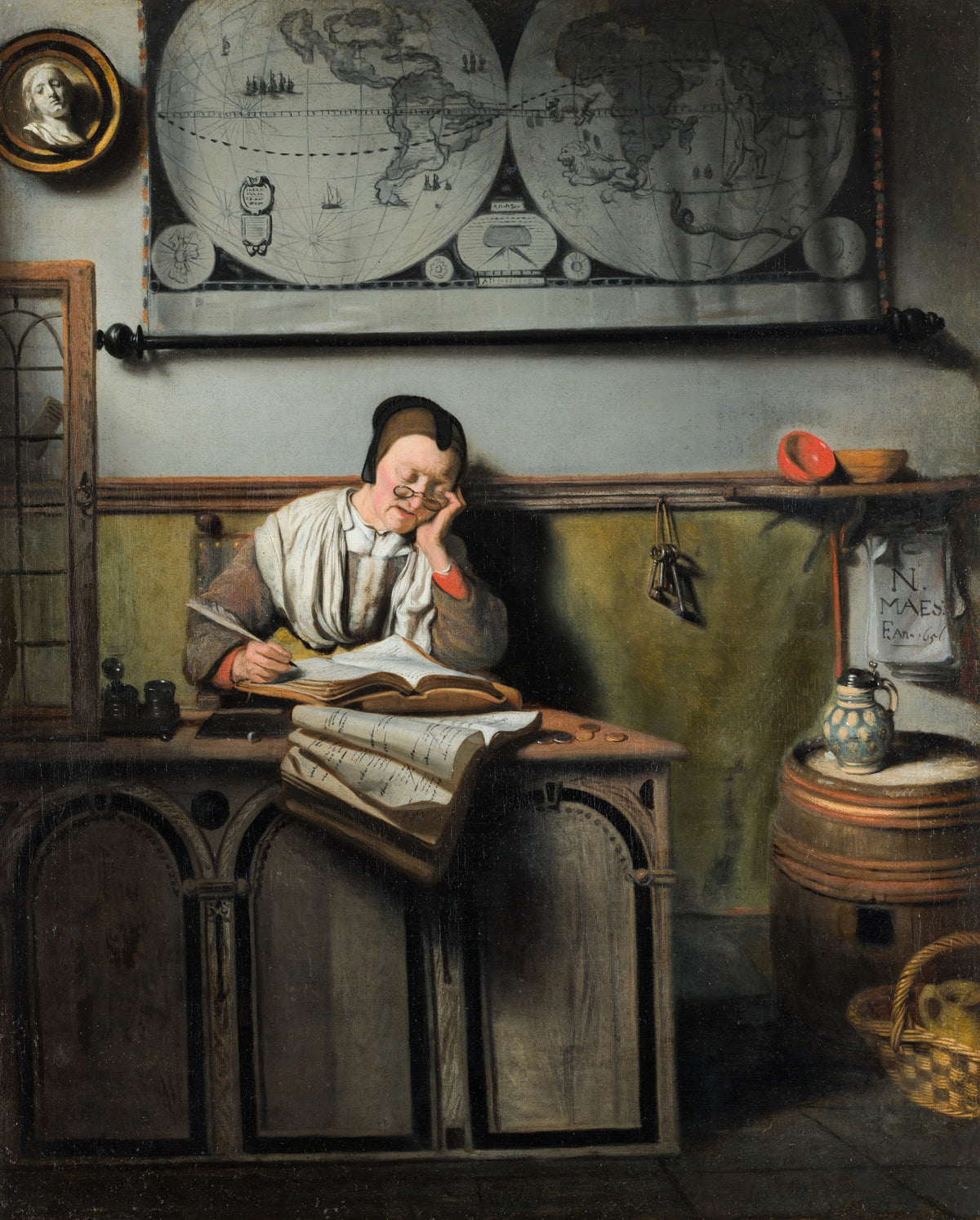
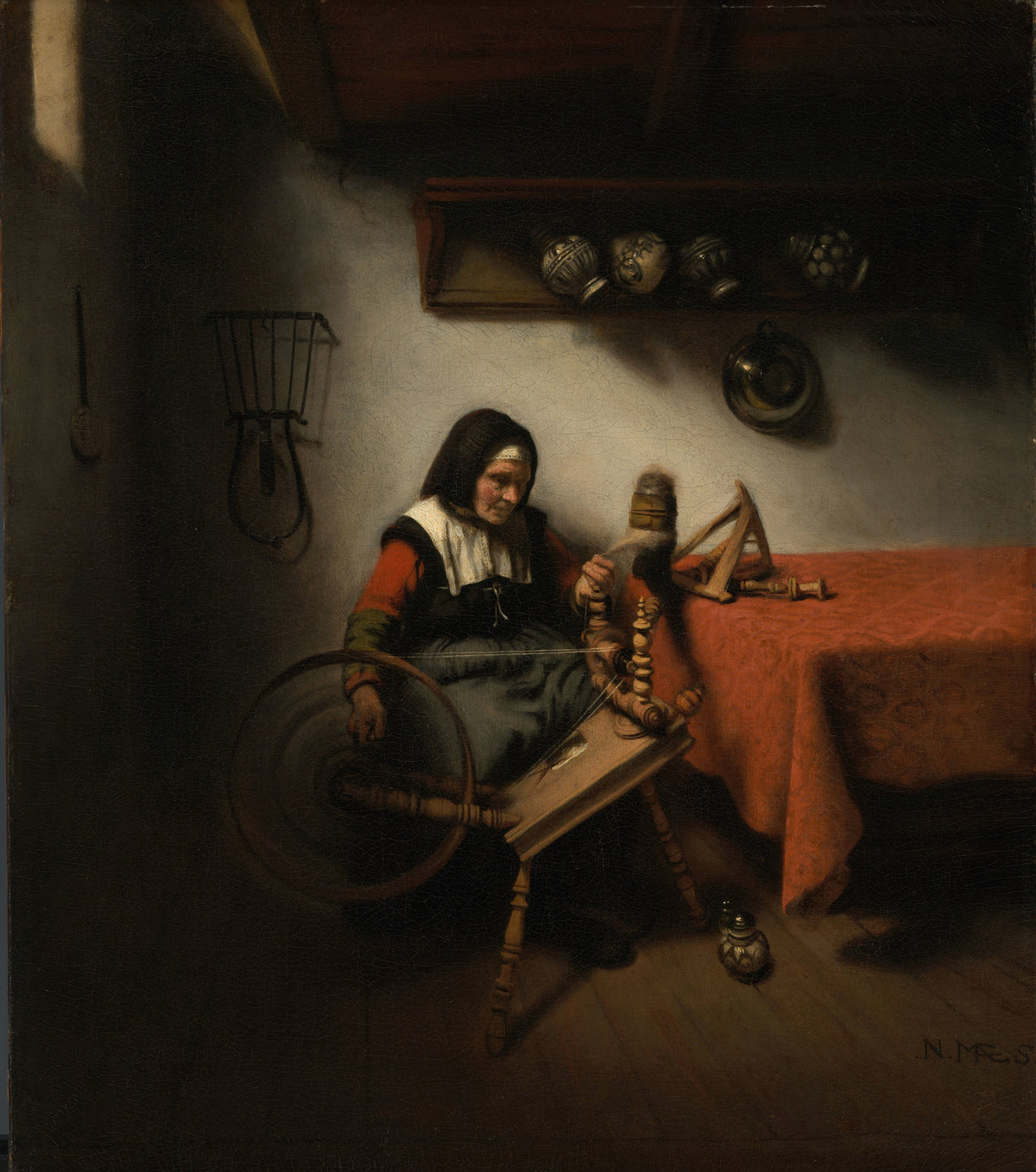
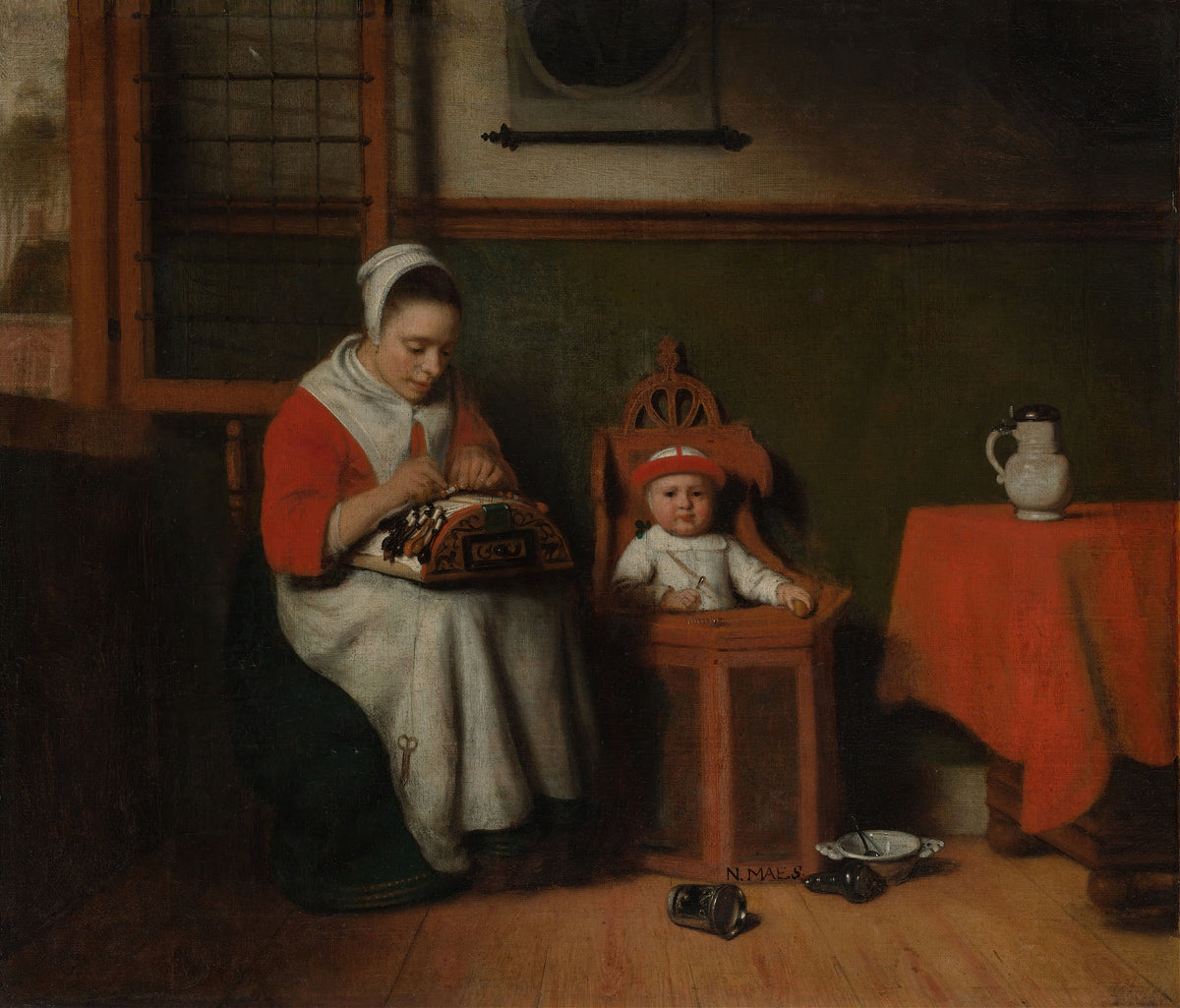
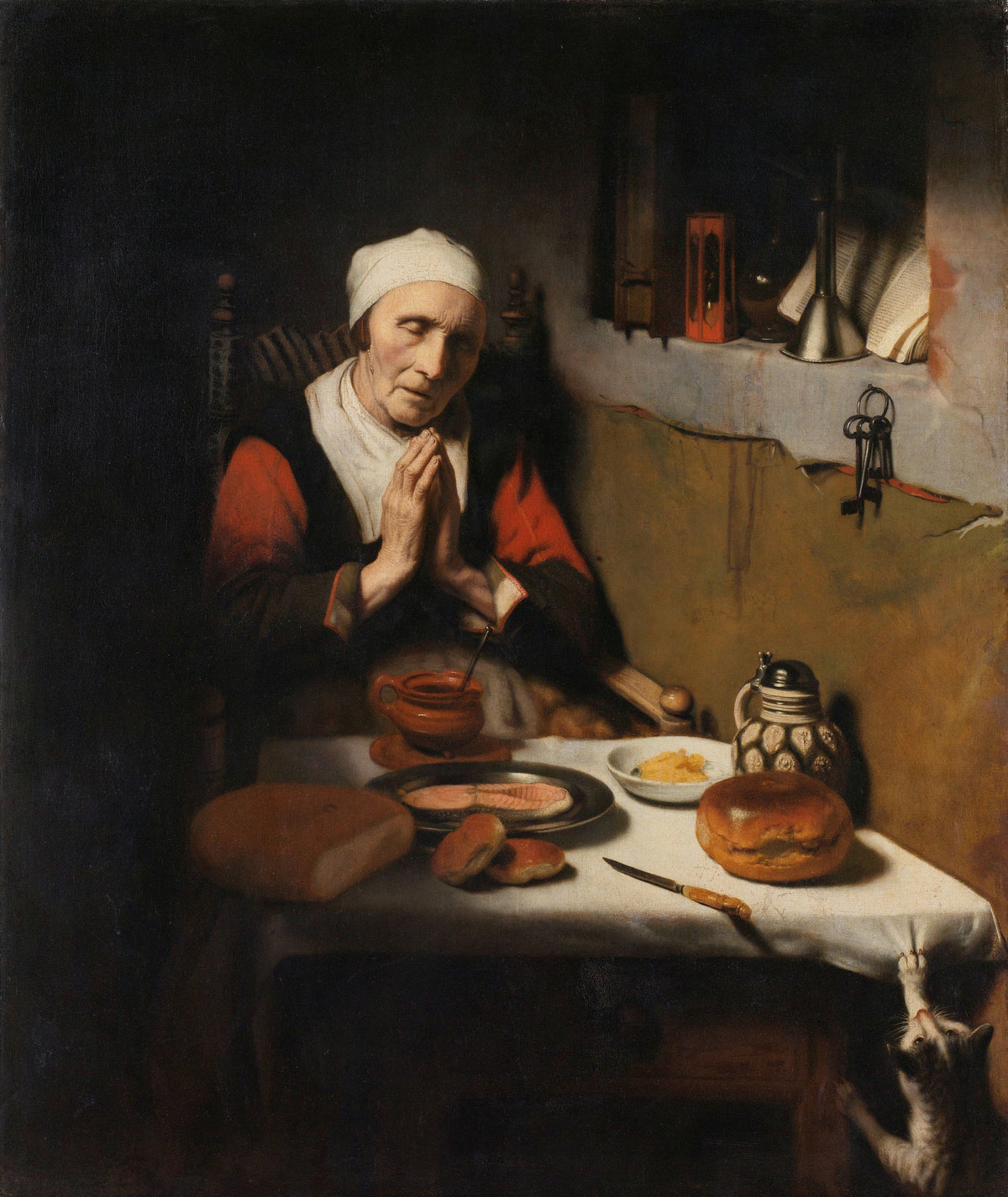
Maes is best known for the small domestic interiors he painted in the mid-1650s, showing women spinning, praying, making lace or listening from a staircase, lit with the warm light and deep shadow he learned from Rembrandt. From 1656 he also painted portraits, and in later years he worked mainly as a fashionable portrait painter. Key works include Old Woman Saying Grace, known as The Prayer without End (c. 1656), in the Rijksmuseum, Amsterdam, and The Account Keeper (1656), in the Saint Louis Art Museum.
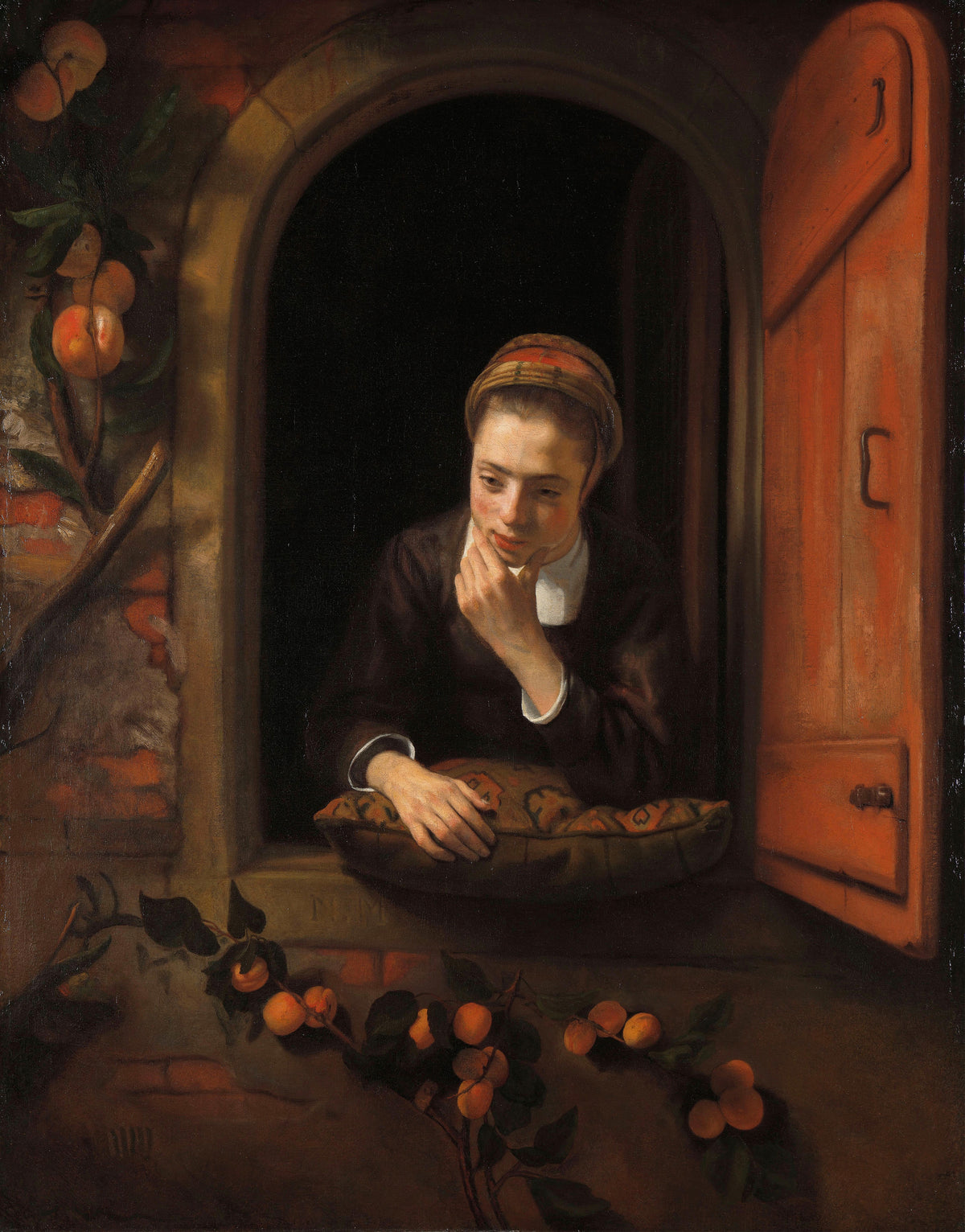
Nicolaes Maes prints: reproductions of Dutch Golden Age genre paintings by a pupil of Rembrandt. The collection includes The Listening Housewife (The Eavesdropper) (1656), The Account Keeper (1656), The Lacemaker (1656), Old Woman Spinning (1650) and The Daydreamer (1650).
Our selection focuses on the quiet household scenes Maes painted in the 1650s: women at work, at prayer or lost in thought, set in dim interiors with deep reds, warm browns and strong contrasts of light and shadow. The Prayer Without End shows an old woman saying grace over a simple meal. Together the works give a close view of daily life in a Dutch home.
These intimate interiors suit a reading corner, study, hallway or dining room, and work well hung as a group. All prints are museum-quality reproductions, available unframed or framed with acrylic glazing, with free shipping and import duties covered.