Artist · 10 prints
Pamela Colman Smith Prints
About Pamela Colman Smith
Pamela Colman Smith was an artist, illustrator and writer, born to American parents in Pimlico, London, on 16 February 1878 and died in Bude, Cornwall, in September 1951. She spent parts of her childhood in New York and Jamaica, and studied at the Pratt Institute in Brooklyn under Arthur Wesley Dow from 1893 to 1897. Back in London she worked with the Lyceum Theatre circle of Ellen Terry, Henry Irving and Bram Stoker, and in 1901 joined the Hermetic Order of the Golden Dawn.
Smith is best known today for the 78 cards of the Rider–Waite–Smith tarot deck, drawn in 1909 for the writer Arthur Edward Waite and now the most widely used tarot deck in the world. Waite gave detailed instructions mainly for the major cards, and much of the imagery on the others was her own invention. She also illustrated Bram Stoker's The Lair of the White Worm (1911). Pamela Colman Smith died in poverty, and her reputation has only recently caught up with her deck.
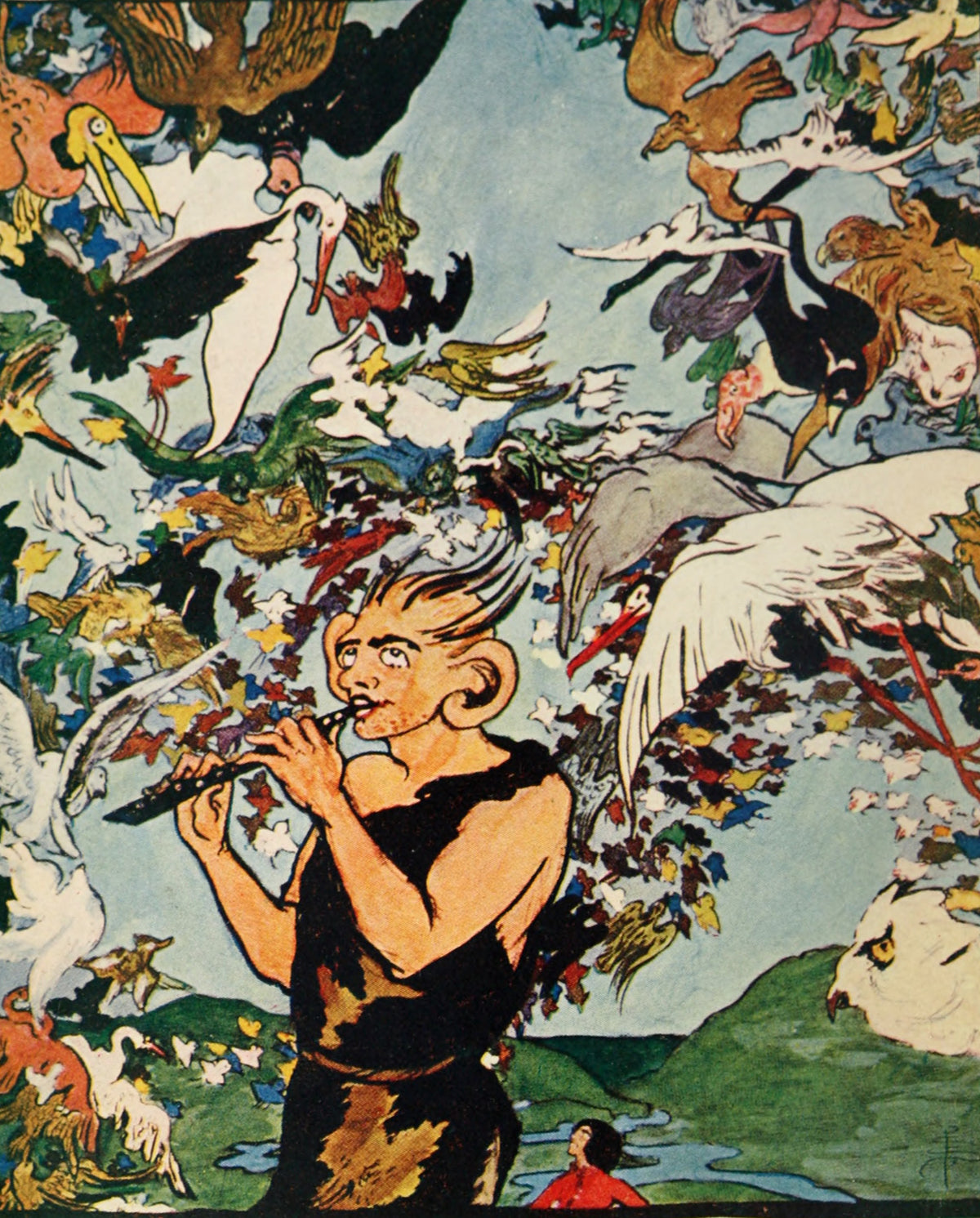
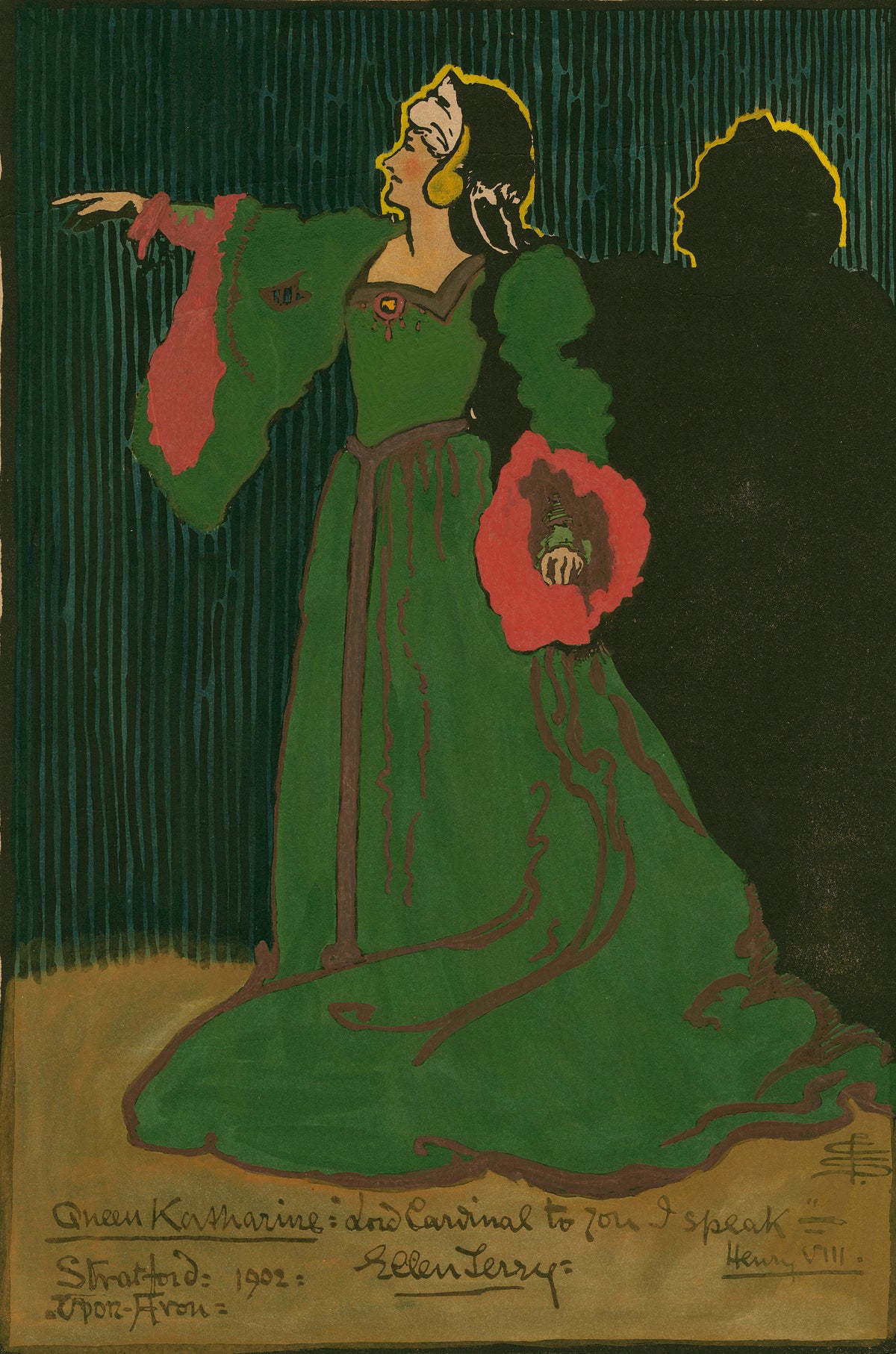
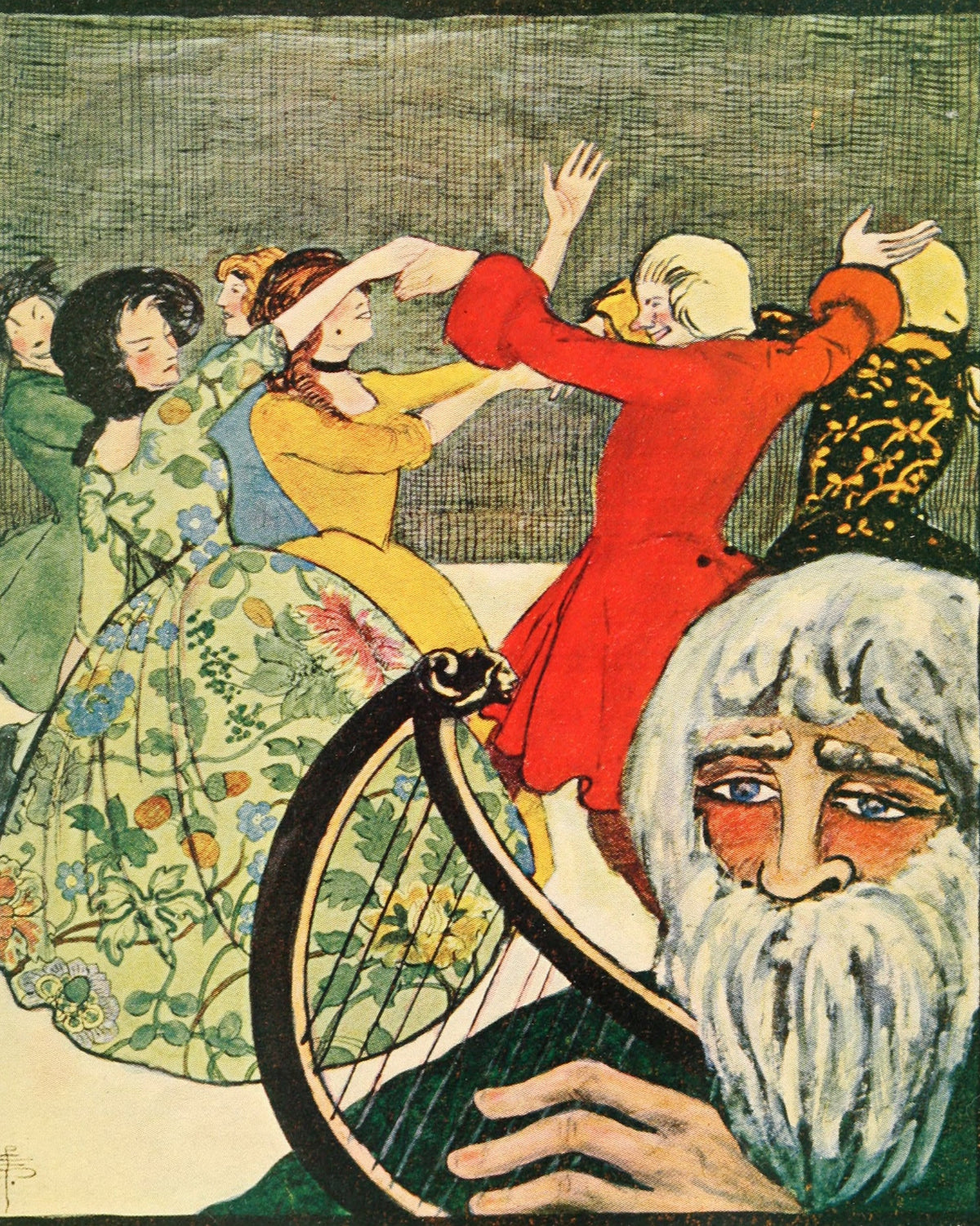
Pamela Colman Smith prints: reproductions of the illustrations Pamela Colman Smith made for books, plays and magazines between 1898 and 1902. The collection includes In Chimney Corners: Then Jack Went into the Castle (1899), In Chimney Corners: Ye Never Saw More Wonderful Beanstalks (1899), Henry VIII: Ellen Terry as Queen Katharine (1902), Macbeth: The Service and the Loyalty I Owe (1898) and Sans Gêne (1900).
This selection focuses on her work before the tarot deck. Most plates come from In Chimney Corners, a book of Irish folk tales, with giants, castles, beanstalks and dances. The rest are theatre subjects, including Shakespeare scenes and portraits of actors, plus the comic Portia Hurrying to the Railway Station. The pictures use bold outlines and flat, bright colour, close to stage design.
The bright, flat colours suit children's rooms, playrooms, reading corners and hallways, and the theatre pieces work well in studies and living rooms. All prints are museum-quality reproductions, available unframed or framed with low-glare acrylic glazing, with free shipping and import duties covered.