Artist · 217 prints
Pierre-Joseph Redouté Prints
About Pierre-Joseph Redouté
Pierre-Joseph Redouté (1759–1840) was a botanical painter born in Saint-Hubert, in the Luxembourg region of what is now Belgium. He made his career in Paris and became a favoured artist at the French court, with patrons running from Marie Antoinette and Louis XVI through the Empress Joséphine to King Louis-Philippe. He kept working through the Revolution and the regimes that followed, and collaborated with the leading botanists of his day.
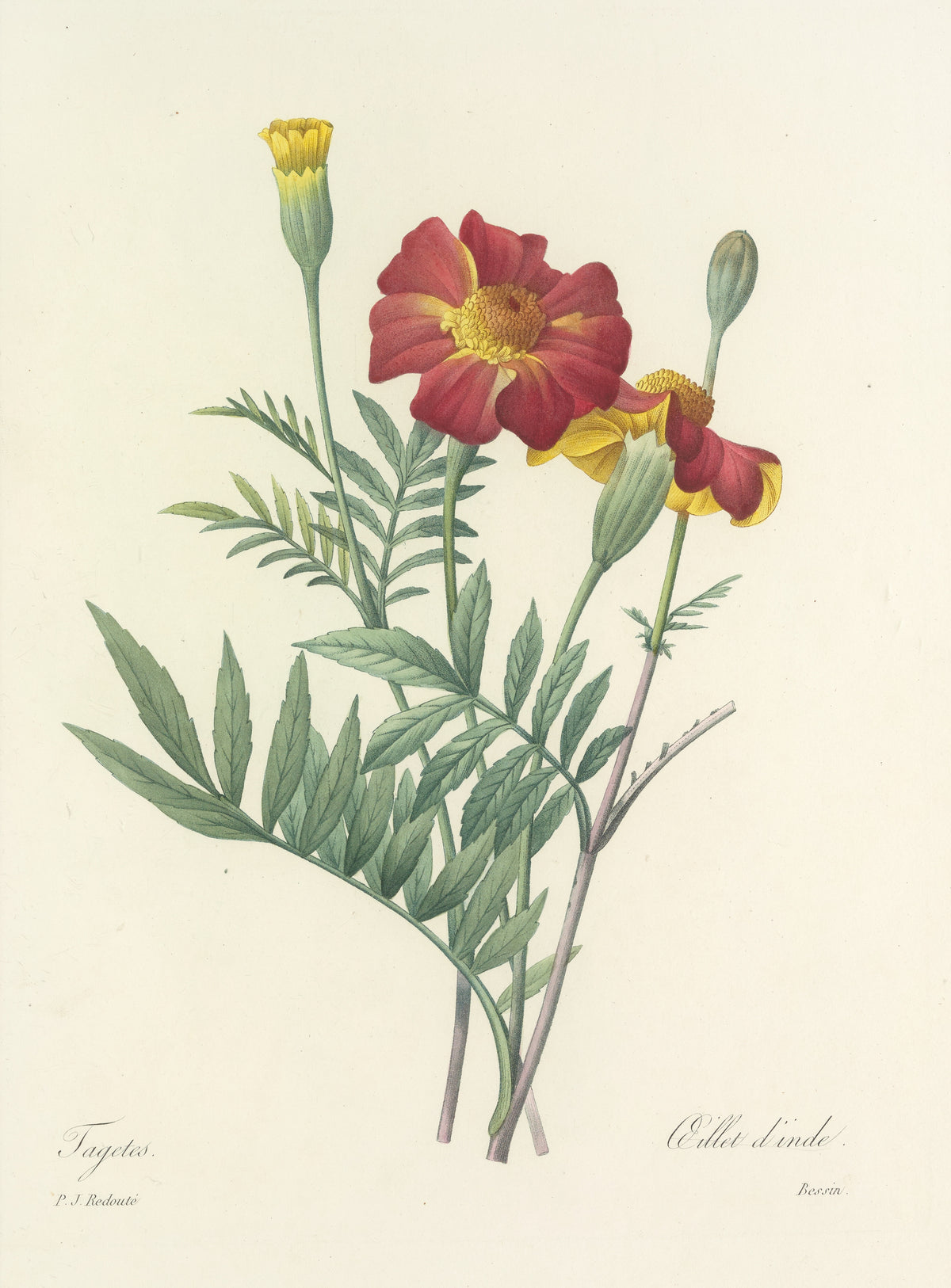
Redouté is known for watercolours of flowers that were reproduced as colour stipple engravings, a printing method that builds up tone from tiny dots, often finished by hand. His two great series are Les Liliacées, published from 1802 with some 500 plates of lilies and related plants, and Les Roses, published from 1817, whose images are still the most widely reproduced of his work. His prints were framed as pictures and copied onto china in his own lifetime. The Metropolitan Museum of Art holds his engravings and watercolours on vellum.
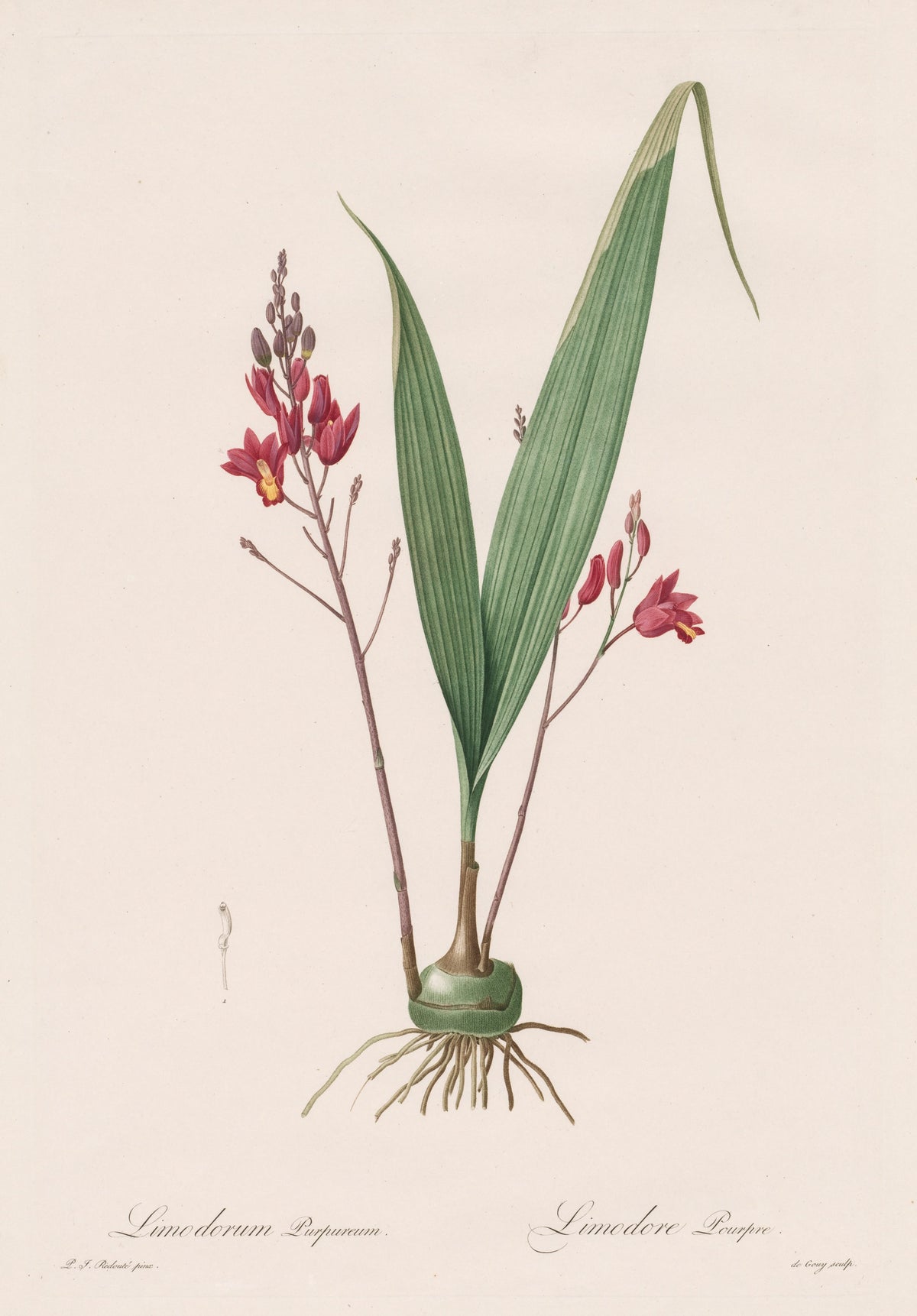
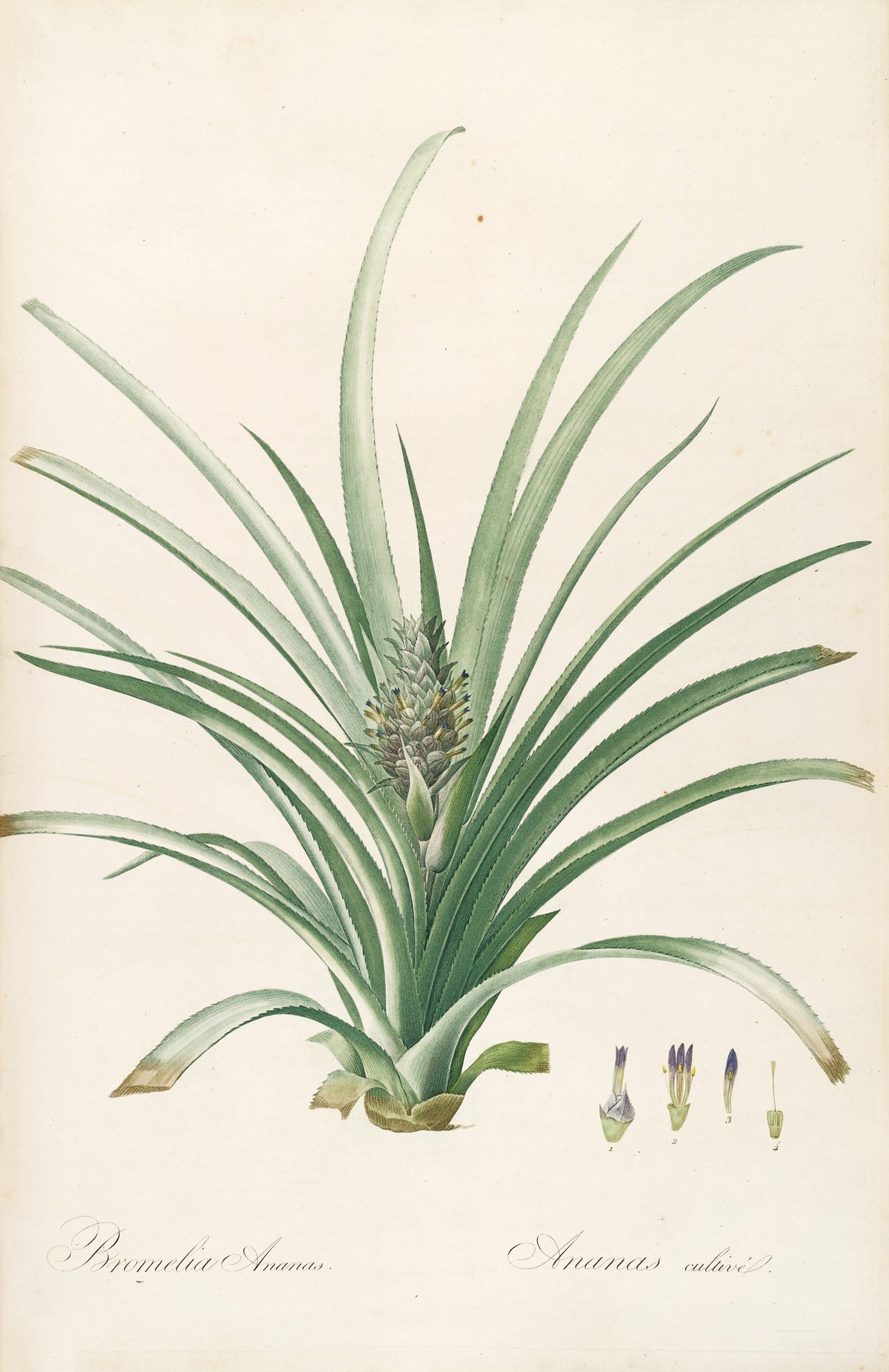
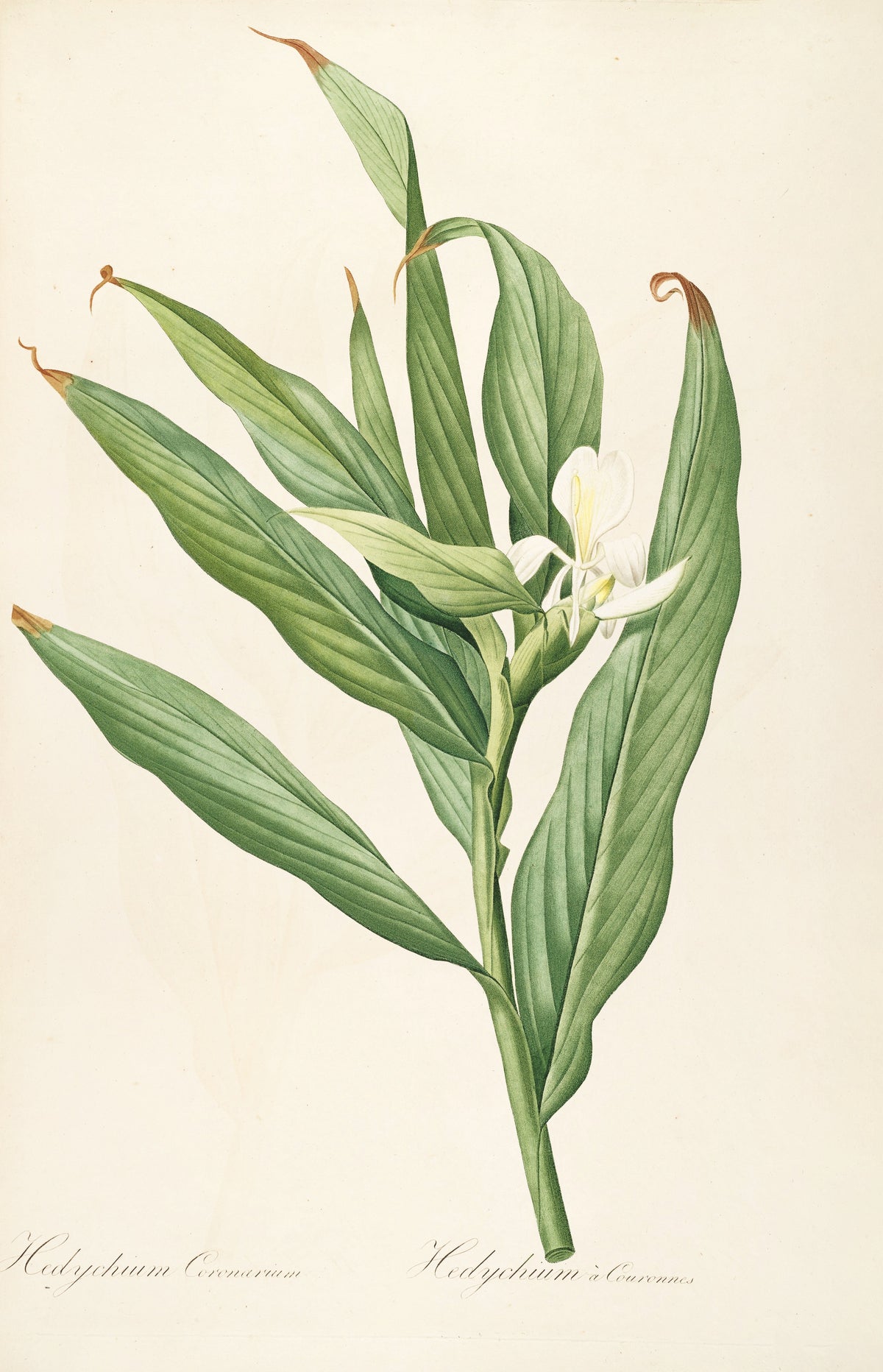
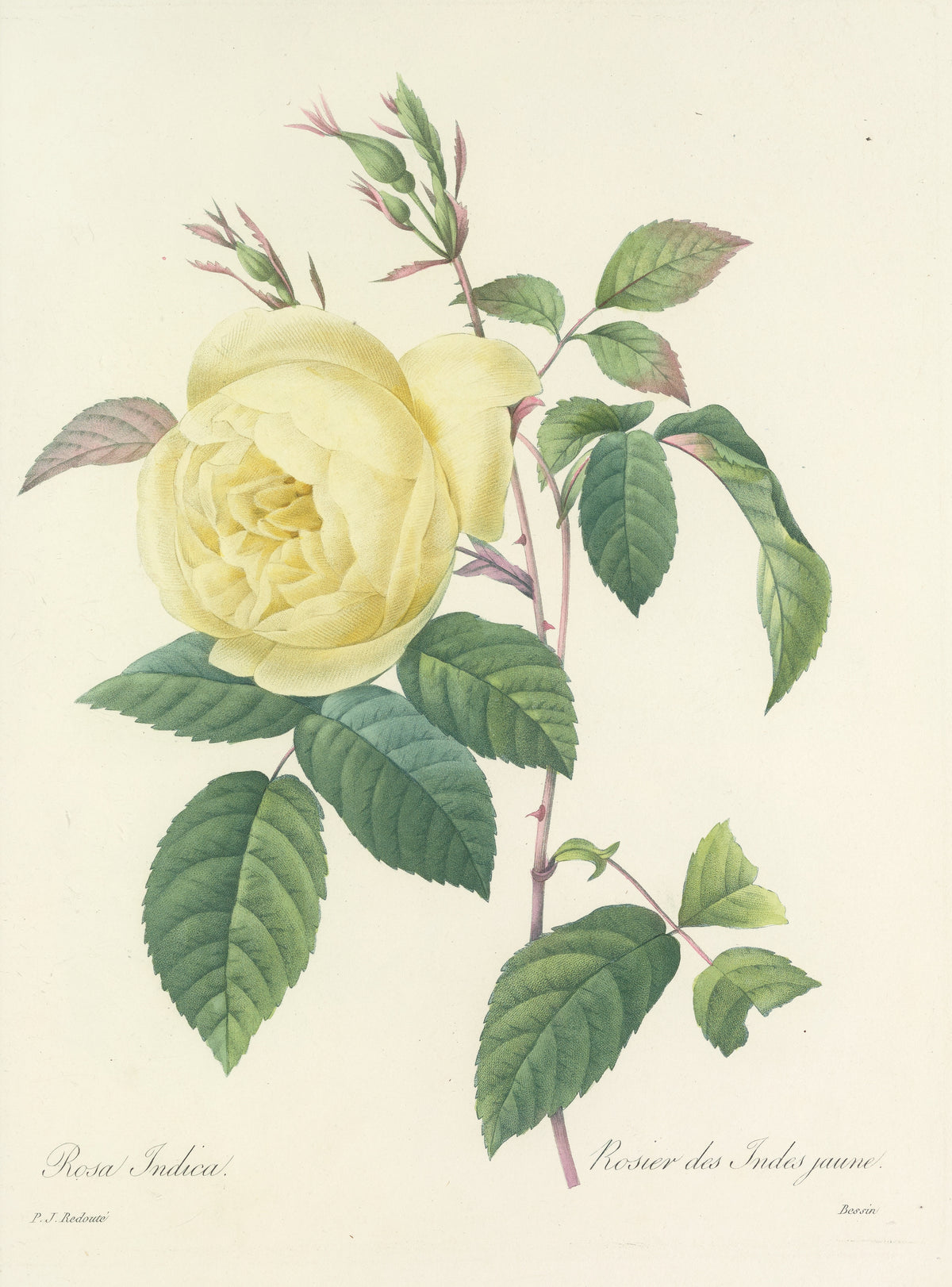
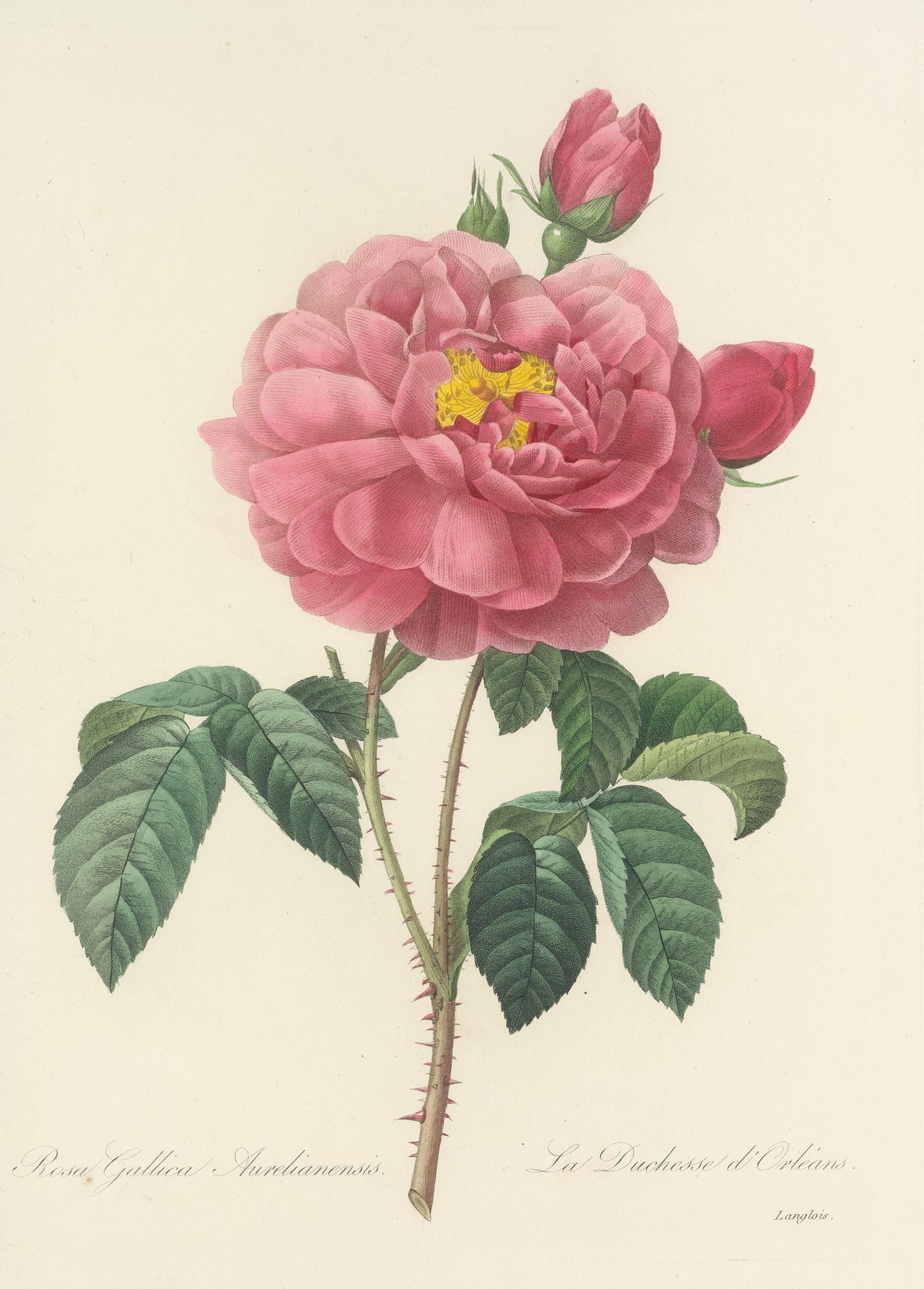
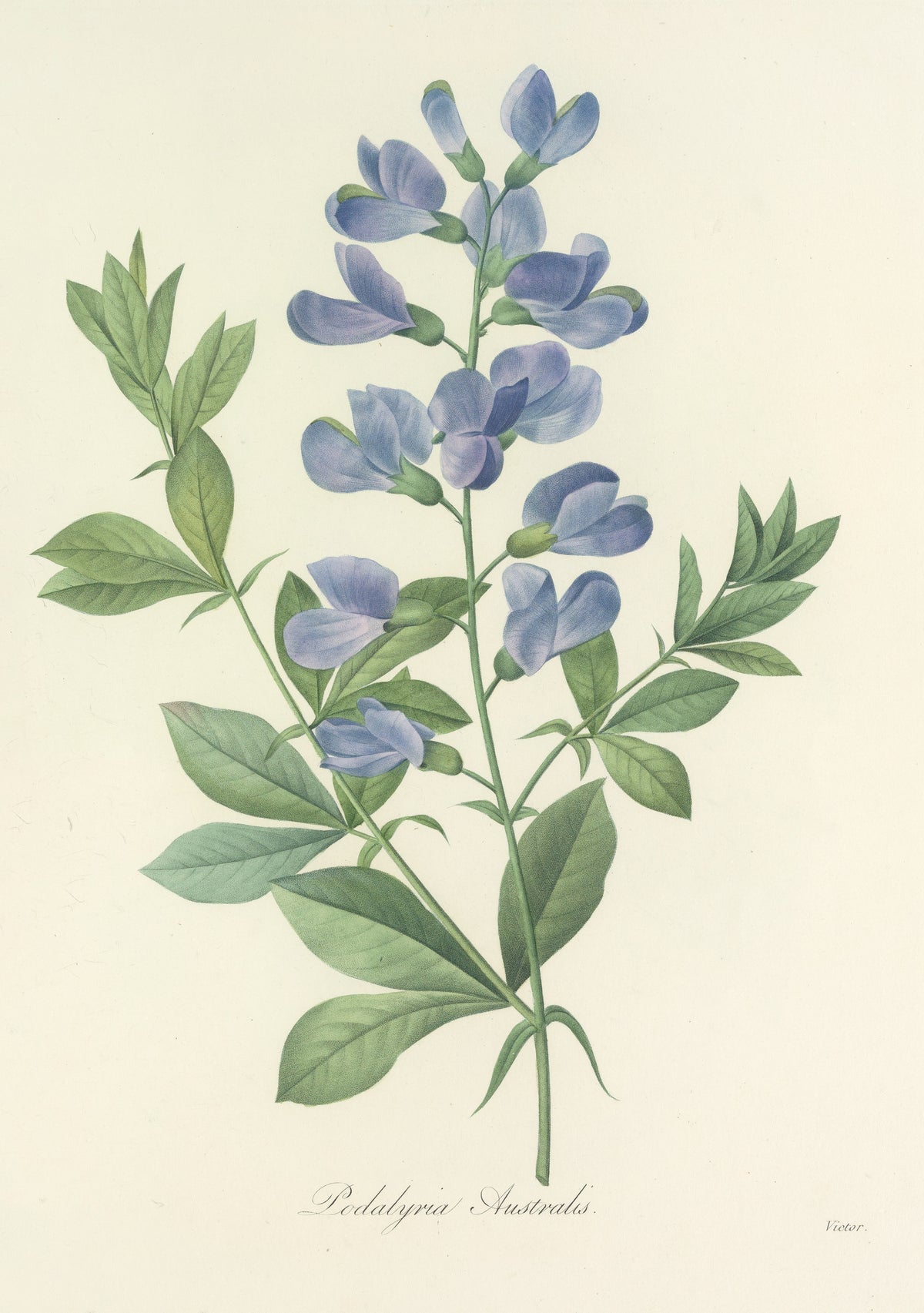
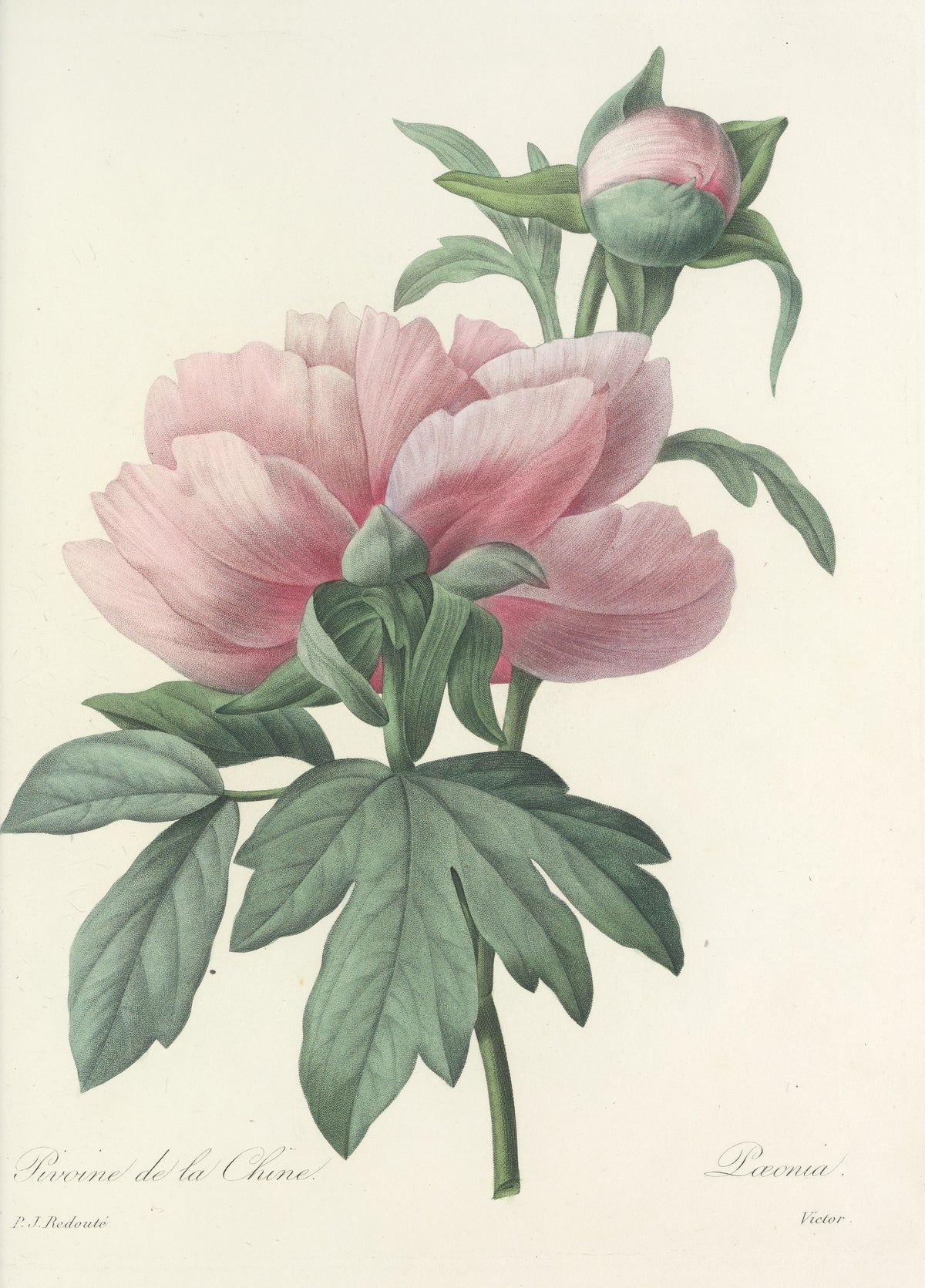
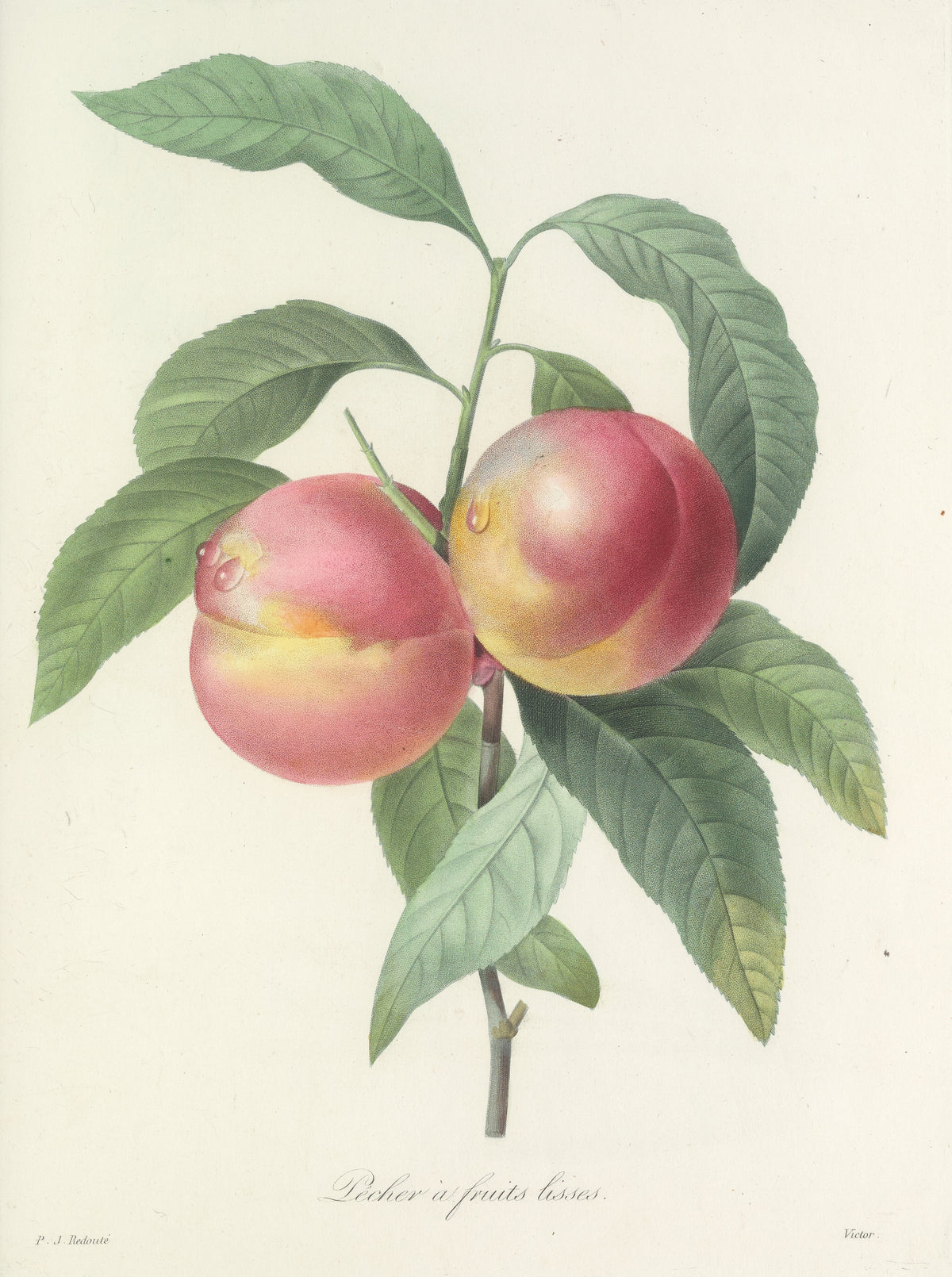
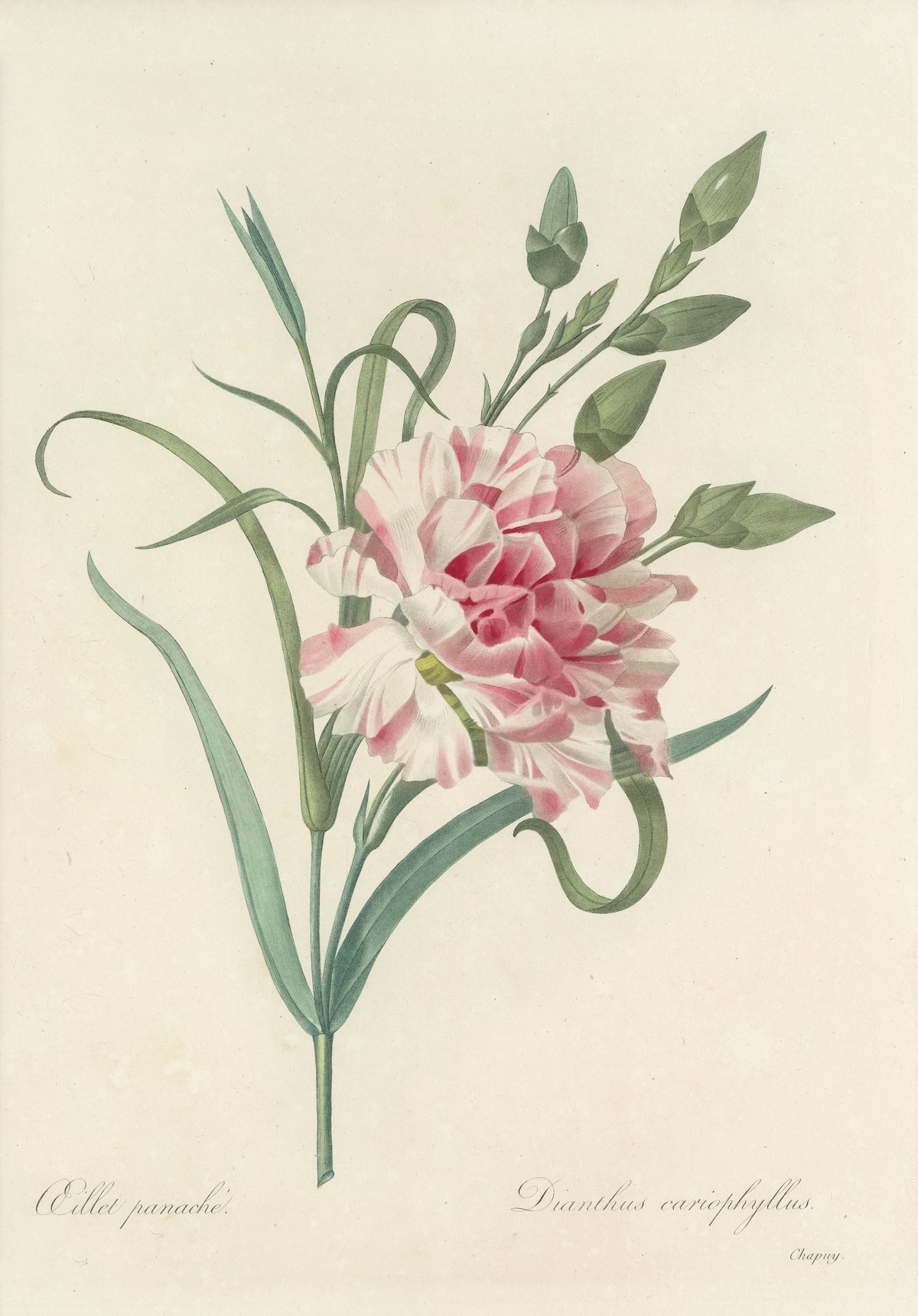
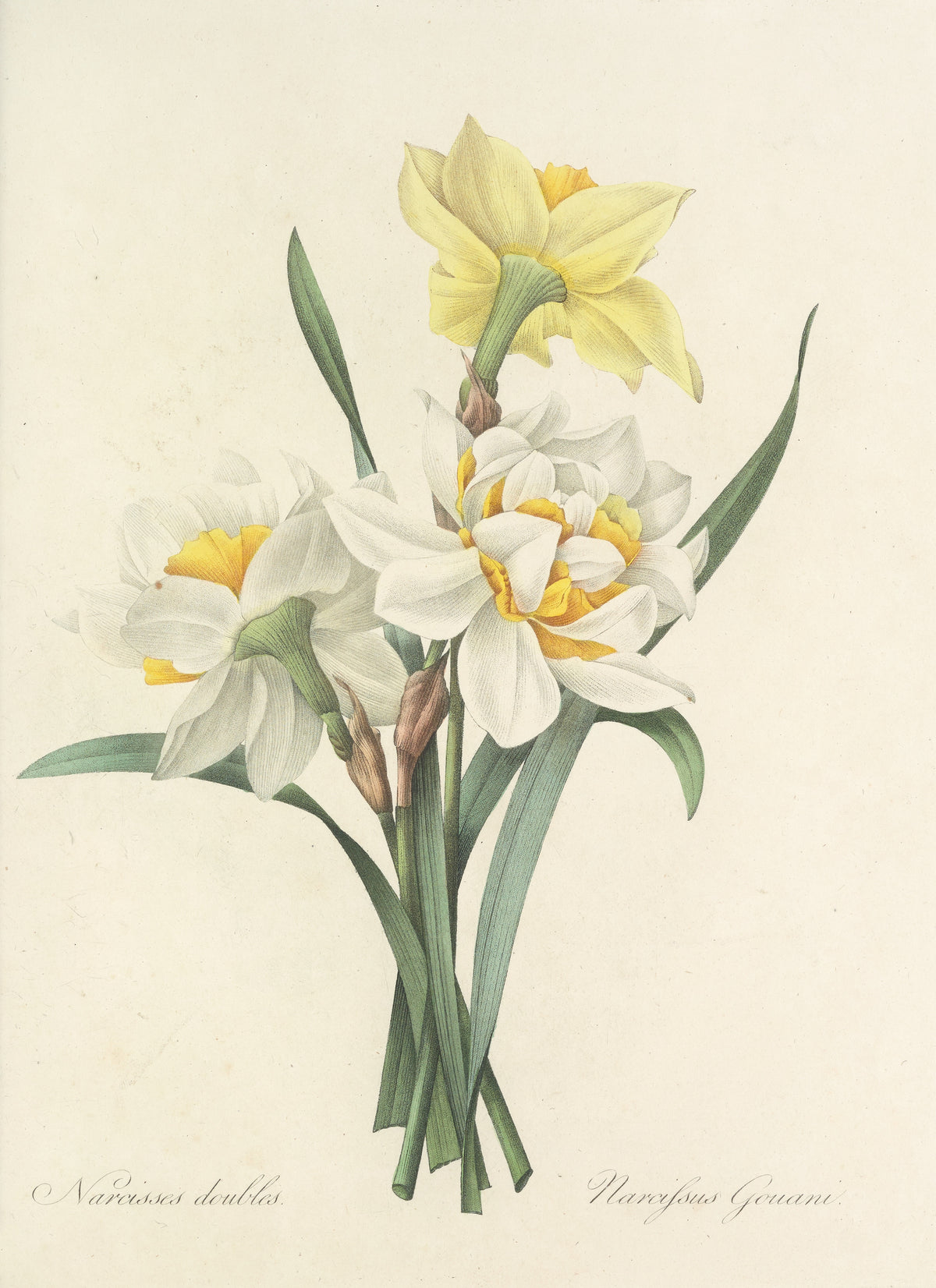
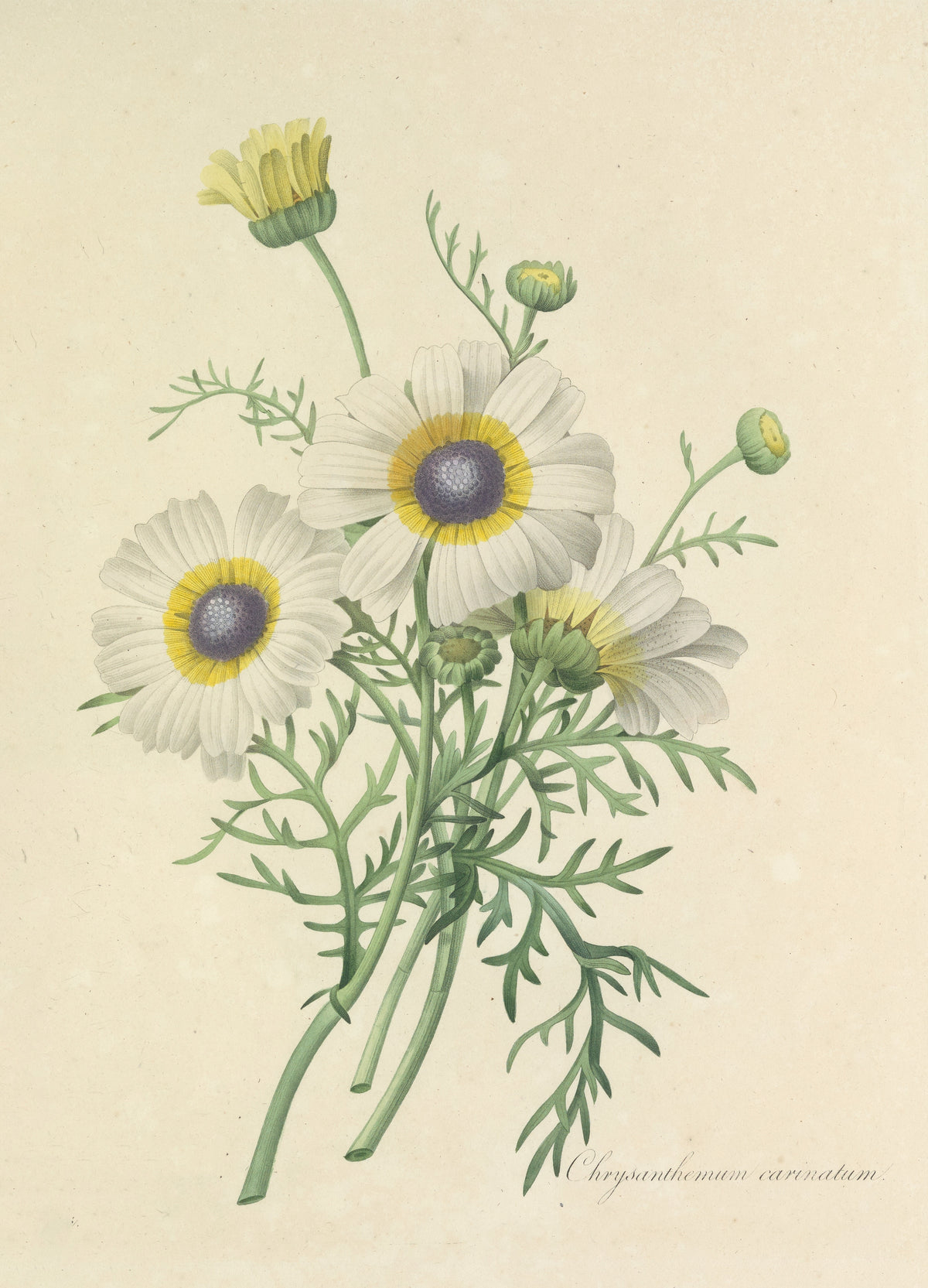
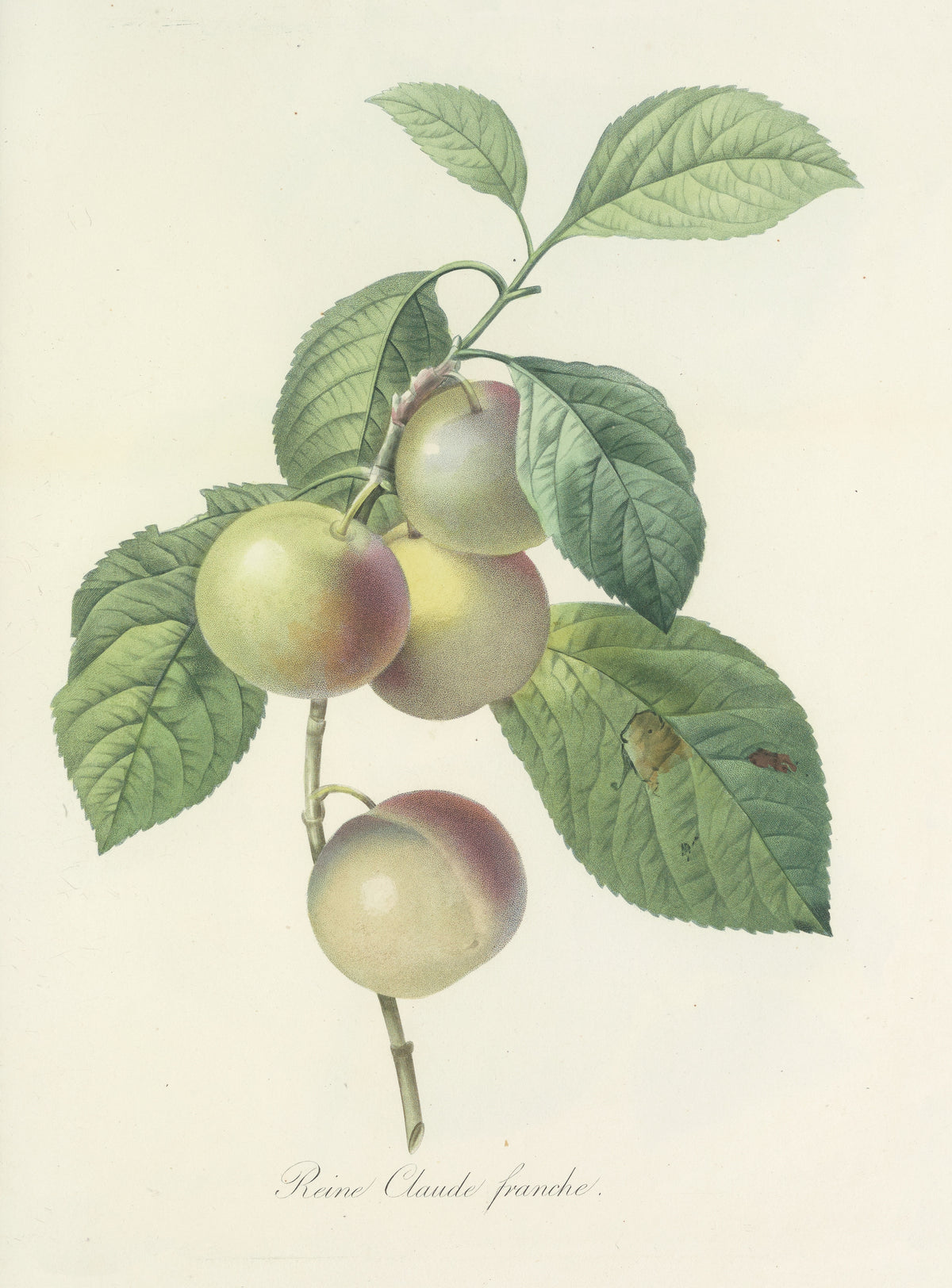
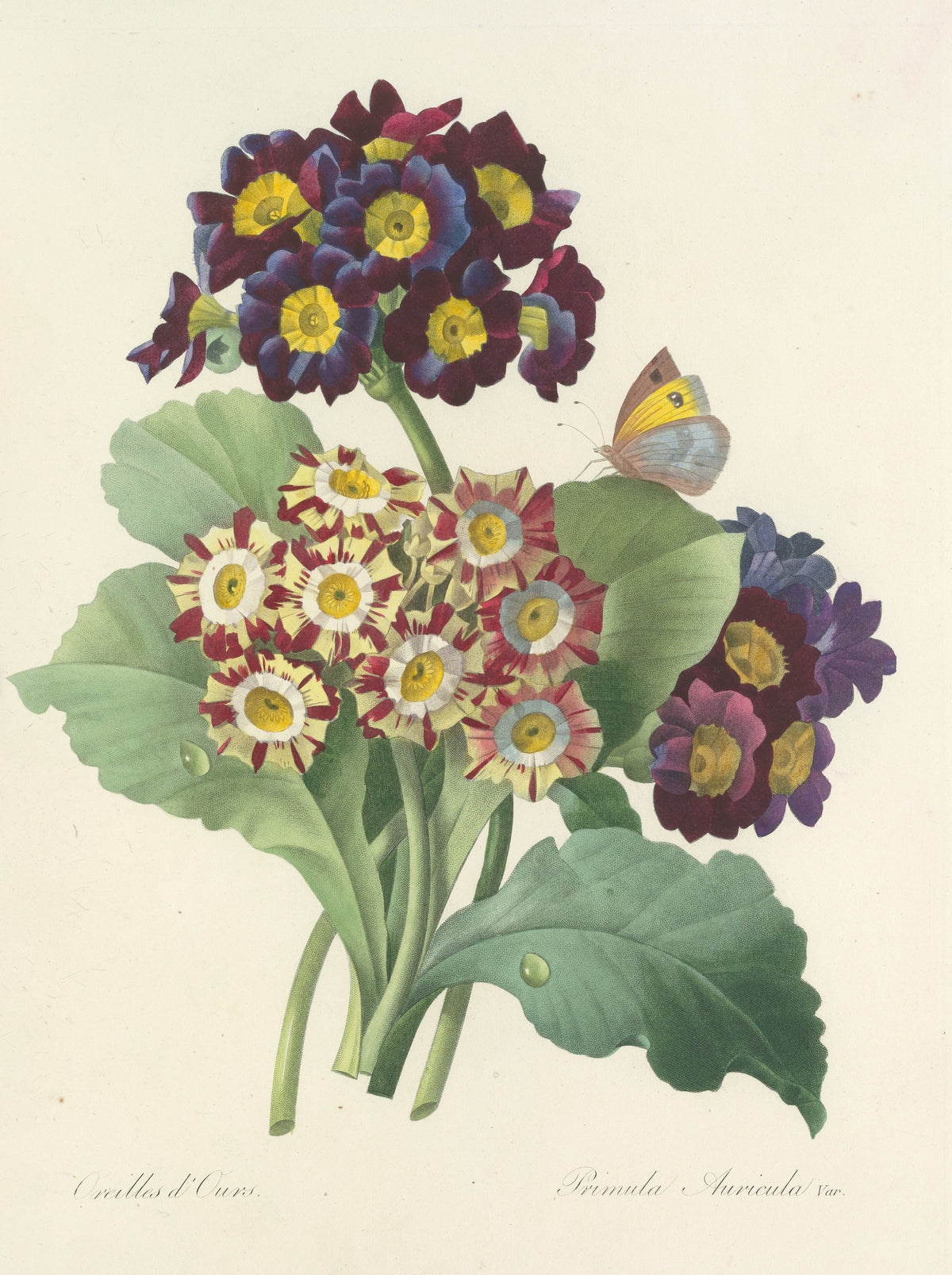
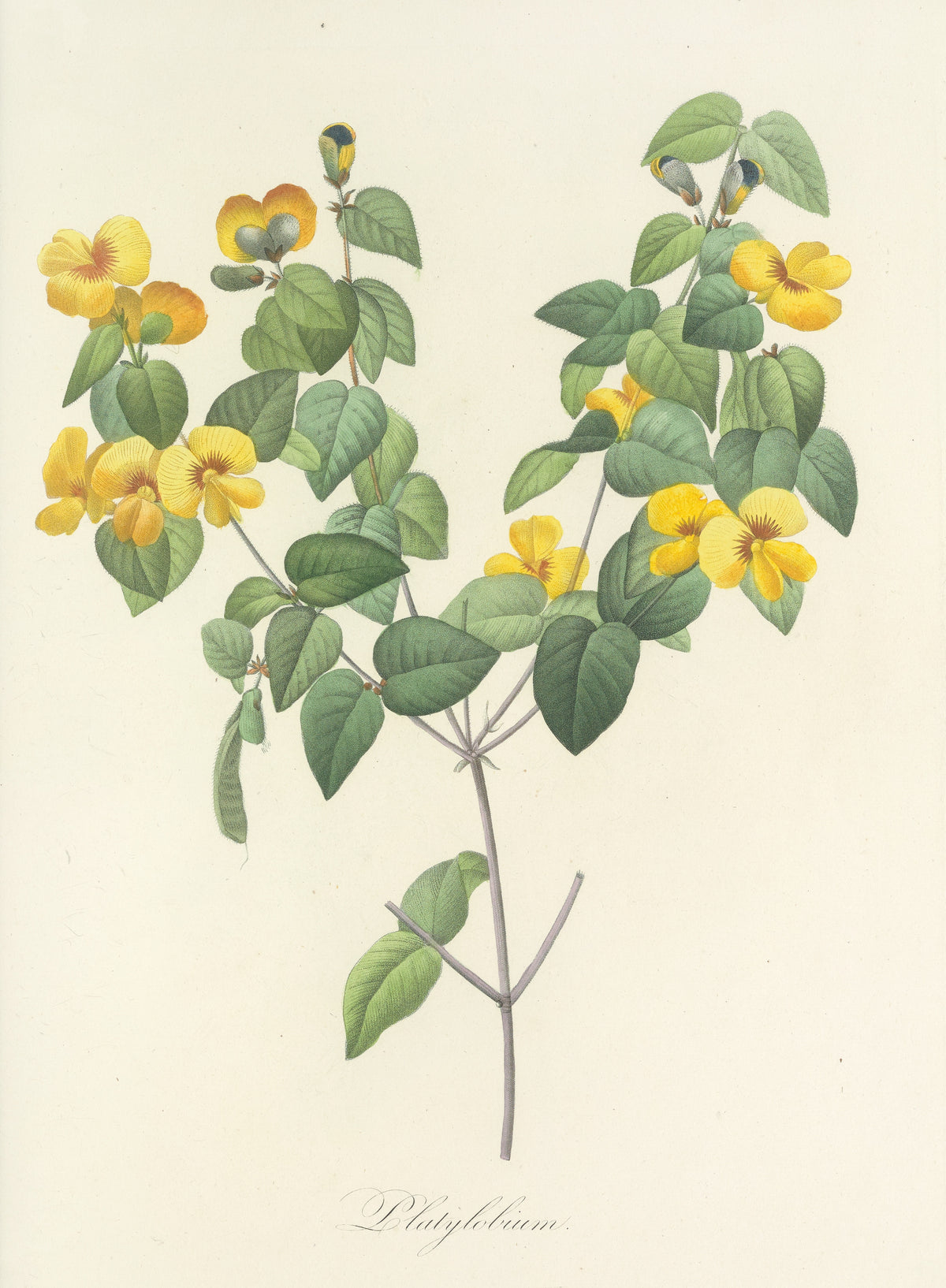
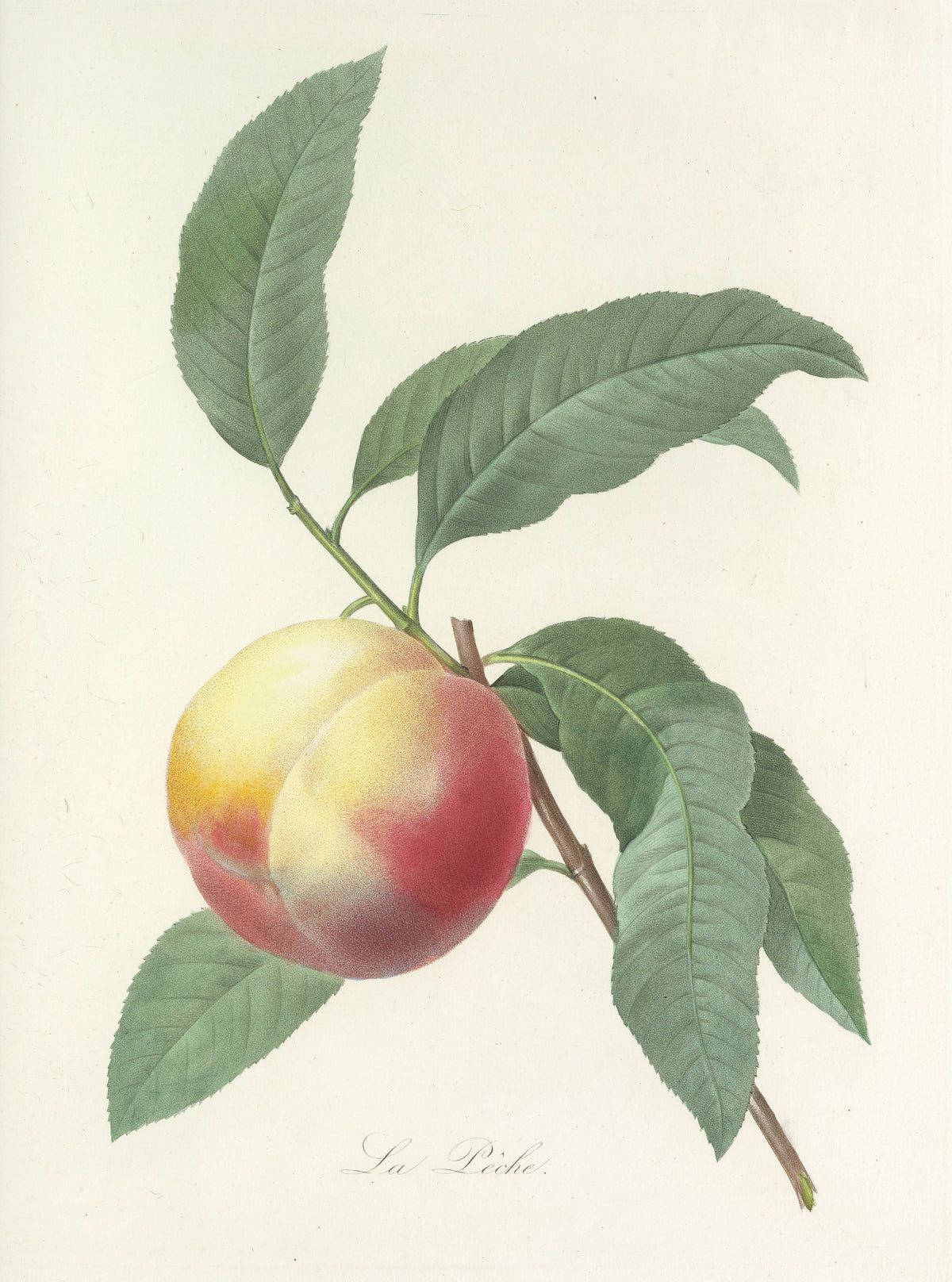
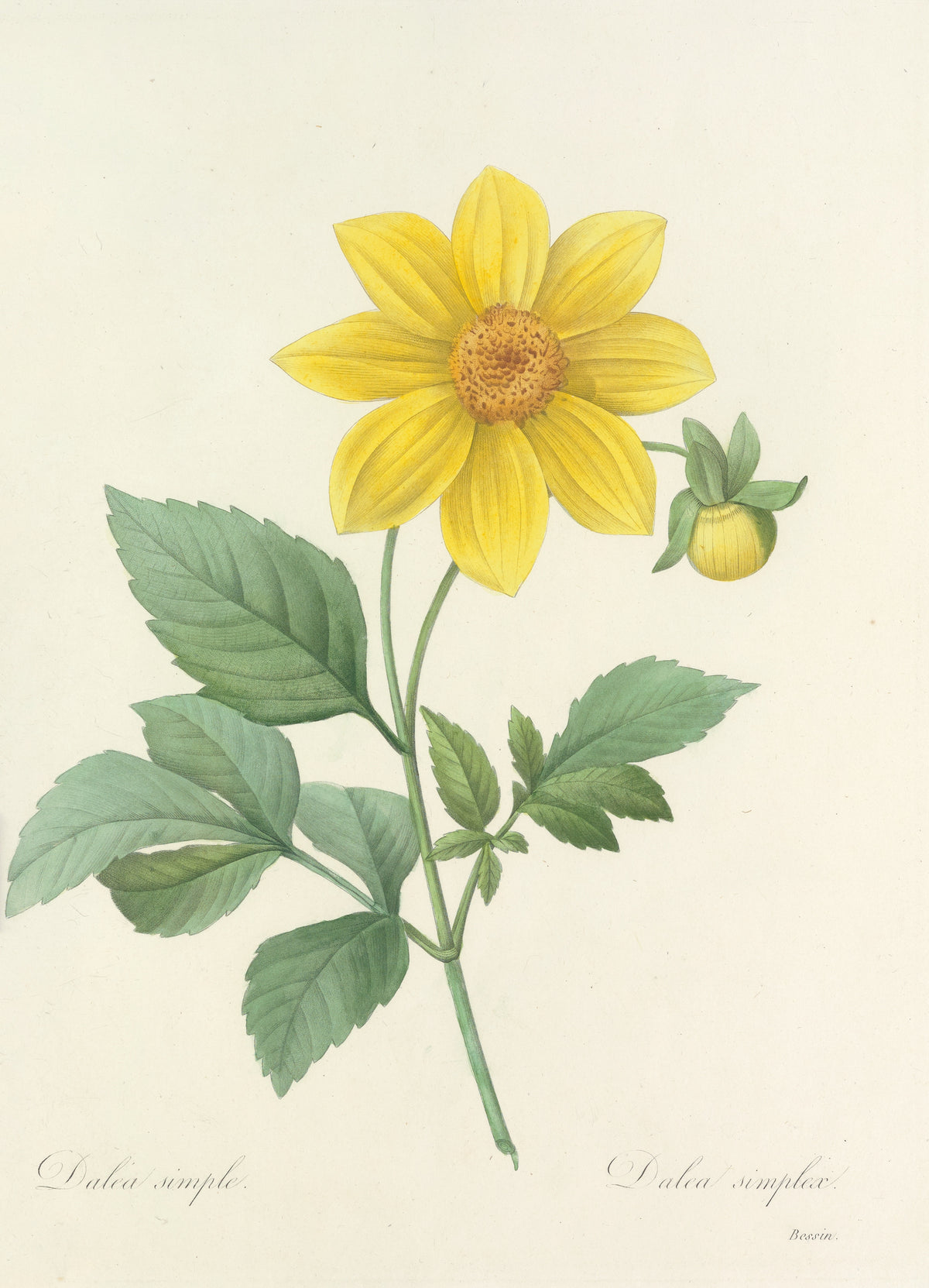
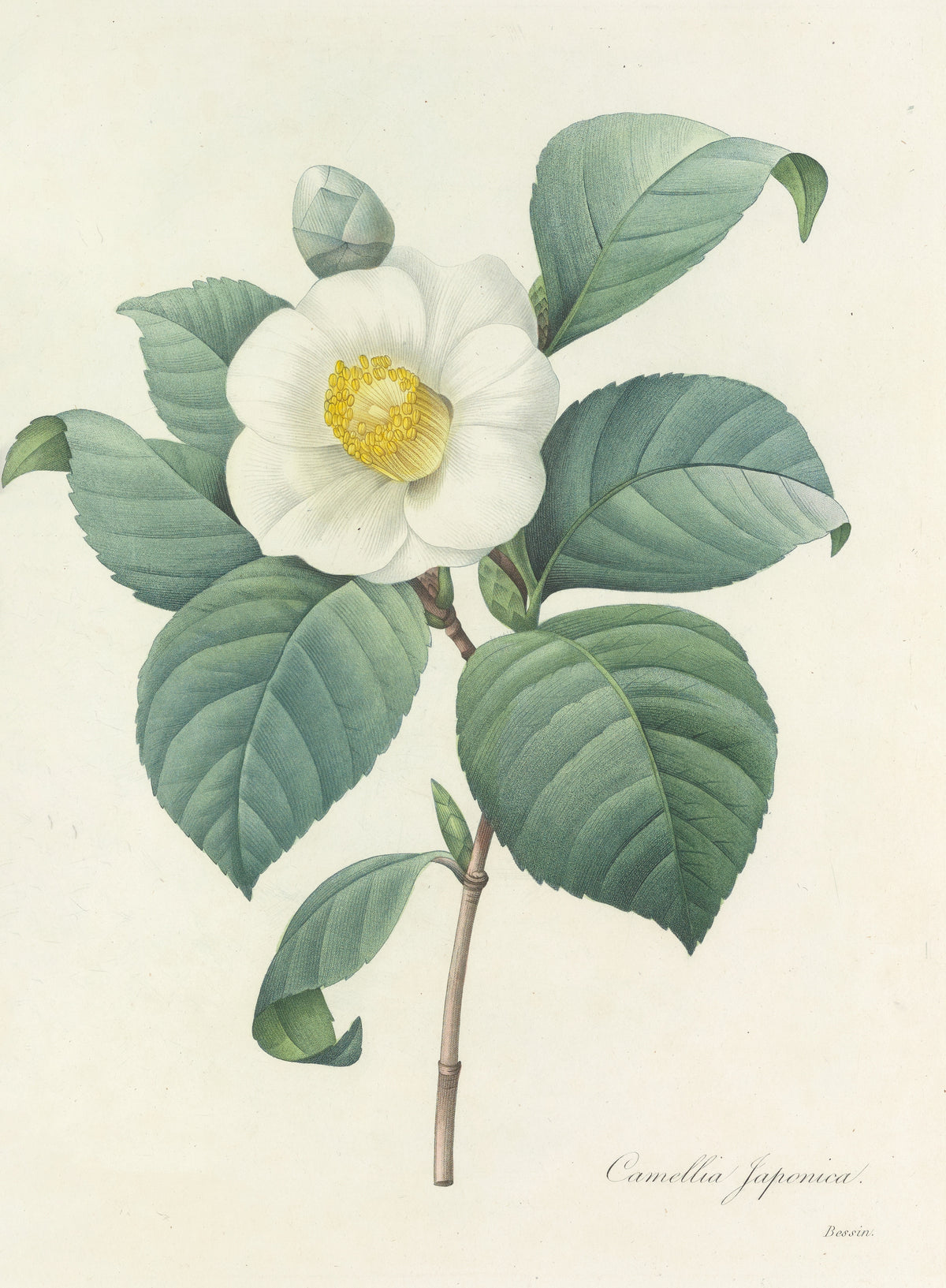
Pierre-Joseph Redouté prints: reproductions of the botanical plates Redouté painted for the French books Les Liliacées and Choix des plus belles fleurs. Works here include Bromelia Ananas (1805), Hedychium Coronarium (1805), Rosa Centifolia (1827), Camellia Japonica (1827) and Amaryllis Equestre (1827).
This selection draws mostly on Choix des plus belles fleurs (1827), with roses, peonies, primulas, sweet peas and fruit such as peaches and plums, alongside lilies, gingers and orchids from Les Liliacées (1802–1805). Each plate shows a single plant on a plain light ground, drawn with botanical accuracy, so the works sit well together as a set.
The pale backgrounds and soft colours suit kitchens, bedrooms, bathrooms and hallways, and several plates hung in a row or grid work well along a staircase or above a sideboard. All prints are museum-quality reproductions, available unframed or framed with low-glare acrylic glazing, with free shipping and import duties covered.