Artist · 7 prints
Reijer Stolk Prints
About Reijer Stolk
Reijer Johan Antonie Stolk was a Dutch artist, born in 1896 in Ngunut, on Java in what was then the Dutch East Indies, and died in 1945. He came to the Netherlands as a child and studied at the School for Applied Arts in Haarlem, where his teacher was the printmaker Samuel Jessurun de Mesquita, an influence that kept him devoted to the woodcut for most of his life.
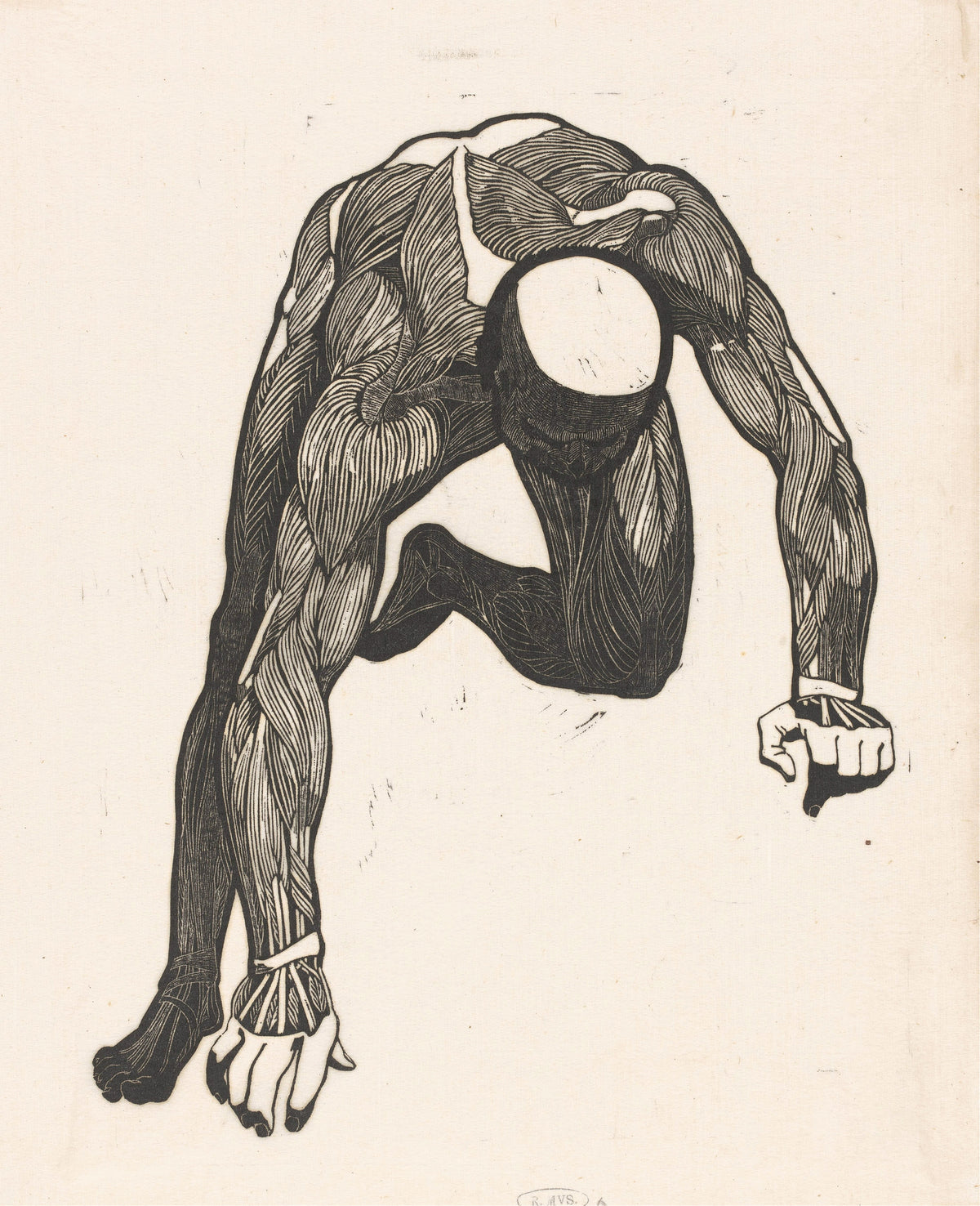
Reijer Stolk is best known for bold, inventive woodcuts of plants, animals, riders and human figures, often simplified into strong blocks of black and white. In 1918 he designed a much-debated cover for a book by the Dutch writer Nescio. He also made batiks, worked in applied design and, after a 1930 journey to West Africa, drew on non-Western art. His long interest in anatomy led to the book Anatomische studies in houtsneden (Anatomical Studies in Woodcuts), published in Amsterdam in 1945. The Rijksmuseum holds a sketchbook and many of his drawings and prints.
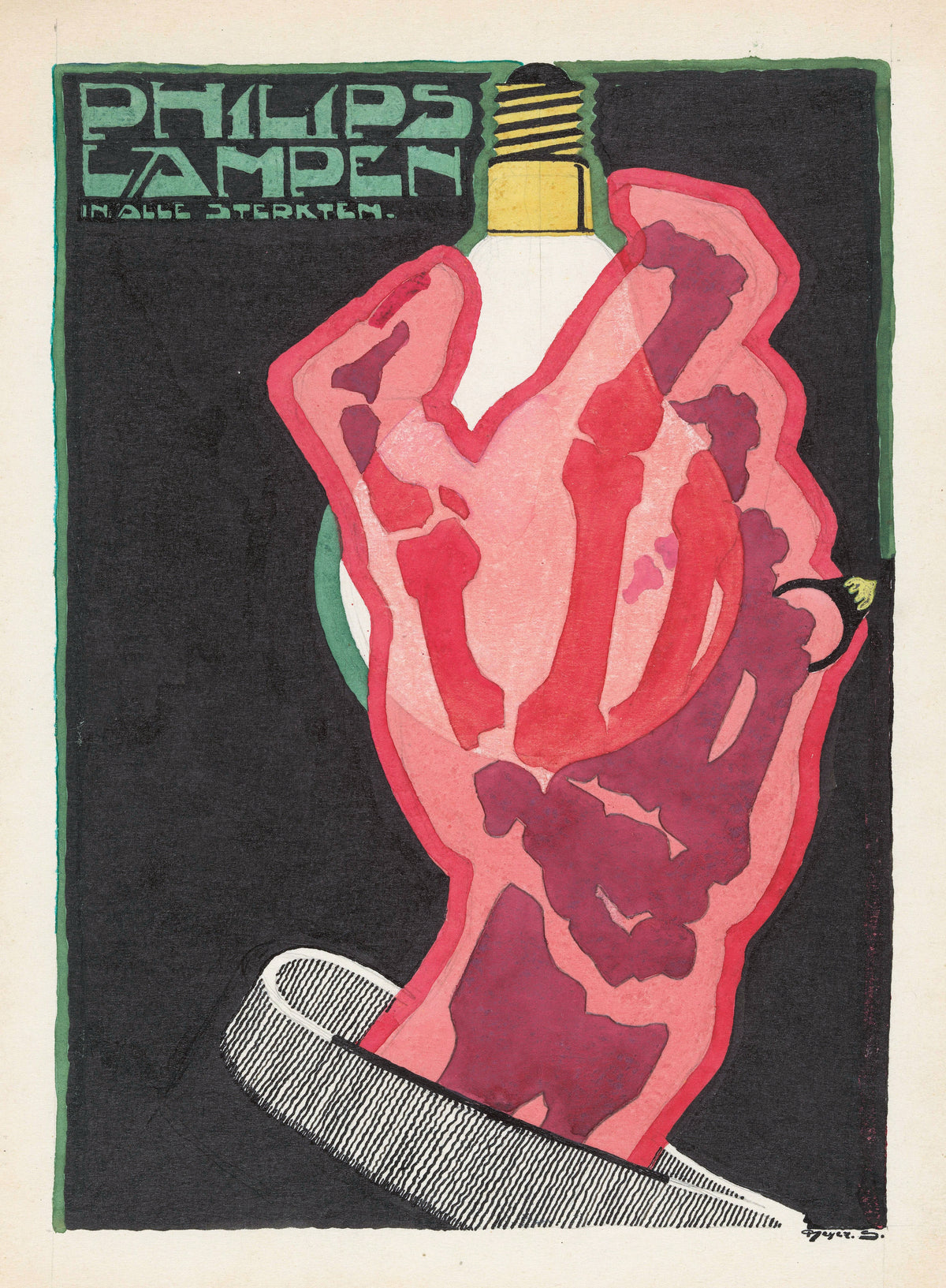
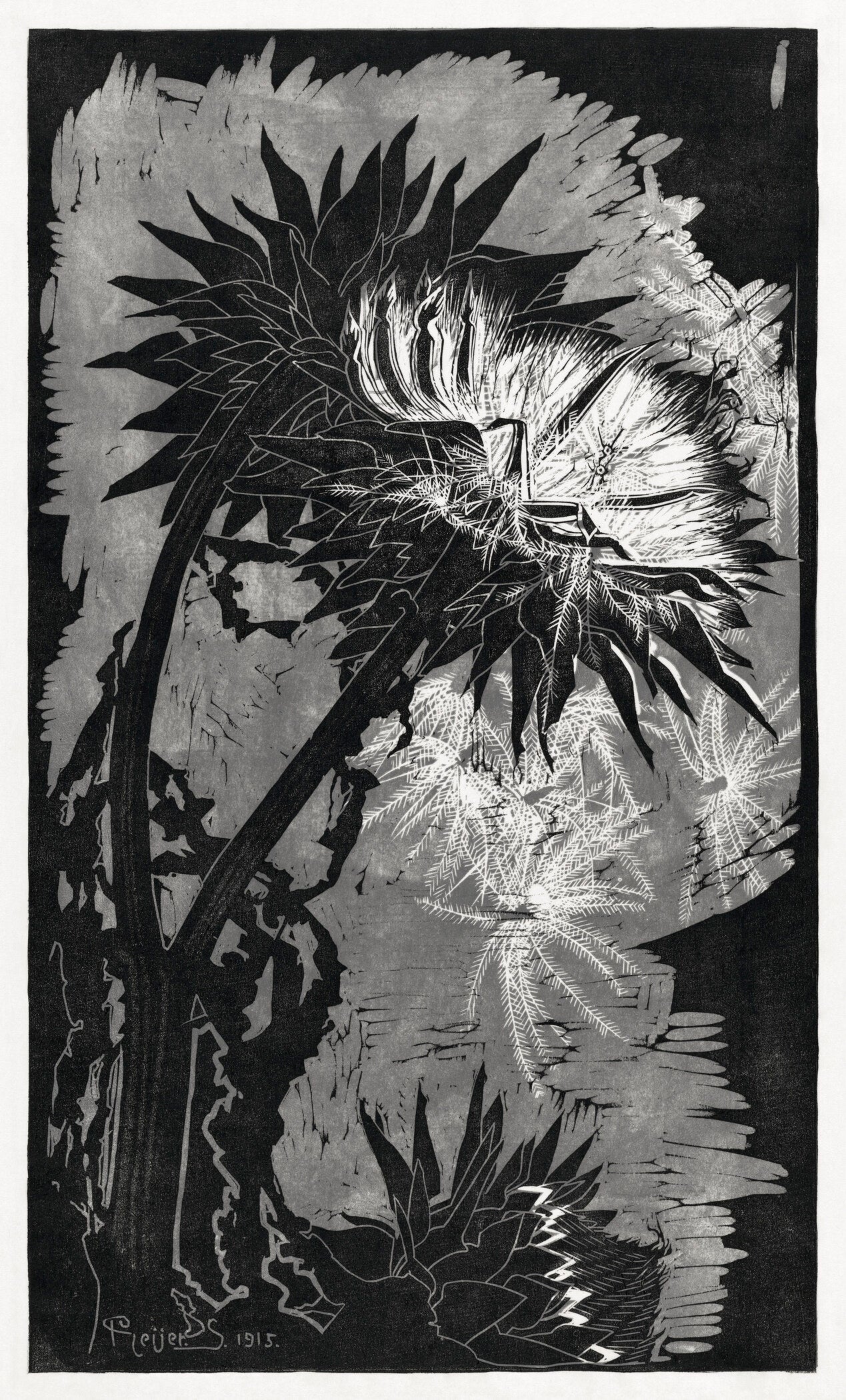
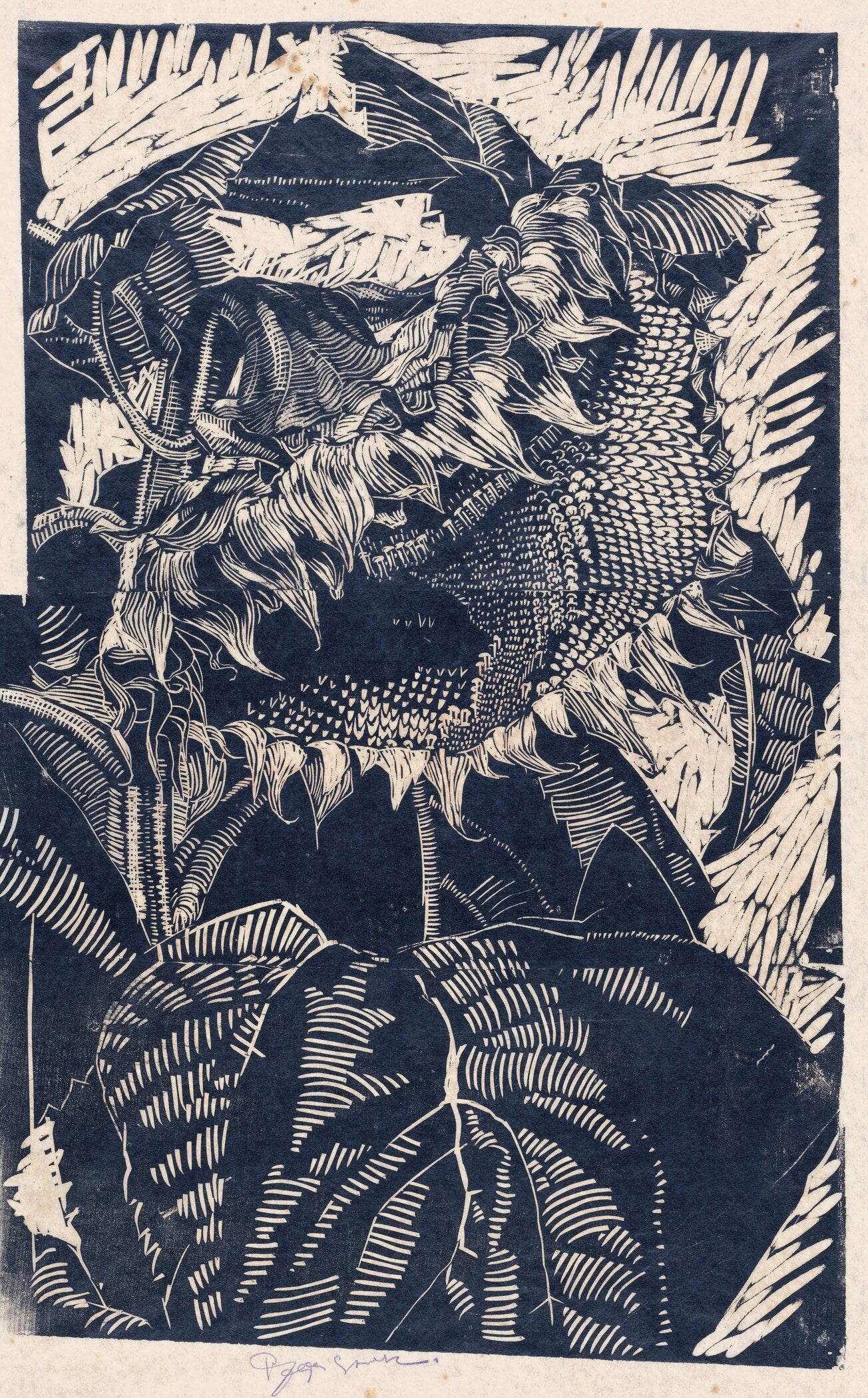
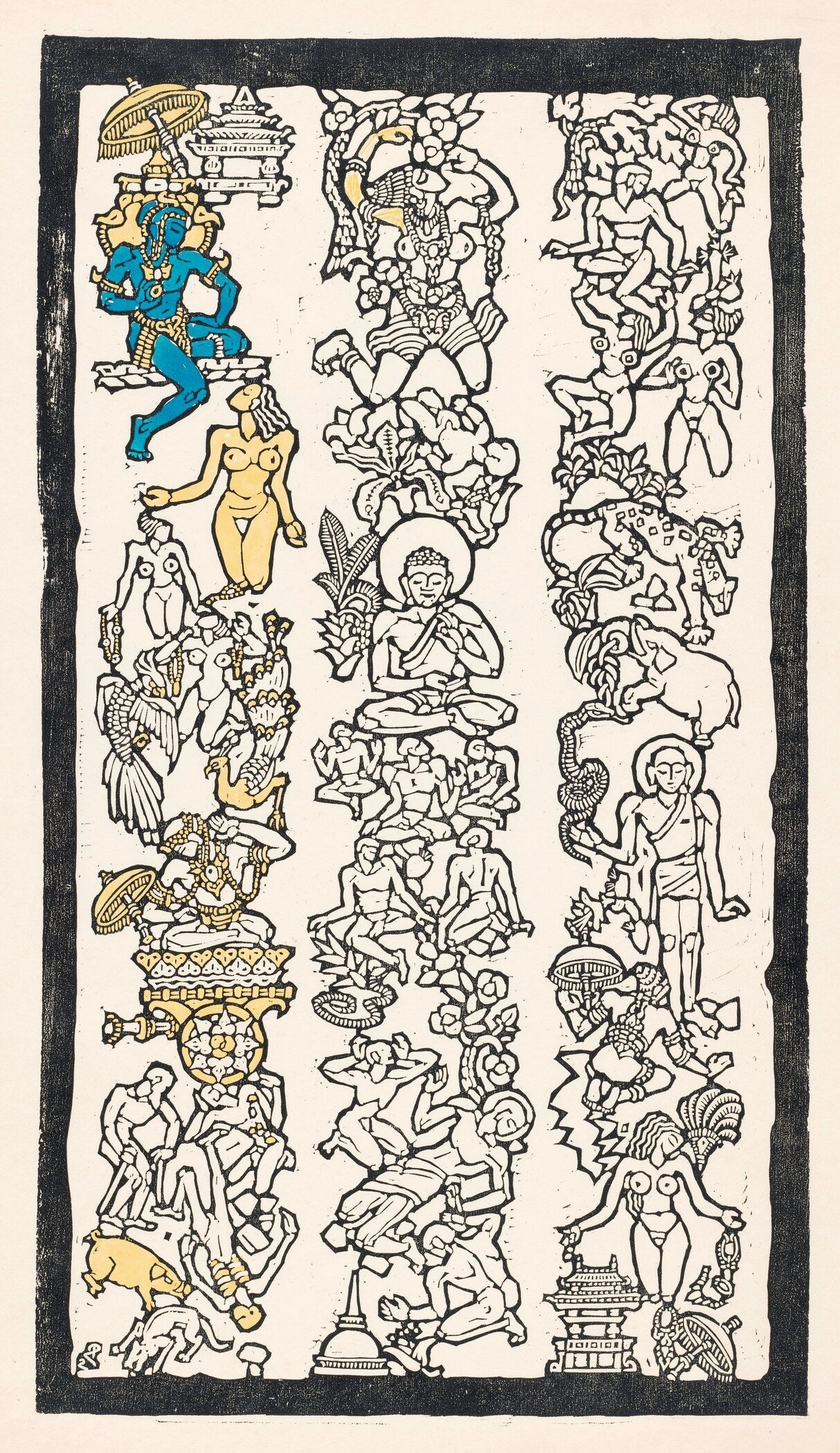
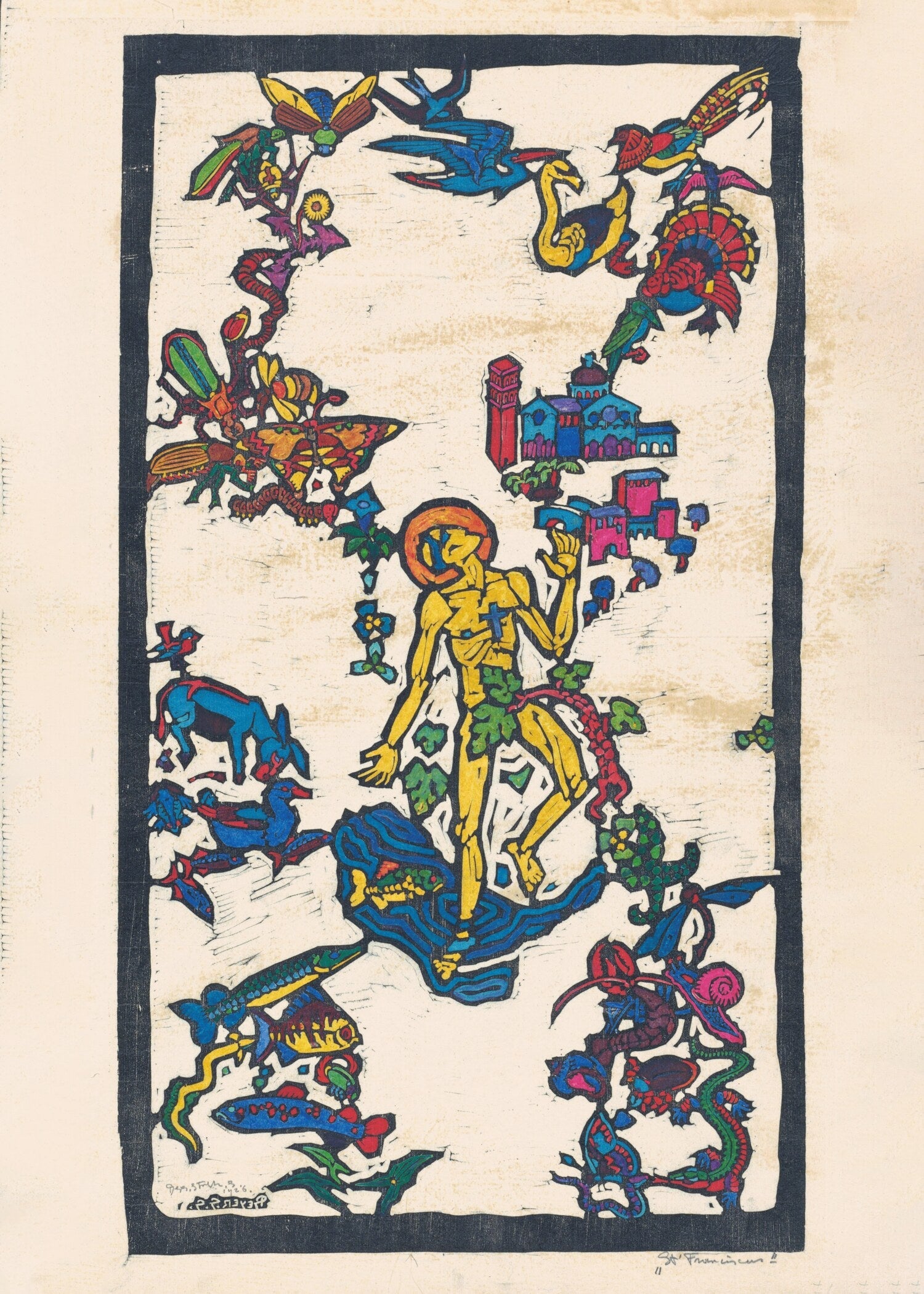
Reijer Stolk prints: reproductions of woodcuts, watercolours and a poster design by the Dutch artist Reijer Stolk, made in the early twentieth century. Works in the collection include Artichokes in Shadow (1915), Sunflowers in Indigo, St. Franciscus, Indian Motif, Anatomical Study and his Philips Lampen poster.
This selection concentrates on Stolk's woodcuts of plants and figures, cut in heavy black lines and flat blocks of colour such as indigo. It includes his religious and Symbolist subjects, one of his anatomical studies and a brightly coloured floral abstraction in watercolour. The Philips Lampen poster shows his work in commercial design.
The graphic black-and-white and indigo woodcuts suit studies, kitchens, hallways and modern living rooms, and several hang well together in a row. All prints are museum-quality reproductions, available unframed or framed with low-glare acrylic glazing, with free shipping and import duties covered.