Artist · 8 prints
Tom Thomson Prints
About Tom Thomson
Tom Thomson (1877–1917) was a Canadian landscape painter, born in Claremont, Ontario, who grew up in the Owen Sound area. He had little formal art training and worked as a commercial artist in Toronto, where colleagues encouraged him to paint, and he began painting seriously around 1911. From the early 1910s he returned again and again to Algonquin Park in central Ontario, spending part of each year there as a guide, woodsman and painter.
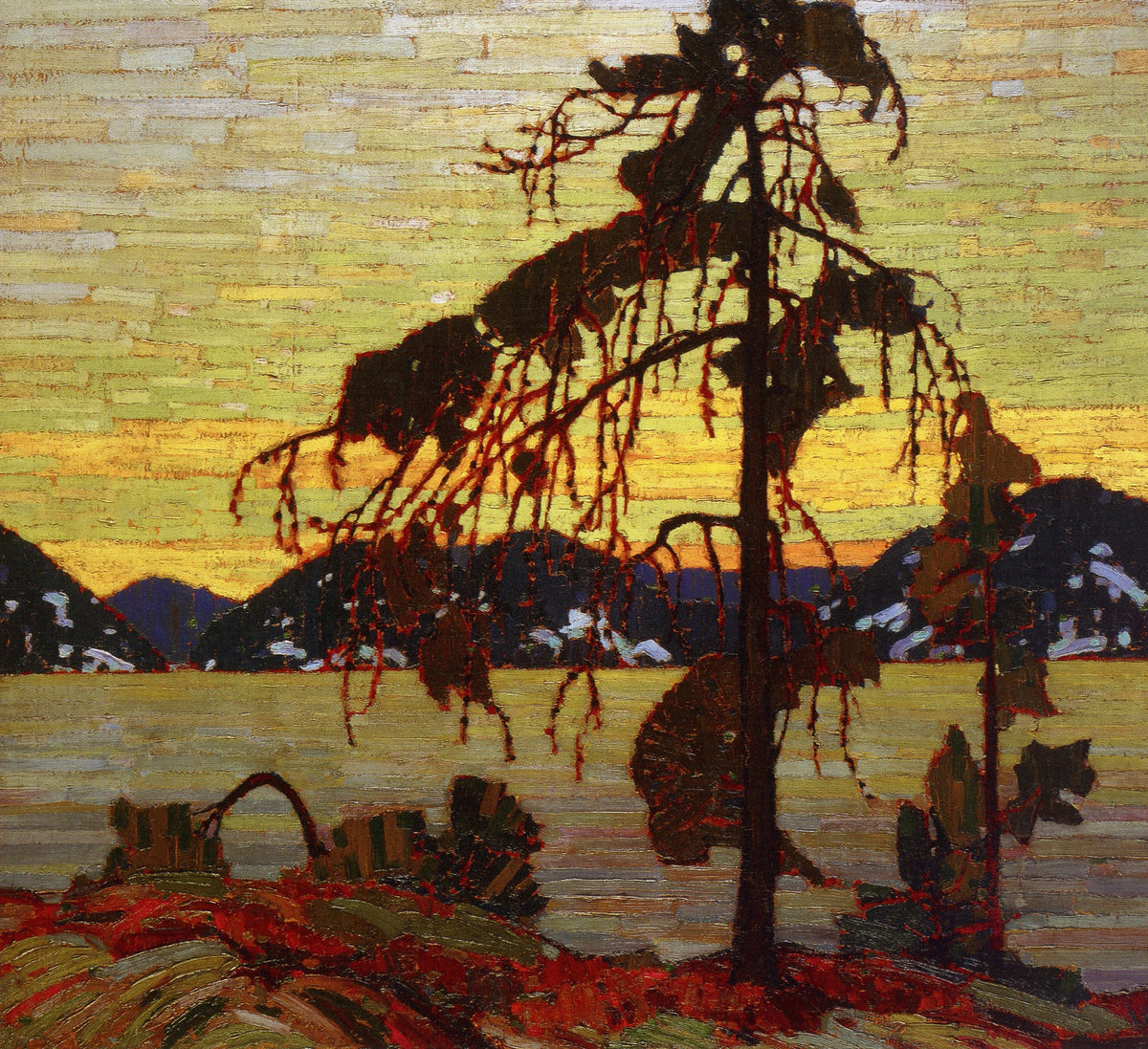
Tom Thomson painted lakes, trees and skies in thick paint and strong colour, usually in small oil sketches on wood panels made outdoors, a few of which he turned into large canvases. His two best-known paintings, The West Wind (1916–17), at the Art Gallery of Ontario, and The Jack Pine (1916–17), at the National Gallery of Canada, each show a windblown pine against open water. He died in Algonquin Park in July 1917, aged 39, and his work helped inspire the painters who formed the Group of Seven.
Tom Thomson prints: reproductions of the Canadian landscape paintings Tom Thomson made in Ontario between 1911 and 1917. Works here include The West Wind (1916), The Jack Pine (1916), Early Snow, Algonquin Park (1914), A Northern Lake (1911) and Autumn Foliage (1915).
This selection concentrates on Thomson's northern Ontario: lakes, spruce and pine, autumn colour, early snow and spring, much of it painted in and around Algonquin Park. It also includes Bateaux (1916), a study of boats. The paint is thick and the colours are strong, with autumn oranges and reds against deep blue water.
The bold colours and northern subjects suit living rooms, cabins, offices and entryways, and the larger works sit well above a sofa or fireplace. All prints are museum-quality reproductions, available unframed or framed with low-glare acrylic glazing, with free shipping and import duties covered.