Artist · 10 prints
Tsukioka Kōgyo Prints
About Tsukioka Kōgyo
Tsukioka Kōgyo (1869–1927) was a Japanese painter and printmaker born in Tokyo. When he was a teenager his mother married the celebrated print designer Tsukioka Yoshitoshi, who became his stepfather and teacher and shared with him a love of Noh, the classical masked theatre of Japan. Kōgyo also studied with the painter Ogata Gekkō.
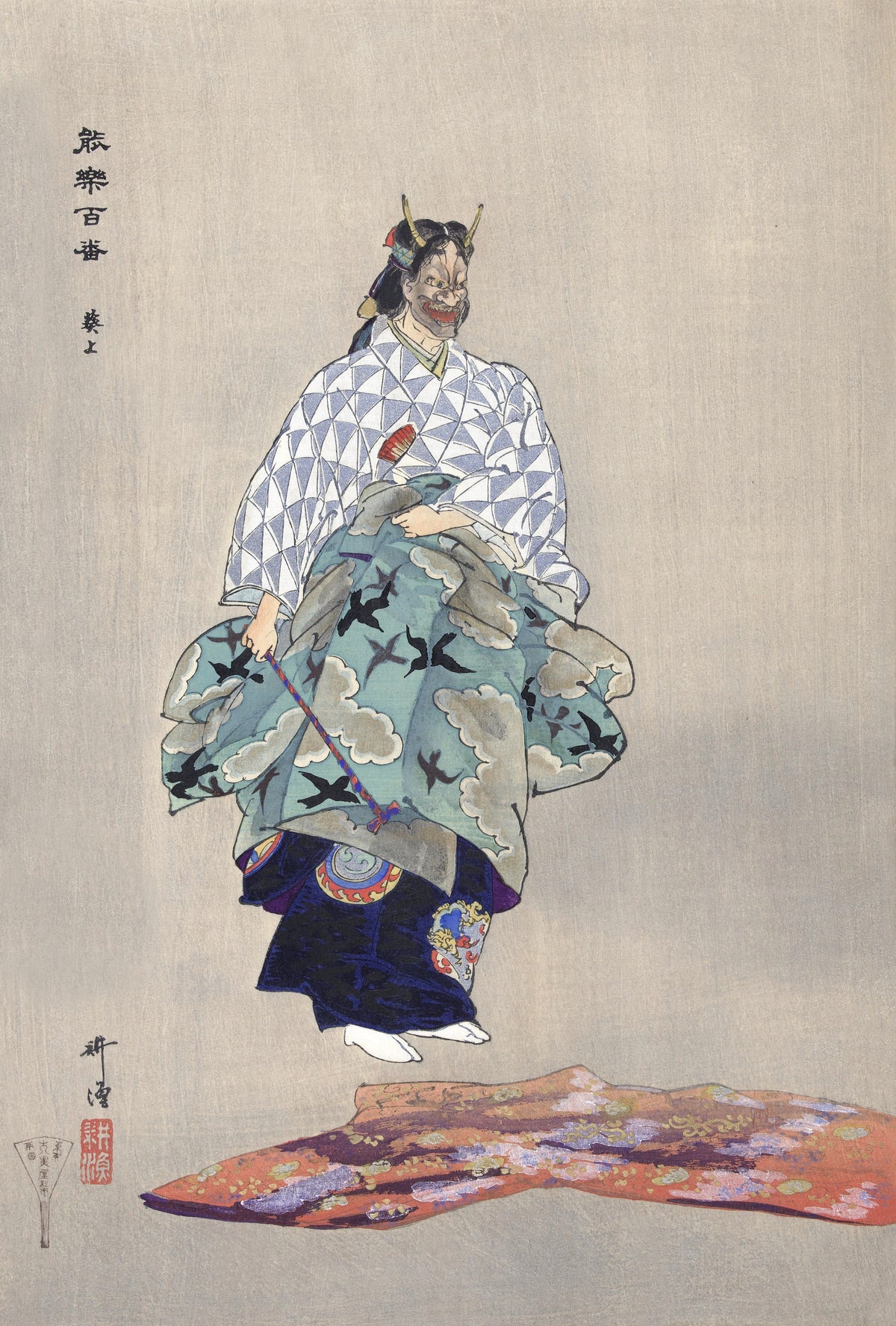
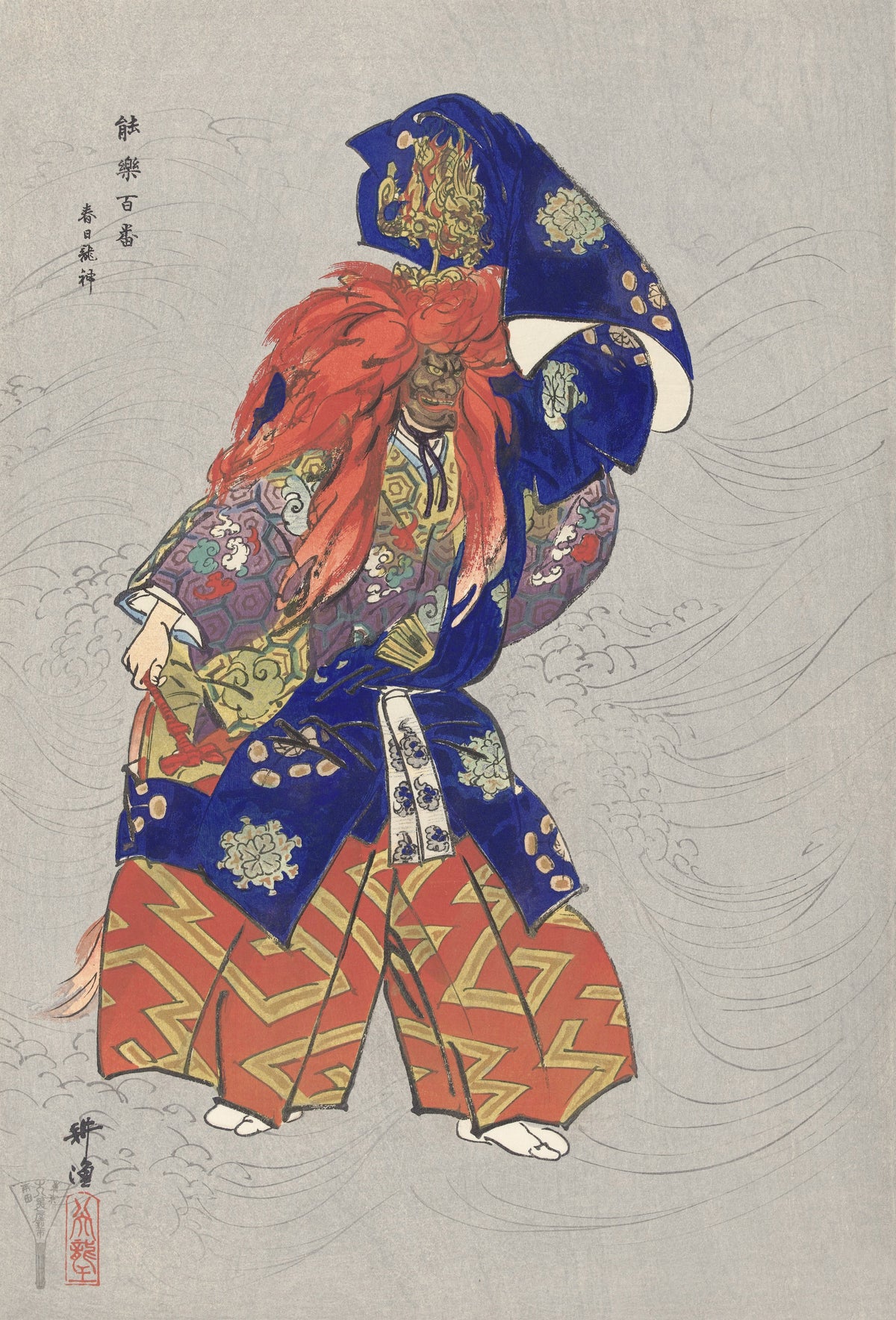
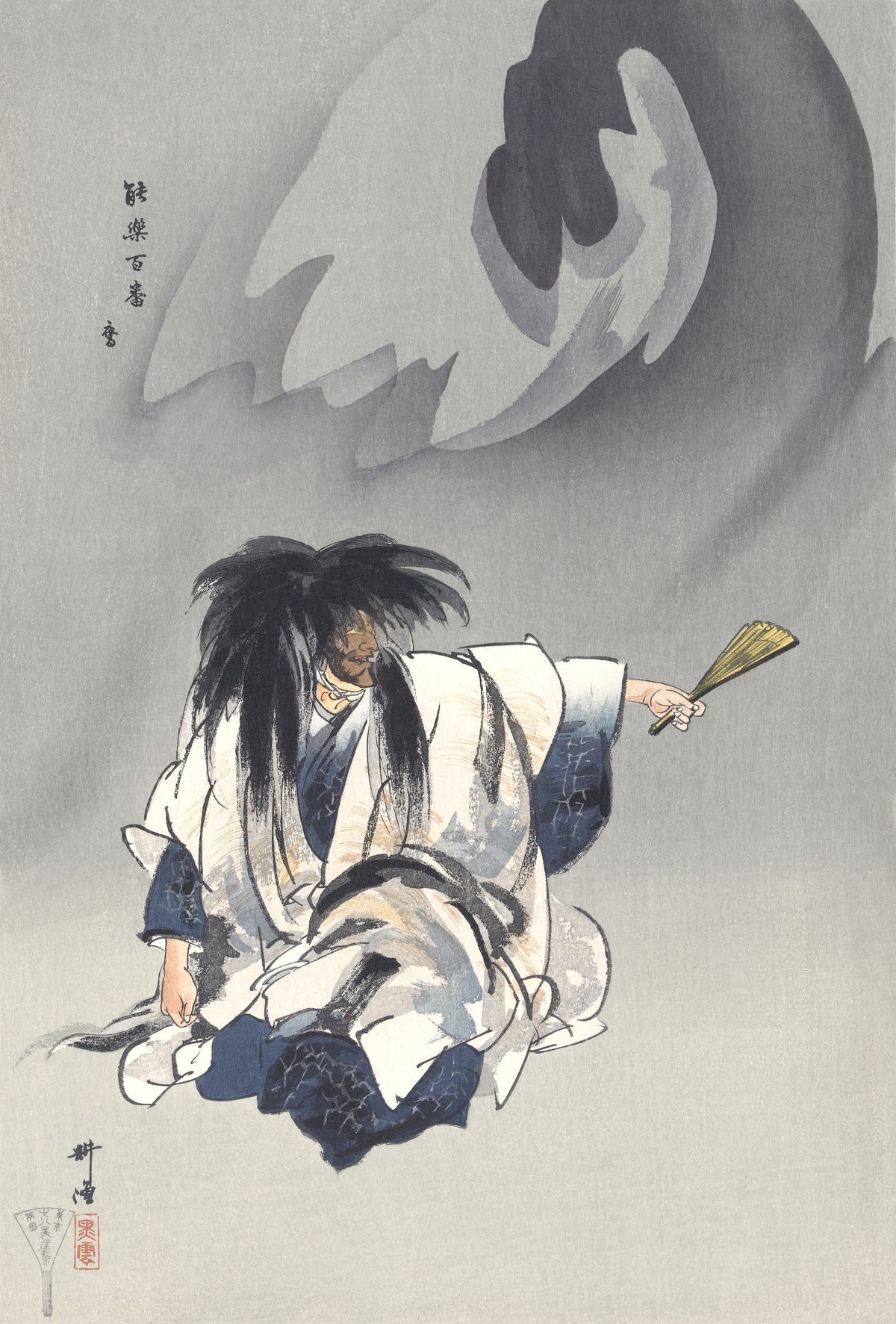
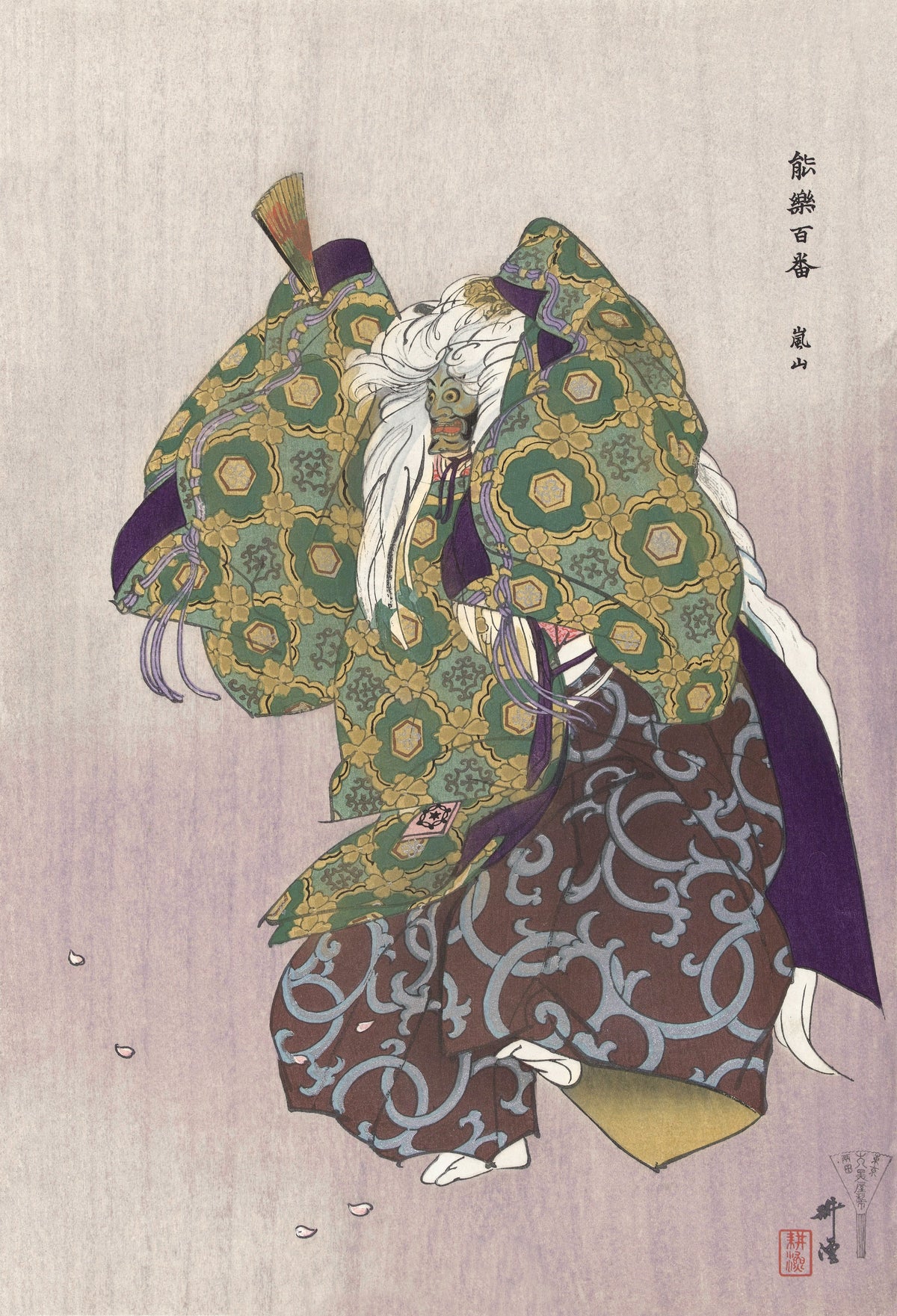
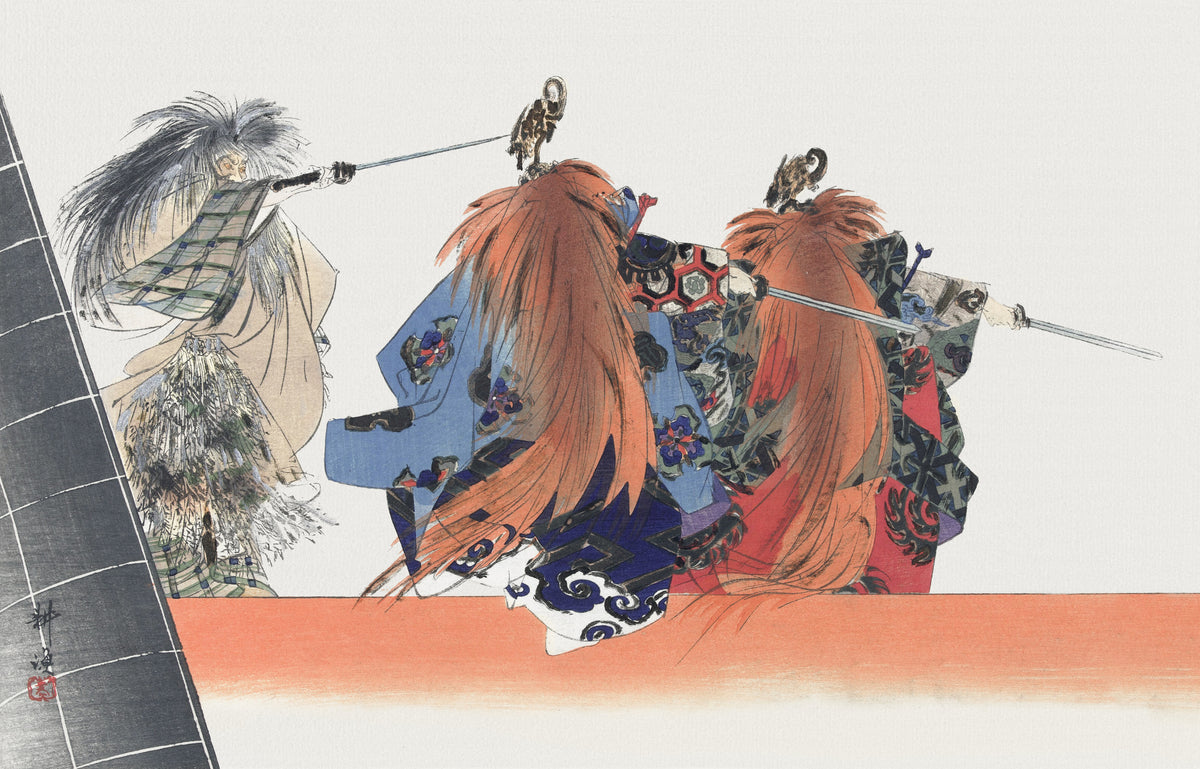
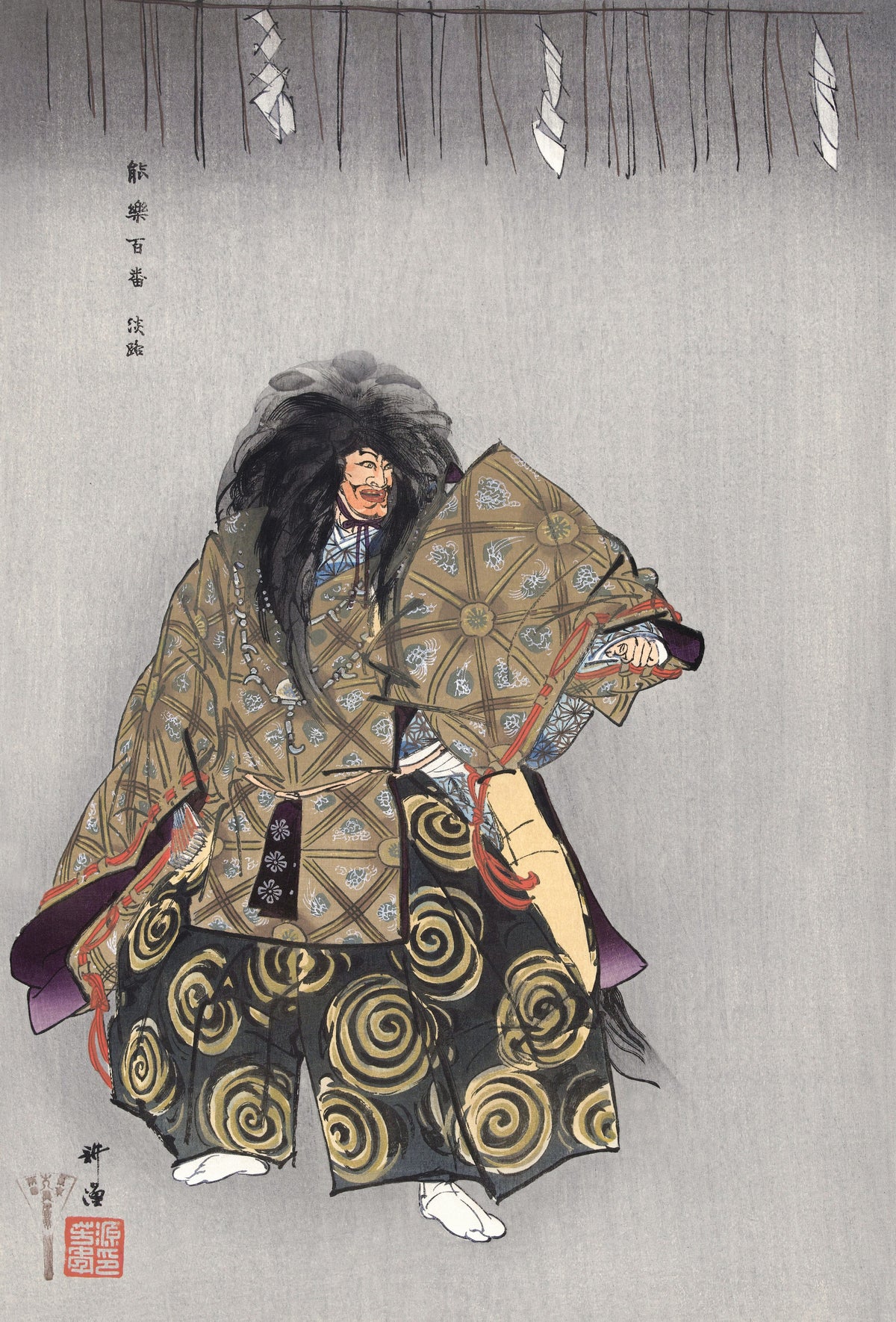
Kōgyo devoted most of his career to Noh, picturing its actors, masks and costumes with a painter's softness and close attention to pattern. His major series are Nōgaku zue (Pictures of Noh Plays, 1897–1902), with 261 prints in five volumes; Nōgaku hyakuban (One Hundred Noh Plays, 1922–1926); and Nōga taikan (Great Collection of Noh Pictures, 1925–1930). He also designed bird-and-flower prints, and in 1927 made a set of prints of Kyōgen, the comic theatre that accompanies Noh, with his daughter Tsukioka Gyokusei. His work is held by the Metropolitan Museum of Art and the Art Institute of Chicago.
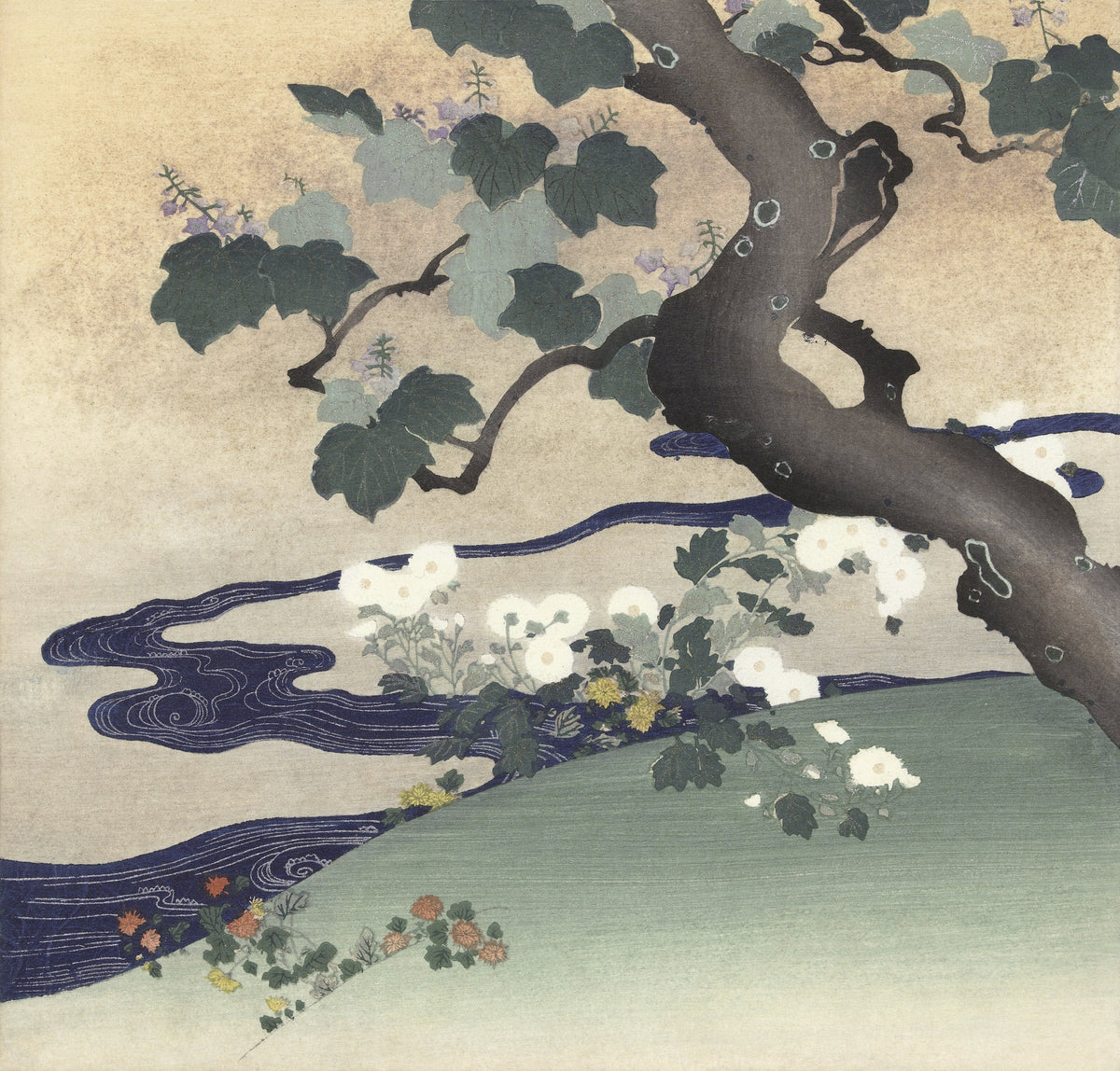
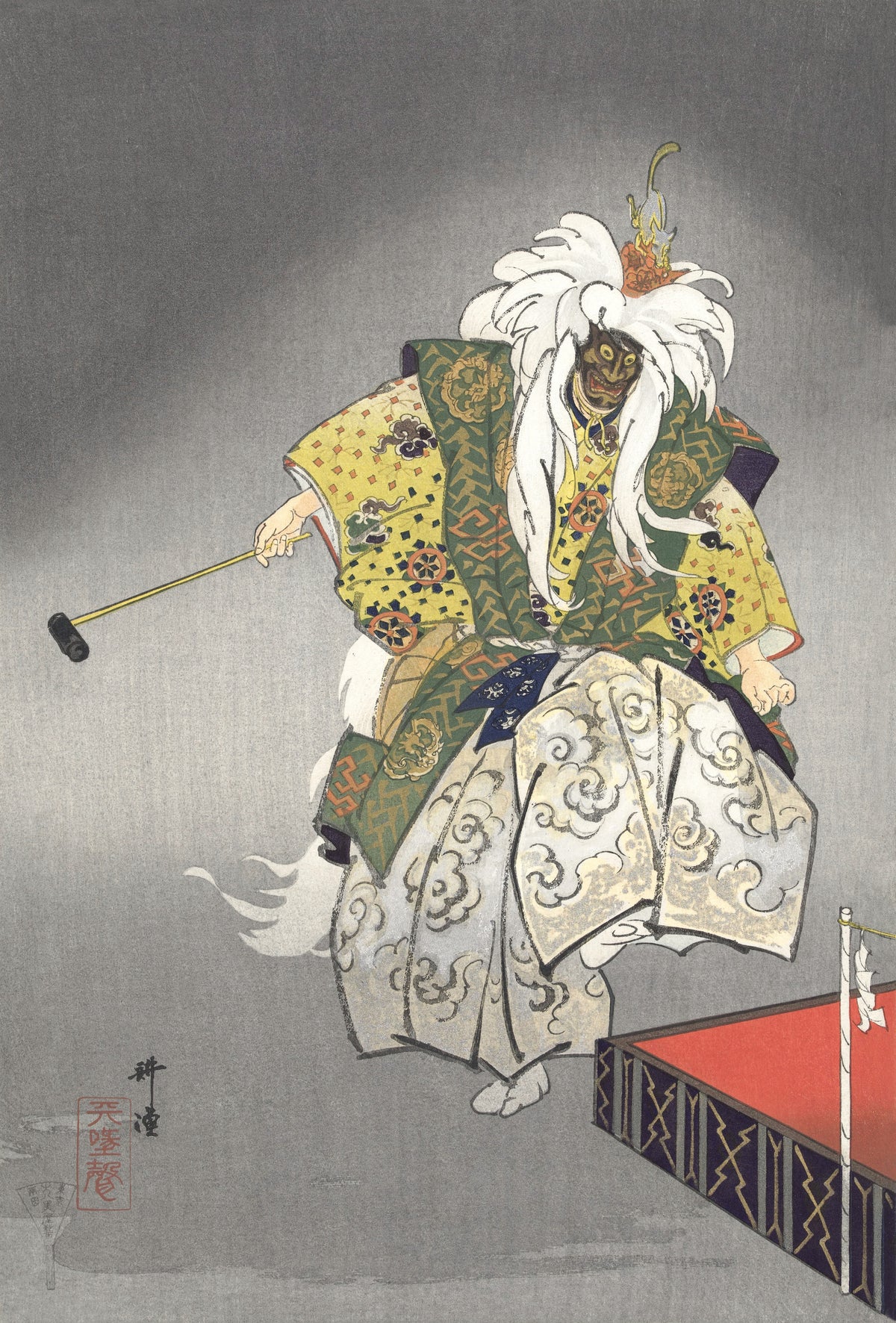
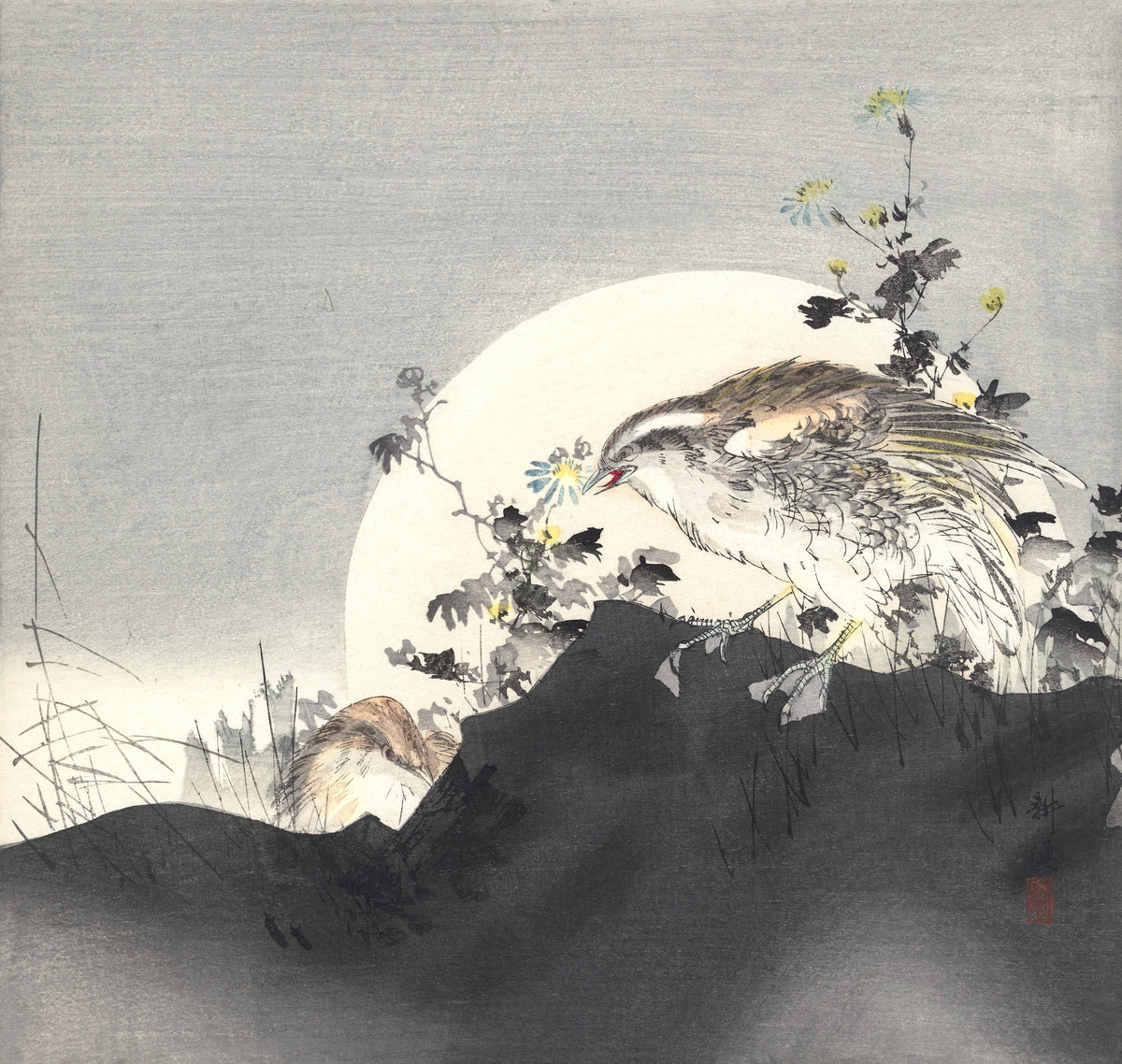
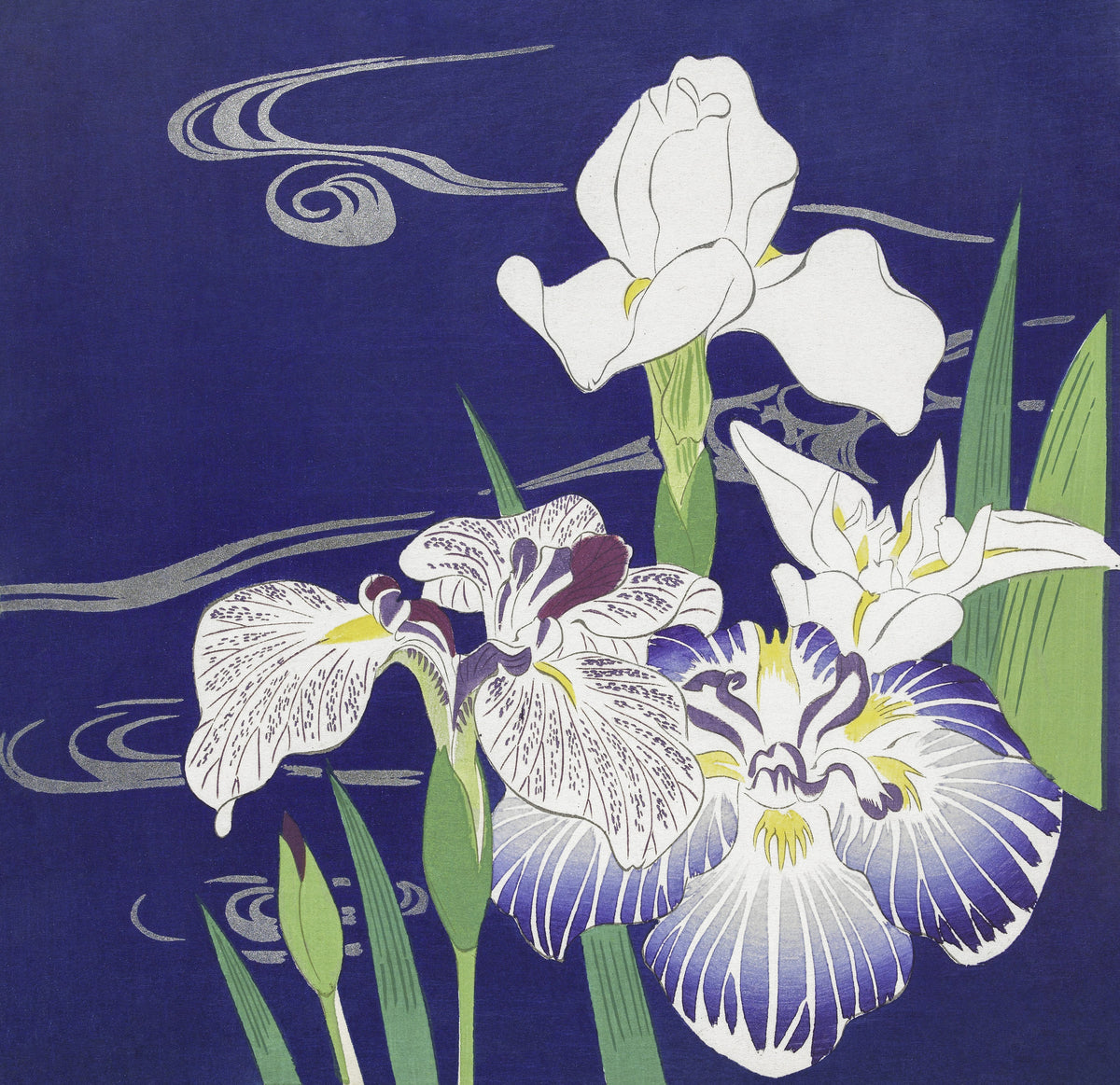
Tsukioka Kōgyo prints: reproductions of Japanese woodblock prints of Noh theatre and bird-and-flower subjects by Tsukioka Kōgyo. The collection includes Irises (1890s), Quail (1890s), Scene from the Noh Play Aoinoue (1922), Actor in the Role of the Dragon God Kasuga (1925) and Scene from the Noh Play Nue (1925).
This selection has two parts. Most prints are scenes from Noh plays made between 1922 and 1926, showing masked actors in patterned robes against plain, open grounds. The rest are bird-and-flower prints from the 1890s: irises, quail, and a tree with chrysanthemums, in softer greens and browns.
The theatre prints suit studies, libraries and hallways where their dark, dramatic figures can stand out, and the flower prints suit bedrooms and sitting rooms. All prints are museum-quality reproductions, available unframed or framed with low-glare acrylic glazing, with free shipping and import duties covered.