Artist · 5 prints
Ernst Ludwig Kirchner Prints
About Ernst Ludwig Kirchner
Ernst Ludwig Kirchner (1880–1938) was a German painter and printmaker, born in Aschaffenburg in Bavaria. He studied architecture in Dresden from 1901, but turned to art, and in 1905 founded the group Die Brücke (The Bridge) with Fritz Bleyl, Karl Schmidt-Rottluff and Erich Heckel, one of the starting points of German Expressionism. He later moved to Berlin. After volunteering for the army in 1915 he suffered a breakdown, and from 1918 he lived near Davos in the Swiss Alps, where he died in 1938.
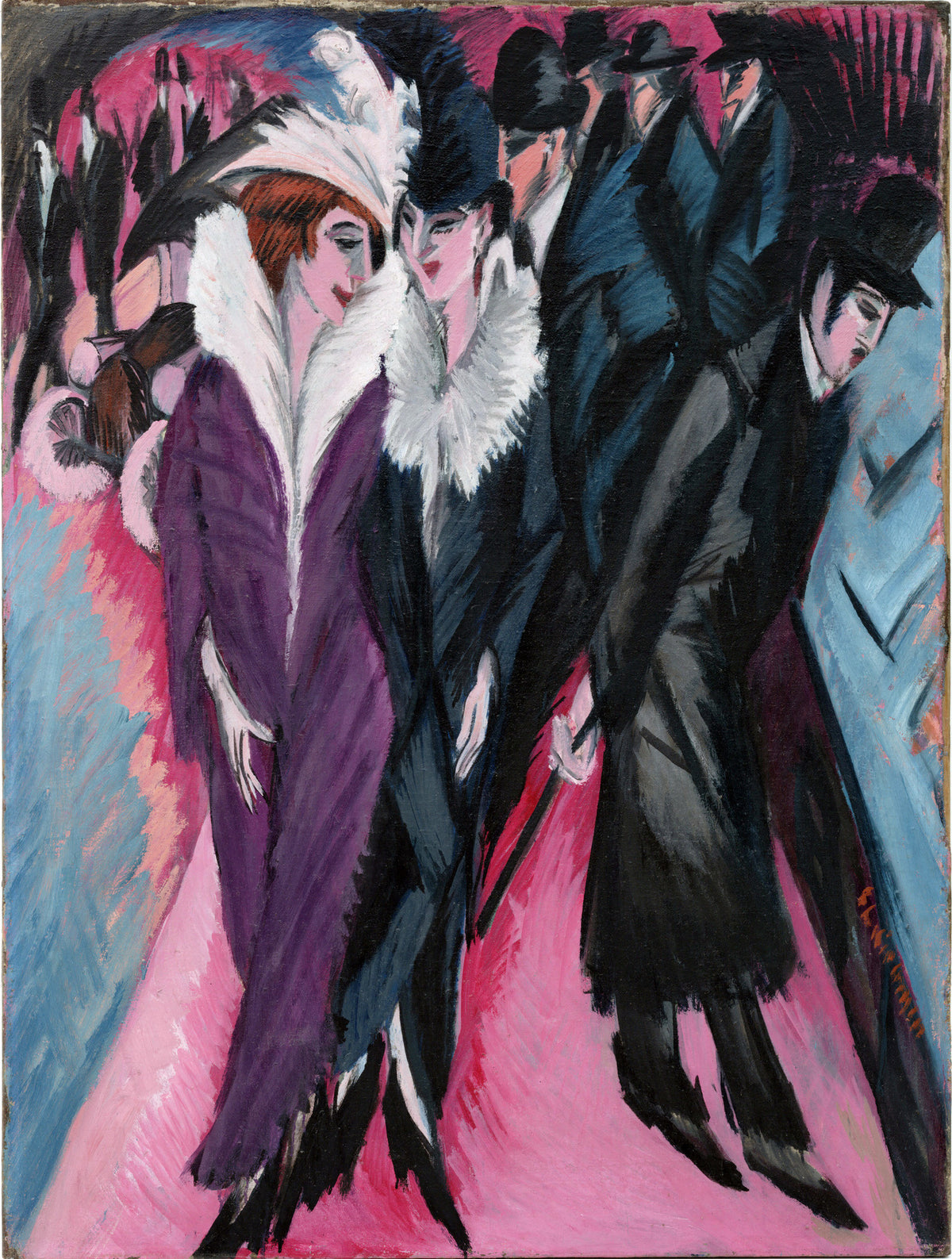
Kirchner is known for jagged forms, sharp angles and harsh, vivid colour. His Berlin street scenes of 1912–1915, crowded with figures, capture the nervous energy of the modern city, and he helped revive the woodcut as a bold, expressive medium. Key works include Street, Berlin (1913), in the Museum of Modern Art, New York, and Self-Portrait as a Soldier (1915). In Davos he turned to mountain landscapes. The Nazis condemned his art as "degenerate", and more than 600 of his works were sold or destroyed.
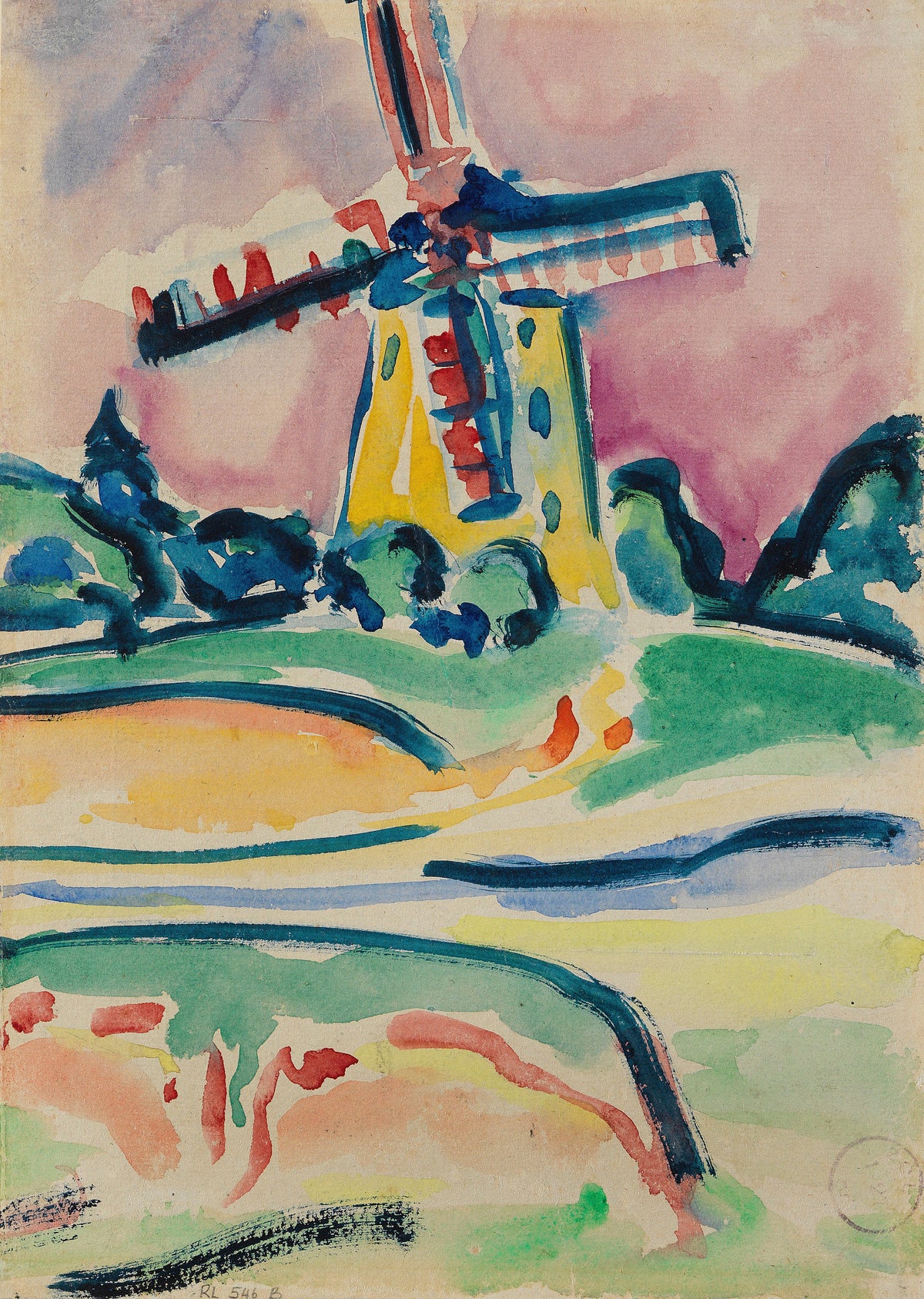
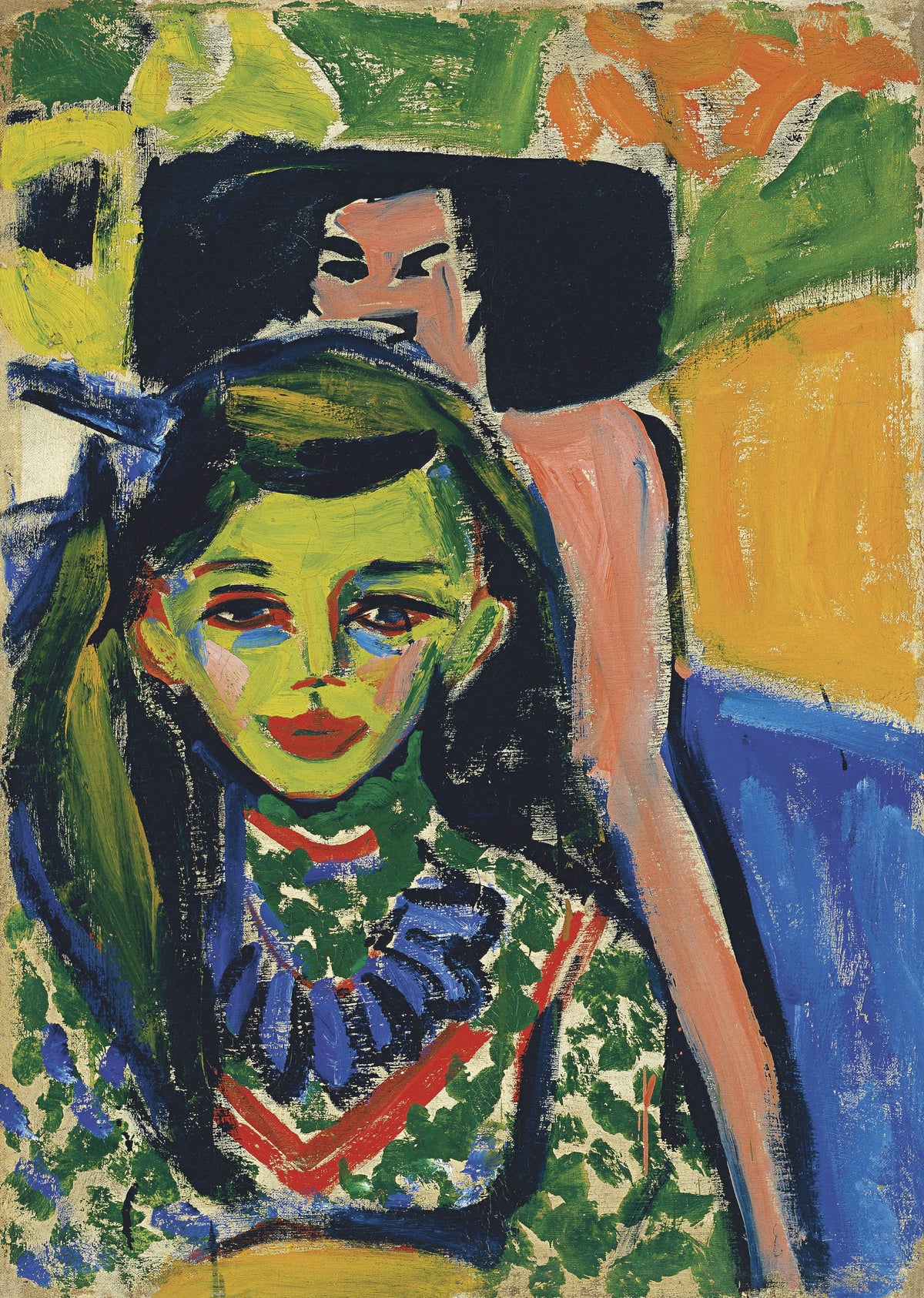
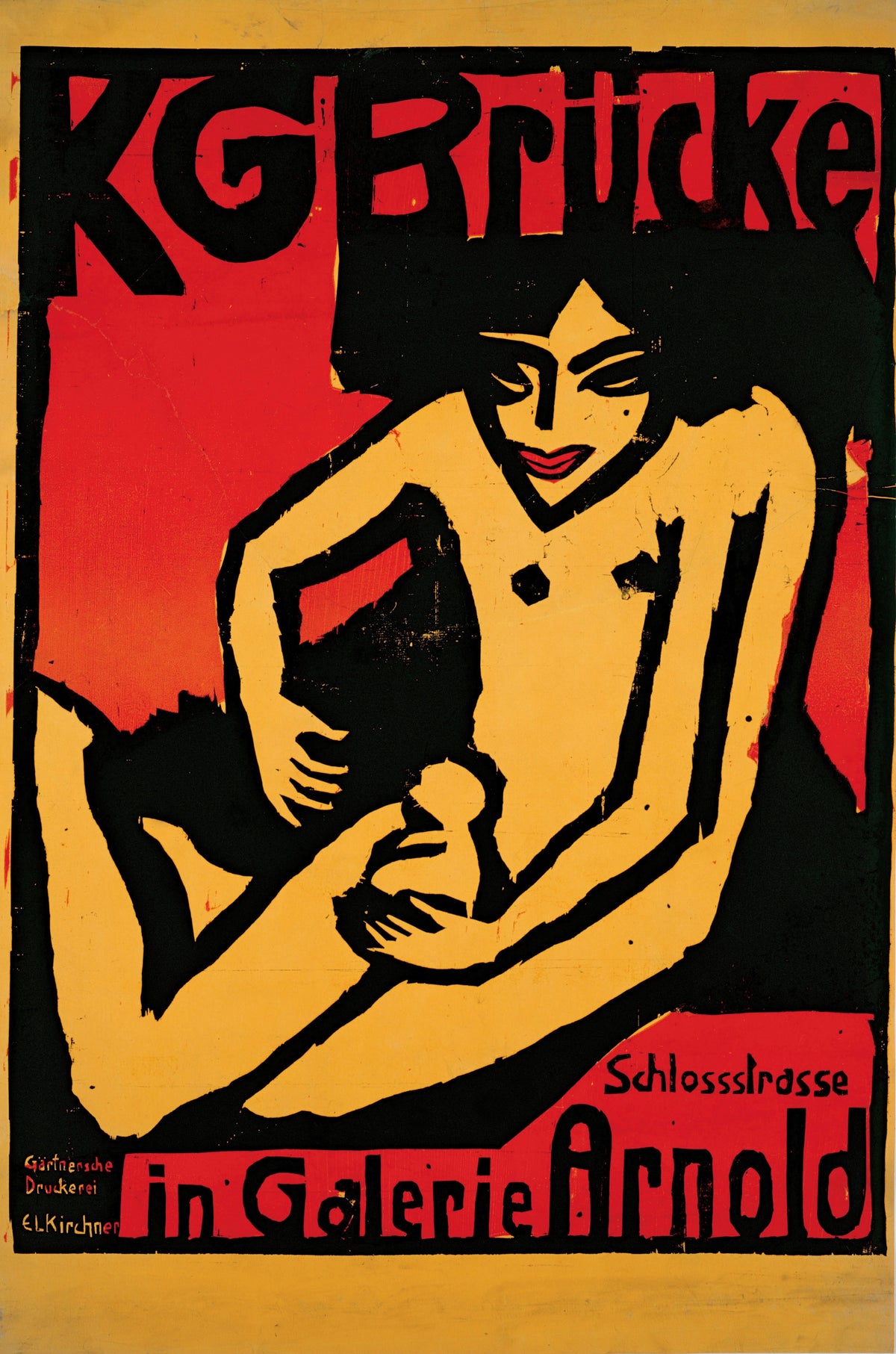
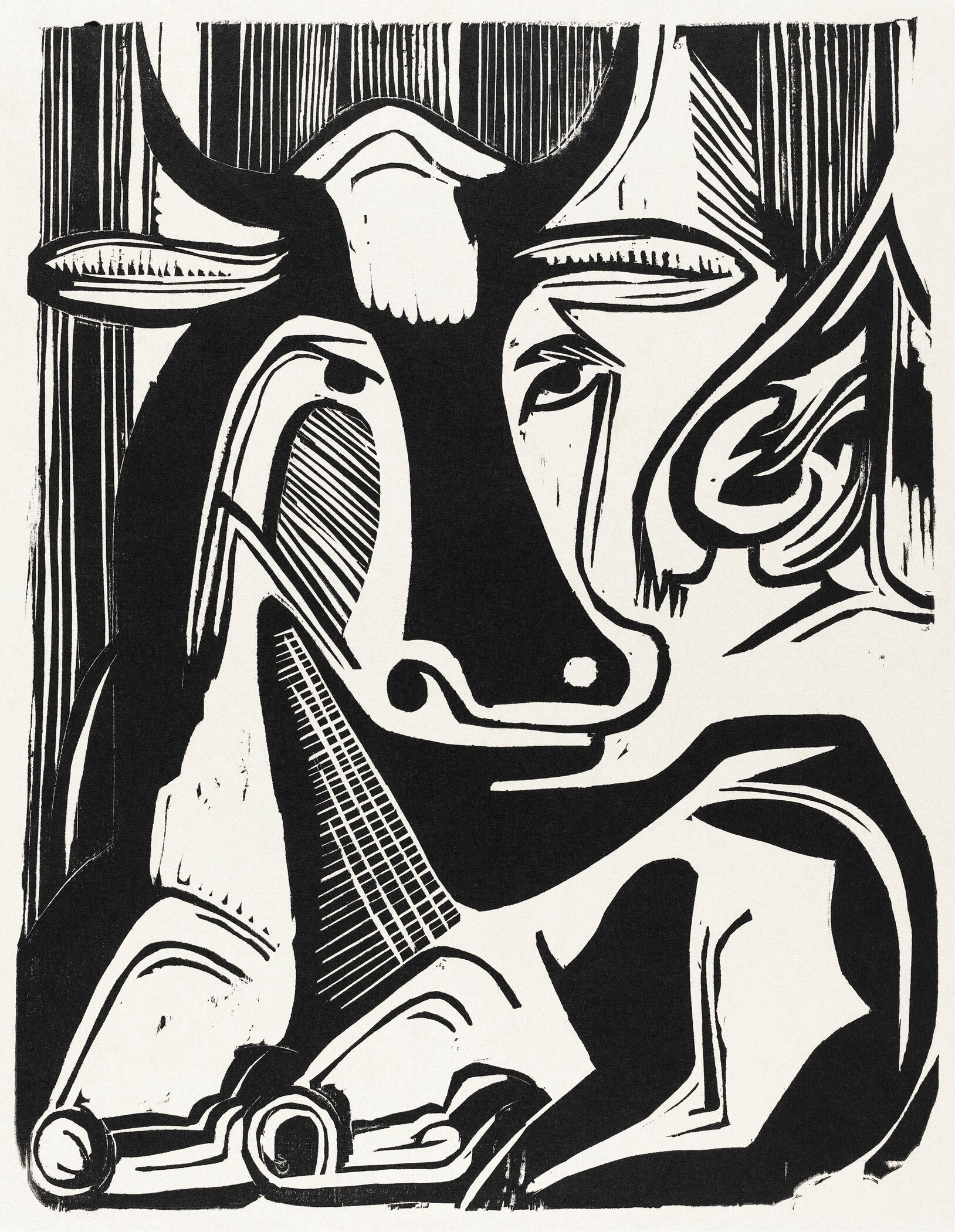
Ernst Ludwig Kirchner prints: reproductions of German Expressionist paintings and graphic work by Ernst Ludwig Kirchner, a founder of Die Brücke. The collection includes Fränzi in front of Carved Chair (1910), the KG Brücke exhibition poster for Galerie Arnold (1910), Street, Berlin (1913), Windmill and Cow.
This selection mixes Kirchner's city and studio subjects with simpler rural ones. Street, Berlin shows his crowded, angular street scenes, Fränzi his portraits of the young model he painted in Dresden, and the Brücke poster his graphic design. Windmill and Cow turn to the countryside, with the same strong colour and hard outlines.
The strong colour and sharp shapes suit modern living rooms, offices and studios, and the poster works well in a hallway or creative workspace. All prints are museum-quality reproductions, available unframed or framed with low-glare acrylic glazing, with free shipping and import duties covered.