Artist · 4 prints
Gaoquan Xingdun Prints
About Gaoquan Xingdun
Gaoquan Xingdun (1633–1695), known in Japan as Kōsen Shōton, was a Chinese Zen Buddhist monk and calligrapher of the Ōbaku school. He was born in Fuqing, in Fujian province, lost his parents young and began training as a monk at 13. He studied under Huimen Rupei, a successor of the master Yinyuan Longqi, who had brought the Ōbaku form of Zen to Japan. Around the age of 29 Gaoquan sailed to Nagasaki and went on to serve at Manpuku-ji, the Ōbaku head temple at Uji near Kyoto.
Gaoquan founded the temple Bukkoku-ji in Fushimi and in 1692 became the fifth abbot of Manpuku-ji. He died in 1695 after travelling to Edo to preach before the shogun Tokugawa Tsunayoshi. Ōbaku monks used Chinese poetry and calligraphy to teach Zen, and Gaoquan was known as one of the finest writers among them. Examples of his calligraphy are held by the Metropolitan Museum of Art and Keio University in Tokyo.
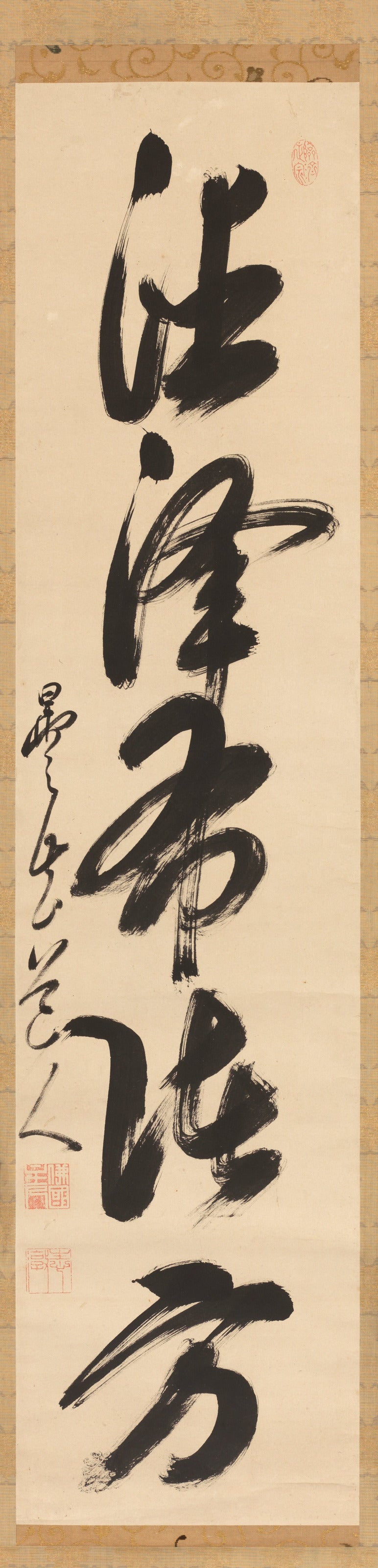
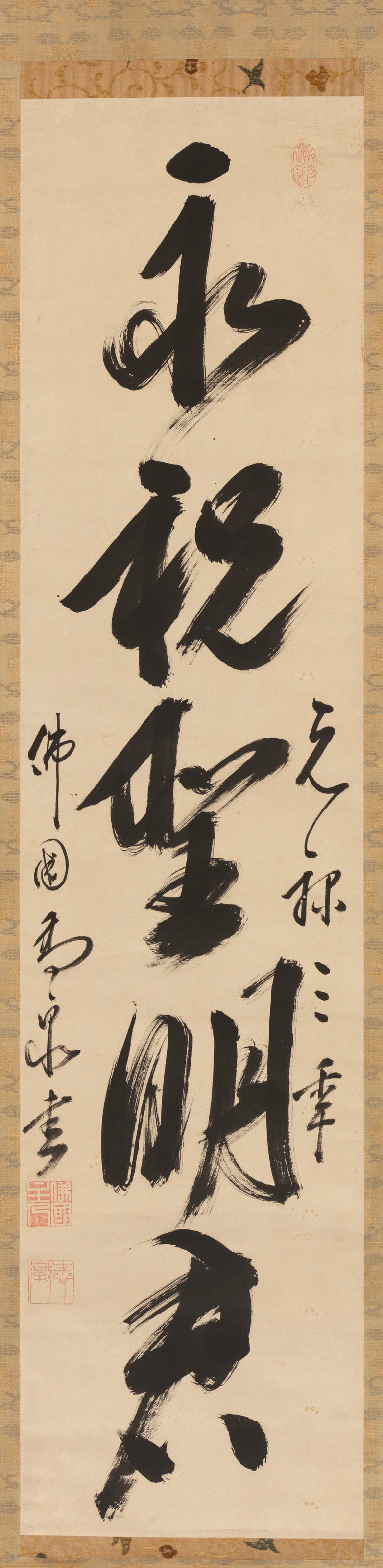
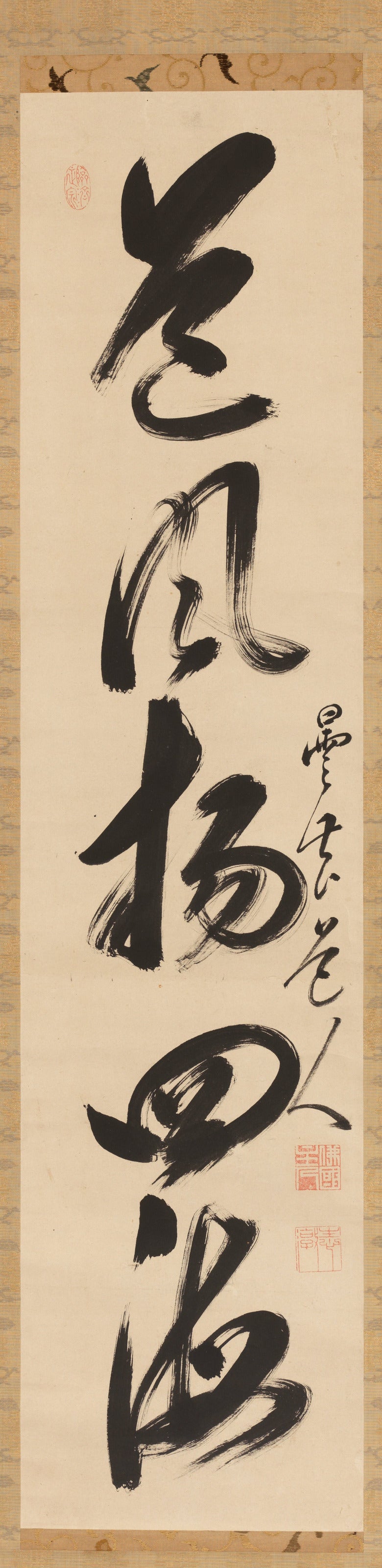
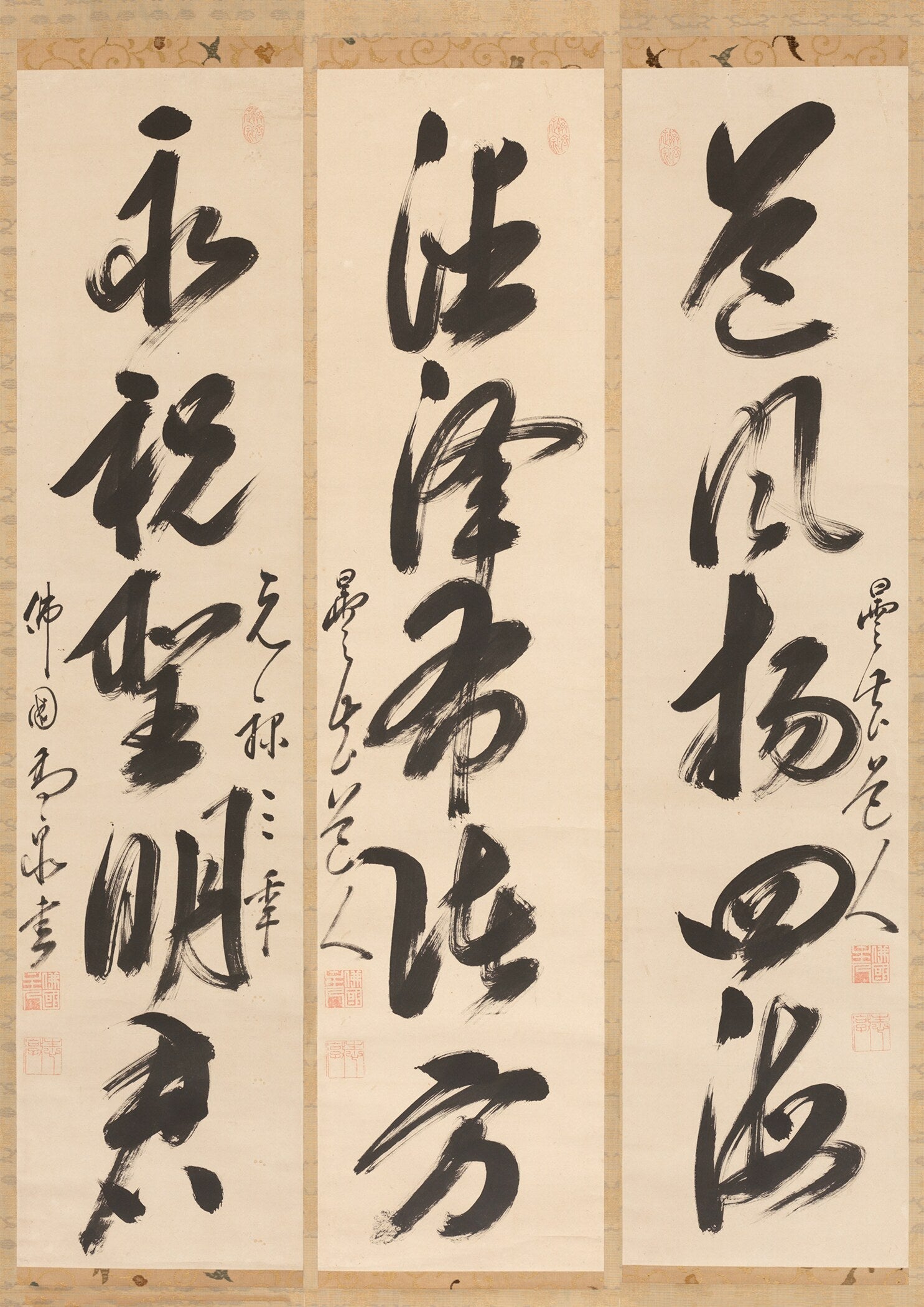
Gaoquan Xingdun prints: reproductions of the Zen calligraphy scrolls the Chinese Ōbaku monk Gaoquan Xingdun (Kōsen Shōton) wrote in Japan around 1690. The collection includes the left, center and right scrolls of a single-line calligraphy triptych (c. 1690), and the complete Calligraphy Triptych shown together.
This selection focuses on one set of three hanging scrolls, each a single vertical column of large characters in black ink. The scrolls can be read separately or as a set, and show the confident brushwork Ōbaku calligraphy is known for.
The black ink on pale paper suits calm, minimal rooms: a study, meditation or yoga space, bedroom or narrow hallway wall, and the three scrolls look best hung side by side. All prints are museum-quality reproductions, available unframed or framed with acrylic glazing, with free shipping and import duties covered.