Artist · 9 prints
Kawanabe Kyosai Prints
About Kawanabe Kyōsai
Kawanabe Kyōsai was a Japanese painter and caricaturist, born in Koga, north of Edo (now Tokyo), on 18 May 1831, the son of a samurai, and died in Tokyo in April 1889. As a boy he worked briefly with the woodblock print master Utagawa Kuniyoshi, then trained in the formal Kanō school of painting before breaking away toward the livelier popular style.
Kyōsai became famous for his political cartoons in the years around the Meiji Restoration of 1868, when Japan's old order gave way to rapid modernisation. The authorities jailed him several times, but he kept publishing. He is loved for quick, witty sketches of goblins and animals, especially birds, fish and reptiles, full of energy caught in a few brushstrokes, and he also produced sketchbooks and a five-volume book on hawks. He was fond of sake and signed many works Shōjō Kyōsai, meaning "drunken Kyōsai". Kawanabe Kyōsai's work is held in museums in Japan and abroad.
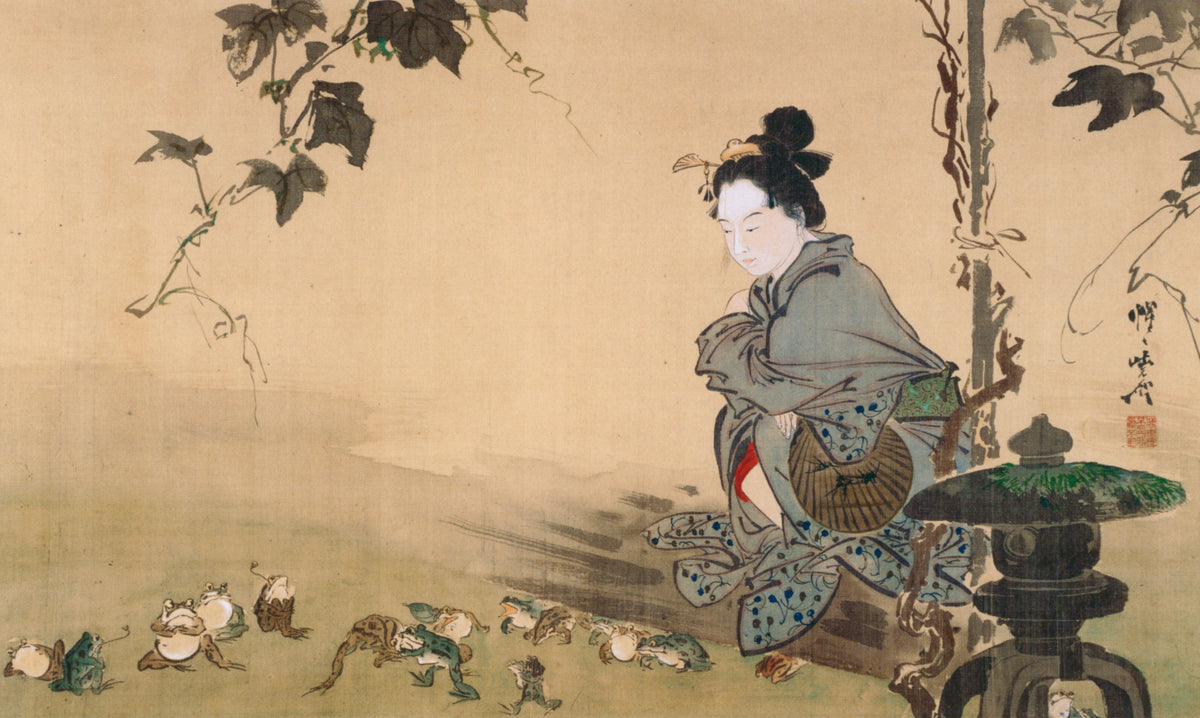
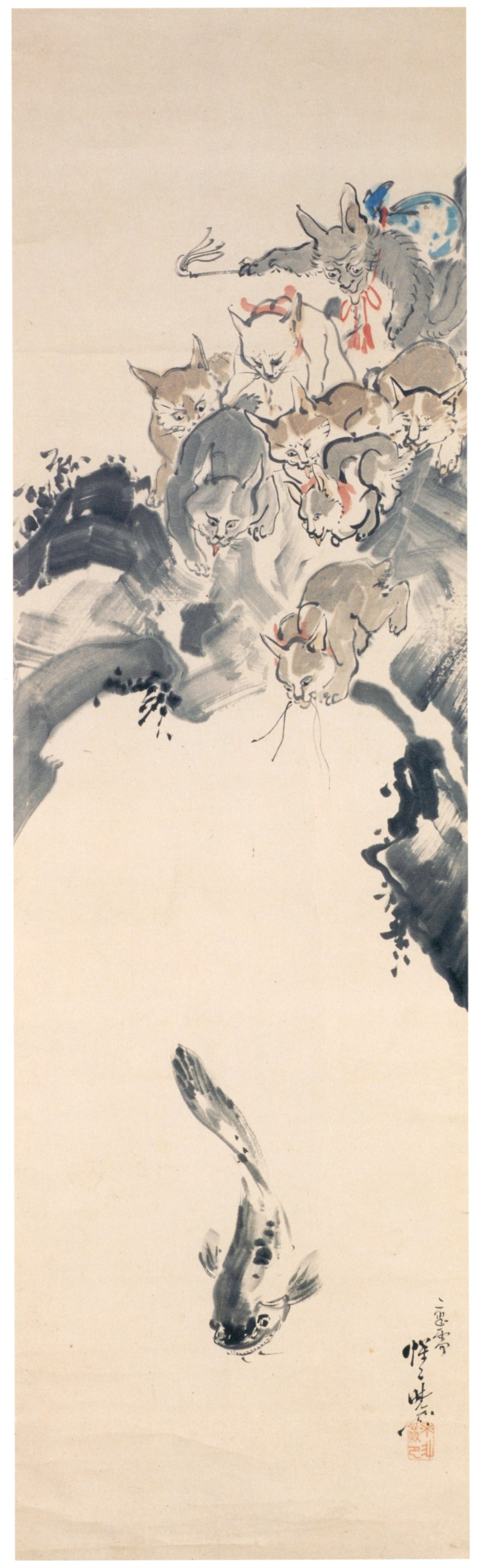
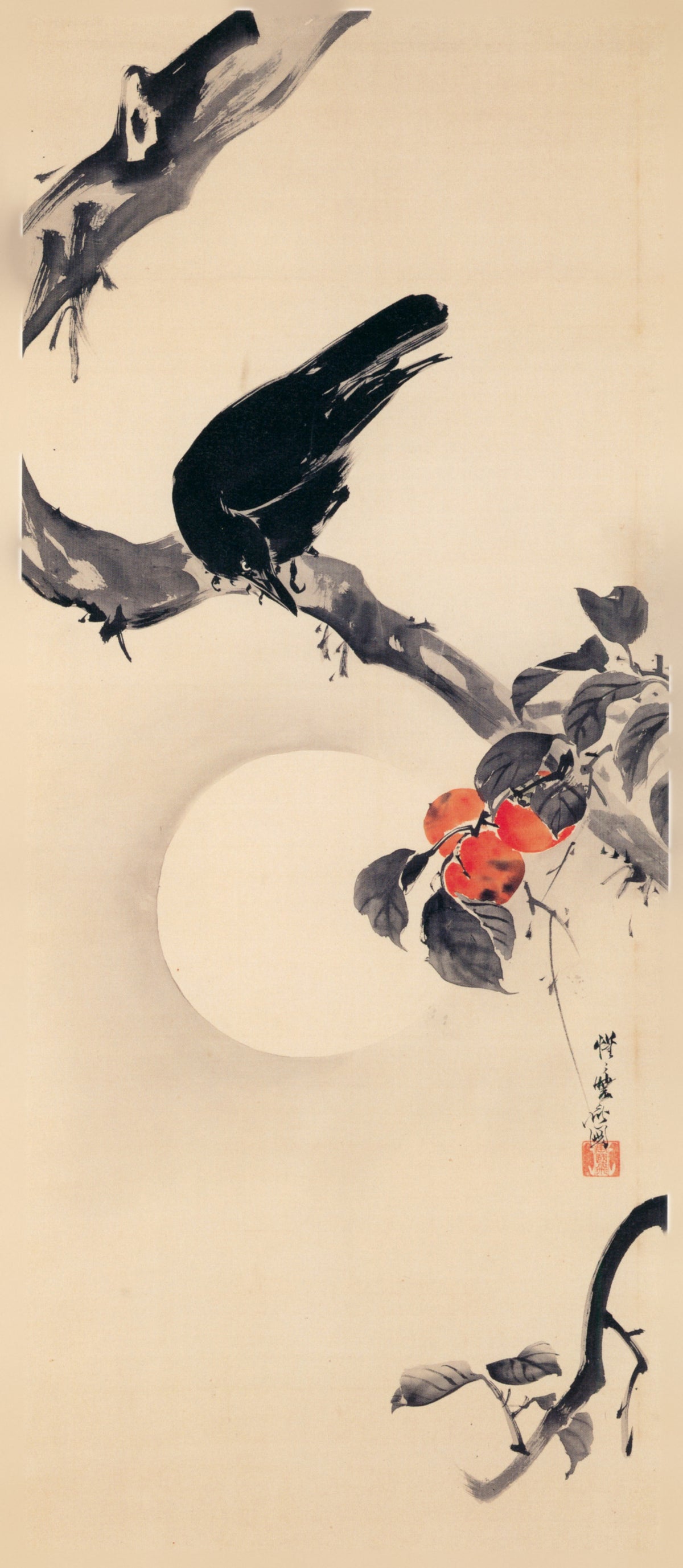
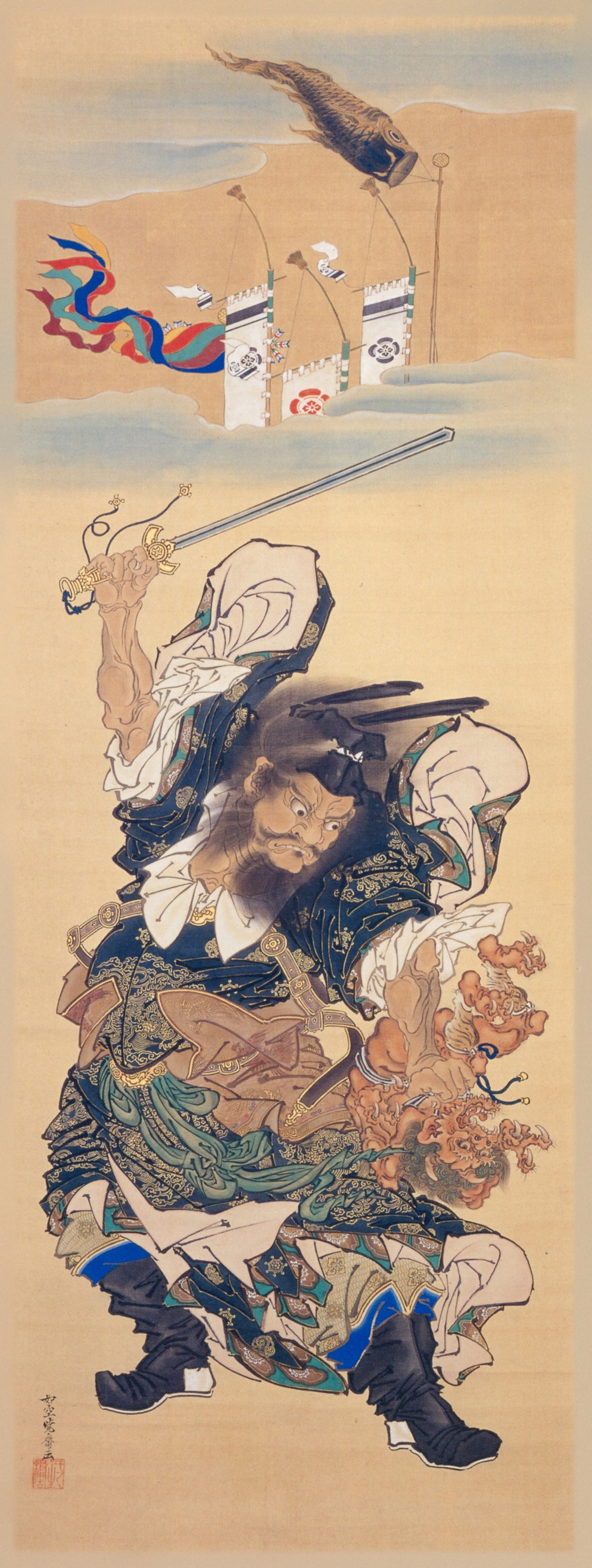
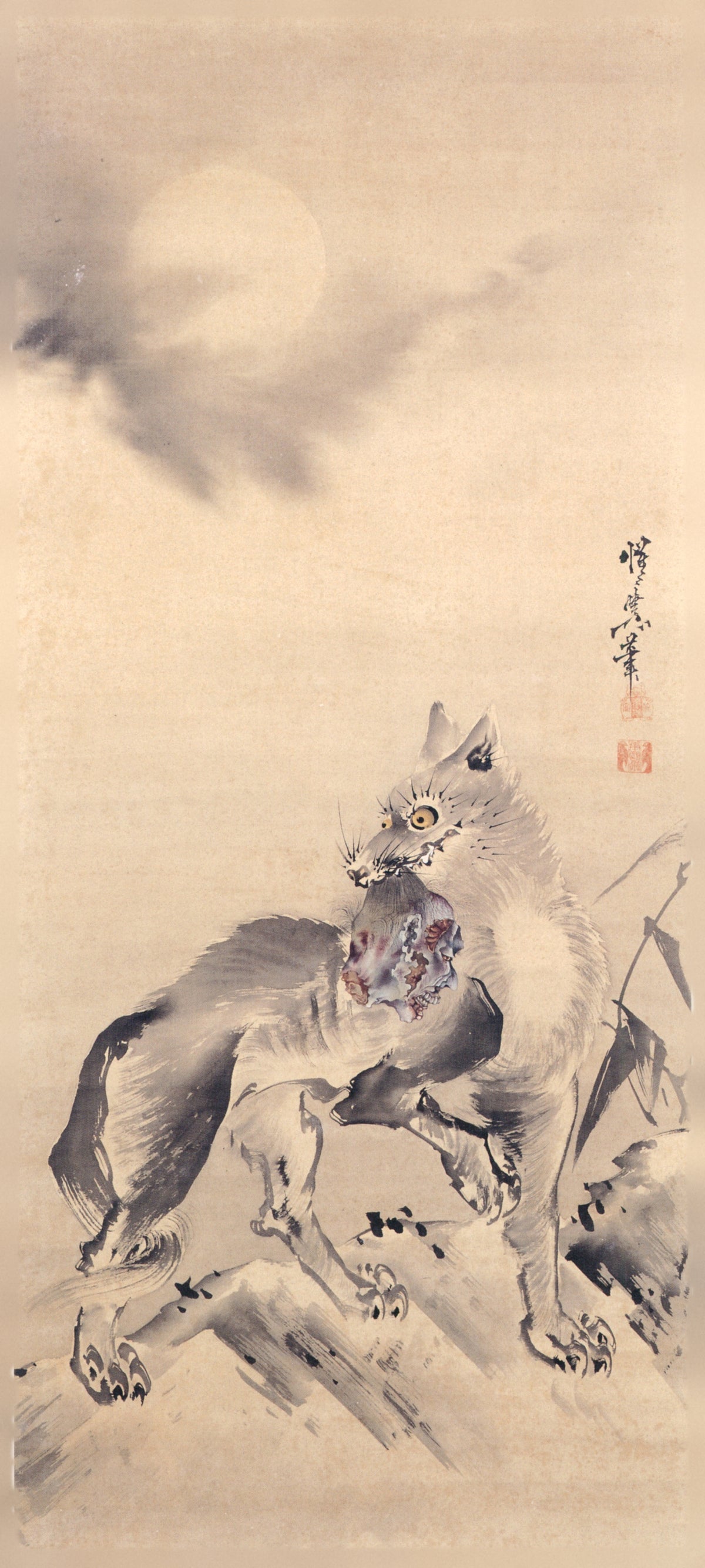
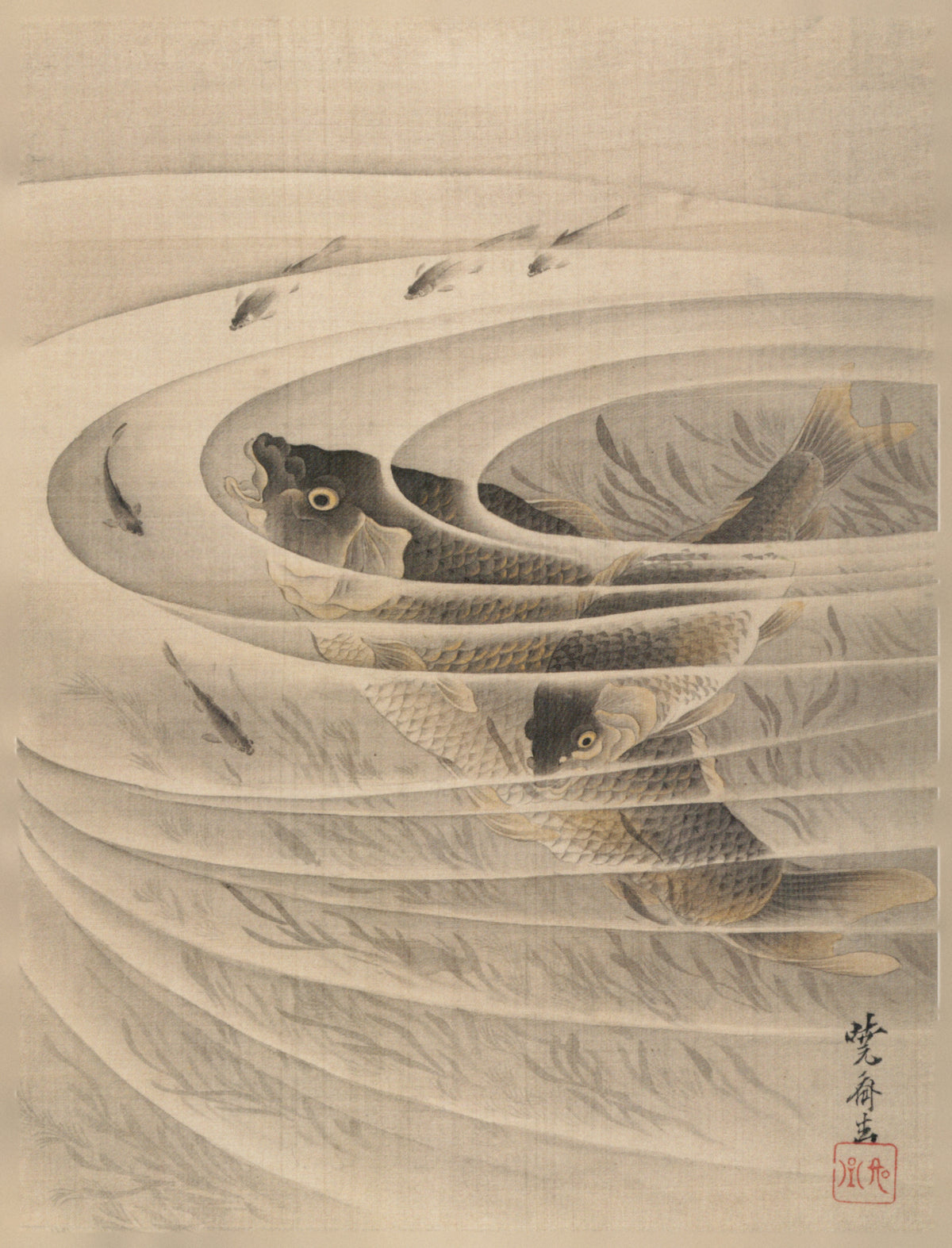
Kawanabe Kyōsai prints: reproductions of ink paintings by the Japanese painter Kawanabe Kyōsai, who worked in Edo and Meiji-era Tokyo. The collection includes Cats Fishing a Catfish, Crow on a Persimmon Branch, Wolf under the Moon, Carp (Koi-zu) and Shōki on a Banner.
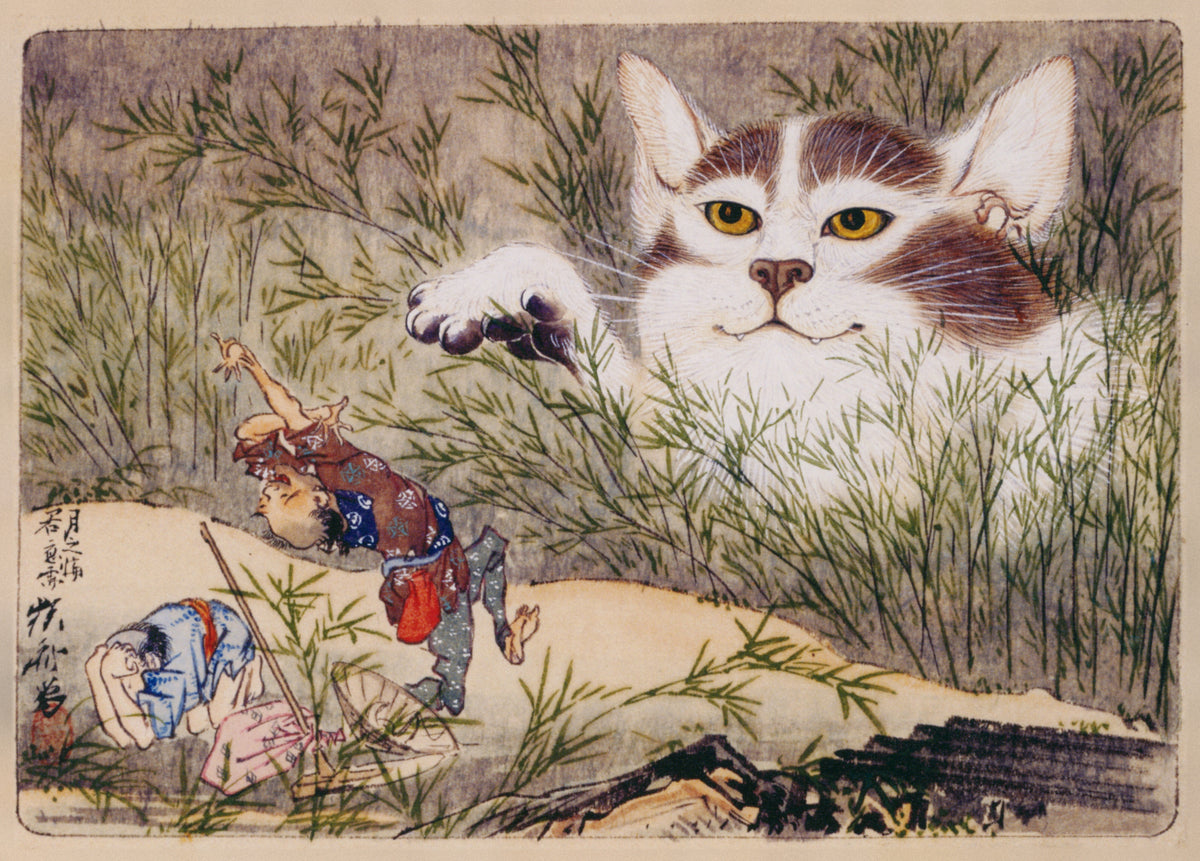
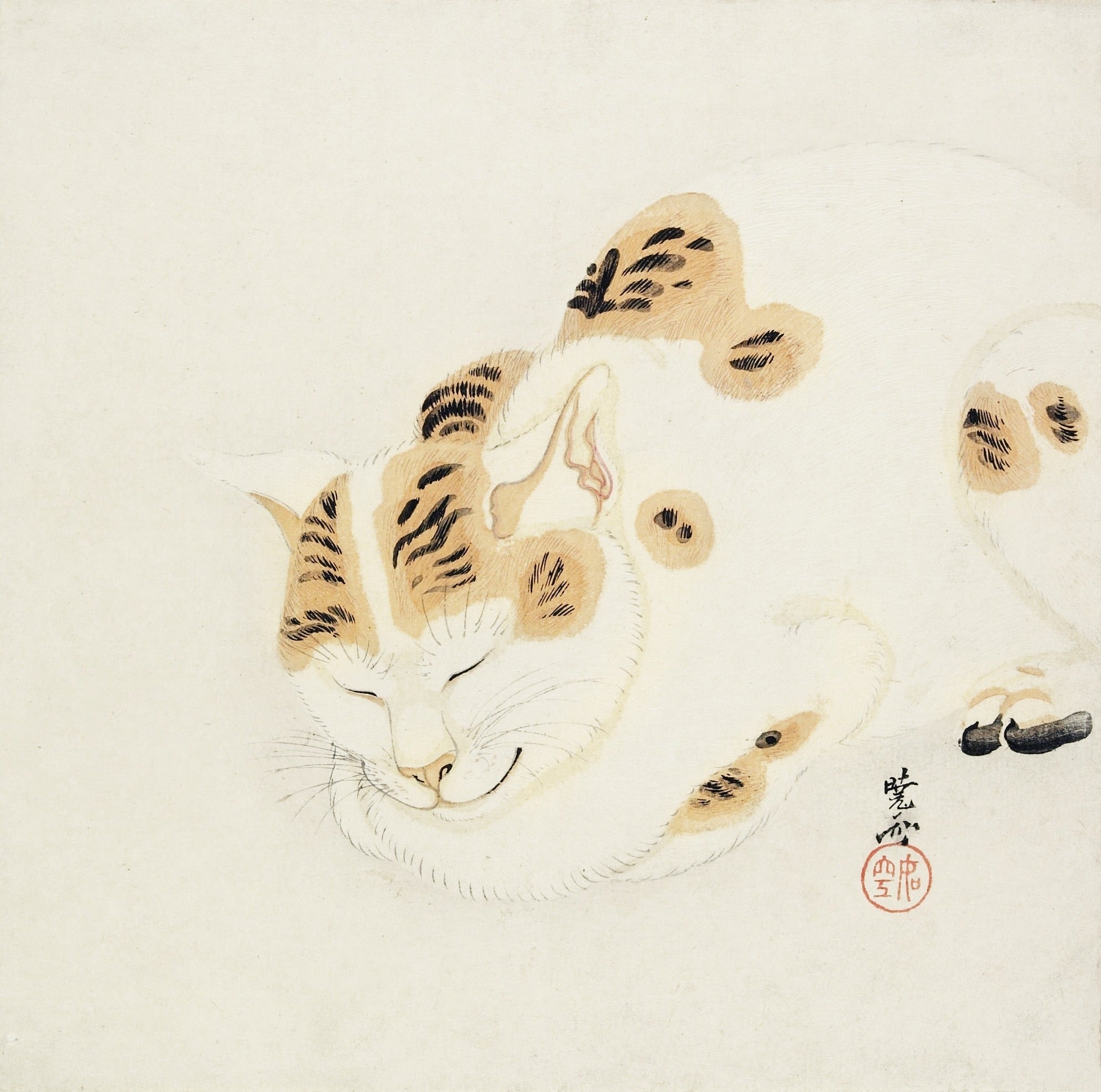
This selection concentrates on Kyōsai's animal paintings: cats, a crow, a wolf and carp, each drawn in quick, confident brushwork with black ink and touches of colour. Several are humorous, such as the giant cat from the Seisei Kyōsai Album and the cats trying to catch a catfish. Others are calmer, like Sleeping Cat and the carp. Shōki, the demon-queller of Chinese and Japanese legend, adds a dramatic figure subject.
The cat and carp paintings suit kitchens, bedrooms and children's rooms; the crow and the wolf under the moon work in studies, hallways and minimal interiors with plain walls. All prints are museum-quality reproductions, available unframed or framed with acrylic glazing, with free shipping and import duties covered.