Collection · 31 prints
The Grin
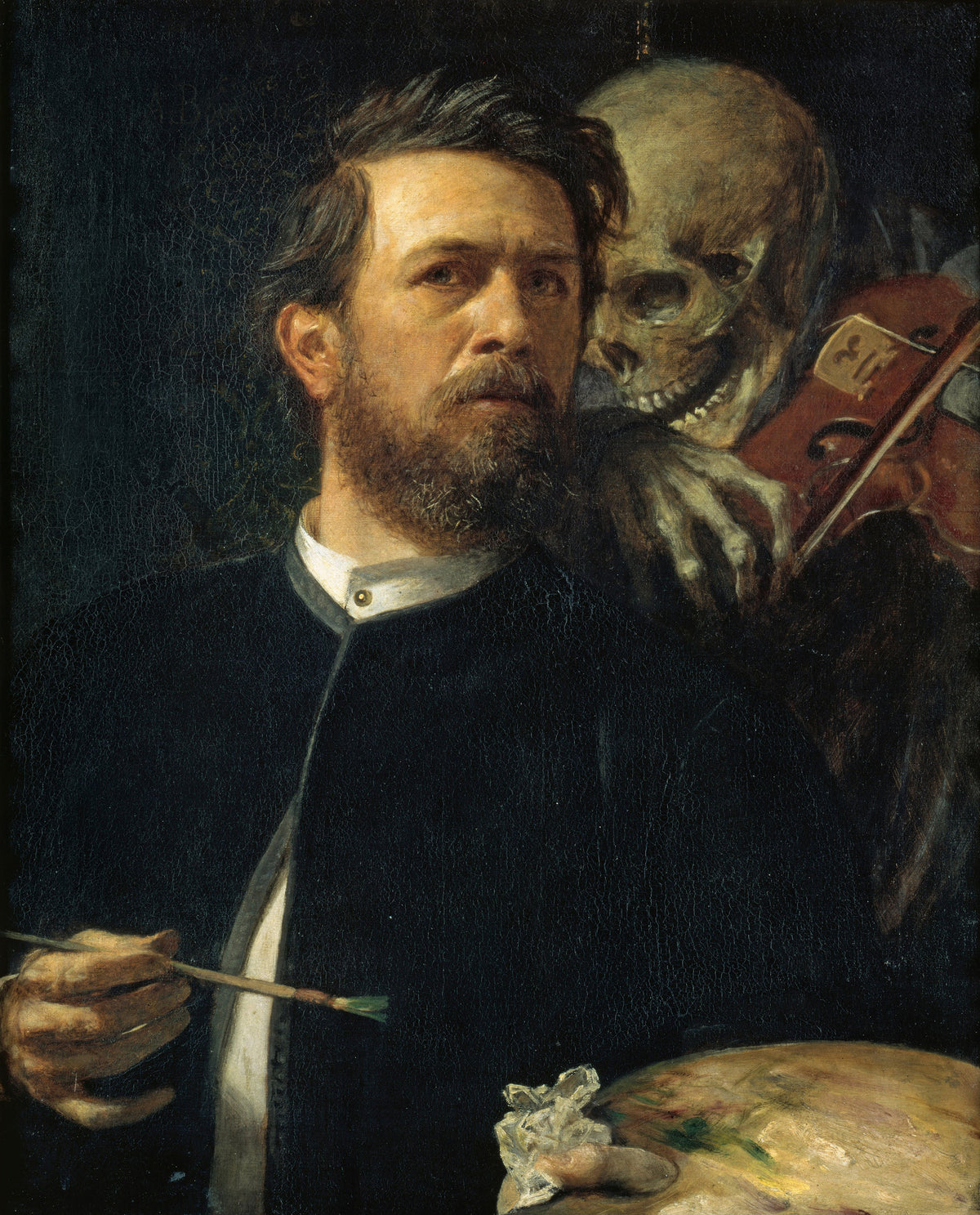
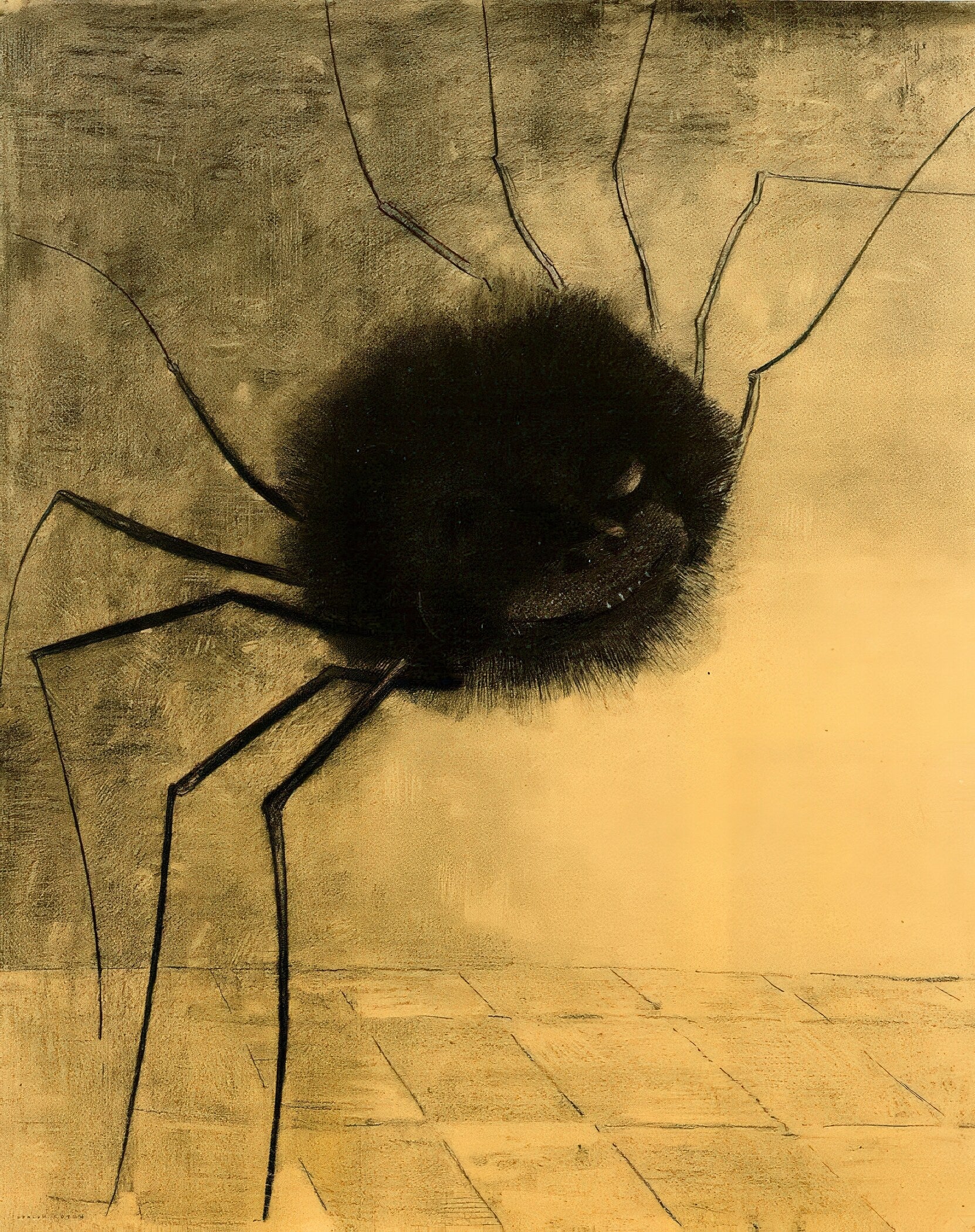
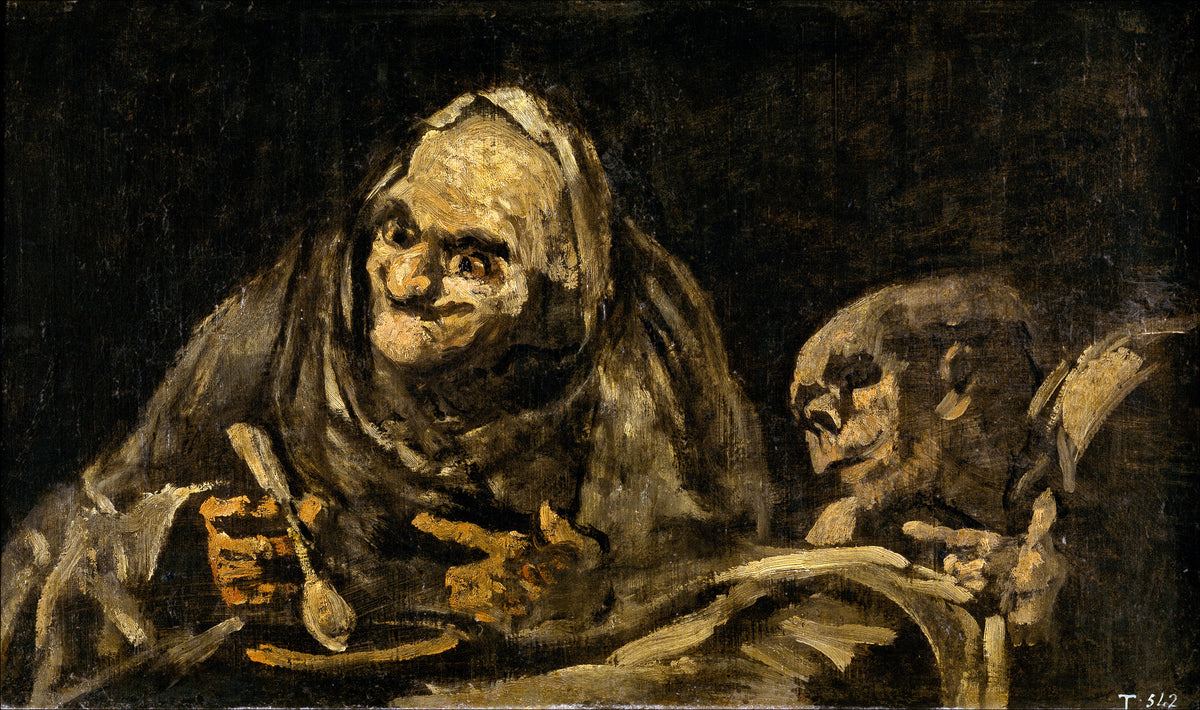
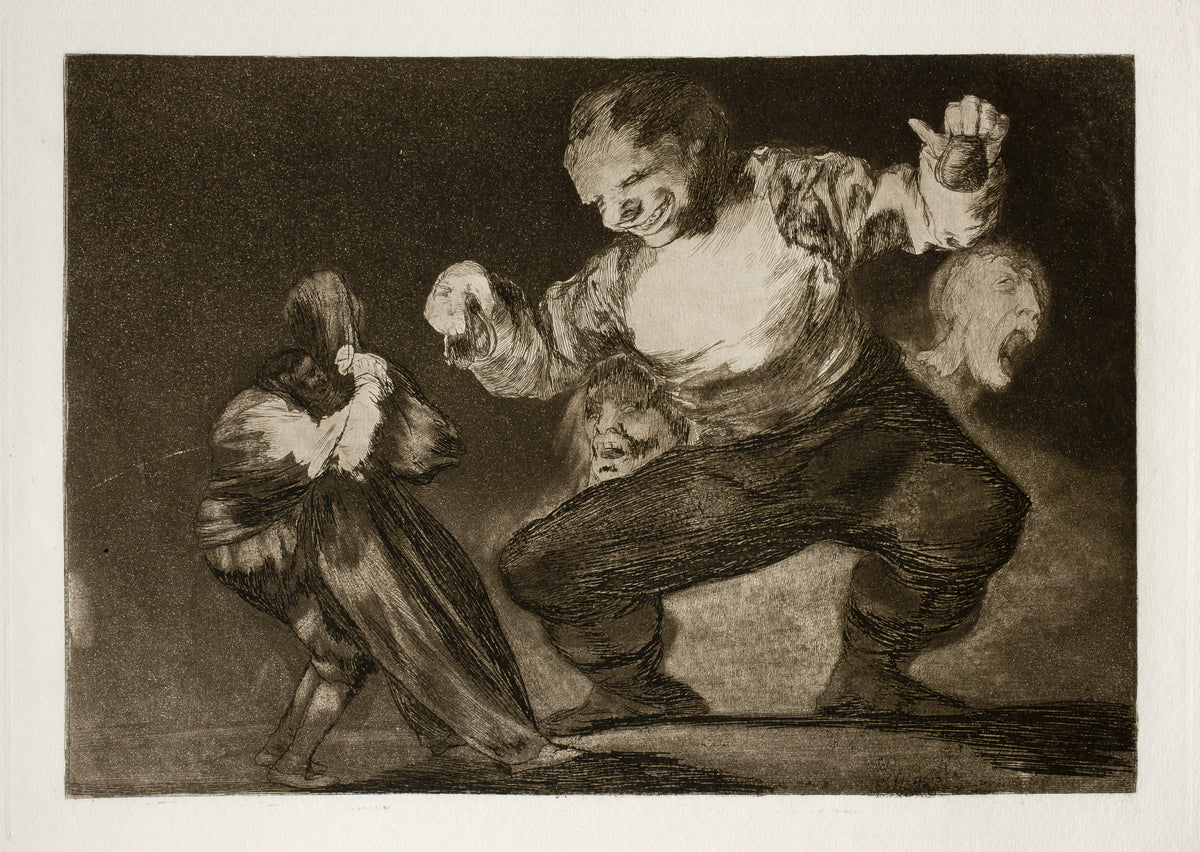
Hals's Malle Babbe cackling with an owl on her shoulder, Ducreux grinning and pointing straight out of the canvas, Velázquez's jester, Redon's smiling spider and Ensor's grinning masks. Smiles that sit a little wrong: the jester, the cynic, the skull with its teeth still in. Chosen by hand, with free shipping and import duties covered.
Featured listings
Note: Framed prints require slightly longer production time
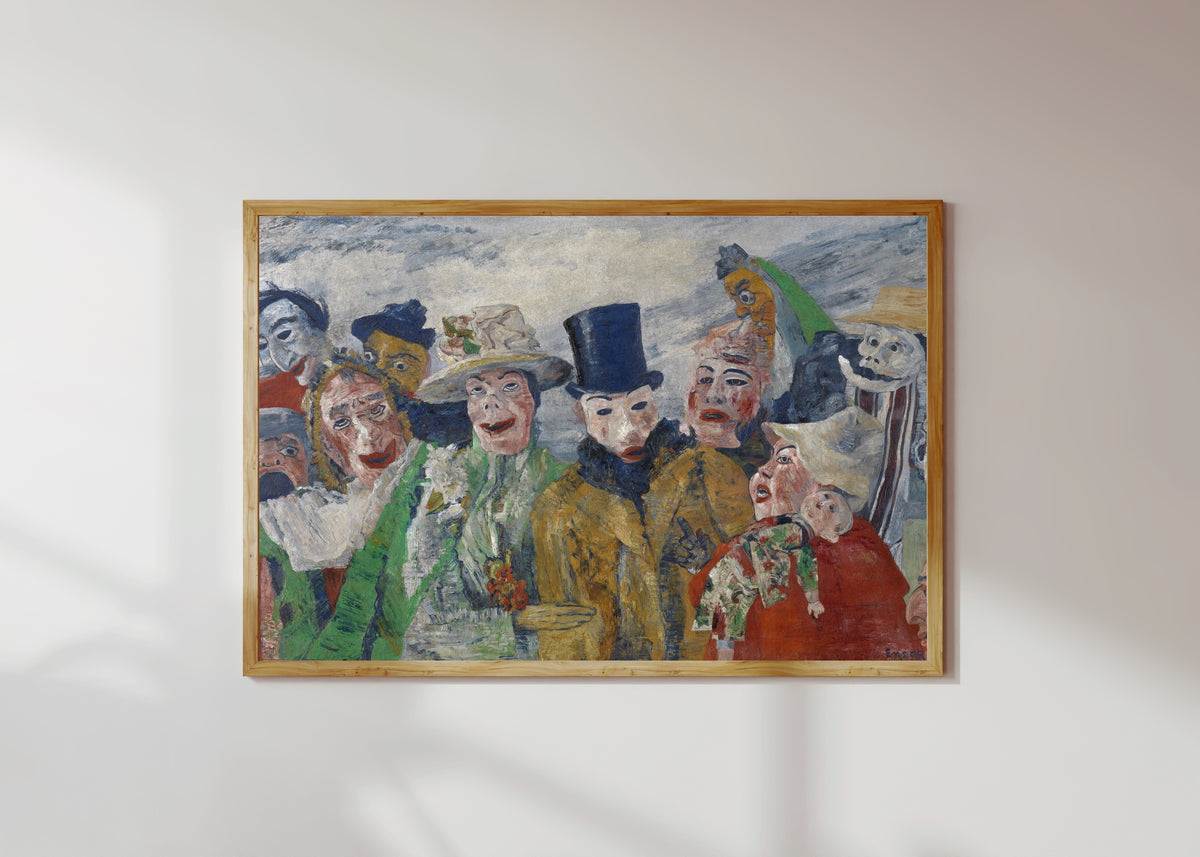
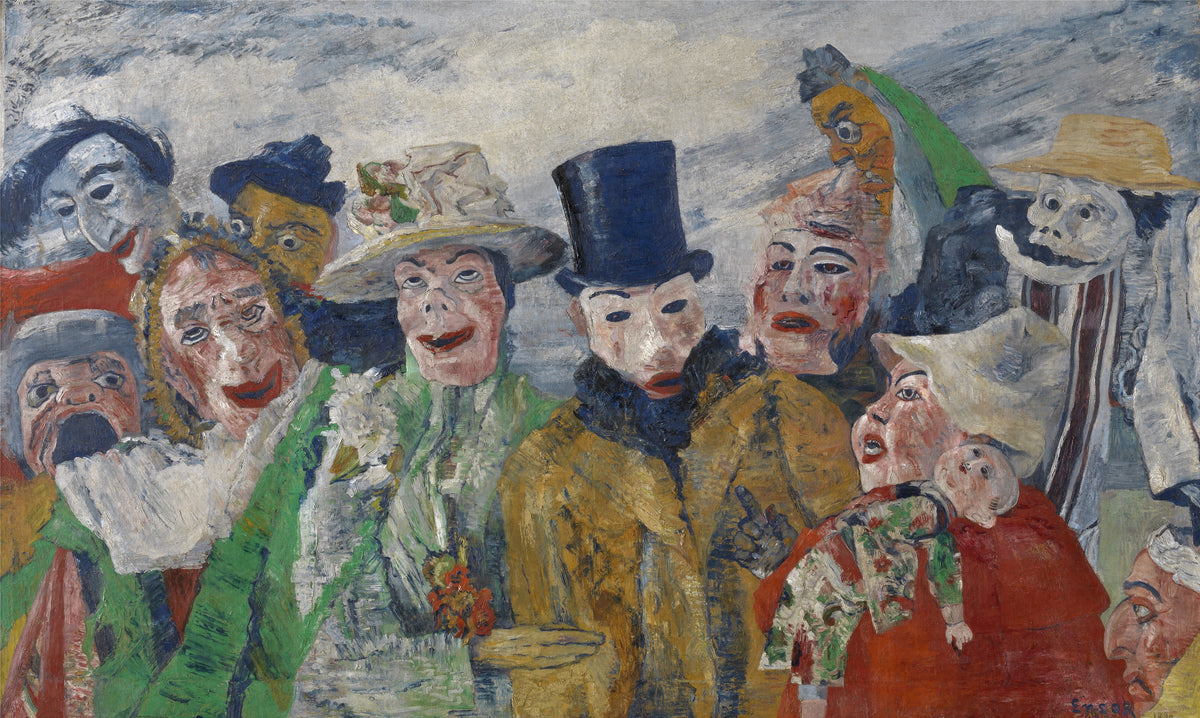
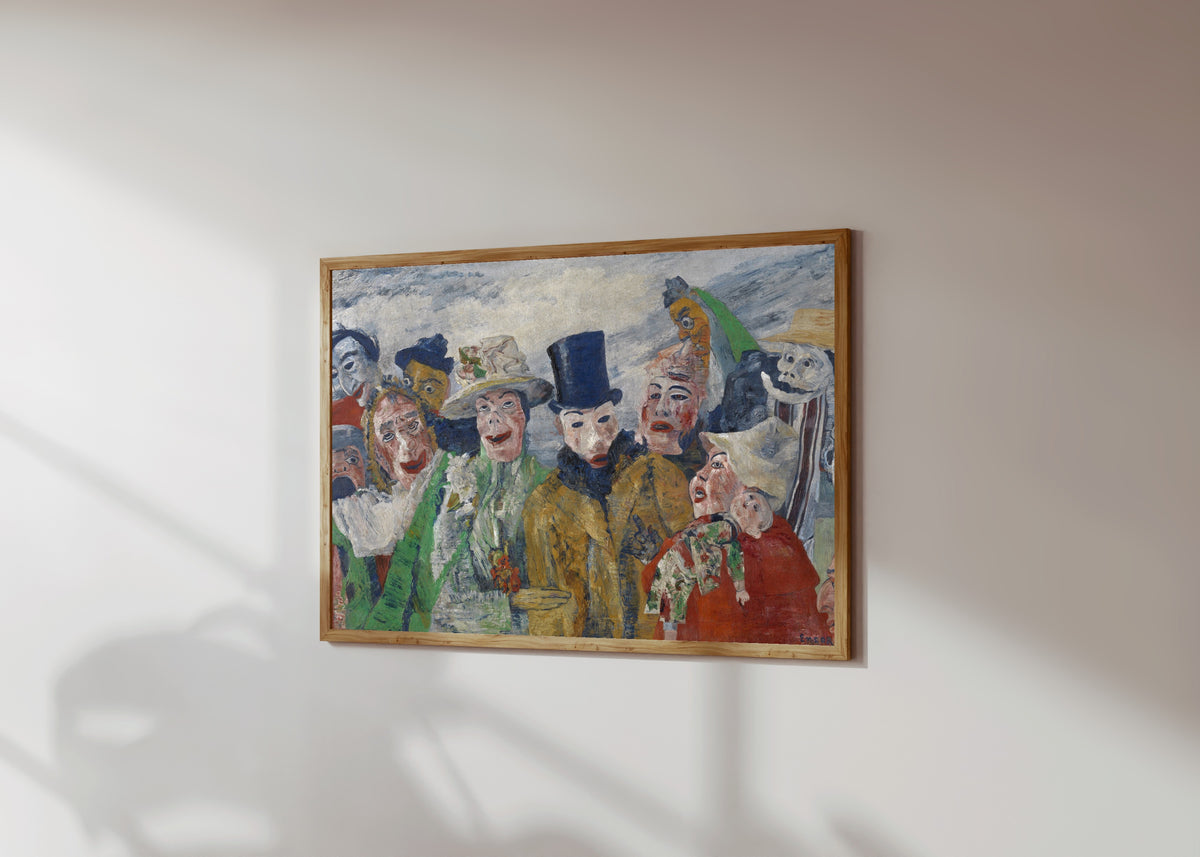
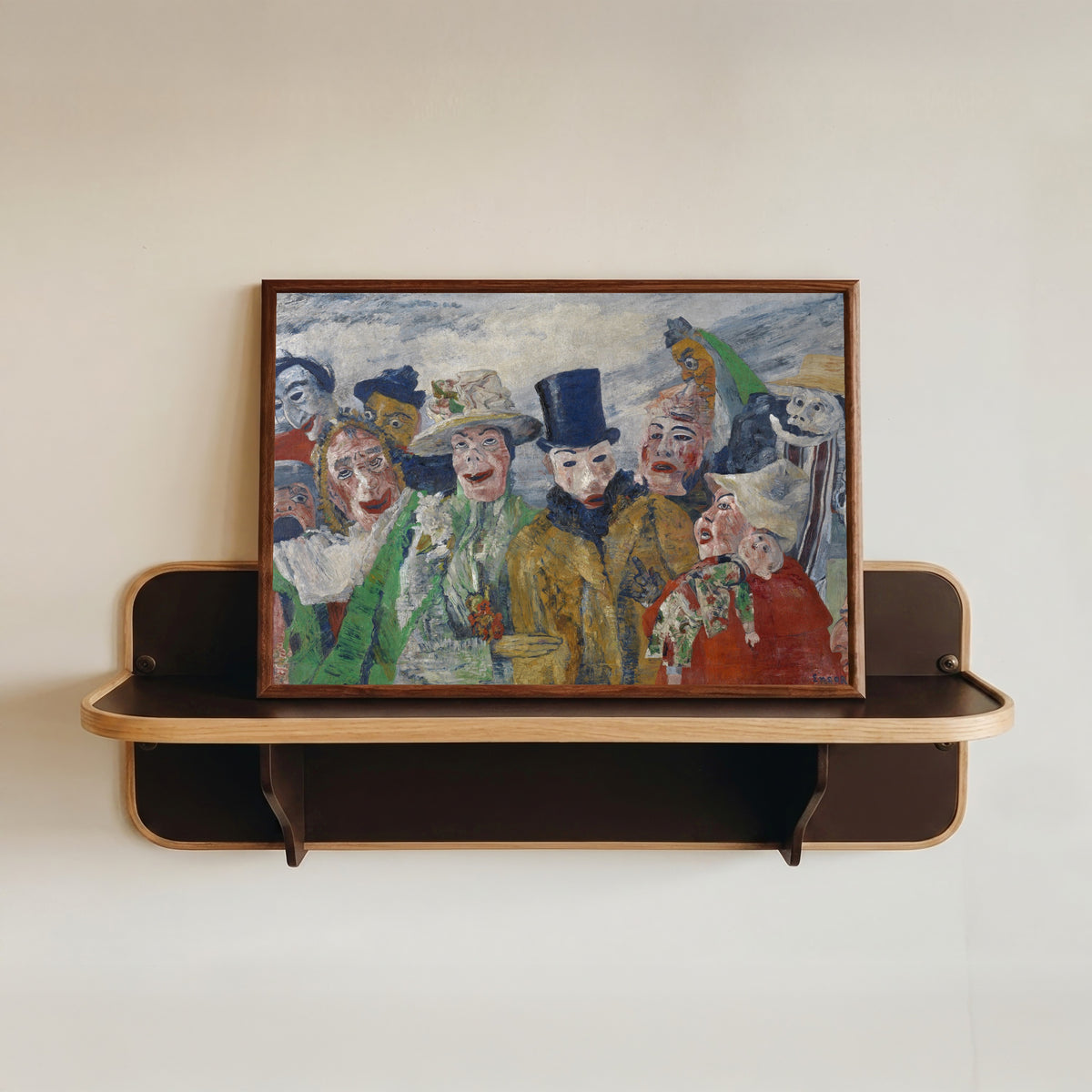
Masked figures fill the canvas shoulder to shoulder against a streaked grey and blue sky. At the centre a figure in a tall navy top hat, pale mask and ochre coat with a dark fur collar raises one finger; beside him a masked woman in a wide flowered cream hat and green coat smiles with red lips. Around them press a mask with a gaping black mouth, a yellow mask under a green veil, a skull-like mask under a straw hat, and a figure in a white bonnet and red cloak clutching a doll. Signed lower right.
The original: oil on canvas, 1890; Royal Museum of Fine Arts Antwerp (KMSKA).
James Ensor (1860–1949) was a Belgian painter and printmaker, and a founding member of the avant-garde group Les XX. Trained at the Académie Royale des Beaux-Arts in Brussels (1877–80), he lived and worked for most of his life in the seaside town of Ostend. He painted carnival masks, skeletons and crowd scenes in a style that moved from Symbolism toward Expressionism, most famously in Christ's Entry into Brussels in 1889 (1888). His work is held by the Museum of Modern Art in New York, the Royal Museums of Fine Arts of Belgium in Brussels, and the Musée d'Orsay in Paris.
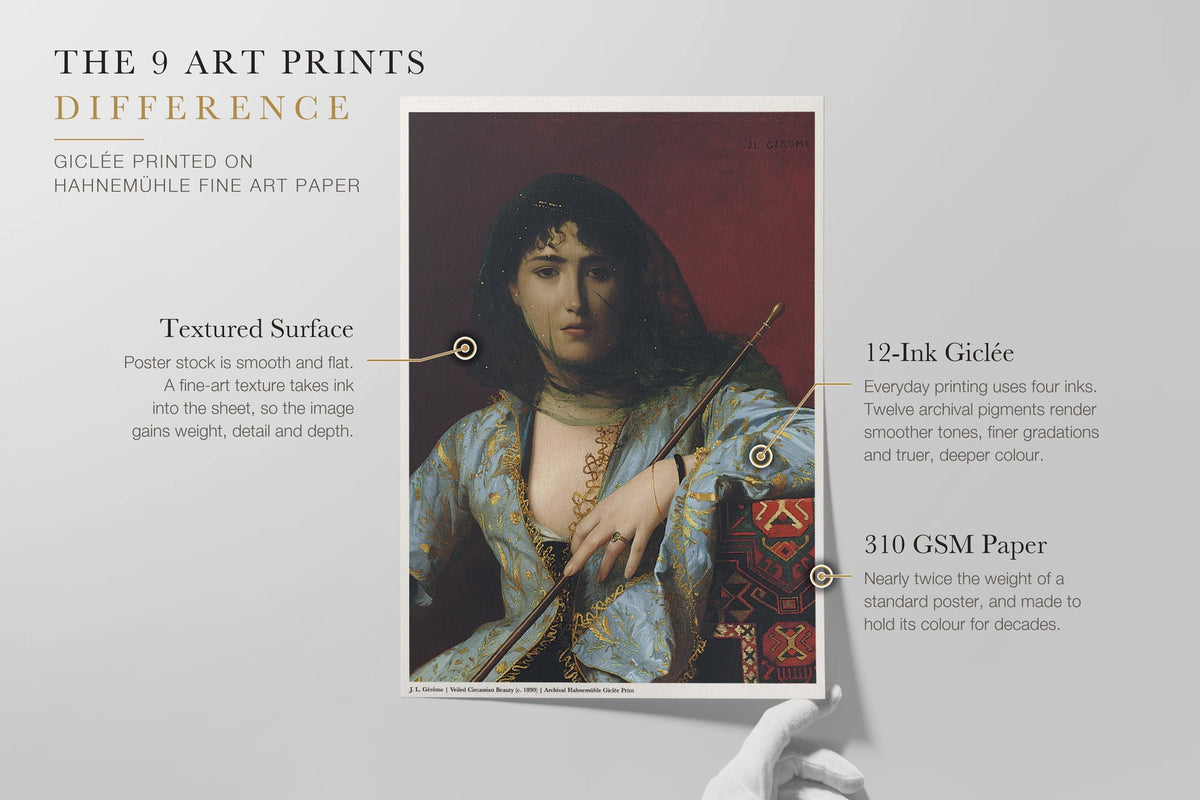
Each print is made to our Archival Museum Standards: a 12-ink giclée, printed to order. Unframed prints are made on Hahnemühle German Etching, a 310gsm matte fine-art paper. Framed prints arrive in a handmade solid-wood frame with low-reflection glazing, ready to hang. Ships worldwide with free delivery to 30+ countries.


Note: Framed prints require slightly longer production time
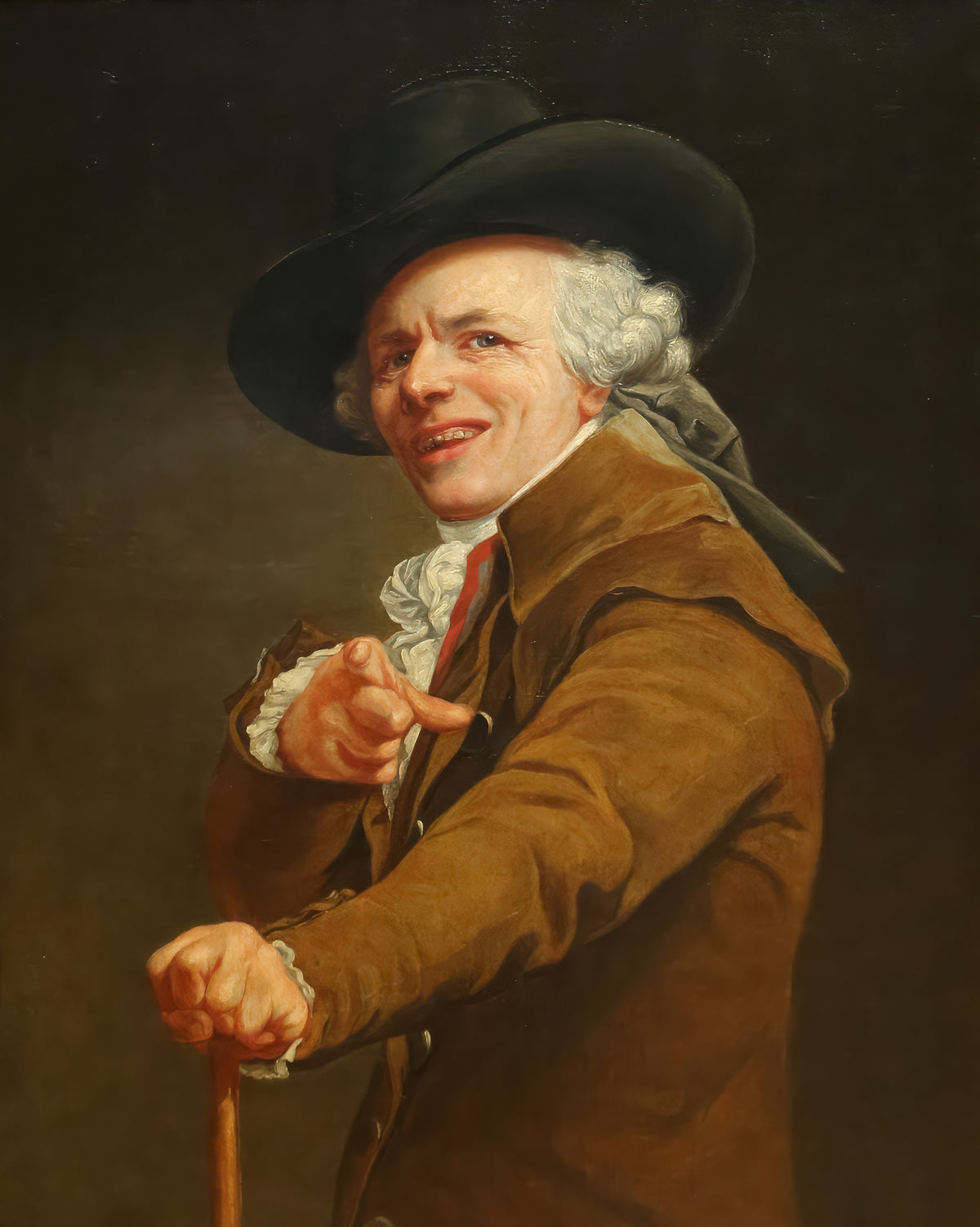
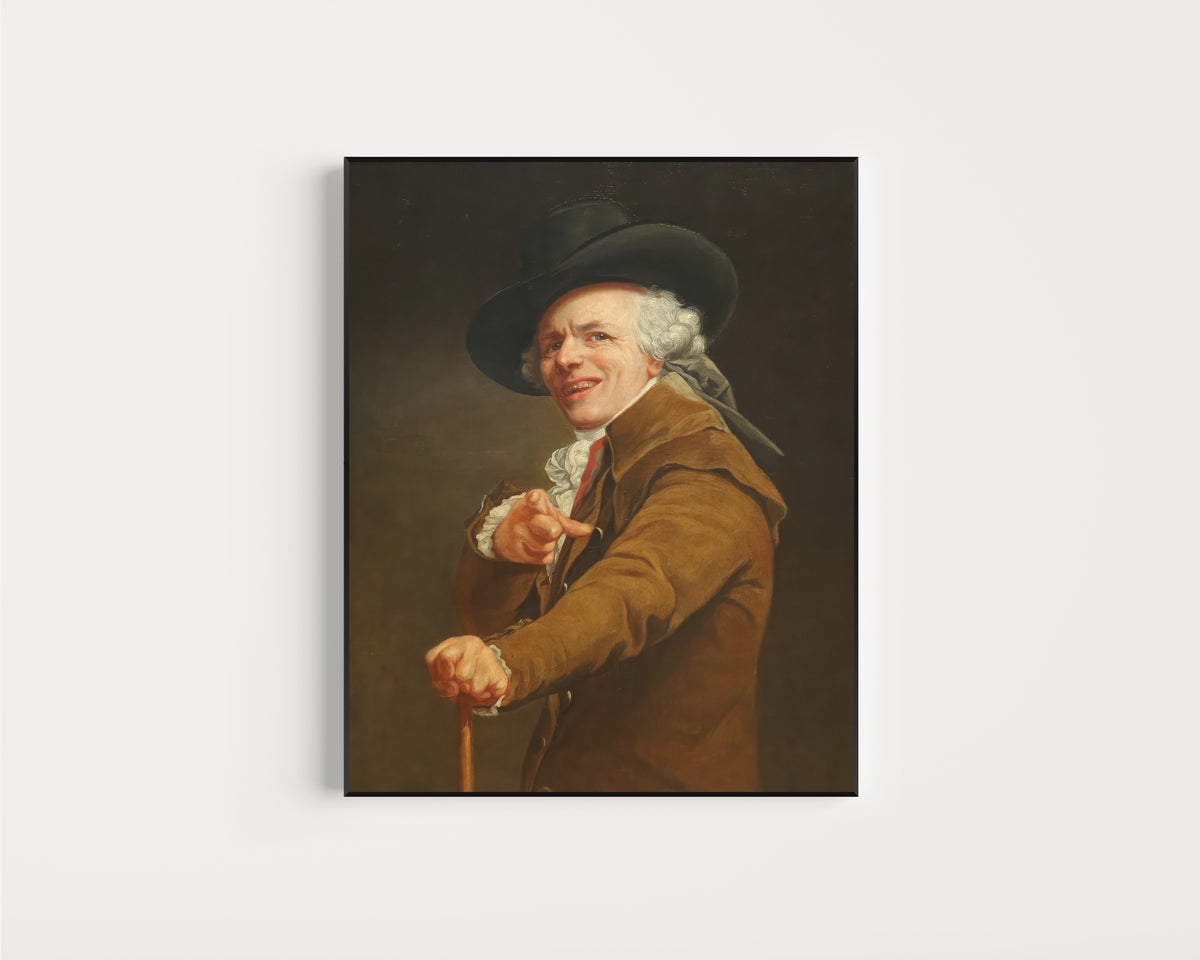
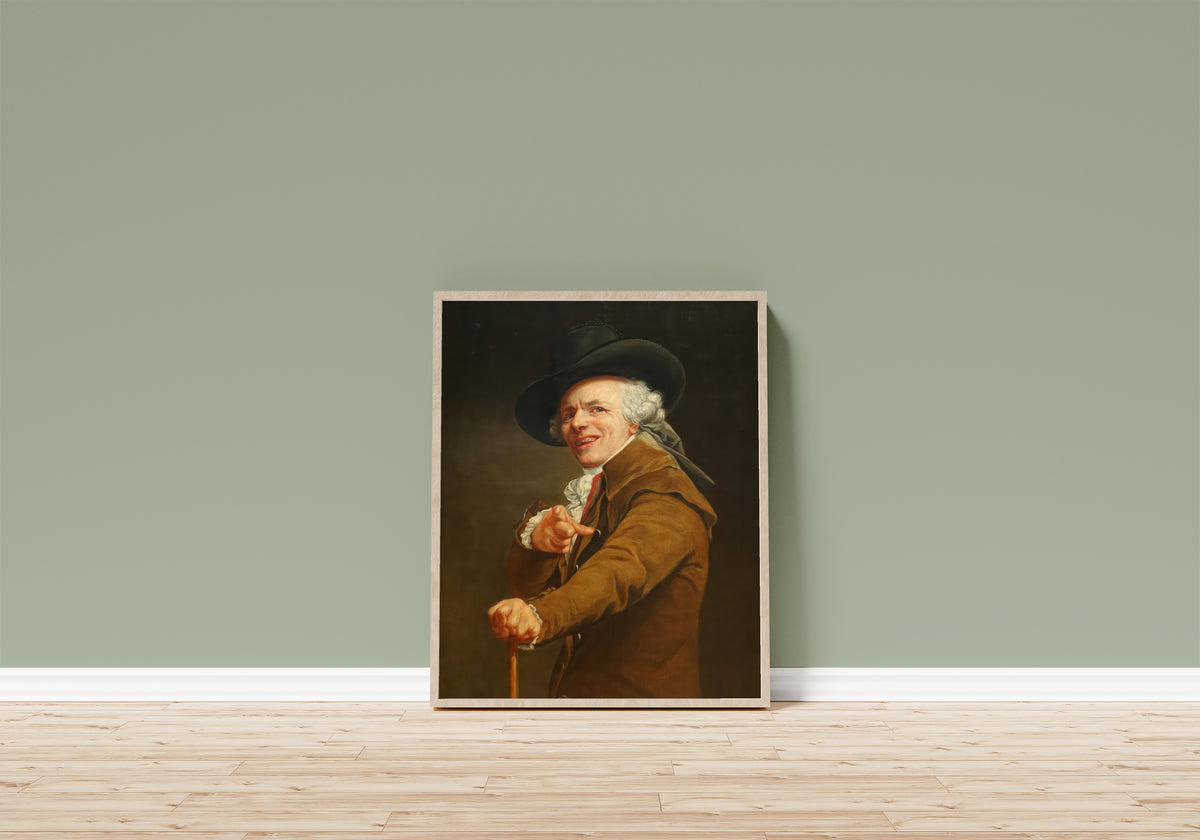
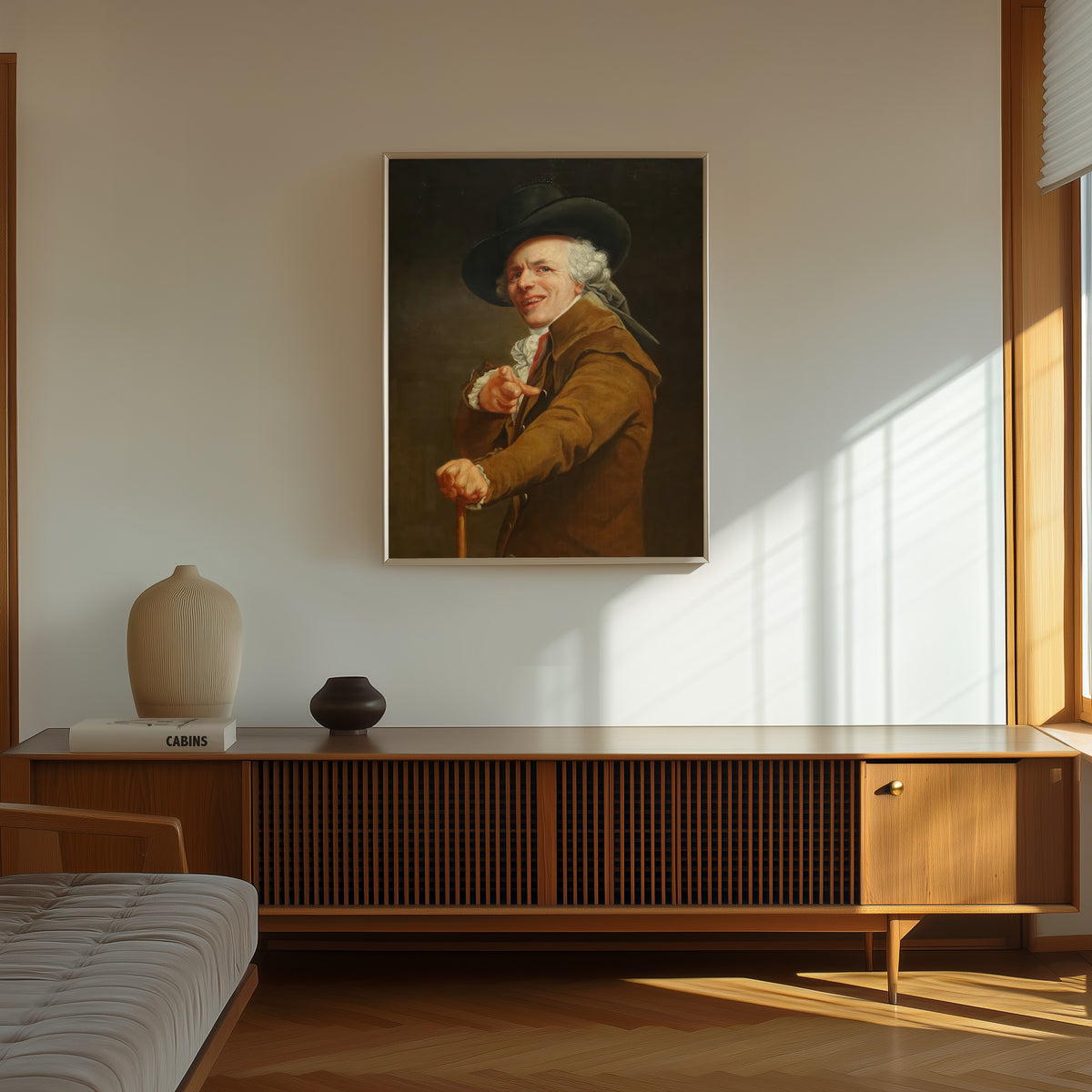
A man in a wide-brimmed black hat and powdered grey wig leans forward with an open, toothy grin, pointing directly outward with one hand. His other hand grips the head of a cane. He wears a brown coat over a white ruffled cravat. The background is plain and dark, throwing the lit face and gesture into sharp focus.
Dated around 1793, the year Louis XVI and Marie Antoinette went to the guillotine, it was probably painted in London during Ducreux's stay in England and may have hung at the Salon of 1793. Frederic Anthony White gave it to the Louvre in 1920. It did not win over everyone when it was new; from 2009 it circulated widely online as a meme, the pose being likened to those of certain rappers.
Joseph Ducreux (1735–1802) was a French portrait painter. He likely trained first with his father Charles Ducreux in Nancy and later through his friendship with Jean-Baptiste Greuze, going on to serve as premier peintre de la reine, first painter to Queen Marie Antoinette, whose portrait he painted in 1769. Beyond his formal court portraits, he is best known for a series of self-portraits, made in the 1780s and 1790s, in which he yawns, laughs or grimaces directly at the viewer, pushing portraiture toward an unusually direct, expressive extreme. His paintings are held by the Louvre, the Metropolitan Museum of Art and the Getty Museum.
Each print is made to our Archival Museum Standards: a 12-ink giclée, printed to order. Unframed prints are made on Hahnemühle German Etching, a 310gsm matte fine-art paper. Framed prints arrive in a handmade solid-wood frame with low-reflection glazing, ready to hang. Ships worldwide with free delivery to 30+ countries.