Artist · 9 prints
Tintoretto Prints
About Tintoretto
Tintoretto, born Jacopo Robusti in Venice in 1518, was an Italian painter who spent almost his whole life in his native city. His nickname means "little dyer", after his father's trade (tintore is Italian for dyer). After Titian's death he became, with Paolo Veronese, one of the two leading painters in Venice, running a large workshop and working on commissions for the Doge's Palace. Tintoretto died in Venice on 31 May 1594.
Tintoretto painted huge religious and historical scenes full of movement, steep perspective and dramatic light, drawing on Titian's colour and Michelangelo's muscular figures. The Miracle of the Slave was commissioned in 1548 for the Scuola di San Marco. His greatest project is the cycle of canvases for the Scuola Grande di San Rocco, painted in two campaigns between 1565 and 1588, which still hangs where it was made. Late in life he and his workshop, including his son Domenico, painted Paradise for the Doge's Palace, one of the largest canvas paintings ever made.
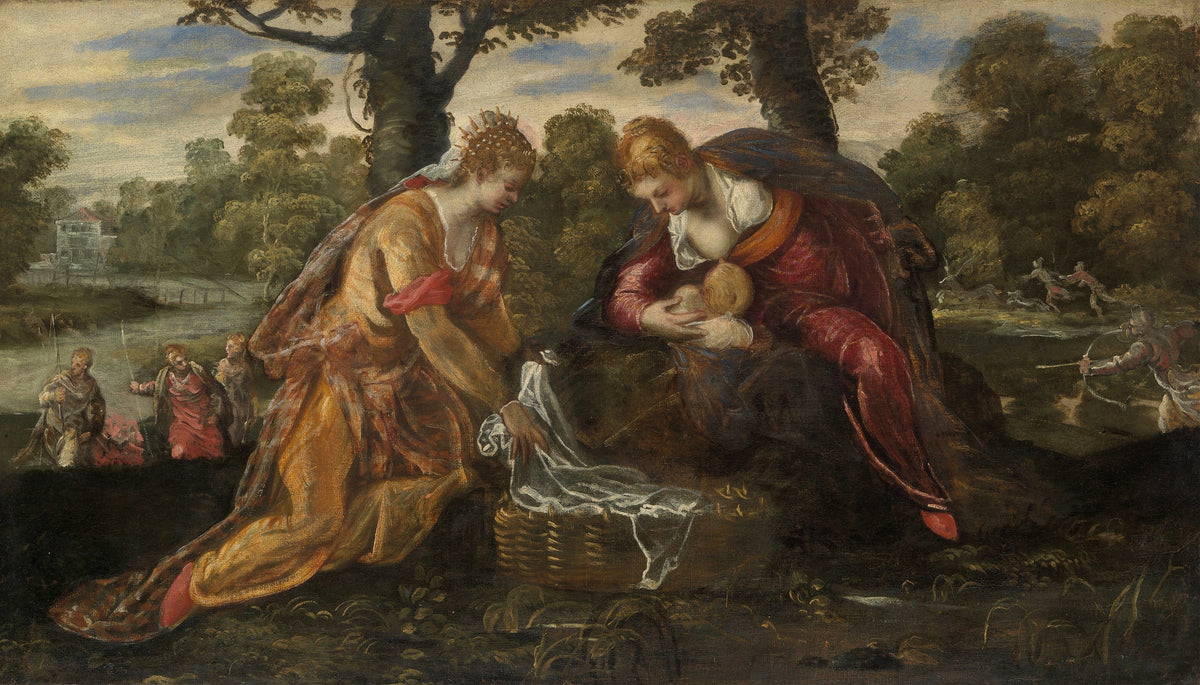
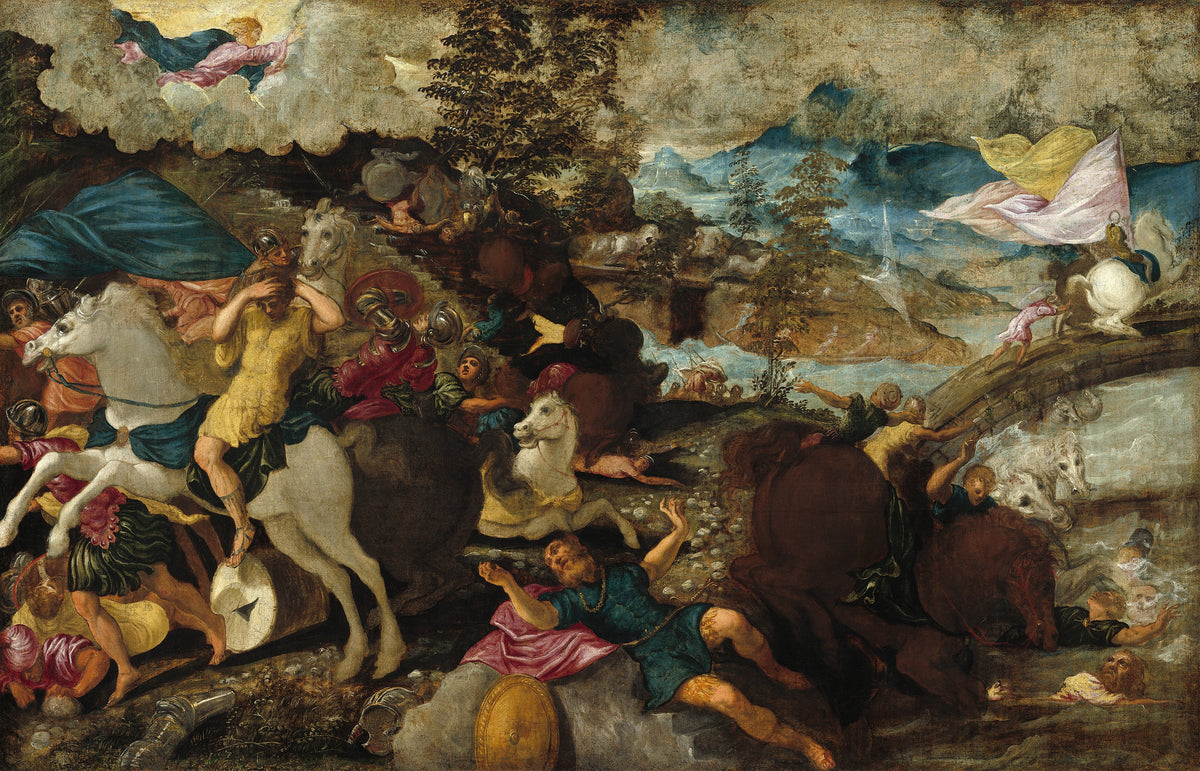
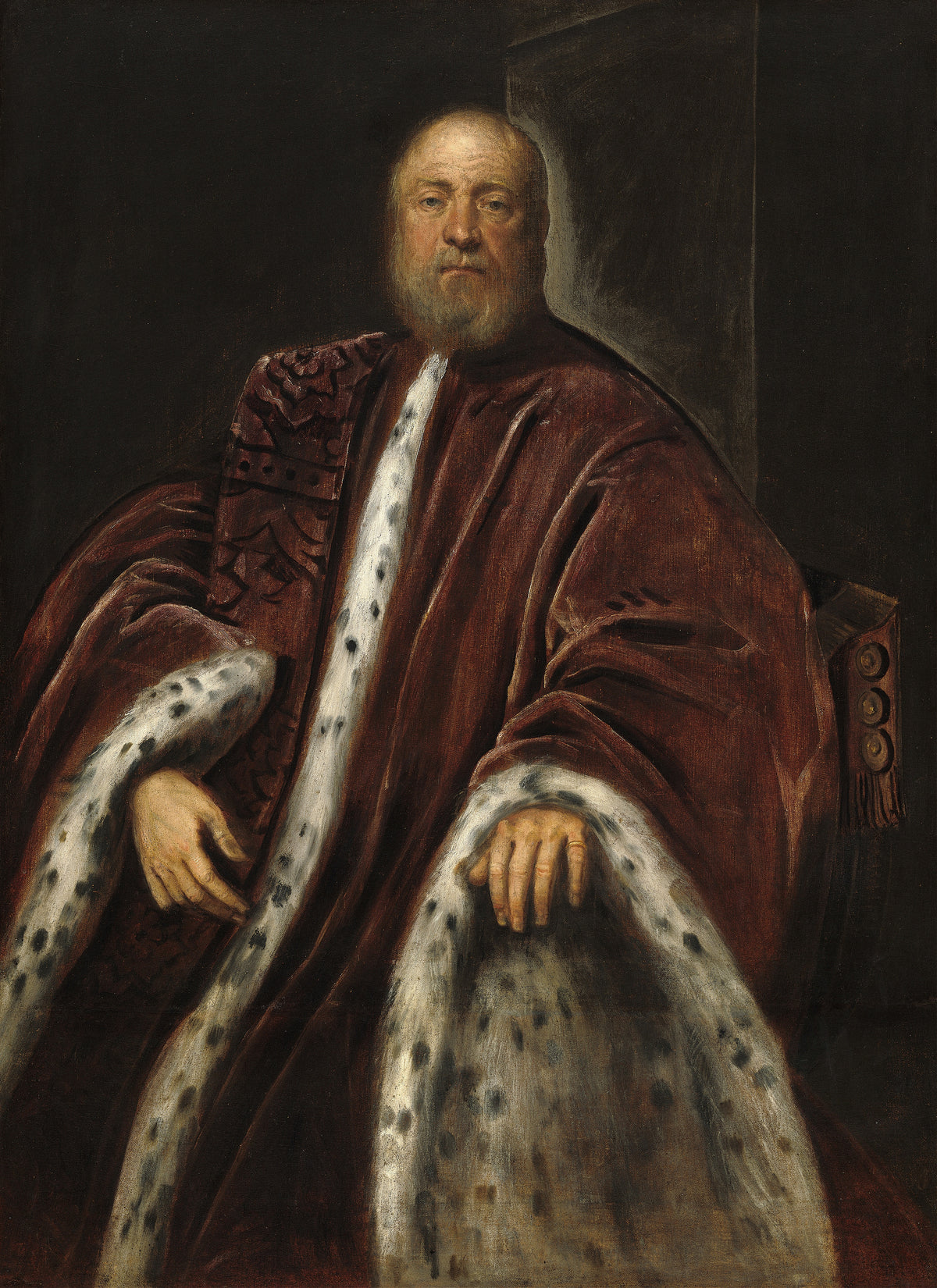
Tintoretto prints: reproductions of paintings by the Venetian Renaissance painter Tintoretto, made between about 1542 and 1578. The collection includes The Conversion of Saint Paul (1544), Susanna and the Elders (1555), The Finding of Moses (1560), Doge Pietro Loredano (1567) and Portrait of Marino Grimani (1578).
This selection balances two sides of his work. One is biblical scenes with strong movement and light, such as The Supper at Emmaus and The Conversion of Saint Paul. The other is formal portraits of Venetian doges, procurators and collectors, shown in red and fur-trimmed robes against dark backgrounds. Deep reds, golds and shadowed browns run through both.
The dark portraits suit studies, libraries, offices and dining rooms; the larger narrative scenes work on a wide wall in a living room or entrance hall. All prints are museum-quality reproductions, available unframed or framed with low-glare acrylic glazing, with free shipping and import duties covered.