Article: Gifts That Don't Look Mass-Market: Art Prints for the Modernist, the Reader, the Minimalist and the Impossible-to-Buy-For
Gifts That Don't Look Mass-Market: Art Prints for the Modernist, the Reader, the Minimalist and the Impossible-to-Buy-For
This article is part of our Ultimate Fine Art Print Buyer's Guide.

The hardest people to buy for are the ones with taste. They already own the Great Wave and the Starry Night, they notice when something came from a chain store, and they would rather have nothing than something generic. The answer is a print they have never seen before — by an artist they may not know, but one that fits exactly how they live. This guide picks those prints for four kinds of people: the modernist, the reader, the minimalist and the one who has everything.
In brief: For the modernist, Karl Wiener or Emilio Pettoruti. For the reader, a book cover from the 1890s. For the minimalist, one quiet seascape. For the impossible-to-buy-for, an artist from our Artists to Know collection — nobody will have given them one before.
For the modernist

For the friend who knows their Bauhaus but has seen every Kandinsky, try the Austrian Karl Wiener. Gegenwart (The Present) is a row of black vertical bars, like railings, standing in front of a glowing yellow-green light that fades to blue at the edges. It is simple enough for a minimal room and strange enough to start a conversation. For more colour, Emilio Pettoruti's The People's Song is a Cubist band of street musicians — a guitar, black hats, flat planes of blue, pink and grey — presented as an exhibition poster with Pettoruti's name below.
For the thinking behind this kind of art, see Best Bauhaus Prints for Minimalist Interiors, then browse Bauhaus & Geometric Modernism.
Frame: black for both.
For the reader

Book lovers like art that comes from books. The King in Yellow is the 1890s poster for Robert W. Chambers's collection of strange stories: a pale robed figure with a halo and huge black wings, standing in a black and orange landscape under two suns, with the title lettered across the top. Anyone who has read it — or watched True Detective — will know it at once. For something calmer, Arthur Heygate Mackmurdo's Wren's City Churches is the title page of his 1883 book, with the words woven into swirling brown and black stems and two long-tailed birds — one of the first designs that pointed towards Art Nouveau.
If they love darker stories, our guides to Gustave Doré and Ivan Bilibin's Russian fairy tales have more ideas. Or browse Literature & Theatre Art Prints.
Frame: black for The King in Yellow; natural oak or brown walnut for Mackmurdo.
For the minimalist

Minimalists do not want less art; they want one piece that is worth the space. Shoda Koho's Moonlit Sea is almost all one colour: a deep teal sea and sky, a small full moon, a little boat with two figures and a few dark reeds in the foreground. August Strindberg — better known as a playwright — painted Seascape with a knife and thick paint: a heavy grey-blue sky over a dark band of sea. It is the gift for someone with white walls and very few things. Ohara Koson's black-ground heron, in our Ohara Koson guide, does the same job.
Browse Serene Art Prints for more.
Frame: white or natural oak for Koho; black or brown walnut for Strindberg.
For the one who has everything

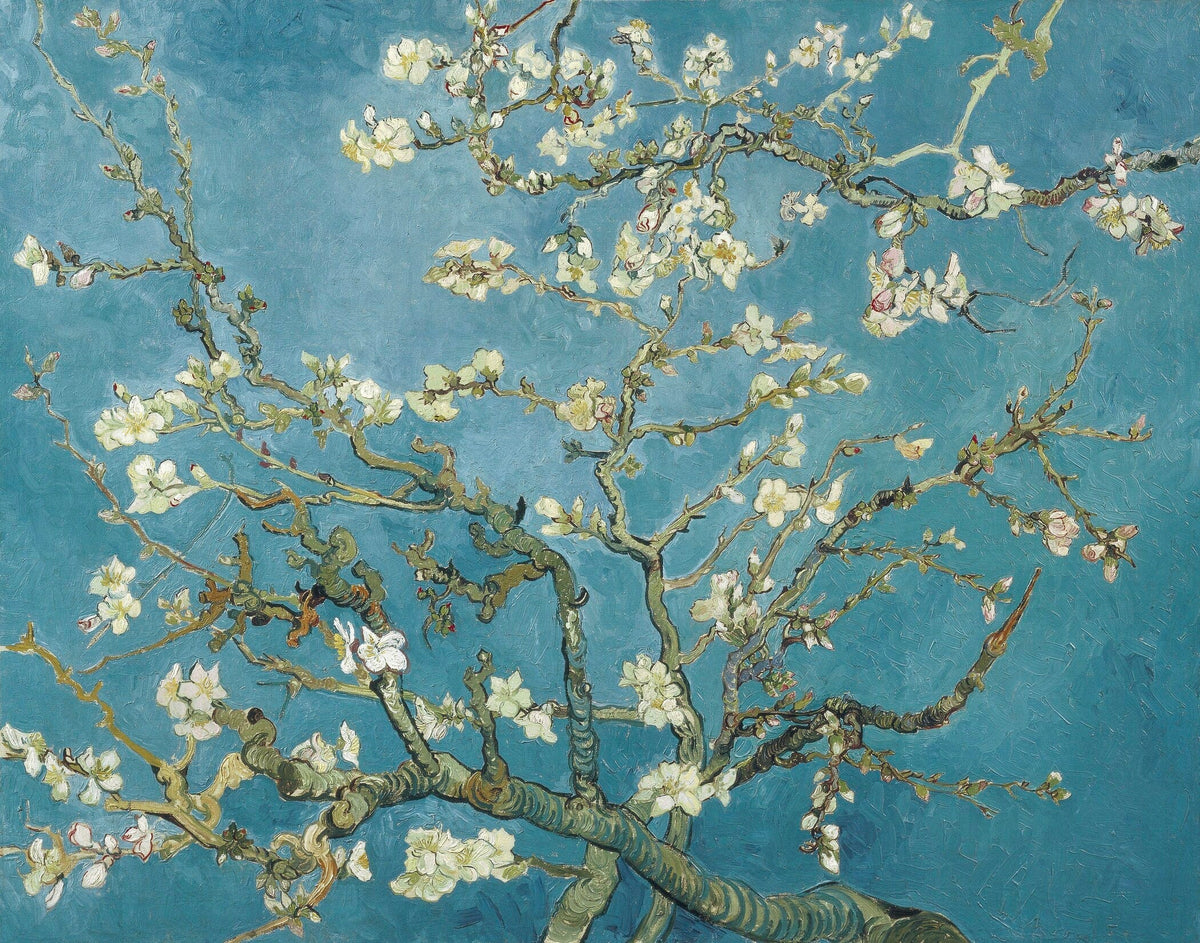
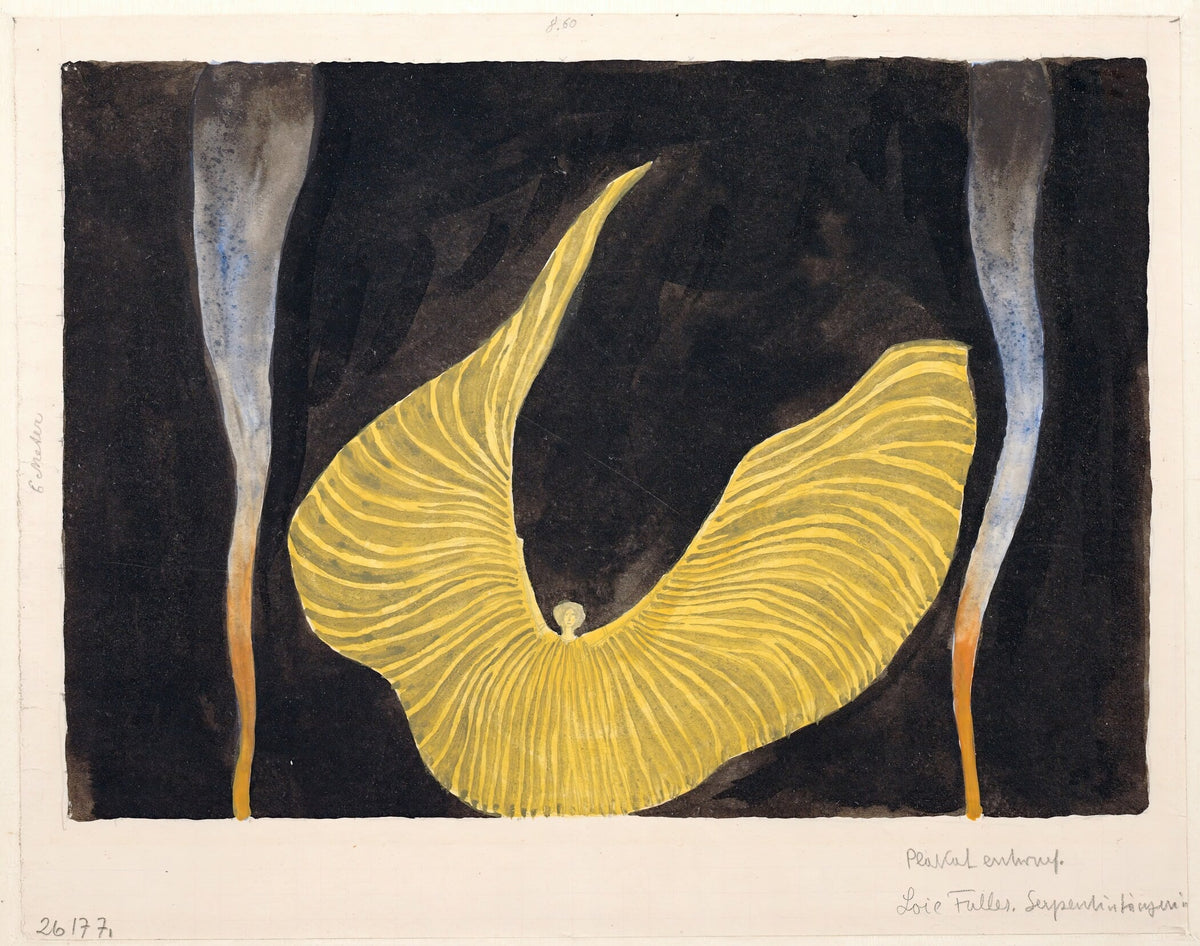
For the person who has seen it all, choose an artist they have never heard of. Our Artists to Know collection is made for this: painters and designers of the late 1800s and early 1900s who are rarely reproduced. The Dutch artist Reijer Stolk's Sunflowers in Indigo is a woodcut of heavy, drooping sunflower heads cut in white line on a deep indigo ground — nothing like the Van Gogh version. Koloman Moser's Loie Fuller as the Archangel, at the top of this page, draws the famous dancer as one great yellow wing on black. And for a cook, Émile Bernard's The Blue Coffee Pot is a tall dark blue pot on a green table with oranges, against a warm ochre wall.
For a mix of Japanese prints, Arts and Crafts patterns and vintage posters chosen to sit together, see Modern Heritage.
Frame: black for Stolk and Moser; natural oak for Bernard.
Why it won't look mass-market
A mass-market print is usually a famous image on thin, shiny paper. These are lesser-known works, printed on Hahnemühle fine art paper with archival pigment inks, so they look and feel like the real thing. For the difference in detail, read What's the Difference Between Cheap Wall Art and Fine Art Prints? Framed prints come in black, white, natural oak and brown walnut and arrive ready to hang — usually the kinder choice for a gift.
For more ideas by recipient — Japanese art, design, architecture and maps — see The 9 Art Prints Holiday Gift Guide 2026. And if you really cannot decide, the 9 Art Prints Gift Card lets them choose.
Summary: Wiener or Pettoruti for the modernist, The King in Yellow or Mackmurdo for the reader, Koho or Strindberg for the minimalist, and Stolk, Moser or Bernard for the person who has everything.